



Spanish School Oil Canvas
These spanish school oil canvas works bring centuries of religious devotion, quiet domestic realism, and dramatic coastal light directly into your room.
Spanish School Oil Canvas
A spanish school oil canvas brings together centuries of painting traditions spanning the sixteenth, seventeenth, eighteenth, and nineteenth centuries, alongside twentieth-century studies.
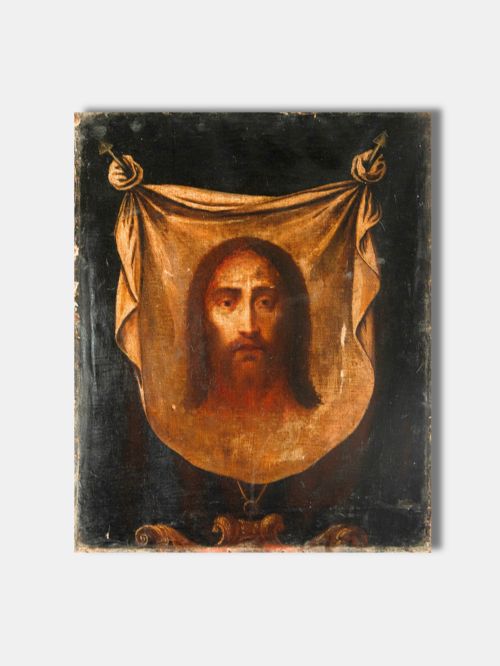
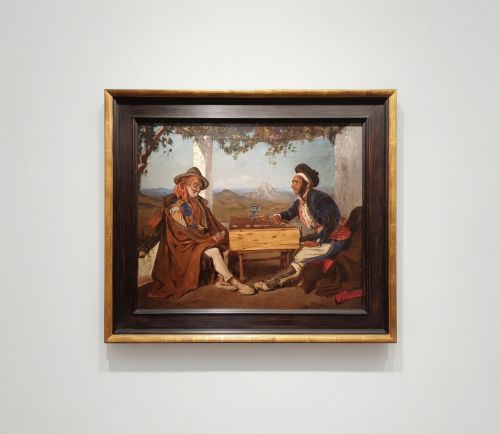
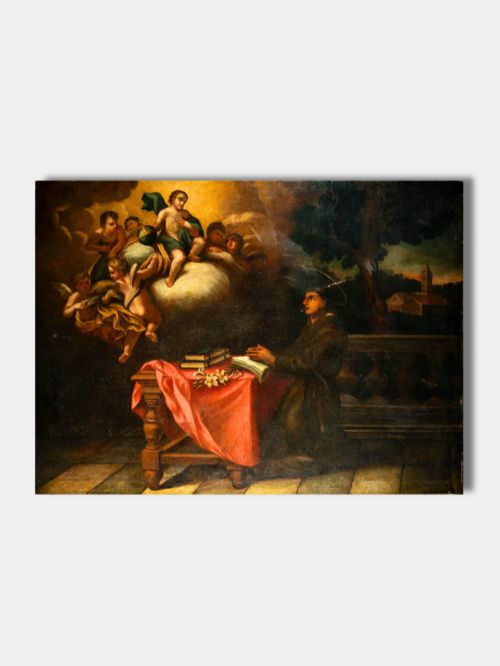
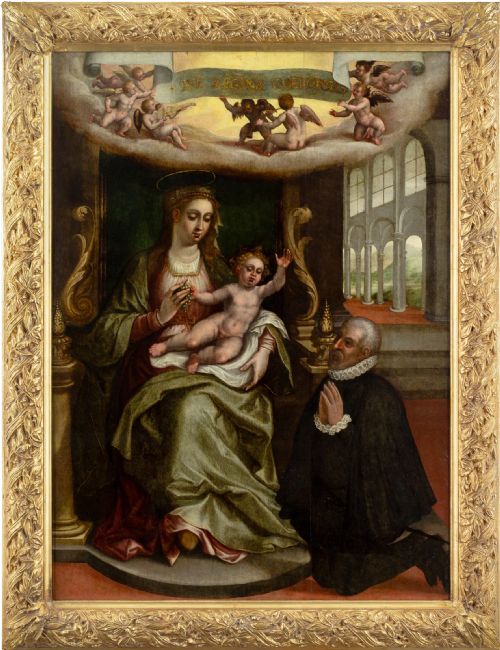
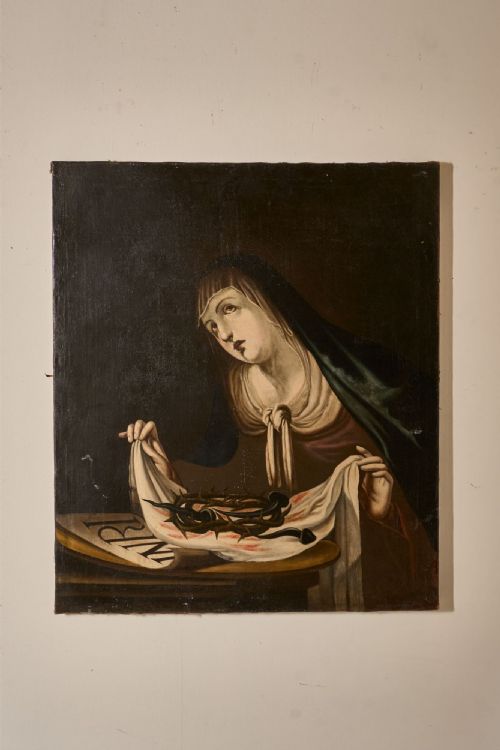
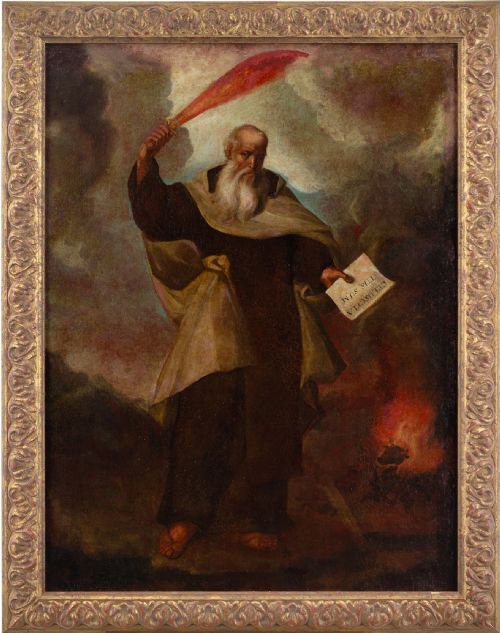
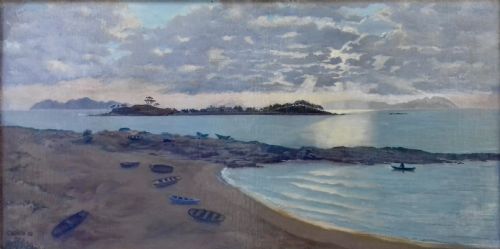
The works you encounter most frequently on this page range from deeply solemn religious icons and austere still-life studies to vibrant portraits, street scenes, and coastal marine landscapes.
Many of these historical canvases capture distinct regional aesthetics, moving from the profound shadows of the Madrid School and Spanish Baroque to later nineteenth-century realism and academic studies.
Materials and technique
These historical pieces rely fundamentally on oil paint applied to woven canvas supports, occasionally set within period wood or giltwood frames.
The underlying technique draws on traditional pigment application to build rich tones, deep shadows, and luminous highlights characteristic of European academy training.
A seventeenth-century larder still life records an eclectic shopping list including eggs, walnuts, lamb, apples, playing cards, dice, a lemon, snails, an onion, and bread.
Assessing quality and depth
Quality rests in the handling of light and shadow, the confidence of the brushwork, and the preservation of the original painted surface across the canvas.
Works attributed to specific regional circles or showing documented provenance reveal a higher level of compositional ambition than anonymous decorative studies.
Miguel Barroso·Flores Cadiz·Henri Cadiou·L Alvarez
The Spanish School Oil Canvas Glossary
- Spanish Baroque
- A stylistic period defined by dramatic contrasts of light and dark, intense religious emotion, and naturalistic detail. It forms the backbone of many seventeenth-century works.
- Oil on Canvas
- A traditional painting method utilising pigments bound in drying oil applied to a stretched woven fabric support. This combination allows for rich blending and enduring depth.
- Madrid School
- A specific regional designation associated with painters working within the Spanish capital during the seventeenth century. These works often display refined portraiture and solemn religious narratives.
- Giltwood
- Wood carved and coated with a thin layer of gold leaf or gold-coloured composition. Such frames frequently accompany antique paintings from the seventeenth and eighteenth centuries.
Spanish School Oil Canvas: Frequently Asked Questions
How do I date a spanish school oil canvas?
Dating relies on stylistic markers, the preparation of the canvas, and the nature of the pigments used.
Earlier centuries often favour sombre religious narratives and baroque shadow play, while nineteenth and twentieth-century pieces lean towards brighter everyday scenes.
Where were these paintings originally displayed?
Many religious works were commissioned for private chapels, convents, or churches across Spain.
Secular portraits and still-life studies typically hung in domestic residences, merchant homes, and grand townhouses.
How should I care for an antique canvas?
Keep the painting away from direct sunlight, damp environments, and rapid fluctuations in household temperature.
Avoid touching the painted surface directly, and consult a professional conservator before attempting any cleaning.
What subjects are most common?
Religious iconography, including saints and biblical figures, appears frequently alongside still-life arrangements of food and everyday objects.
Portraits, street scenes, and marine landscapes also emerge strongly in nineteenth and twentieth-century examples.