




Spanish Colonial Art
Spanish colonial art brings centuries of devotion into the room, uniting faith and craft through carved wood, oil paint, and gold leaf.
Spanish Colonial Art
Spanish colonial art spans centuries of religious devotion, encompassing paintings, sculptures, and home altars created for prayer and contemplation. You will encounter devotional pieces from the seventeenth and eighteenth centuries, alongside later nineteenth-century folk art interpretations.
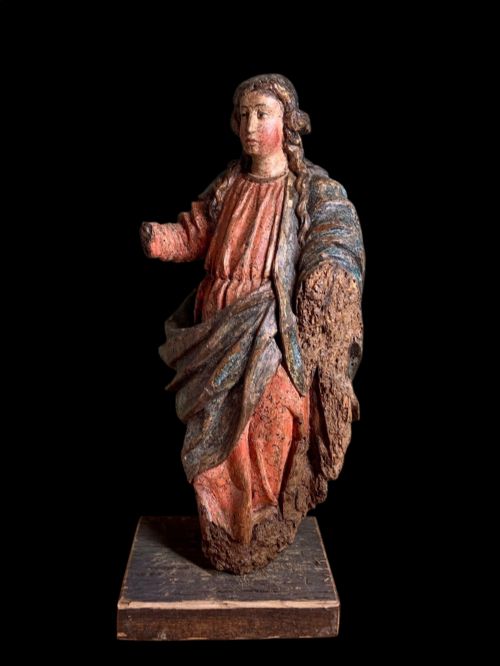
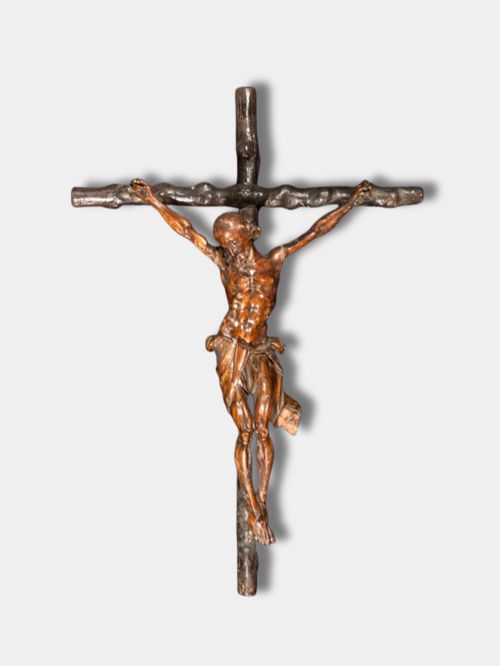
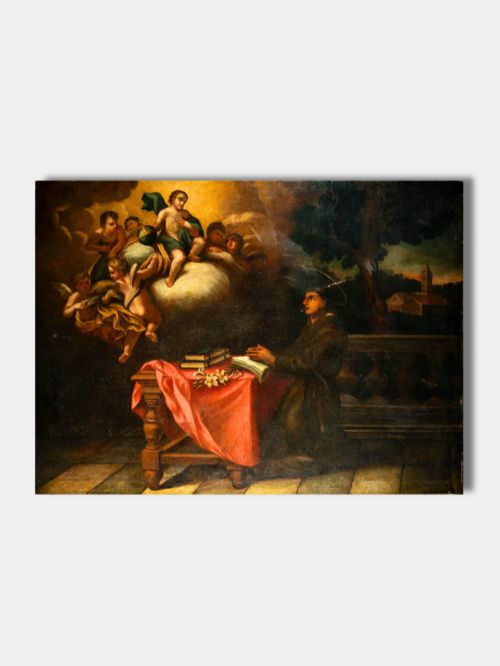
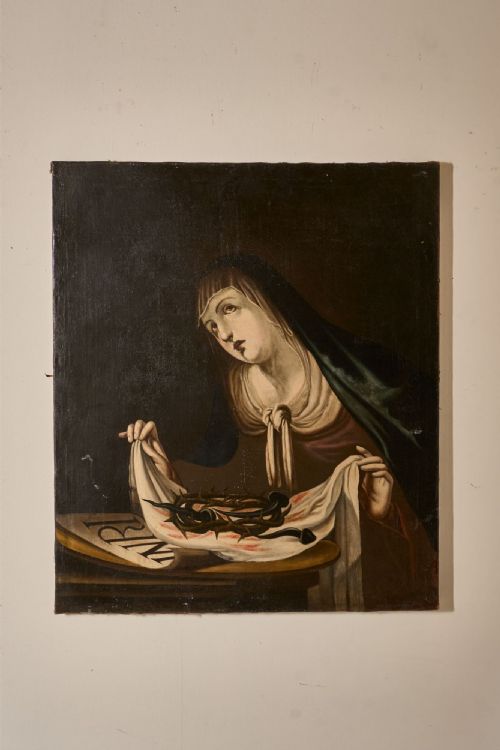
The objects take many forms, from large oil paintings on canvas depicting saints and biblical scenes to carved wooden statues and crucifixes. Figures range in scale from small devotional pieces to life-size representations of Christ and the Virgin Mary.
Originating across the Spanish empire, these works reflect both official ecclesiastical traditions and local folk art practices. Pieces such as capipotes and home altars demonstrate the intimate scale of private worship alongside monumental fine art.
Materials and Construction
Sculptural works rely on carved wood as a base, frequently prepared with a layer of gesso before receiving intricate polychrome paint finishes. Artisans applied gold leaf to highlight drapery and halos, creating luminous surfaces that caught the candlelight of churches and private chapels.
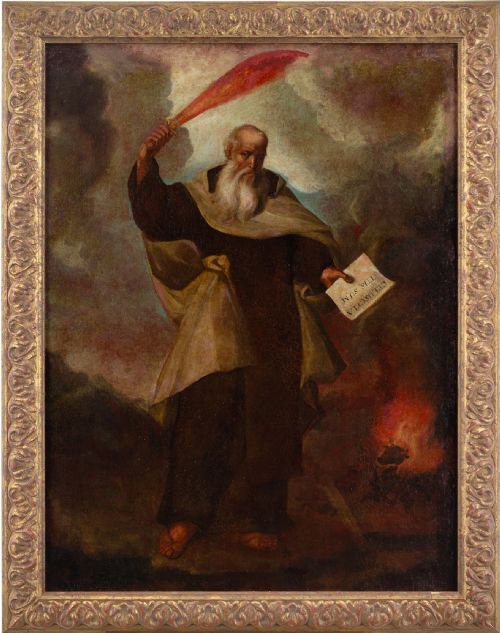
Paintings employ oil paint on canvas, capturing rich theological narratives with deep shadows and expressive faces typical of the Baroque style. Secondary materials like leather and willow appear in associated liturgical furniture sets.
Several figures come equipped with real hair and textile garments, blurring the line between sculpture and doll.
Judging Quality and Execution
The application of polychrome paint and gold leaf dictates visual impact, with superior pieces showing delicate layering and nuanced ageing. Finer canvases demonstrate confident brushwork and balanced compositions, particularly within works attributed to recognised schools or circles.
Juan Ruiz Soriano·Gaspar de Figueroa
The Spanish Colonial Art Glossary
- Polychrome
- Painted in several colours. This surface treatment brings carved wooden figures to life with realistic flesh tones and ornamented garments.
- Gesso
- A plaster mix applied to wood surfaces as a preparation for painting and gilding. It provides a smooth base for the application of gold leaf and polychrome pigments.
- Corpus Christi
- The body of Christ depicted on a cross. These wooden figures range from small devotional objects to monumental church sculptures.
- Capipote
- A processional figure with a carved head and hands attached to a framework designed for dressing in real textiles. They were utilised in religious processions and domestic settings.
- Home Altar
- A portable or domestic shrine used for private worship. These structures often house smaller statues and devotional paintings.
- Baroque
- An artistic style characterised by dramatic movement and high emotional intensity. It dominates the painting and sculpture of the seventeenth and eighteenth centuries.
Spanish Colonial Art: Frequently Asked Questions
How were these devotional pieces used?
These works served primarily as focal points for prayer, both within large ecclesiastical settings and inside domestic spaces. Home altars and smaller statues allowed families to practice daily devotion at home.
Larger paintings and life-size figures commanded the interiors of churches, inspiring the congregation through vivid visual storytelling and theatrical lighting.
What is a santos figure?
A santos figure is a carved representation of a saint, the Virgin Mary, or Christ used in Catholic worship. They were often dressed in real garments and placed in churches or private homes.
These sculptures varied widely in size, from small table-top devotional carvings to life-size figures intended for processions.
How do I care for antique wood and canvas?
Keep wooden sculptures and oil paintings away from direct sunlight and steady sources of artificial heat. Stable humidity levels prevent the wood from splitting and protect the gesso and paint layers from flaking.
Dust surfaces gently with a soft, dry brush without applying chemical cleaners or oils to the historic polychrome or canvas.
How do I distinguish seventeenth and eighteenth-century styles?
Seventeenth-century pieces often follow strict Madrid School and Baroque conventions, emphasising deep shadows and solemn, dramatic expressions. Figures from this period lean toward intense spiritual gravity.
Eighteenth-century works frequently introduce softer palettes and more ornate detailing, culminating in expressive folk art interpretations by the nineteenth century.