






Spanish Console
A spanish antique console brings centuries of architectural weight and rustic character to an interior.
Spanish Console
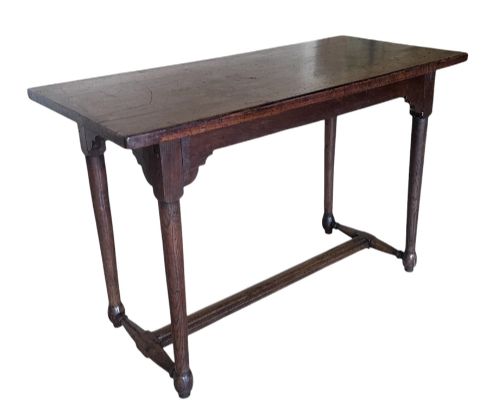
When you search for a spanish antique console, you are looking at substantial timber furniture designed to anchor a room with architectural presence. These pieces emerge primarily from the seventeenth and eighteenth centuries, though nineteenth-century revivals also appear frequently.
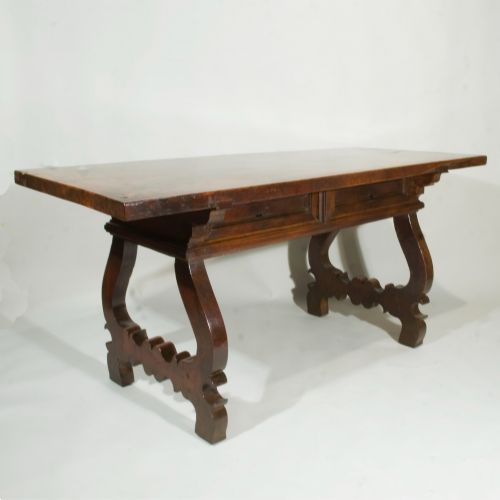
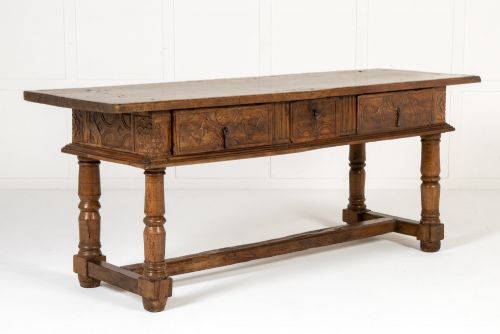
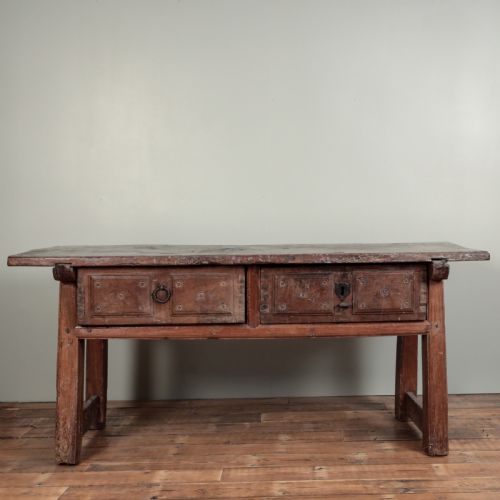
The forms span console tables, side tables, and centre tables, often defined by sturdy rectangular tops and heavy stretchers. Walnut and oak dominate the selection, bringing a dark, warm gravity to domestic spaces.
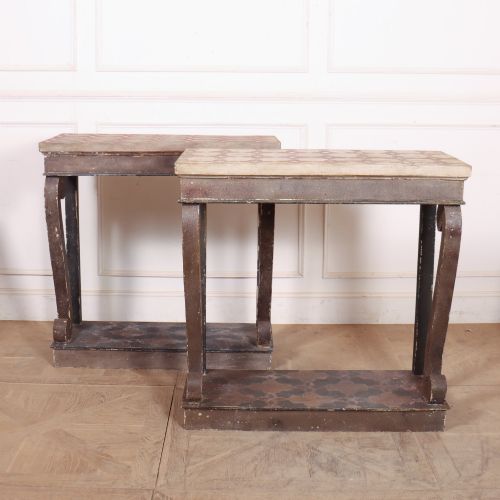
Regional variations include pieces finished with painted surfaces or ebonised wood, alongside rustic interpretations. You will encounter everything from severe seventeenth-century walnut formats to later nineteenth-century revival pieces.
Materials and Construction
Carpenters constructed these tables using dense hardwoods like walnut, oak, and chestnut, selected for their structural resilience. Planks were joined with traditional framing techniques to withstand heavy daily use.
Surface treatments varied from waxed natural timber and original patina to applied paint and ebonisation. Some later pieces incorporated gilding to reflect shifting stylistic preferences.
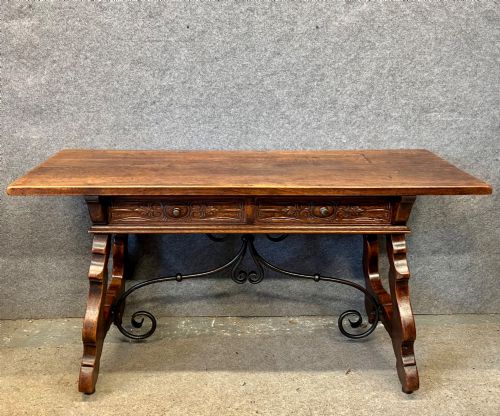
Wrought iron stretchers were often twisted by hand while hot, meaning no two scrolling braces match perfectly under the tabletop.
Judging Quality
Quality rests in the integrity of the timber and the depth of the surface patina accumulated over centuries. Untouched original surfaces display a richness that modern finishing cannot replicate.
The sophistication of the joinery and the harmonious proportion of the base structure distinguish finer pieces from simpler utilitarian tables. Well-executed iron stretchers show careful blacksmithing rather than hurried assembly.
Period authenticity plays a central role, separating seventeenth-century originals from later nineteenth-century revival pieces. Each era brings distinct characteristics in timber selection and carving depth.
Whytock and Reid
The Spanish Console Glossary
- Patina
- The surface sheen and colour developed through age, handling, and waxing. It acts as a visual record of the timber's long history.
- Stretchers
- Horizontal wooden or iron braces connecting the legs of a table. They provide structural stability and often display decorative scrolling.
- Ebonised
- Wood treated with a chemical stain or dark finish to imitate ebony. This technique was popular in nineteenth-century interpretations.
- Baroque
- A flamboyant artistic style originating in the seventeenth century, characterised by dramatic carved details and robust forms. It heavily influenced Spanish furniture design.
Spanish Console: Frequently Asked Questions
How do I use a console table?
These tables function well against a hallway wall or as a striking focal point in a living room. Their narrow profile allows them to fit circulation spaces while holding lamps or decorative objects.
Pair them with a simple mirror or artwork above to balance their visual weight. Ensure the room has sufficient space to let the heavy timber breathe.
Are these tables sturdy enough for daily use?
Constructed from dense hardwoods like oak and walnut, these pieces were built to endure centuries of service. Their substantial frames and iron stretchers provide excellent structural support.
While robust, they benefit from sensible placement away from direct heat sources. Treat the antique timber with respect to preserve its historic joinery.
How do I tell a seventeenth-century piece from a later revival?
Seventeenth-century examples display natural timber wear, hand-cut joinery, and an authentic accumulated patina. Their proportions tend to reflect utilitarian origins of the period.
Nineteenth-century revival pieces often show more uniform machining marks and different surface treatments. Comparing the wood grain and construction methods clarifies the age.
What is the difference between oak and walnut pieces?
Walnut furniture typically offers a smoother grain and takes a deep, warm polish that defines classic Spanish Baroque forms. It allows for finer carved details on the frieze and legs.
Oak pieces often present a coarser, more robust texture suited to rustic or provincial environments. Both timbers bring distinct visual textures to an interior.