


Spaniel Dog Statue
A spaniel dog statue brings character to a mantelpiece, most often met as a pair of Victorian earthenware figures.
Spaniel Dog Statue
When you search for a spaniel dog statue, you encounter a variety of decorative figures modelled after hounds and pets. These objects range from earthenware pottery meant for the fireside to metal castings produced in France and Russia.
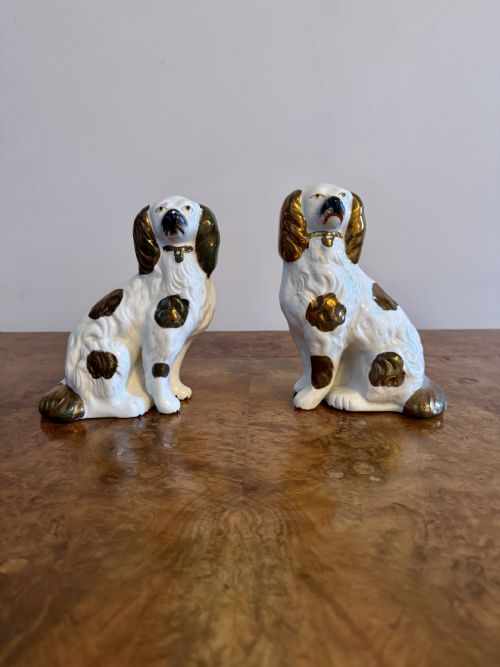
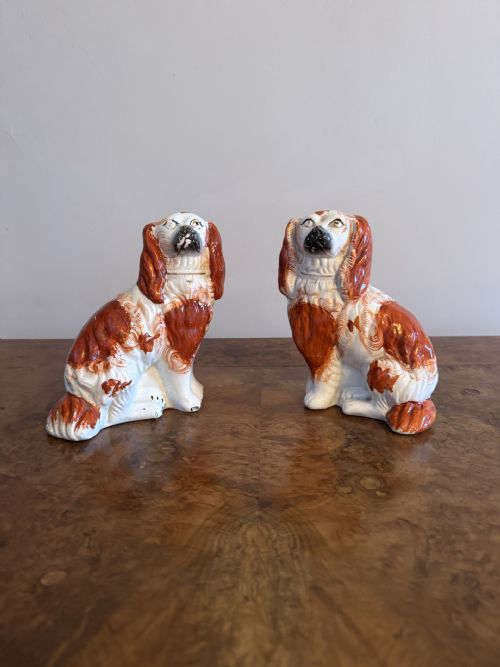
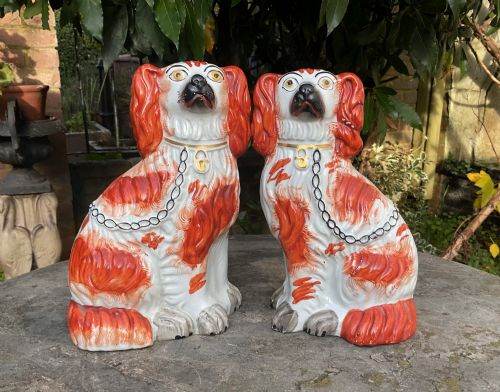
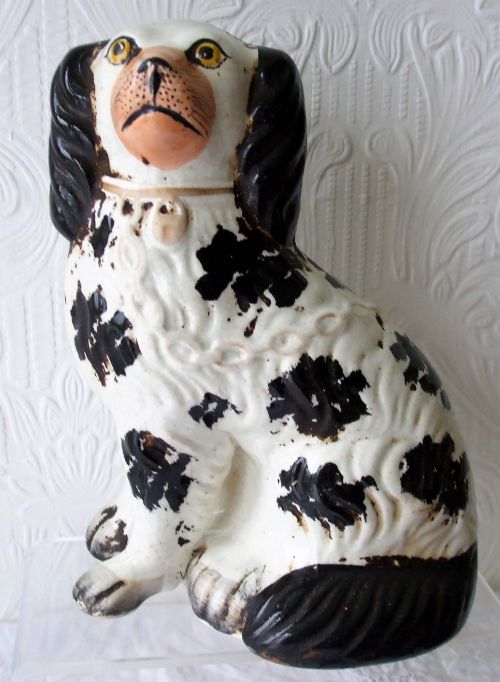
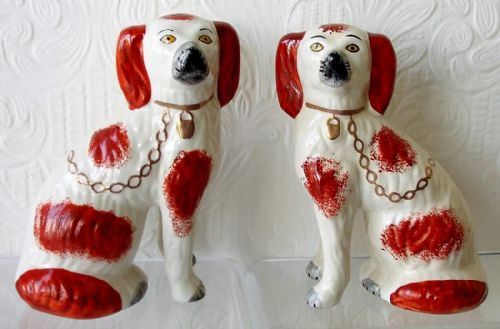
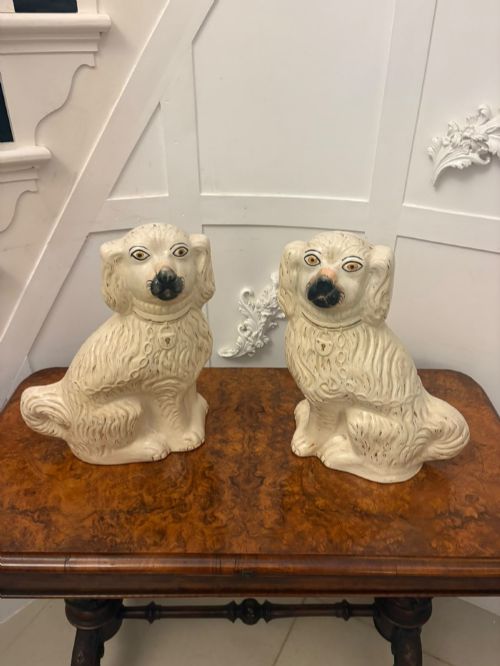
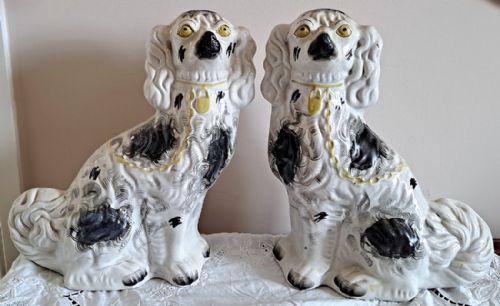
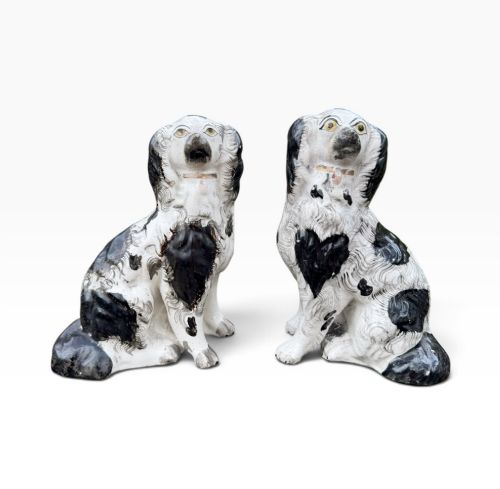
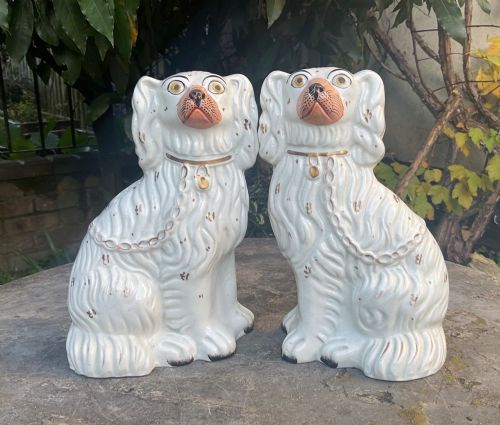
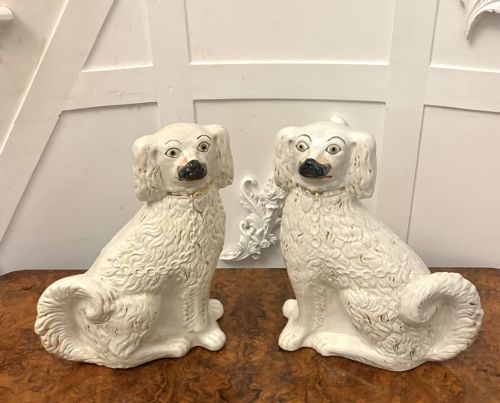
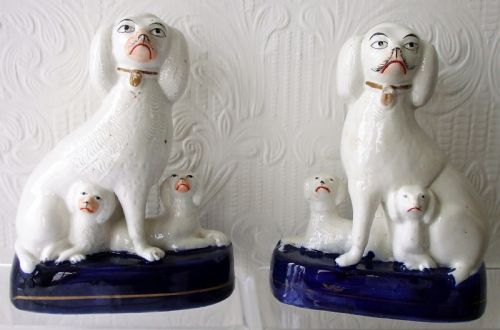
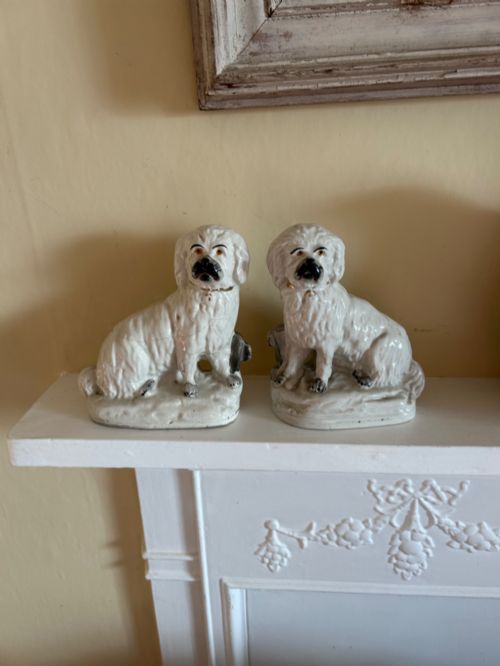
The version you are most likely to meet on this page is the Victorian Staffordshire pottery pair, typically shown seated upright. These ceramic figures often feature white bodies with gilt accents or red and white markings, modelled to sit symmetrically on either side of a fireplace.
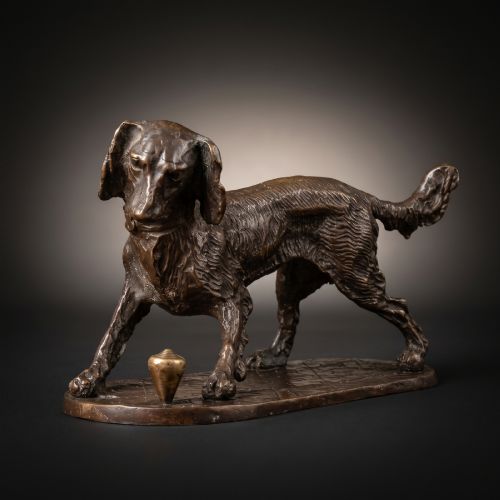
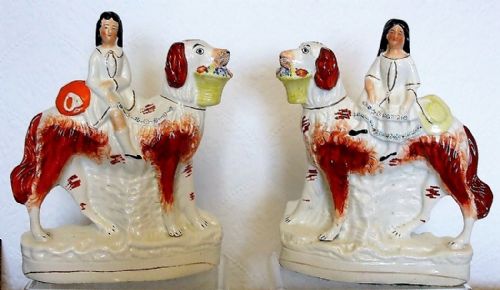
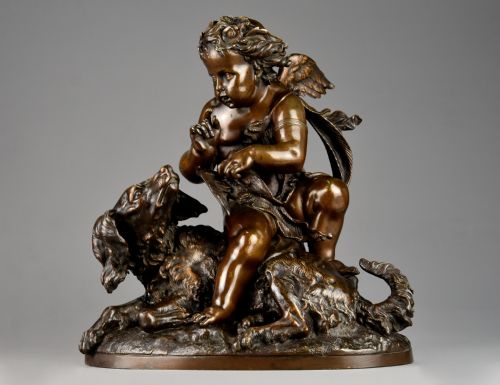
Other interpretations appear alongside these ceramic pairs, including bronze sculptures from the nineteenth century and Chinese export porcelain from the Qianlong period. Some variations depict the animals resting on cushions or paired with children, while others serve utilitarian functions such as inkwells or doorstops.
Earthenware, bronze and glaze
Metal versions utilise bronze or cast iron, shaped through traditional casting methods and finished with patination. These sculptures capture finer anatomical details of the hunting or lap spaniels compared to the simpler ceramic castings.
Spaniel Dog Statue Retail Price Guide 2026
Typical asking prices for spaniel dog statue among the pieces listed under this phrase on Sellingantiques today, from the lower quarter to the upper quarter. They describe what is for sale here now, not the wider market.
Listings feature items spanning from the eighteenth century to the late twentieth century, encompassing earthenware, porcelain, bronze and cast iron.
Modelling, paintwork and crispness
The distinction between standard and superior pieces rests largely on the crispness of the modelling and the care taken with the hand-painted details. Finer ceramic figures display distinct facial expressions, clean enamel work and well-defined eyes rather than heavy, blurred brushstrokes.
In cast metal examples, quality reveals itself in the depth of the patination and the precision of the chasing work on the fur. Pairs that retain matching proportions, original gilding and undamaged enamel command greater appreciation than worn or mismatched specimens.
Antoine Louis Barye·P.de Soete·J. Moigniez·Beswick
The Spaniel Dog Statue Glossary
- Comforter spaniel
- A ceramic figure modelled after the King Charles spaniel popular as a lap dog in the nineteenth century. These ornamental dogs typically face left or right to form matching pairs.
- Animalier
- A nineteenth-century artistic style focusing on the realistic portrayal of animals. Pieces in this style emphasise naturalistic poses and accurate anatomical observation.
- Enamel
- A pigmented vitreous substance applied to ceramic surfaces for decoration before firing. This material provides the distinct red patches, black muzzles and collar details on pottery figures.
- Gilt
- A thin layer of gold or gold leaf applied to the surface of ceramics or metalwork. It highlights decorative elements such as chains, lockets and trim.
- Patinated bronze
- A metal sculpture treated with chemical solutions to produce a specific surface colour and finish. This process protects the bronze while giving it an aged appearance.
Spaniel Dog Statue: Frequently Asked Questions
How were Staffordshire dogs displayed?
Victorian households traditionally placed these ceramic figures in pairs on the mantelpiece above the fireplace. Owners positioned them facing inward toward each other to create a balanced arrangement.
Beyond the fireplace, people set them on window sills and side tables to brighten domestic interiors. Their symmetrical design made them ideal focal points for decorative displays in sitting rooms.
How do you tell periods apart?
Distinguishing periods relies on observing the materials, manufacturing techniques and stylistic details present in the object. Nineteenth-century Staffordshire pottery generally exhibits thicker earthenware bodies and hand-painted enamel highlights, whereas twentieth-century items often show more uniform industrial production.
Bronze sculptures display the distinct casting techniques and patination methods characteristic of the era in which they were poured. Examining the base and the wear on the glaze or metal provides further clues to the age of the piece.
Are bronze spaniels different from pottery?
Bronze spaniels differ fundamentally in weight, material composition and artistic intent compared to pottery figures. Metal castings offer greater anatomical precision and capture the muscular forms of hunting dogs rather than the domestic comfort of ceramic lap dogs.
While Staffordshire figures were mass-produced in pottery towns for domestic mantels, bronze and cast iron sculptures were often created by named artists in limited foundries. These metal works frequently depict working breeds like retrievers and hunting spaniels in active poses.