









Soumak Weave Bag
A soumak weave bag brings durable nomadic craftsmanship into a room through flatwoven structure and intricate geometric tribal designs.
Soumak Weave Bag
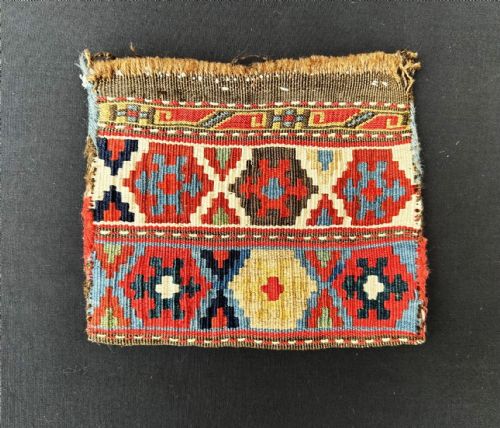
A soumak weave bag represents nomadic textile artistry created across Persia and the Caucasus during the nineteenth and early twentieth centuries. These functional storage containers include complete mafrash storage pieces, khorjin saddle bags, vanity bags, salt bags, and individual bag faces.
The selections encountered here originate from tribal groups such as the Shahsevan, Qashqa'i, Afshar, Lori-Bakhtiari, and Kurdish nomads. Makers produced these textiles for daily nomadic life, utilising durable flatwoven techniques to transport household goods or store personal possessions.
Materials and construction methods
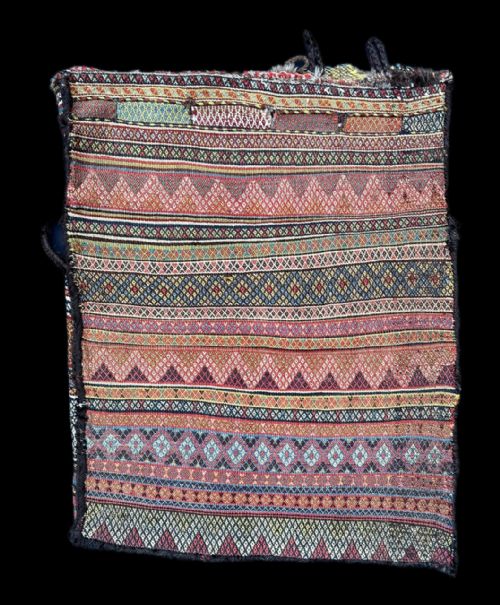
Weavers constructed these textiles using hand-spun wool and cotton foundations, employing the wrap-faced soumak technique which creates a ribbed, textured surface on the face while leaving trailing threads on the reverse. Artisans coloured these fibres using natural and vegetable dyes to achieve deep hues.
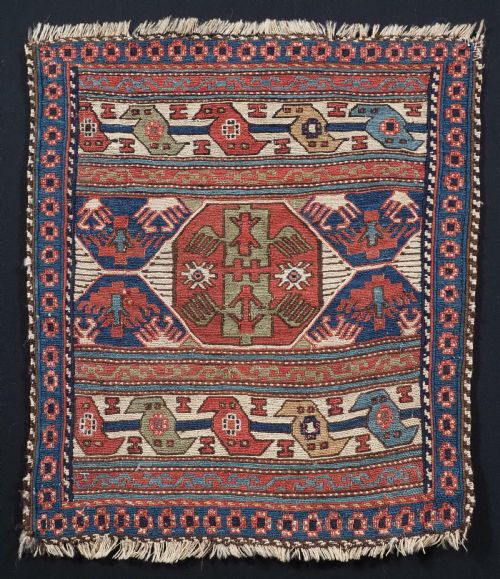
The decorative schemes incorporate supplementary weft wrapping methods that allow crisp diagonal lines, hooked motifs, and stylised animal figures like birds and dragons to emerge across the surface.
Soumak Weave Bag Retail Price Guide 2026
Typical asking prices for soumak weave bag among the pieces listed under this phrase on Sellingantiques today, from the lower quarter to the upper quarter. They describe what is for sale here now, not the wider market.
Listings span the period from eighteen-fifty to nineteen-twenty, featuring wool and cotton foundations coloured with natural and vegetable dyes.
Evaluating the standard of weaving
Quality rests upon the tightness of the soumak wrapping and the fineness of the hand-spun wool, which dictate the crispness of the geometric pattern work. Tighter foundational structures and well-preserved natural dye palettes separate robust examples from simpler household pieces.
The complexity of the iconography, such as distinct bird and dragon motifs integrated into Shahsevan bag faces, elevates the artistic merit of individual pieces.
The Soumak Weave Bag Glossary
- Soumak
- A flatweaving technique where coloured weft threads wrap around the vertical warp threads in a specific patterned sequence, producing a durable textured surface resembling embroidery.
- Khorjin
- A traditional double saddle bag designed for transport on pack animals, featuring two pouches connected by a central web.
- Mafrash
- A large rectangular storage chest panel or complete container used by nomads for bedding and household goods.
- Juval
- A large storage sack utilised within nomadic households for bulky possessions and wool storage.
- Tacheh
- A specific type of flatwoven container or grain bag associated with Persian nomadic weaving traditions.
Soumak Weave Bag: Frequently Asked Questions
How were these bags used?
Nomadic groups utilised these textiles as practical containers for transporting belongings on animals or storing household provisions within tents.
Over time, many complete bags separated into individual bag faces or panels, which survived as decorative tribal art.
Where did these pieces originate?
The pieces originate primarily from the Caucasus and Persia, created by nomadic confederacies and tribal groups.
Regions such as Moghan in Azerbaijan, Fars Province, and Western Persia produced distinct regional styles and colour palettes.
How should I care for a textile?
Protect antique flatweaves from direct sunlight to prevent natural dye fading and preserve the integrity of the wool.
Gentle vacuuming with a low suction attachment through a mesh screen helps remove dust without disturbing the hand-spun fibres.
How do I identify a Shahsevan piece?
Shahsevan nomadic pieces often display precise soumak wrapping with characteristic iconography including hooked motifs, birds, and dragons.
These works frequently originate from the Moghan region of Azerbaijan and date from the nineteenth century.