


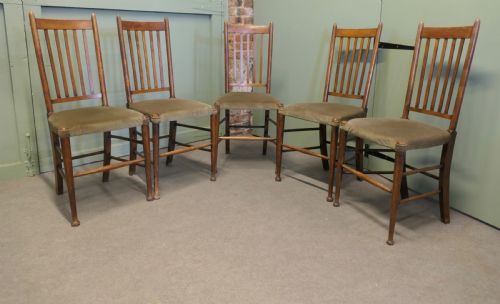


Solid Timber Dining Chairs
Solid timber dining chairs bring genuine grain and time-worn character to the table, and these pieces span centuries of practical craftsmanship.
Solid Timber Dining Chairs
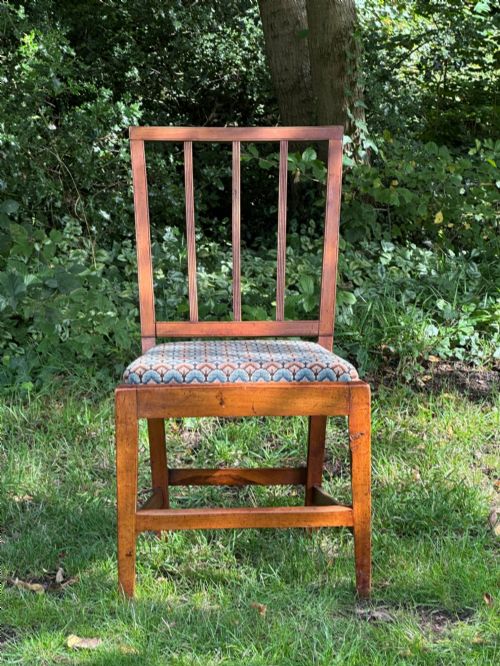
Solid timber dining chairs encompass an array of traditional forms, from sturdy farmhouse kitchen seating to formal Regency mahogany hall chairs. When sorting through solid timber dining chairs, buyers frequently encounter provincial elm Windsors and classic Georgian designs alongside later Victorian oak and pine variations.
The selection ranges from matched sets of six down to individual side chairs and pairs, reflecting the diverse domestic settings they originally served. Makers utilised native woods to build robust seating that endured decades of daily use without losing structural integrity.
Materials and construction methods
Makers built these chairs using dense hardwoods like oak and mahogany alongside resilient native timbers such as elm, birch, beech and pine. Turned spindles, joined stretcher bases and carved solid seats provide the structural foundation for both rustic kitchen models and formal reception seating.
Traditional joinery techniques ensure stability across centuries, utilising pegged joints and steam-bent components for curved Windsor backs. Finish applications rely on natural wax or oil treatments that highlight the underlying grain patterns of the wood.
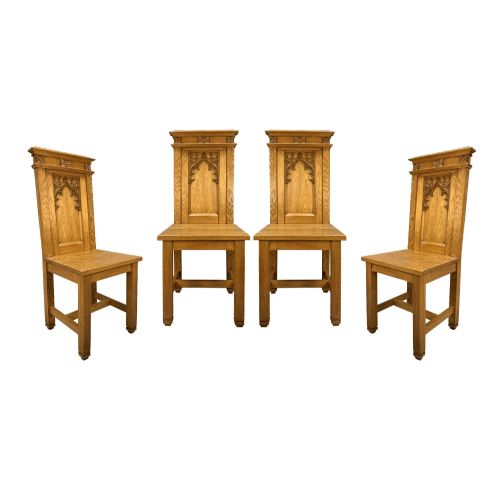
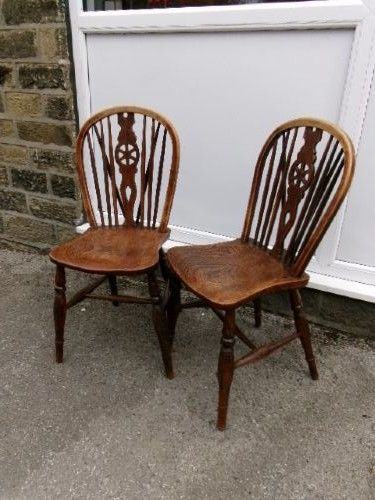
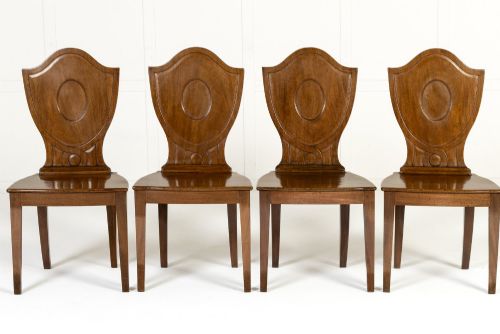
Several chairs feature carved wheelbacks and heraldic shields, proving that even everyday seating once demanded a touch of theatrical flair.
Assessing craftsmanship and proportion
Superior examples display balanced proportions, crisp carving on crest rails and shields, and tight joinery that remains firm under weight. The choice of timber also dictates quality, with finely figured mahogany and well-selected quarter-sawn oak sitting at the higher end of the scale.
Simpler provincial pieces rely on honest utility, where the charm stems from surface wear and patination rather than elaborate ornamentation. Consistency within a matched set requires uniform timber selection and matching turning details across every chair.
The Solid Timber Dining Chairs Glossary
- Windsor
- A traditional chair construction featuring a solid wooden seat into which the legs and back spindles are wedged directly. This technique creates a remarkably sturdy frame without requiring conventional corner blocks.
- Hall Chair
- A rigid, timber-seated chair designed primarily for entranceways rather than prolonged dining. These pieces often feature carved or painted heraldic shields on the backrest.
- Wheelback
- A specific Windsor variation incorporating a wheel-shaped splat carved into the centre of the backrest. It gained popularity during the nineteenth century in kitchen and farmhouse settings.
- Stretcher
- The horizontal wooden member connecting the legs of a chair to provide extra stability and rigidity. They often appear as turned rungs in traditional country seating.
Solid Timber Dining Chairs: Frequently Asked Questions
How do I care for antique wood chairs?
Apply a quality beeswax polish periodically to nourish the timber and maintain a soft lustre on the surface. Avoid placing them near direct heat sources or in strong sunlight to prevent the wood from drying out and splitting.
Check the joints gently from time to time to ensure the wooden pins remain secure. Regular dusting with a soft cloth prevents grit from accumulating in carved details and joints.
Can I mix different styles around a table?
Mixing different styles creates an eclectic, collected interior that reflects individual taste rather than a rigid showroom look. Matching heights and seat proportions ensures everyone sits comfortably around the same dining surface.
Sticking to a similar palette of timber tones helps tie disparate provincial and formal chairs together cohesively. Pairs or small matching groups work particularly well when positioned at opposite ends of a table.
What is the difference between a hall chair and a dining chair?
Hall chairs feature solid wooden seats and upright backs without upholstery, designed for formal reception areas where guests waited briefly. They frequently display heraldic crests or carved panels intended to impress visitors upon entry.
Dining chairs prioritise prolonged comfort, often incorporating upholstered pads, flexible spindle backs or more ergonomic seating angles. Their construction focuses on sustained support during lengthy meals rather than architectural display.
How do I identify elm wood?
Elm exhibits a distinctive interlocking grain pattern that often creates a cloudy or swirling figure across the seat. It tends to have a warm, golden-brown hue that deepens gracefully with age and handling.
Cabinet makers valued elm for its resistance to splitting, making it the primary choice for solid Windsor chair seats. Its heavy weight and fibrous texture set it apart from softer pine or straighter-grained oak.