




Solid Silver Sugar Basin
A solid silver sugar basin sits at the centre of the tea table, bringing weight and gleam to daily service.
Solid Silver Sugar Basin
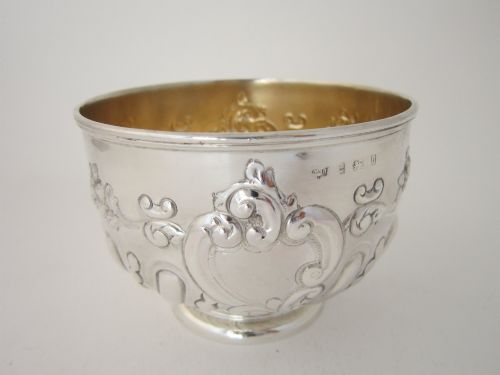
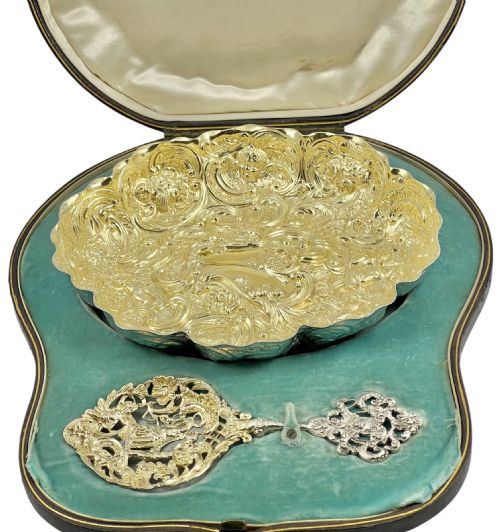
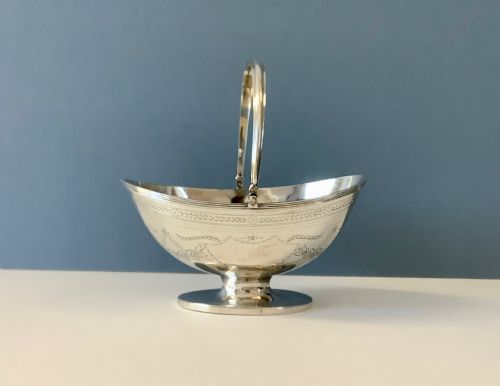
A solid silver sugar basin brings tactile weight to the table, taking forms from George III ovals to Victorian repoussé vessels and later Arts and Crafts bowls. These pieces emerge across periods spanning the eighteenth century through the mid-twentieth century, recording changes in domestic ritual and design.
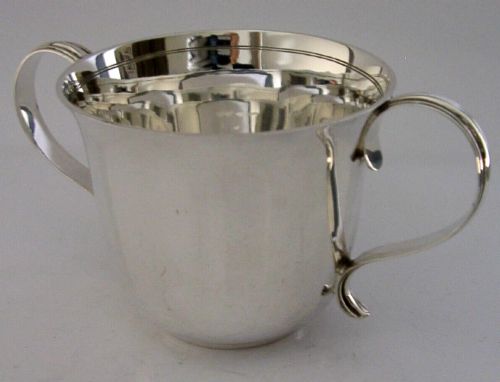
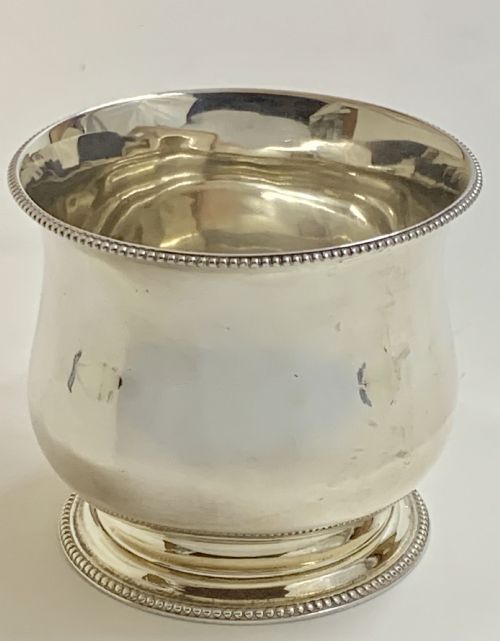
The versions most commonly met here include open sterling silver bowls, twin-handled porringers, and footed sugar baskets with swing handles. Makers shaped them in regional British styles as well as Austro-Hungarian workshops and Irish silversmithing centres.
Buyers look for these objects to serve tea or simply to anchor a sideboard with substantial metalwork. Each solid silver sugar basin carries the marks of its assay office, grounding its pedigree in tangible physical evidence.
What Varies in Quality
Gauge and heft separate the sturdiest vessels from lighter domestic wares, dictating how the object feels when lifted. Substantial weight in the hand points to thick metal walls that resist denting.
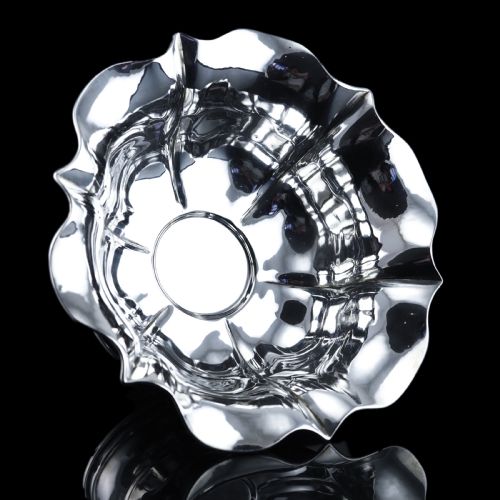
The crispness of hand-chased detail and the clarity of maker's marks distinguish accomplished workshop production from standard commercial output. Design ambition also plays a role, moving from simple flared rims to complex articulated handles and bespoke foot rings.
Listings feature solid silver sugar basins across Georgian, Victorian, and Edwardian periods, alongside later Arts and Crafts and Mid-Century Irish examples.
Hukin & Heath·John Barrett·Walter Brind·Robert Hennel
The Solid Silver Sugar Basin Glossary
- Sterling silver
- An alloy containing 92.5 percent silver by mass, with the remainder usually copper. This standard ensures durability while maintaining precious metal lustre.
- Silver gilt
- Silver that has been coated with a thin layer of gold on its surface, often applied to the interior of sugar vessels to protect the metal from acidic contents.
- Repoussé
- A metalworking technique where the smith hammers the metal from the reverse side to form raised relief designs on the front. It creates tactile depth across the body of a bowl.
- Planishing
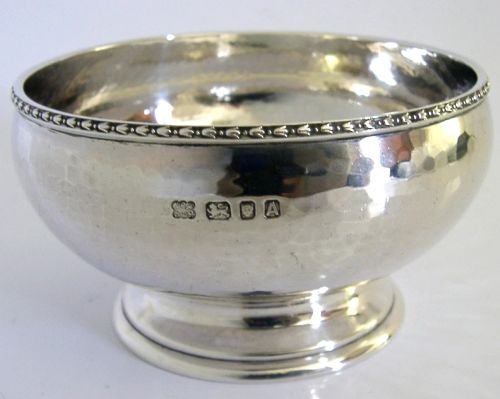
- A hammering technique using a polished flat-faced hammer to smooth metal and leave a subtle, uniform faceted texture across the surface. This finish is typical of Arts and Crafts silver.
- Porringer
- A small, shallow vessel with one or two flat pierced handles, used historically for soft foods and later adapted as a bowl. The form appears frequently in early twentieth-century metalwork.
Solid Silver Sugar Basin: Frequently Asked Questions
How do I clean a solid silver sugar basin?
Wash the basin gently in warm water with mild washing-up liquid and dry it immediately with a soft cloth. Avoid abrasive dips or harsh cloths that wear away fine chasing and remove aged patination.
Store the piece away from rubber bands and damp environments to prevent tarnishing. Regular handling and gentle wiping keep the surface bright without harming the metal.
What is the difference between a sugar basin and a sugar bowl?
The terms are often used interchangeably by makers and dealers to describe open vessels designed for loose sugar cubes or granules. Basin frequently appears in Georgian and Victorian contexts for heavier footed forms.
Bowl covers a broader range of open circular vessels, including twin-handled porringers and flared Arts and Crafts designs. Both serve the same domestic function on the tea table.
Can I use an antique sugar basin for daily dining?
Solid silver is durable enough for regular use, provided you handle the piece with care and avoid metal utensils that might scratch the interior. Many owners enjoy incorporating these historic vessels into modern tea service.
Wash the silver promptly after use, especially if it held moist sugar or preserves, to protect the surface. Careful handling preserves both the function and the crispness of the decoration.
How do I date a silver sugar basin?
Look for the hallmarks stamped into the metal, which typically include a maker's mark, a standard mark, an assay office symbol, and a date letter. These tiny punches provide an exact year and town of origin.
Stylistic cues such as George III oval geometry, Victorian repoussé floral work, or 1930s planished surfaces also point to specific eras. Comparing the marks with standard registry guides confirms the period.