






Solid Silver Goblet
A solid silver goblet carries centuries of drinking tradition, moving from formal presentation pieces to intimate personal cups.
Solid Silver Goblet
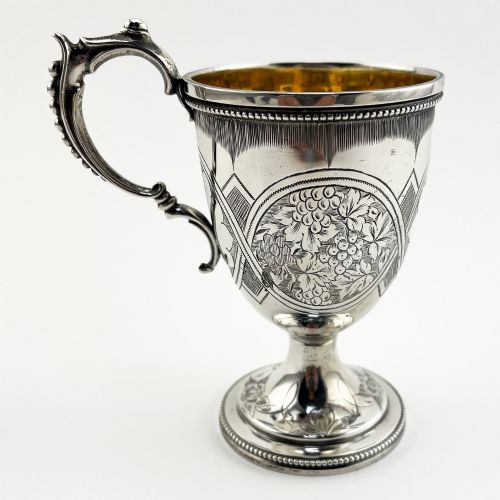
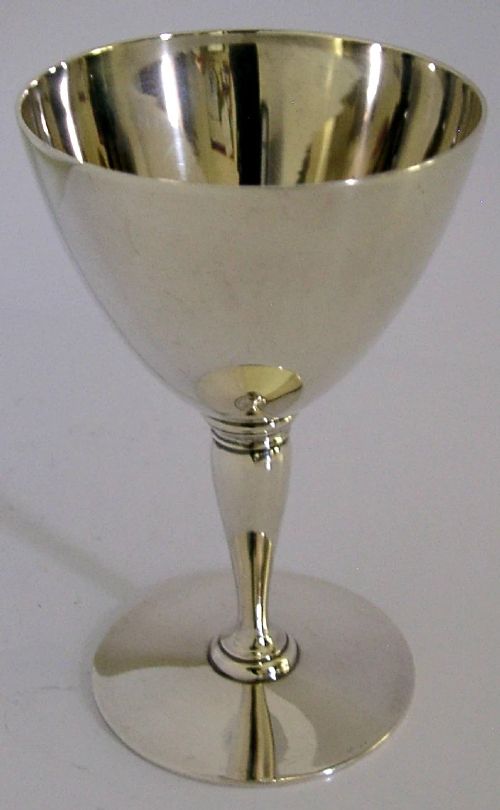
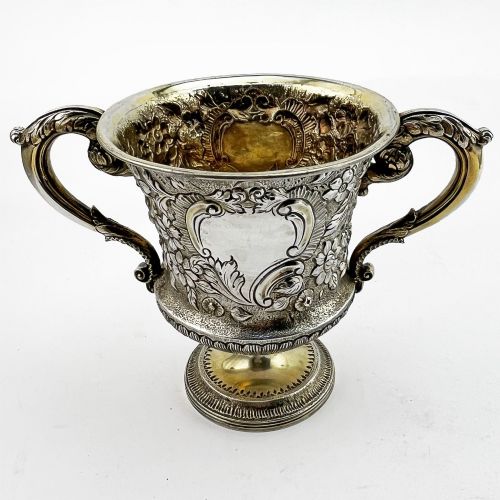
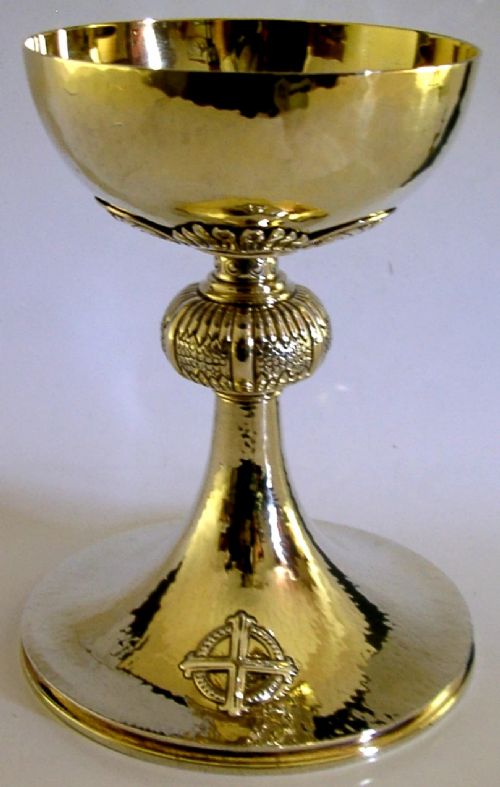
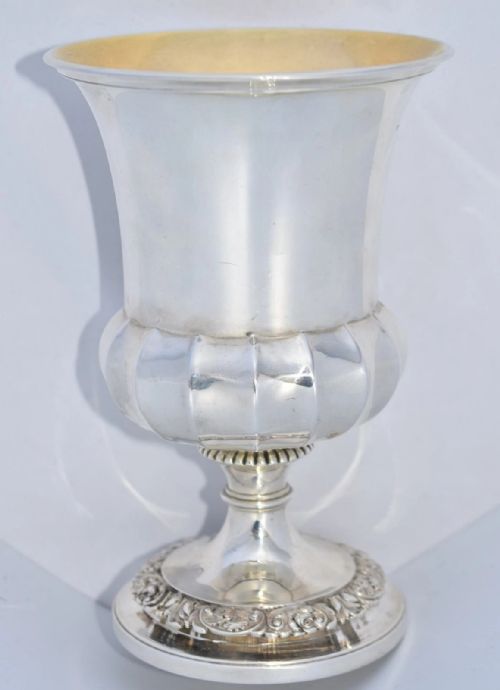
A solid silver goblet serves as a drinking vessel, chalice, or trophy cup spanning the Georgian, Victorian, and mid-century eras. The forms range from simple vase-shaped bodies and thistle designs to elaborate two-handled campana cups and ecclesiastical chalices.
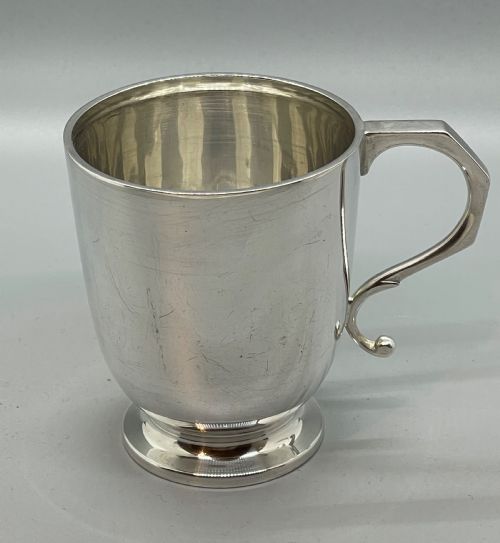
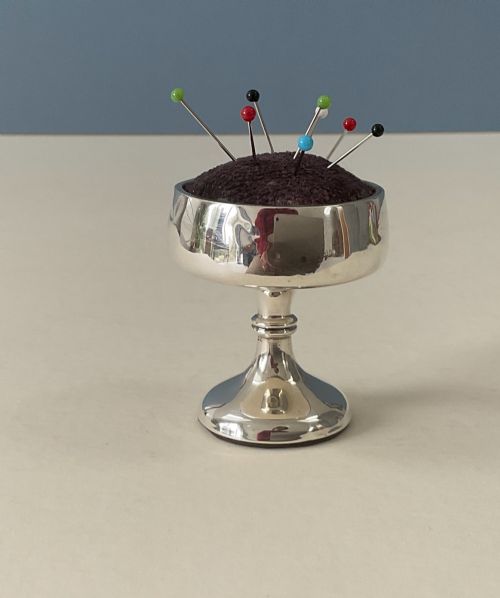
Mugs, tankards, and novelty pin cushions also appear alongside traditional drinking vessels in the listings. Pieces originate from English provincial assay offices as well as international workshops.
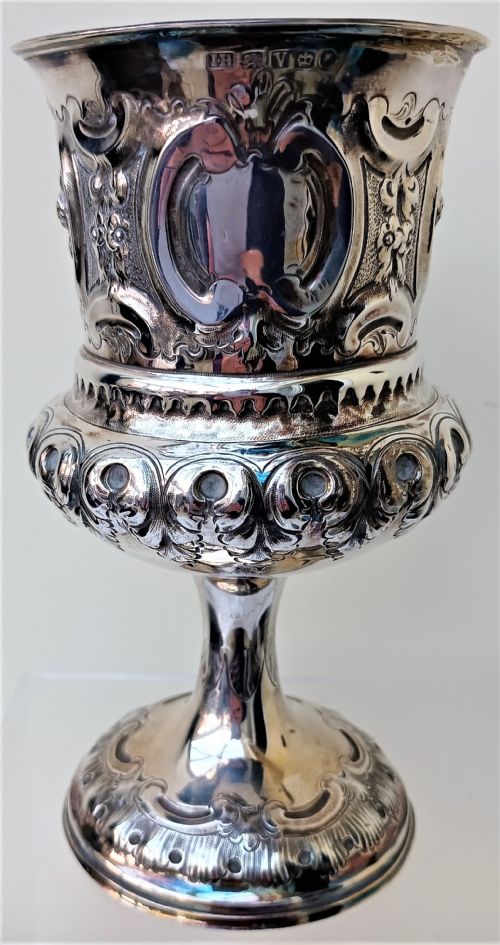
Victorian and Edwardian iterations dominate the selection, often featuring parcel gilding, bright cut engraving, or high emboss chasing. Buyers encounter both single presentation pieces and matched sets intended for functional use or display.
How They Were Made
Silversmiths formed the main bodies of these vessels from sterling silver, shaping the metal by hand or utilising spinning techniques depending on the period. Interior surfaces frequently received a layer of gold gilt, known as silver-gilt or parcel gilt, to protect the silver from acidic contents like wine.
Decoration relied on skilled hand-engraving, bright cut work, repoussé chasing, and applied cast handles. Hallmarks stamped directly into the silver record the assay office, date letter, and maker's mark.
Solid Silver Goblet Retail Price Guide 2026
Typical asking prices for solid silver goblet among the pieces listed under this phrase on Sellingantiques today, from the lower quarter to the upper quarter. They describe what is for sale here now, not the wider market.
Listings span the eighteenth, nineteenth, and twentieth centuries, incorporating Georgian, Victorian, Edwardian, and Art Deco design movements.
What Varies in Quality
The weight and gauge of the silver determine the substantial feel of the vessel in the hand. Thicker metal supports deeper chasing and sharper engraving without compromising the structural integrity of the stem and foot.
The precision of the hallmarks and the reputation of the maker distinguish standard commercial production from master workshops. Quality also rests in the crispness of decorative motifs such as Roman friezes, floral chasing, or bright cut borders.
Tiffany and Co·George Unite·William Eaton·James Deakin and Sons·Cooper Brothers and Sons·Charles Stuart Harris·Solomon Hougham·Elkington and Co·Mappin and Webb
The Solid Silver Goblet Glossary
- Sterling silver
- An alloy consisting of 92.5 percent silver and 7.5 percent other metals, typically copper, chosen for durability.
- Silver-gilt
- Sterling silver that has been coated with a thin layer of gold on the interior or exterior surface.
- Bright cut engraving
- A surface decoration technique using faceted cuts to create a sparkling, reflective geometric or floral pattern.
- Campana
- A bell-shaped vessel form with a flared rim, frequently seen on Georgian presentation cups.
- Assay office
- An official body responsible for testing the purity of precious metals and stamping items with hallmarks.
Solid Silver Goblet: Frequently Asked Questions
Can I drink from a solid silver goblet?
These vessels function well for drinking, though pieces with gold gilt interiors offer better resistance to acidic beverages like wine.
Regular cleaning with a gentle silver polish maintains the finish for practical use.
How do I date a silver goblet?
British pieces feature hallmarks that include a date letter indicating the exact year of assay. Maker marks and assay office symbols provide further historical context.
Stylistic cues such as bright cut engraving or Art Deco geometry also point toward specific decades.
How should I display my goblet?
Displaying silver away from direct sunlight and damp environments helps prevent rapid tarnishing. Open shelving or glass cabinets allow the form and reflective surface to remain visible.
Occasional handling prevents stubborn tarnish spots from settling into recessed engravings.