

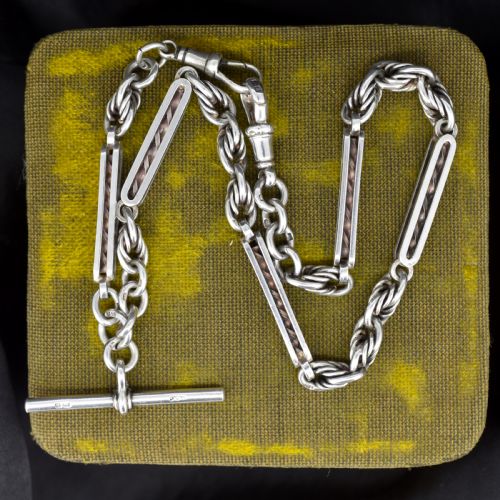

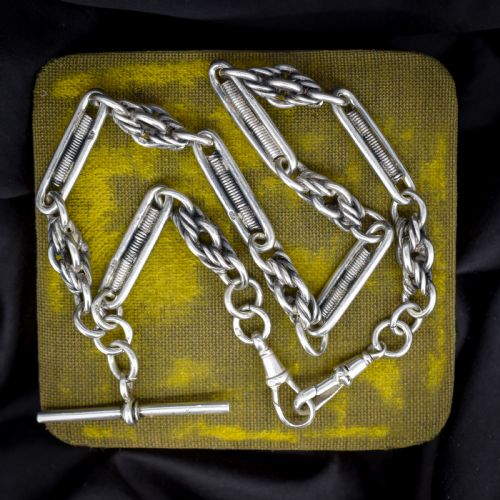
Solid Silver Fob Chain
A solid silver fob chain is a substantial wearable link built to secure a pocket watch, now prized for daily neck wear.
Solid Silver Fob Chain
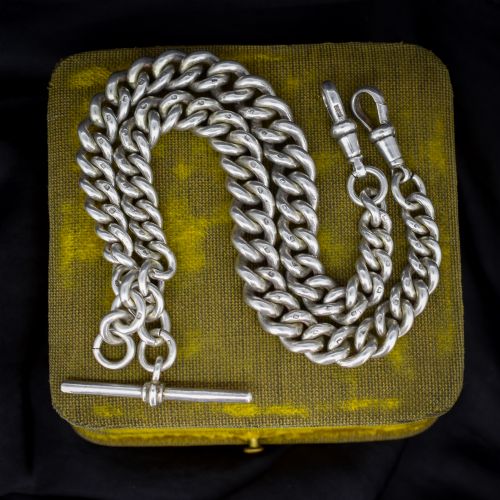
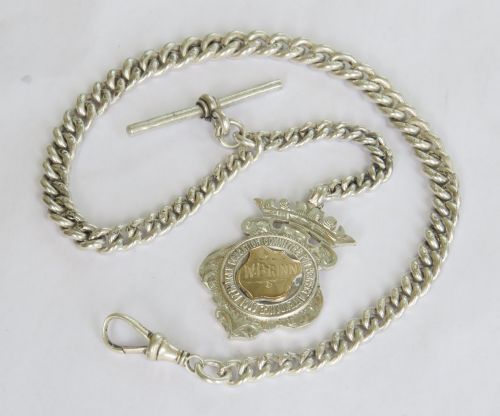
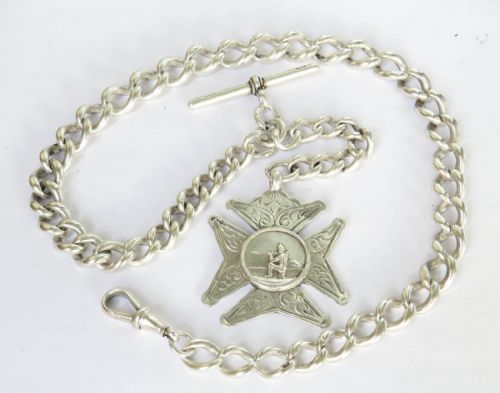
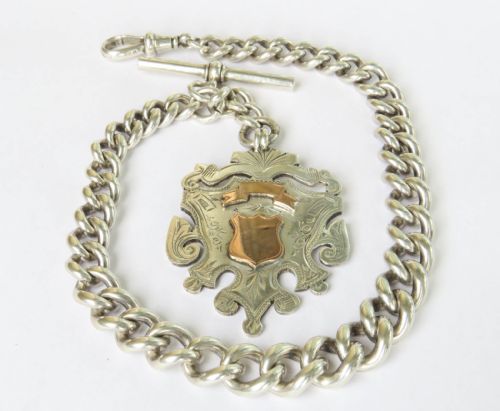
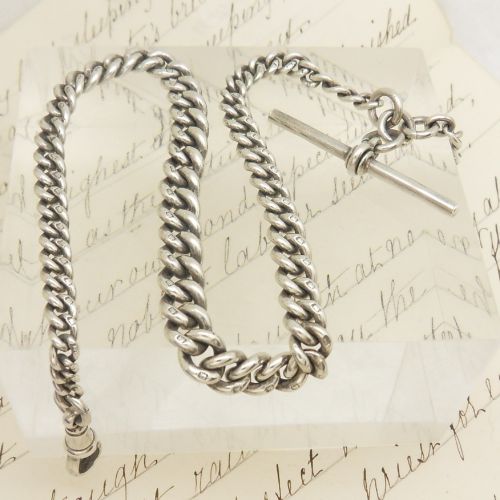
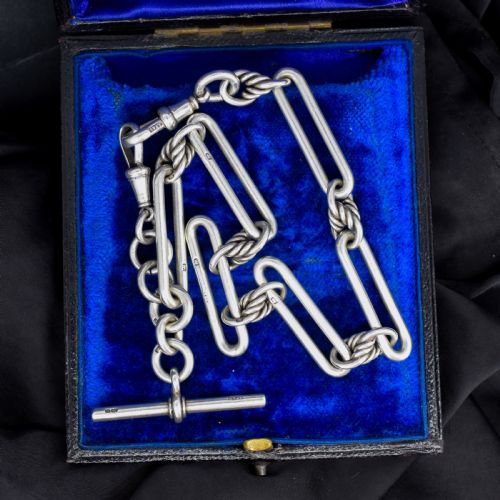
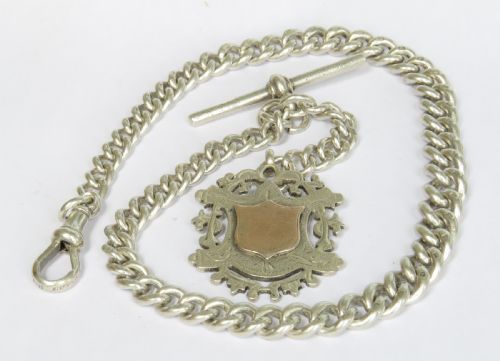
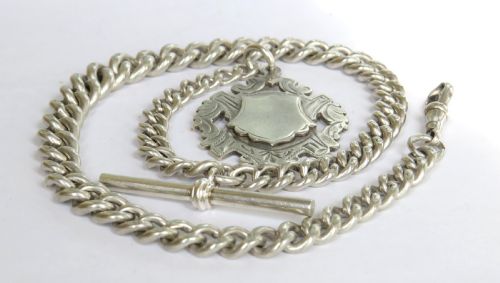
A solid silver fob chain brings together heavy links, T-bars, and dog clips designed in the Victorian and Edwardian eras. These pieces originated as functional fastenings for pocket watches carried in waistcoat pockets.
The versions most commonly met on this page span the late nineteenth century through to the nineteen-twenties. They appear as chunky curb links, trombone patterns, and love knot variations rendered in sterling silver.
Many examples now function as short necklaces or substantial chains worn directly around the neck. They retain their original hallmarks and length proportions from the period of their manufacture.
How they were made
Silversmiths constructed these pieces using sterling silver wire and sheet metal shaped into individual links. Each component was hand-assembled and soldered before receiving official assay office hallmarks such as the Chester marks.
Makers incorporated specialised terminals including swivel dog clips and central T-bars to secure the timepiece and pocket attachment. Rose gold highlights occasionally appear as contrasting decorative elements within the silver links.
Solid Silver Fob Chain Retail Price Guide 2026
Typical asking prices for solid silver fob chain among the pieces listed under this phrase on Sellingantiques today, from the lower quarter to the upper quarter. They describe what is for sale here now, not the wider market.
Current listings feature sterling silver pieces spanning the Victorian, Edwardian, and Art Deco periods, predominantly taking the form of watch chains and necklaces.
What varies in quality
The overall heft and gauge of the individual links dictate the physical presence of the chain. Tighter link construction and substantial gram weights separate standard utility pieces from heavier presentation examples.
The legibility of period hallmarks and the crispness of link profiles indicate the level of preservation over time. Original matching components, including dog clips and T-bars stamped with corresponding marks, enhance the integrity of the piece.
The Solid Silver Fob Chain Glossary
- Albert chain
- A traditional pocket watch chain named after Prince Albert, featuring a T-bar at one end and a drop for a fob.
- Dog clip
- A spring-loaded swivel fastening used to attach a pocket watch or pendant securely to the chain.
- T-bar
- The crossbar component designed to slip through a buttonhole on a waistcoat to anchor the watch.
- Hallmark
- An official stamp indicating the metal purity, assay office, and year of manufacture for the silver.
- Curb link
- A type of chain design featuring twisted, uniform links that lie flat against the body.
Solid Silver Fob Chain: Frequently Asked Questions
How do I wear a pocket watch chain as a necklace?
These chains easily transition to neck wear by fastening the dog clip directly to one of the end links or a designated jump ring. The original T-bar often hangs as a decorative feature at the front.
Lengths generally range between thirteen and sixteen inches, sitting high on the collarbone like a choker or short chain.
What is the difference between an Albert chain and a standard chain?
An Albert chain specifically incorporates a T-bar anchor designed for historical waistcoat use, alongside a drop pendant loop. Standard decorative chains lack this specific anchoring configuration.
Most surviving examples retain these original functional elements, which now serve as distinctive design details.
How do I read the hallmarks on these chains?
British hallmarking systems stamp individual links, T-bars, and dog clips with symbols indicating the silver standard and assay town. Chester marks and date letters help pinpoint the exact year of production.
Sterling silver is typically denoted by the lion passant mark, confirming the metal purity.
Are these chains made of solid silver or plated metal?
The pieces listed here consist of solid sterling silver rather than plated base metals. This solid construction accounts for the substantial weight and durable nature of the links.
Over the decades, the silver develops a natural patina that highlights the individual link patterns.