
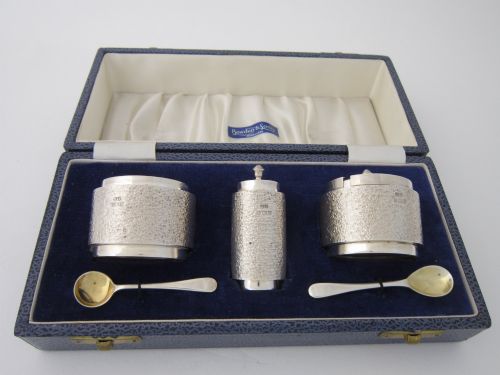


Solid Silver Condiment Pot
A solid silver condiment pot brings miniature craft and dining history to the table, spanning from Georgian pedestal forms to novelty animal cruets.
Solid Silver Condiment Pot
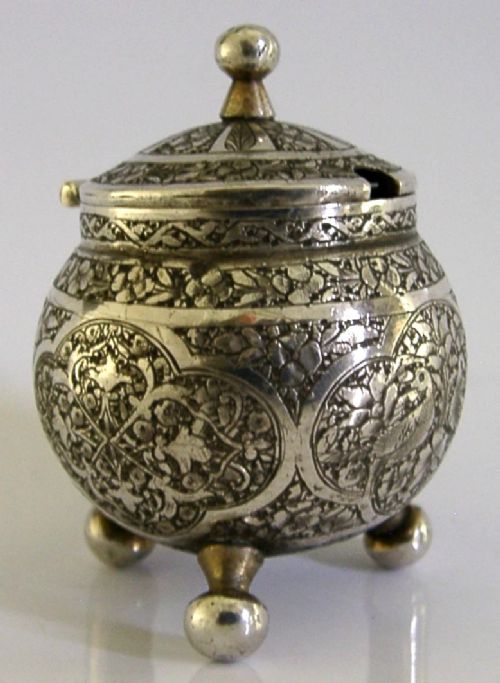
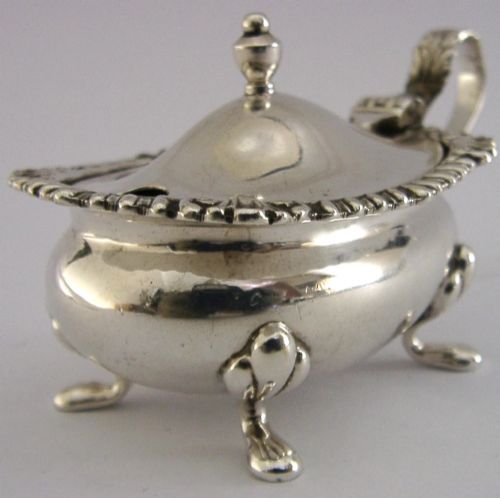
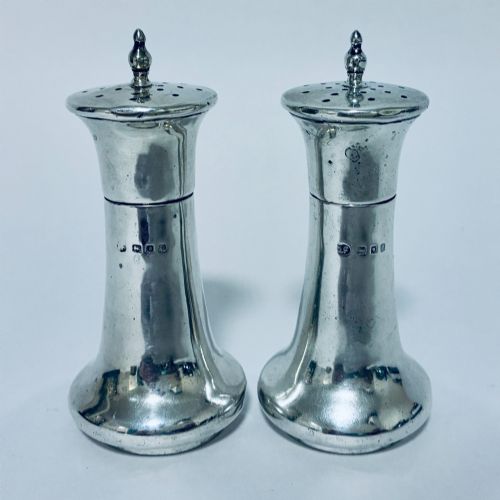
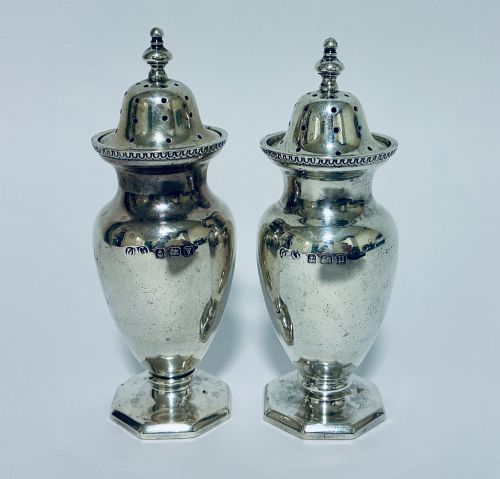
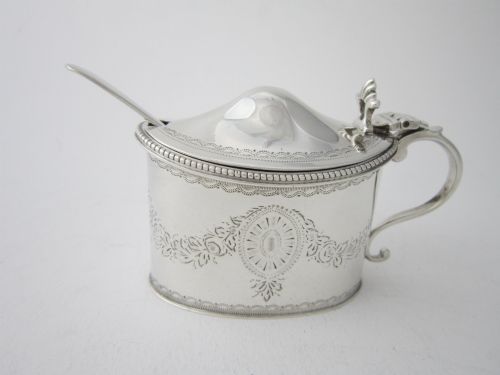
A solid silver condiment pot is a table vessel designed to hold mustard, pepper, or salt, appearing on this page as individual mustard pots, pepper casters, or matched sets. The versions most commonly met here include Victorian and Edwardian mustard pots fitted with glass liners, alongside George V sets and novelty animal peppers.
The selection extends from Georgian silver pieces through Art Deco styles up to Mid-Century Modern tableware. Alongside traditional English sterling silver, the evidence includes continental 800 silver, Ottoman pieces, and Japanese Meiji designs.
How they were made
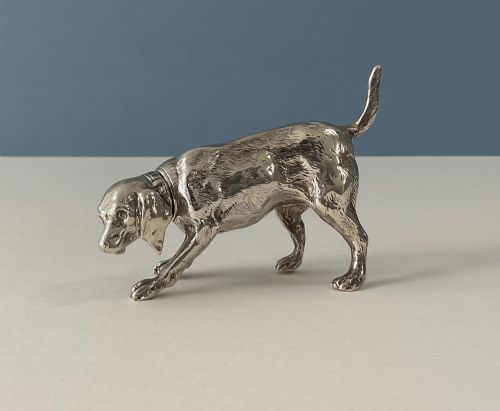
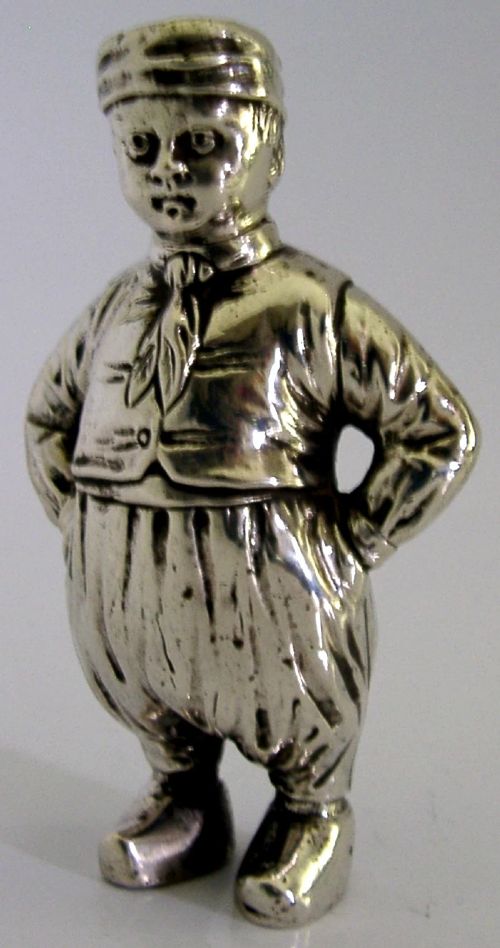
Silversmiths formed these vessels using traditional techniques of casting, hammering, and hallmarking, frequently pairing solid silver with fitted blue glass liners to protect the metal from corrosive mustard. Novelty peppers in the form of owls, dogs, and foxes demonstrate detailed chasing and casting work.
Makers utilised sterling silver and 800 silver, occasionally incorporating gold plate, silk, or velvet details into fitted presentation cases for larger condiment sets.
Dinners past featured miniature silver owls, dogs, and pheasants dispensing pepper from their heads.
What varies in quality
Quality rests on the crispness of the chased or cast detail, particularly in novelty animal figures such as owls, pheasants, and dogs where expression and feather or fur texture define the work. Weight and the presence of original components, such as matching spoons and intact glass liners, separate standard production items from finer pieces.
The distinction also lies in the provenance and maker reputation, with work from established silversmiths commanding attention for clean assay marks and balanced proportions across cruet sets.
Matthew Boulton·Walker and Hall·Bricks and Sons·Viners Sheffield·Heath and Middleton·Elkington and Company·Alexander Macrae
The Solid Silver Condiment Pot Glossary
- Pepper caster
- A perforated jar or shaker used for dispensing ground pepper over food.
- Cruet set
- A matched collection of matching condiment containers holding mustard, pepper, and salt.
- Hallmark
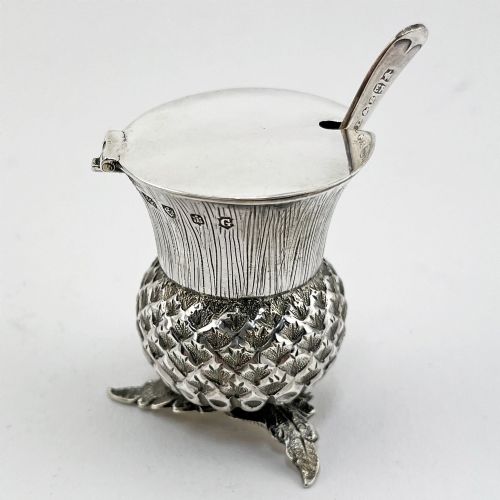
- A series of stamped marks on silver indicating the maker, assay office, standard of purity, and year of manufacture.
Solid Silver Condiment Pot: Frequently Asked Questions
How do I clean silver condiment pots?
Cleaning solid silver requires a soft cloth and a gentle silver polish formulated to remove tarnish without scratching the metal surface. Avoid harsh chemical dips, especially if the piece retains a glass liner or velvet lining.
Careful washing in warm soapy water is suitable for removing old mustard residue from the interior before polishing.
Are glass liners original?
Many mustard pots require glass liners to prevent acidic mustard from tarnishing or corroding the silver interior. Replacement liners are common, but original blue glass liners add to the completeness of the piece.
Checking the fit inside the silver body helps determine if a liner matches the period of the container.
How do I date an antique silver pot?
Dating relies primarily on the hallmarks stamped into the silver, which reveal the assay office, standard mark, and a specific date letter corresponding to the year of manufacture. Stylistic clues such as Art Deco geometric lines or Victorian chased decoration also point to the era of production.
Maker marks further narrow down the active years of the silversmithing firm.