
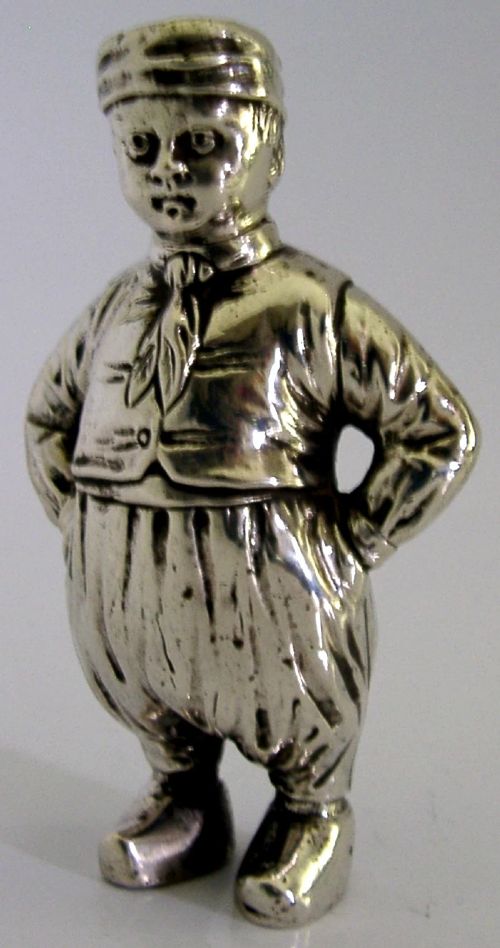


Novelty Silver Casters
Novelty silver casters bring playful animal and figural forms to the dining table, combining practical condiment storage with whimsical Victorian and Edwardian design.
Novelty Silver Casters
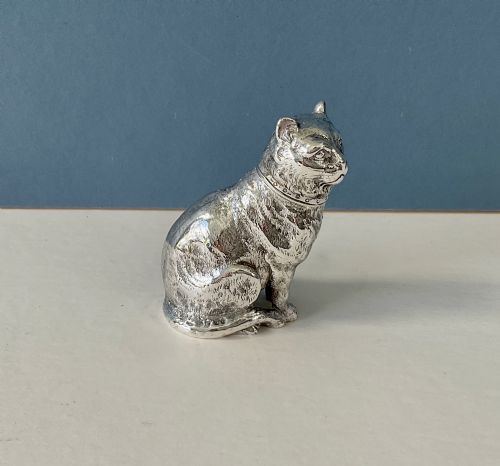
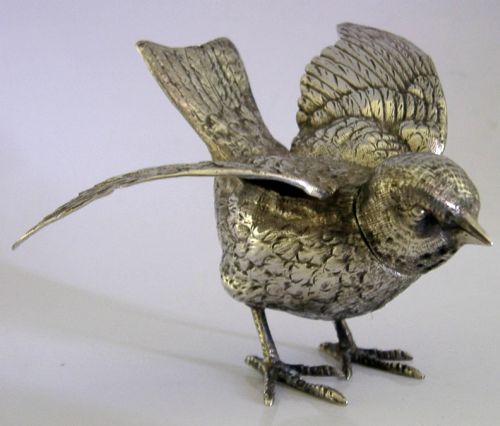
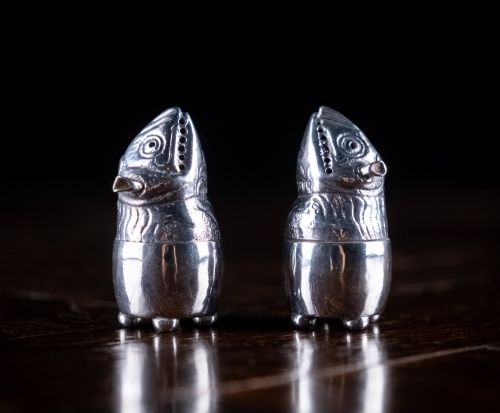
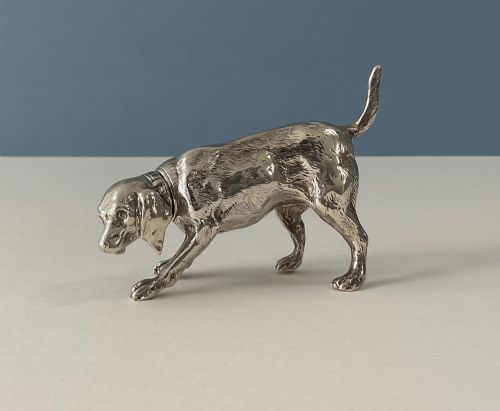
The most common subjects span the animal kingdom, including owls, dogs, cats, birds, foxes, and pheasants, alongside character figures such as Mr Punch's dog Toby. These items appear either as single pieces, matched pairs, or part of more extensive farmyard and hunting cruet sets.
Materials range from solid sterling silver and silver plate to 800 silver and pewter, sometimes paired with cut glass components or accented with gilt. Origins stretch across English workshops and continental makers.
Materials and construction
Craftsmen utilised casting and hand-finishing techniques to shape solid sterling silver and silver plate into detailed figural forms. Textured feather and fur engraving brings realism to birds and animals.
Internal screw fittings and pierced bases allow the removal of heads or lower sections for refilling the spice chambers. Glass inserts appear in specific condiment and sugar box configurations to hold the contents securely.
Continental workshops contributed substantial numbers of figural bird casters, particularly pheasants and chicks, during the early twentieth century.
Quality and execution
The degree of anatomical detail and crispness in the chasing separates ordinary production from exceptional work. Cast pieces that retain sharp feather definition and clear facial expressions demonstrate superior silversmithing.
Maker marks, clear silver hallmarks, and registration dates provide assurance of origin and date. Well-balanced proportions and secure fitting mechanisms ensure the piece functions as intended without wobbling.
Frederick Brasted·Thomas Johnson·Berthold Muller·Mappin & Webb
The Novelty Silver Casters Glossary
- Pepperette
- A small cylindrical or figural container designed specifically for dispensing ground pepper at the table. These often feature pierced tops and screw-fitting bases.
- Cruet set
- A matched collection of bottles, jars, or figural pots holding condiments like oil, vinegar, salt, and pepper. They frequently sit within a dedicated silver plated or wooden tray.
- Sterling silver
- An alloy consisting of pure silver and other metals, usually copper, meeting a specific fineness standard. This material provides the primary medium for high-end Victorian and Edwardian novelty pieces.
- Cast silver
- Silver melted and poured into a mould to create three-dimensional figural shapes. This technique allows for the creation of complex animal and character forms.
- Gilt
- A thin layer of gold applied to the interior or exterior surface of silver items. This process protects the metal from corrosive food acids.
Novelty Silver Casters: Frequently Asked Questions
How do you fill a figural pepper pot?
Most novelty animal peppers feature a removable head, a screw-fitting base, or a small plug underneath the belly for refilling.
Carefully twist or lift the secured section to access the interior chamber without damaging the hinge or thread.
Are these silver shakers safe to use daily?
While sturdy enough for dining, antique silver and silver plate require careful handling and hand washing to protect delicate chased details and historic hallmarks.
Avoid abrasive cleaners that wear away the surface engraving over time.
How can I date an antique silver caster?
Assay office marks, maker stamps, and date letters stamped into the silver provide the exact year of manufacture for British pieces.
Style indicators like Victorian naturalism or Edwardian restraint also help narrow down the production period.
What is the difference between a caster and a pepperette?
Casters traditionally refer to taller vessels used for dispensing sugar, while pepperettes are smaller shakers intended strictly for ground pepper.
Many collectors use the terms interchangeably when describing figural table silver.