

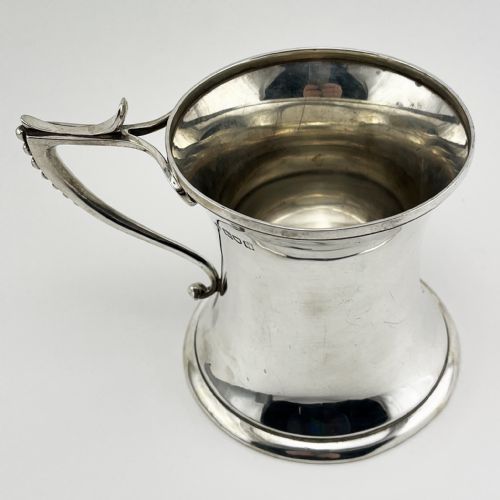
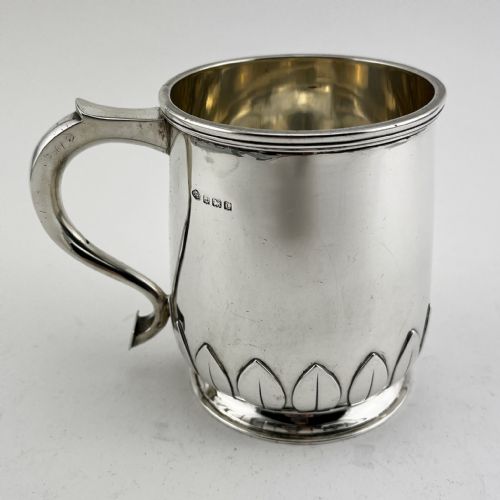


Solid Silver Beer Mug
These solid silver beer mugs are drinking vessels formed in sterling silver, prized by collectors for their weight and history.
Solid Silver Beer Mug
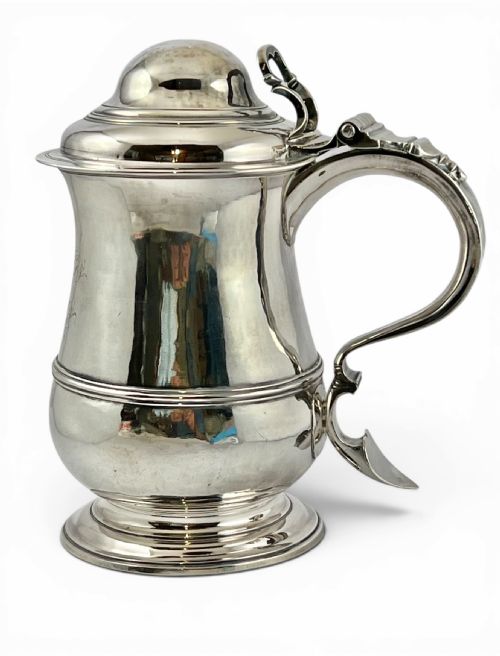
A solid silver beer mug is a substantial drinking vessel designed for daily use or display, appearing frequently in Georgian, Victorian, and Edwardian styles. Buyers searching this phrase encounter forms ranging from plain bodies to lidded tankards featuring scroll handles.
The pieces on this page span the eighteenth and nineteenth centuries into the twentieth century, originating from makers working in London and Newcastle. Tankards and pint mugs dominate the selection, showing the enduring utility of silver barware across different reigns.
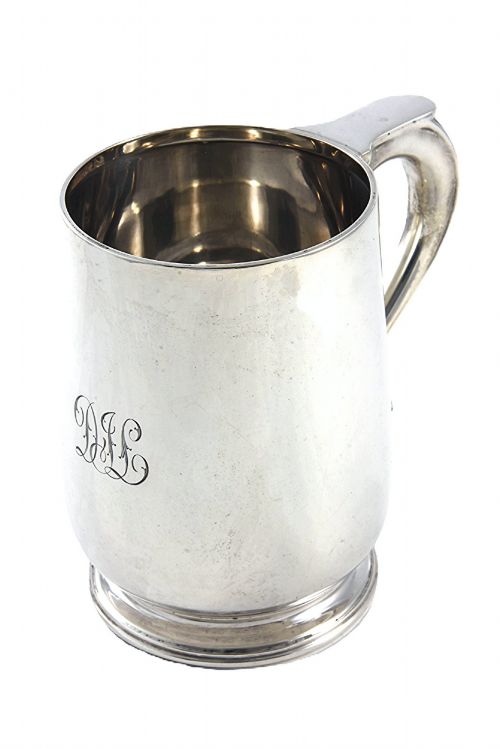
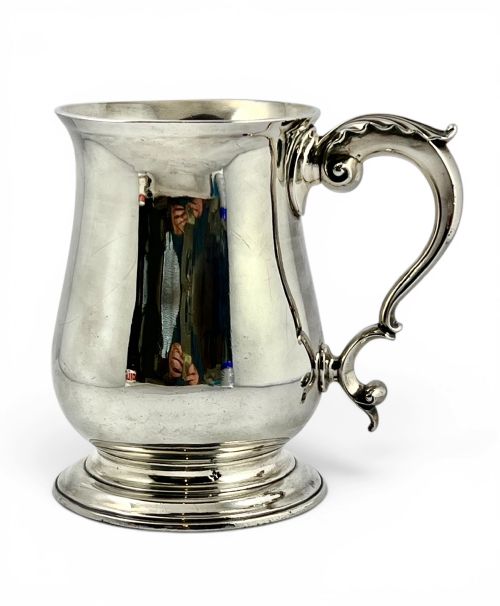
Mugs from the Georgian era often display baluster profiles and heavier gauges of metal, whilst later Edwardian and George V examples introduce unusual shapes or straightforward pint capacities. Each piece represents a specific period of silversmithing tradition.
How They Were Made
Silversmiths constructed these mugs primarily from sterling silver, shaping the bodies through raising from a flat sheet or casting. Handles were cast separately and soldered securely to the main body to withstand regular lifting.
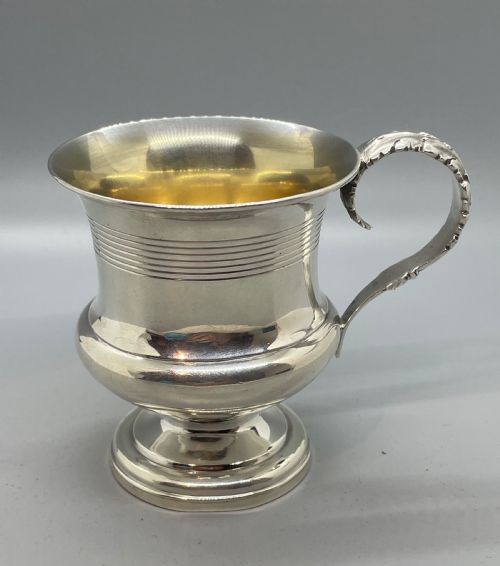
Select pieces received internal gold gilt surfaces, known as vermeil, which protected the silver from the acidic nature of beer and added a contrasting interior finish. Surface decoration was applied by hand through chasing, engraving, or leaving the metal entirely plain.
Listings feature sterling silver pieces spanning the eighteenth century through to the twentieth century, including both plain and lidded tankard forms.
What Varies in Quality
Quality rests in the weight of the metal and the crispness of the hallmarks struck into the silver. Thicker gauge sterling silver maintains its structural integrity and resists denting over centuries of use.
The proportion of the scroll handle relative to the body and the smoothness of the soldering lines distinguish finer work from standard production. Makers who paid attention to the balance of the piece created more pleasing drinking vessels.
John Payne·William Grundy·Gabriel Sleath
The Solid Silver Beer Mug Glossary
- Sterling silver
- An alloy consisting of ninety-two point five percent silver and seven point five percent other metals, typically copper, chosen for durability in tableware. This standard has been used by British silversmiths for centuries.
- Tankard
- A tall drinking vessel with a single handle, sometimes fitted with a hinged lid. They are typically larger than standard mugs.
- Baluster
- A curved, vase-like architectural form often seen in the profile of eighteenth-century mug bodies. This shape provides a stable base and comfortable grip.
- Gold gilt
- A thin layer of gold applied to the interior surface of a silver mug. This technique prevents the metallic taste of silver from affecting the beverage.
- Hallmark
- A series of official marks stamped on precious metals indicating the standard of purity, the assay office, and the date of manufacture. These stamps allow historians to date pieces accurately.
Solid Silver Beer Mug: Frequently Asked Questions
How do I clean a silver mug?
Clean silver mugs using a soft cloth and a specialised silver polish to remove tarnish without scratching the metal. Avoid abrasive materials that can wear down engraved details or hallmarks over time.
Rinse the mug thoroughly in warm water and dry it completely with a lint-free cloth after cleaning. Regular gentle washing preserves the natural lustre of the sterling silver.
Can I drink beer from these mugs?
These solid silver beer mugs are fully functional vessels that can hold cold beverages. The thermal conductivity of silver keeps the drink cool in the hand.
Wash the mug by hand promptly after use, especially if it contained acidic drinks, to maintain the condition of the metal and any interior gilding.
What is the difference between a mug and a tankard?
Tankards traditionally feature a hinged lid and a more robust, cylindrical or tapered body designed for heavy tavern use. Mugs are generally open-topped vessels with simpler cylindrical or baluster forms.
Both terms appear across the listings depending on the specific proportions and the presence of a lid.
How can I tell the date of a silver mug?
The date letter stamped within the hallmark indicates the specific year the piece was assayed and hallmarked. Reference books match these letters to London, Newcastle, or other assay office records.
Stylistic elements like baluster shapes or scroll handles also offer clues to the period, aligning with Georgian or Victorian design conventions.