


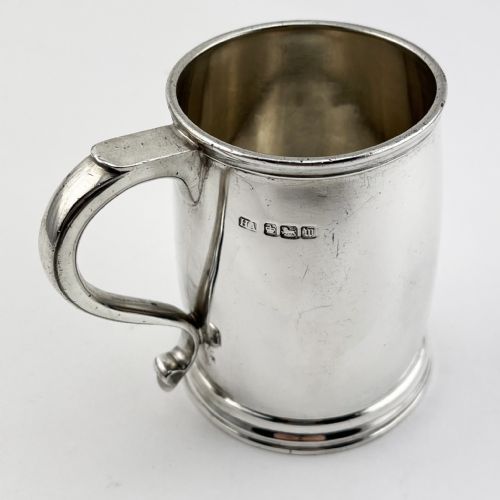


Solid Silver Baby Cup
A solid silver baby cup is a traditional gift of lasting metalwork, marking early childhood with sterling craftsmanship designed to endure for generations.
Solid Silver Baby Cup
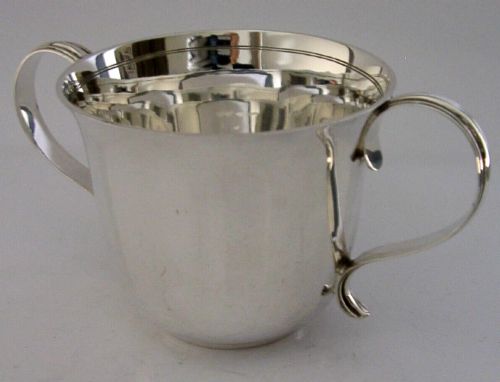
A solid silver baby cup encompasses traditional christening mugs, porringers, and small presentation vessels created for young children. These items emerge from various eras including the Victorian period, the Edwardian years, and the mid-twentieth century.
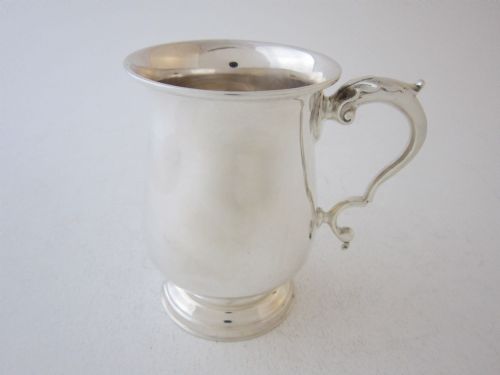
Most examples found here take the form of sterling silver mugs and handled porringers, often shaped in baluster profiles or cylindrical tankards. Makers fashioned these pieces in cities such as Birmingham, Sheffield, and Chester.
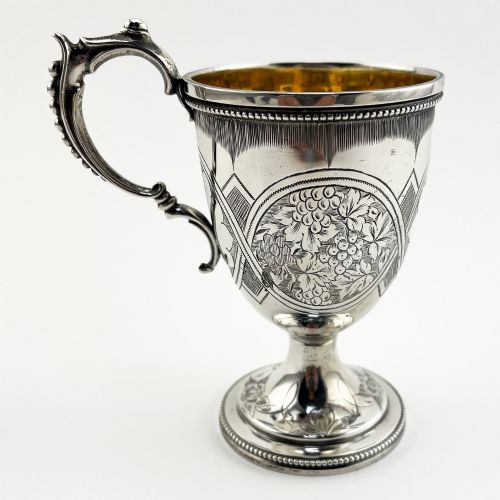
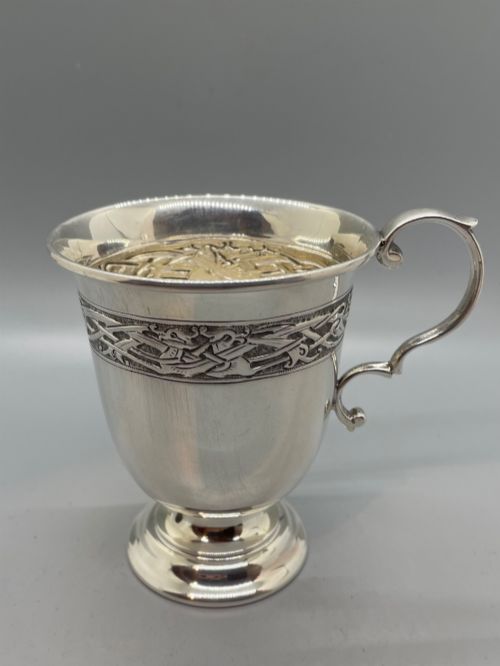
Many of these vessels serve as commemorative christening gifts, sometimes appearing within fitted presentation boxes lined with silk and leather. Collectors encounter both plain forms and heavily decorated surfaces featuring floral engraving or Rococo scroll handles.
How they were made
Silversmiths utilised sterling silver to shape these vessels, occasionally applying silver gilt to the interior surfaces of bowls and mugs. Artisans formed the bodies through raising and spinning techniques before attaching cast handles.
Decoration relied heavily on hand engraving, floral embossing, and applied scrollwork to achieve styles ranging from Victorian revivalism to Art Deco simplicity. Fitted storage containers often paired leather outer cases with silk and velvet interiors to protect the metal.
Solid Silver Baby Cup Retail Price Guide 2026
Typical asking prices for solid silver baby cup among the pieces listed under this phrase on Sellingantiques today, from the lower quarter to the upper quarter. They describe what is for sale here now, not the wider market.
Materials recorded across the inventory include sterling silver, silver gilt, leather, and silk.
What varies in quality
Distinction across these pieces rests on the weight of the sterling silver used and the crispness of the hand engraving or embossing. Heavier gauge metal and balanced proportions elevate certain vessels above standard production.
The presence of distinguished makers, such as R E Stone or Tiffany & Co, introduces a higher level of design execution and workshop provenance. Original fitted boxes featuring silk and leather linings also contribute to the overall character of a piece.
R E Stone·Tiffany & Co
The Solid Silver Baby Cup Glossary
- Sterling silver
- A silver alloy containing 92.5 percent pure silver by mass, standard for British silverware. This composition provides the necessary durability for functional presentation items.
- Porringer
- A small, shallow vessel with one or two flat handles, often used as a bowl for porridge or broth. In silver, these pieces frequently double as christening gifts.
- Baluster form
- An architectural silhouette characterised by a wider lower section tapering into a narrow neck. This curving profile appears frequently on antique drinking vessels.
- Silver gilt
- Silver objects coated with a thin layer of gold on the surface. This technique protected the wearer and added a rich interior finish to drinking vessels.
- Hallmark
- A series of official marks stamped onto precious metals to indicate purity, place of assay, and date of manufacture. These stamps provide the primary evidence for dating British silver.
Solid Silver Baby Cup: Frequently Asked Questions
What is a solid silver baby cup?
A solid silver baby cup is a small vessel fashioned from sterling silver, traditionally presented to mark a birth or christening. These items include handled mugs, tankards, and shallow porringers.
Historically, families gave these pieces as durable keepsakes meant to last a lifetime. Many examples feature engraved names or dates alongside decorative motifs.
How were these silver cups used?
While some vessels served practical dining functions for young children, many functioned primarily as commemorative presentation pieces. Their enduring metal construction ensured they survived as family heirlooms.
Over generations, these items transitioned from practical nursery items into treasured display objects and collection centerpieces.
How do I care for antique silver?
Maintaining antique silver requires gentle cleaning with appropriate non-abrasive polishes and soft cloths to preserve the underlying metal and hallmarks. Avoiding harsh chemicals prevents damage to delicate engravings and embossed details.
Storing pieces in dry environments or lined presentation boxes helps reduce tarnishing over time.
How can I date an antique silver cup?
Dating relies heavily on the assay office hallmarks stamped directly onto the silver surface, which correspond to specific active years. Stylistic clues such as Rococo scrollwork or Art Deco lines also point toward particular periods.
Comparing the form and engraving style helps narrow down whether a piece originates from the Victorian era or later decades.