

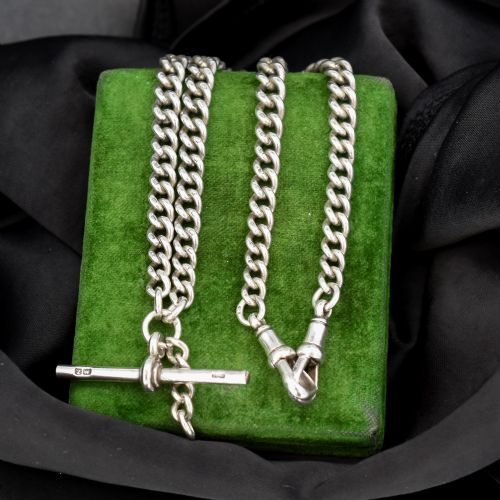


Solid Silver Albert Chain
A solid silver albert chain is a substantial piece of historic neckwear that brings immediate character to daily wear.
What these pieces are
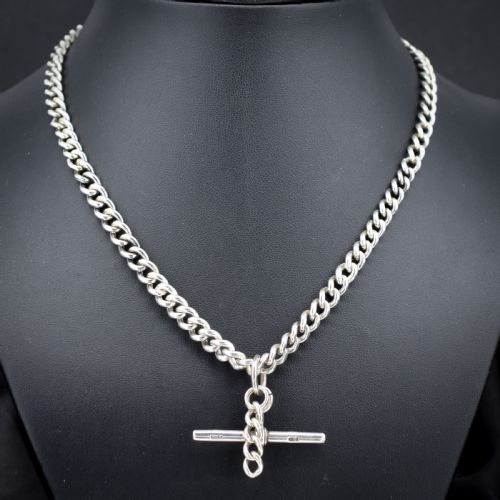
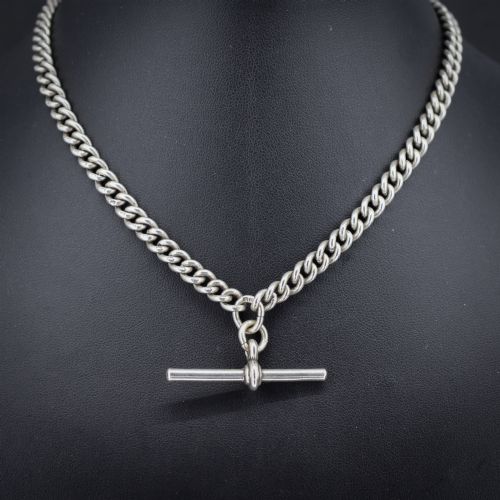
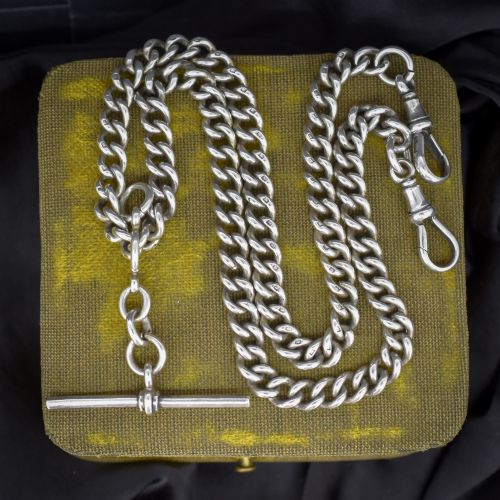
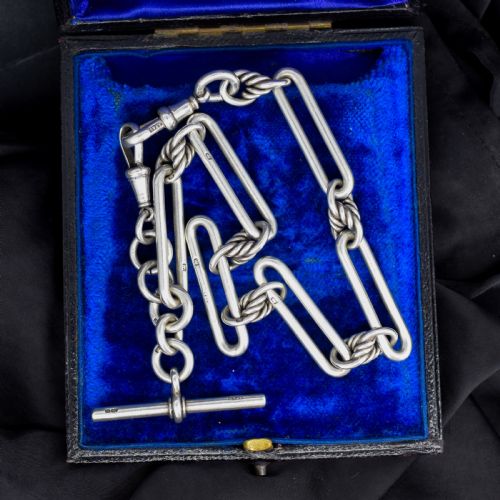
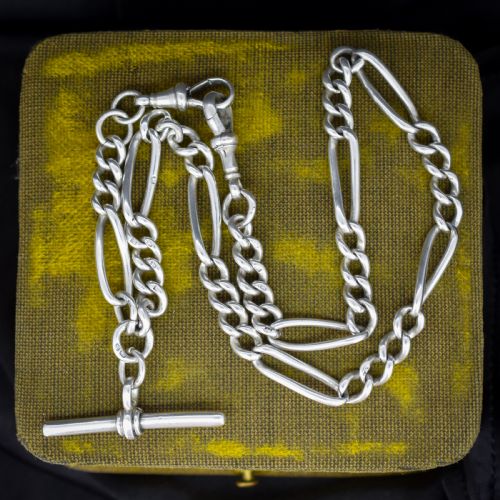
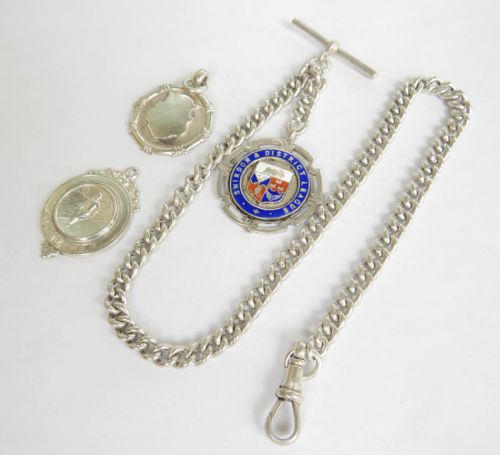
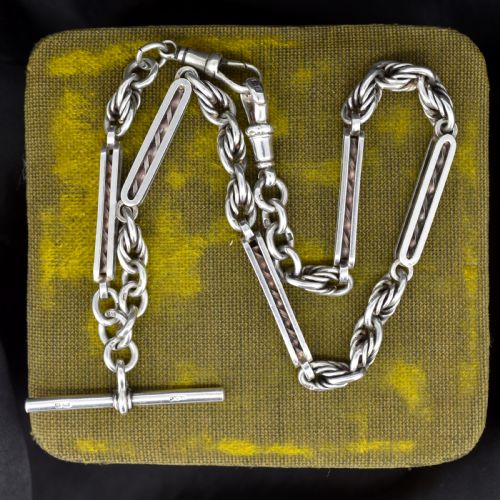
A solid silver albert chain is a traditional watch chain designed to secure a pocket watch, frequently worn today as a necklace or choker. The pieces found here span the Victorian, Edwardian, and Art Deco periods, encompassing both single and double strand configurations.
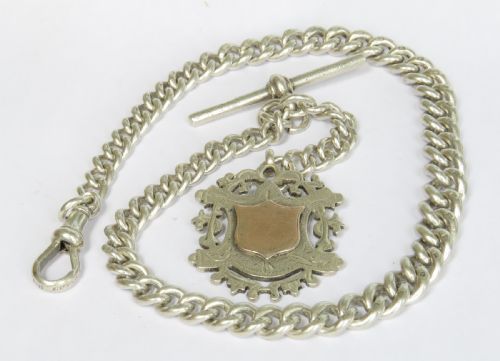
Most examples originate from around the late nineteenth and early twentieth centuries, particularly the 1890s through to the 1920s. These items often arrive accompanied by original fob seals, keys, or decorative pendants.
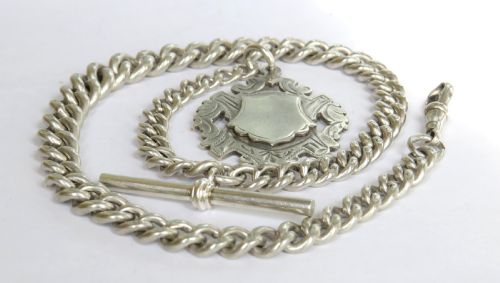
The form relies on robust metal links, predominantly styled as curb links, designed to withstand the daily use of carrying a timepiece. They represent practical finery from an era when portable timekeeping required secure anchoring.
How they were made
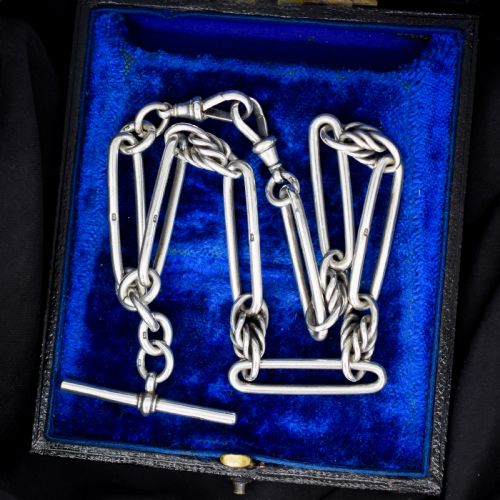
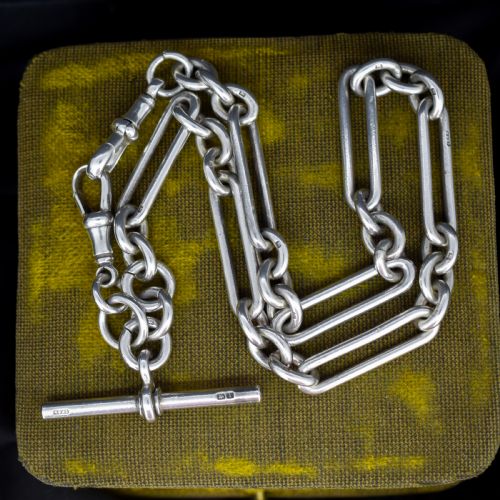
Every piece is formed from sterling silver, shaping durable links that are often individually hallmarked. Silversmiths constructed these chains to bear weight, utilising interlocking curb links and secure T-bars.
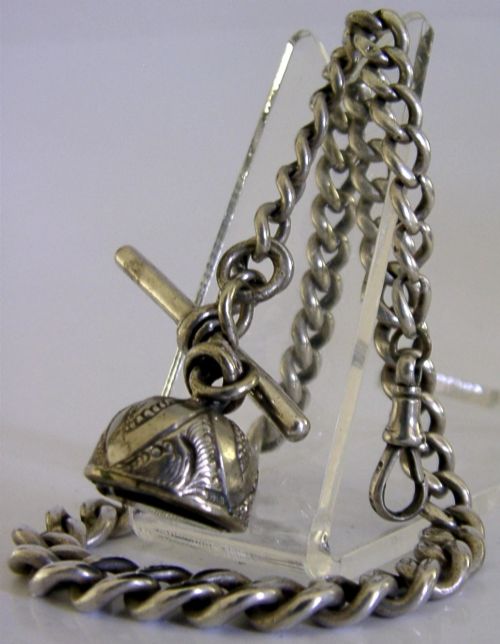
Many specimens incorporate supplementary elements such as enamel work, seal fobs, or rotating key pendants. The construction relies on traditional hand-assembly methods typical of British workshops in the decades surrounding nineteen hundred.
Retail Price Guide 2026
Typical UK retail prices for solid silver albert chain, calculated from the Sellingantiques database of over a million retail prices indexed since 2003. This retail price guide relies exclusively on Sellingantiques data; no external sources or auction records are used, so the figures do not describe the wider market.
Every solid silver albert chain carries a little T-bar designed to slip through a waistcoat buttonhole, now repurposed to anchor modern necklines.
What varies in quality
The distinction between standard and superior pieces rests largely on weight and scale, with heavier examples demonstrating greater substance. Finer specimens retain crisp hallmarks, intact enamel details, and original matching fobs rather than replacement elements.
Proportion and link density also differentiate the range, as tighter curb formations and substantial gauge wire create a heavier drape when worn around the neck.
The Solid Silver Albert Chain Glossary
- Albert chain
- A type of watch chain named after Prince Albert, designed to attach a pocket watch to a waistcoat or garment buttonhole. They are frequently worn today as necklaces.
- Curb link
- A style of chain link consisting of flattened, identical links that interlock smoothly when laid flat. This formation provides both flexibility and high tensile strength.
- Fob
- A small ornament or seal attached to a watch chain, often used for stamping wax or simply for decoration. They add considerable visual weight to the ensemble.
- T-bar
- The crossbar component at the end of an albert chain, originally passed through a buttonhole to secure the watch. It serves as a distinct decorative terminal on modern necklaces.
- Sterling silver
- A silver alloy containing ninety-two point five percent pure silver and seven point five percent other metals, usually copper, ensuring durability for jewellery.
Frequently Asked Questions
How do I wear an albert chain?
These chains function effectively as necklaces or chokers, often worn with the T-bar hanging as a front detail. The substantial weight of the sterling silver links allows them to sit comfortably against the collarbone.
Securing the clasp depends on whether the piece is a single or double albert configuration, offering varied styling options for daily wear.
What periods do these chains come from?
The pieces available range from the Victorian and Edwardian eras into the Art Deco period. This encompasses the late nineteenth century through to the early nineteen-twenties.
Dates are often confirmed by the presence of British hallmarks stamped directly onto the individual links or the attached T-bar.
Are fobs always included with the chain?
Many examples retain their original seal fobs, keys, or pendants, though some survive as chains alone. The presence of a matching fob enhances the historical completeness of the piece.
Fobs were traditionally used for sealing correspondence with hot wax or simply as decorative counterweights.