


Solid Oak Slant Desk
A solid oak slant desk is a sturdy writing cabinet with a hinged sloping lid, offering a practical workspace and hidden storage for modern homes.
Solid Oak Slant Desk
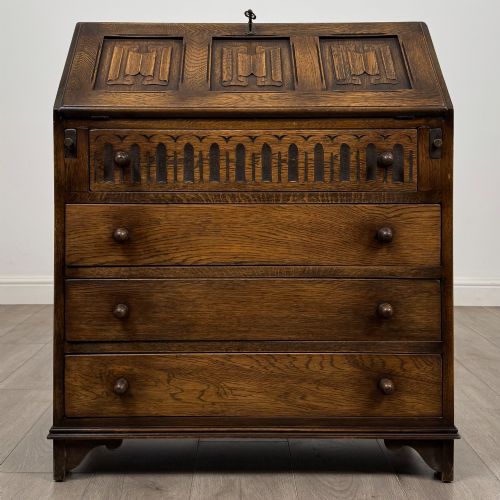
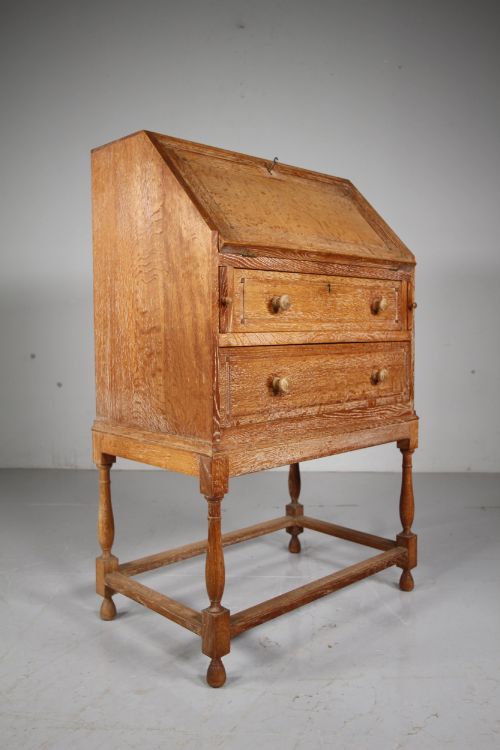
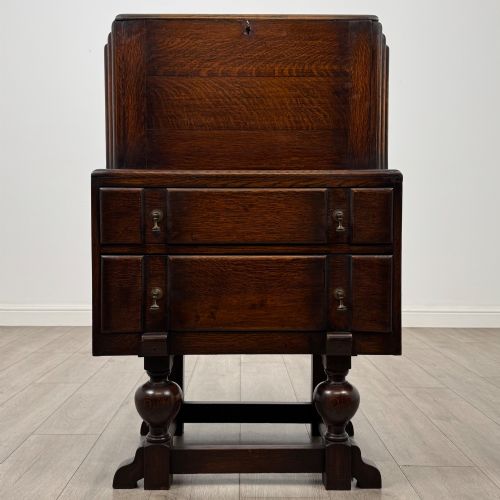
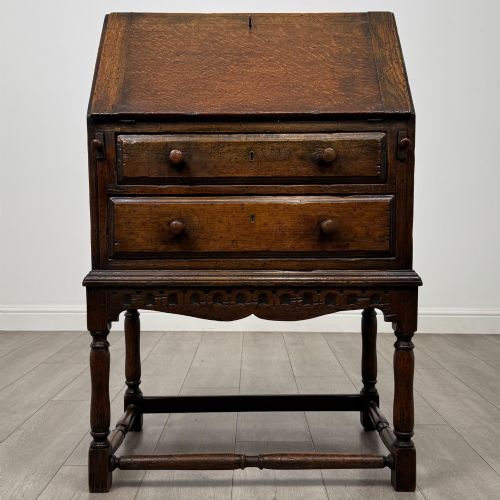
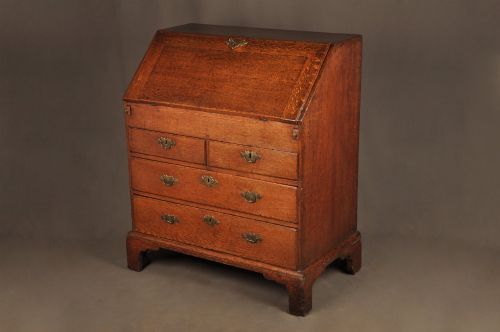
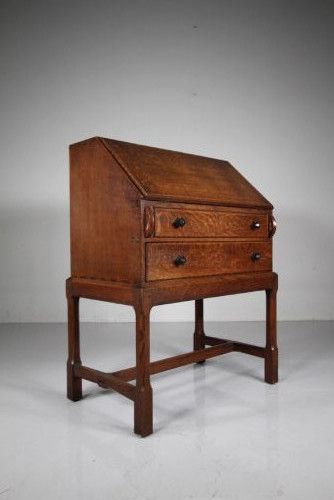
When you search for a solid oak slant desk, you encounter heavy writing furniture designed for domestic administration and correspondence. These pieces combine a slanted writing surface with internal partitions, pigeonholes and drawers concealed beneath the fold-down flap.
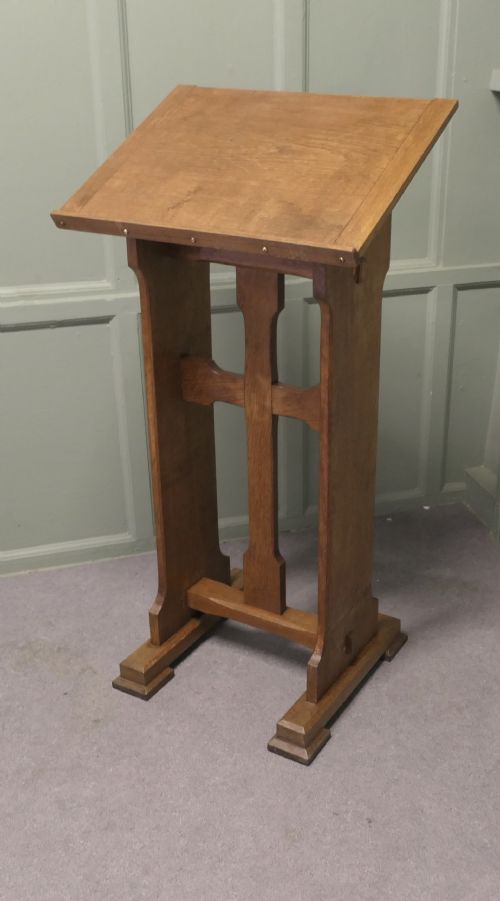
You are most likely to meet two distinct chronological groups on this page: early eighteenth-century pieces with straightforward timber construction, and twentieth-century revivals spanning the Edwardian era, the 1920s and the 1930s. Forms range from compact freestanding writing bureaux to larger bureau bookcases and occasional podiums.
The stylistic vocabulary draws heavily on Jacobean, Tudor, and Georgian precedents, alongside the clean geometric lines of the Arts and Crafts movement. Makers of the later period often emphasised natural grain patterns and functional simplicity, while older examples display deep patination built up over generations.
How they were made
Construction relies primarily on solid oak, selected for its durability and prominent medullary rays, frequently enhanced by carved linenfold panels or geometric mouldings. Cabinetmakers joined primary structural members using traditional mortise and tenon joints.
Metal fittings typically consist of brass drop handles, escutcheons, and hinges that secure the sloping fall-front. Glass occasionally appears in upper bookcase sections, while copper accents feature on specific Arts and Crafts interpretations.
Listings span multiple centuries, including eighteenth-century cabinetwork, Edwardian examples, and pieces dated securely to the 1920s and 1930s.
What varies in quality
The upper tier of craftsmanship shows in the selection of timber with consistent grain and rich natural colour, alongside precise dovetail joints in the internal drawers. Superior examples maintain structural integrity in the fall-front hinges and support lopers without sagging.
Simpler or later pieces may rely on mechanical fixings or machine-cut elements rather than hand-finished joinery. The presence of original working locks, authentic keys, and documented maker labels elevates the standing of an individual desk.
Heals of London·Stanley Webb Davies·Liberty and Co
The Solid Oak Slant Desk Glossary
- Bureau
- A writing cabinet featuring a sloping lid that opens to reveal a fitted interior of small drawers and pigeonholes. This form serves as the primary shape for the pieces on this page.
- Linenfold
- A style of carved wooden panelling designed to resemble folded vertical lengths of fabric. It frequently appears on early twentieth-century revival pieces.
- Loper
- A pull-out wooden arm or bracket that extends from the cabinet frame to support the opened slant desk lid. Strong lopers prevent strain on the hinges during writing.
- Arts and Crafts
- A design movement emphasising handcraftsmanship, simple forms, and local materials. Pieces from this tradition often showcase unadorned golden oak surfaces.
Solid Oak Slant Desk: Frequently Asked Questions
What is a solid oak slant desk used for?
These pieces function as compact writing stations and storage cabinets. The slanted lid provides a comfortable angle for handwriting while concealing papers and stationery inside.
Beneath the flap, fitted compartments help organise documents and small objects. Many people continue to use them daily for correspondence and laptop placement.
How do I date a solid oak slant desk?
Dating relies on examining construction methods, hardware, and stylistic details. Eighteenth-century pieces feature hand-cut dovetails and pegged joints.
Twentieth-century revivals often incorporate maker labels or hardware styles specific to the Edwardian period or the 1920s and 1930s.
Are these desks made of solid wood?
The pieces listed here utilise solid oak throughout their primary construction and internal drawer linings. This heavy timber provides natural strength and resistance to daily wear.
Secondary woods or glass may appear in associated components like bookcase doors or backing panels.
How do I care for an oak writing surface?
Maintenance involves dusting with a soft cloth and applying a traditional beeswax polish sparingly to nourish the timber. Avoid placing desks in direct sunlight or near heat sources to prevent wood splitting.
Protecting the sloping writing flap from moisture ensures the polished surface retains its character over time.