


Barley Twist Oak Bureau
A barley twist oak bureau brings practical writing space and turned woodwork together, offering traditional character for daily use.
Barley Twist Oak Bureau
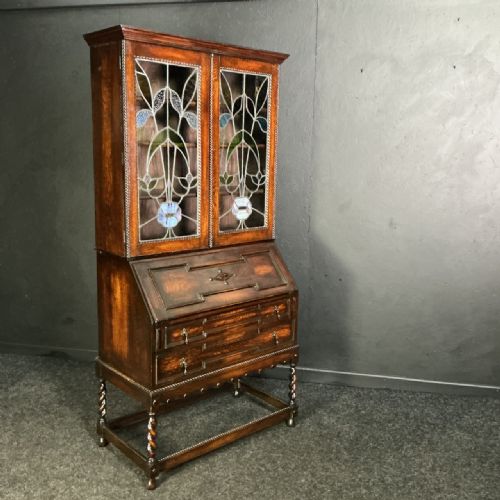
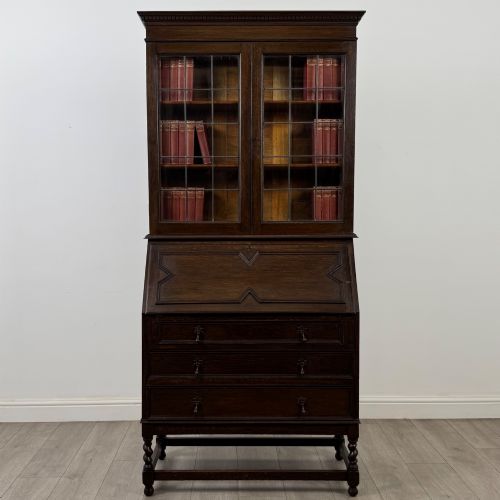
When you search for a barley twist oak bureau, you are looking at writing furniture featuring distinct spiral turned supports alongside fall-front desks or bookcases.
The pieces appearing on this page span the Victorian and Edwardian eras through to the nineteen twenties, embracing Jacobean Revival, Arts and Crafts and Gothic tastes.
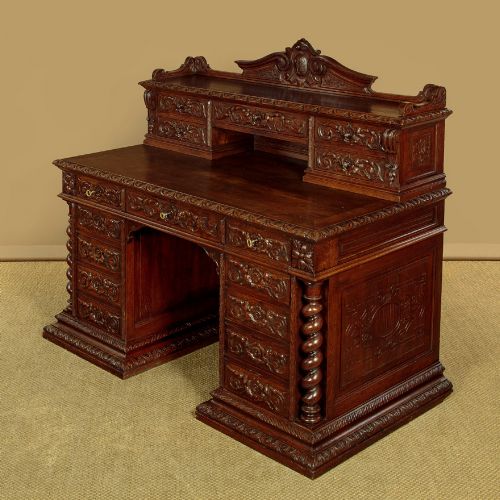
You will encounter various formats including writing desks, kneehole desks, and two-piece glazed bureau bookcases equipped with fitted stationery interiors.
How they were made
Carpenters constructed these items primarily from solid oak, incorporating wood inlay and panelled construction for structural strength.
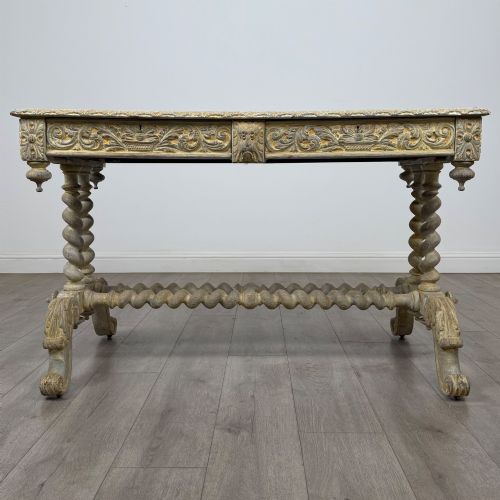
Makers added brass handles, glass panes, and lead details, while turning timber on a lathe to create spiral barley twist supports and stretchers.
Every twist was turned by hand, meaning no two spirals are identical.
What varies in quality
Quality rests in the crispness of the turned spiral legs and the depth of the carved detailing across the fall-front and panels.
The sophistication of the internal stationery fittings and the quality of the brass hardware distinguish finer items from simpler production.
The Barley Twist Oak Bureau Glossary
- Barley twist
- A spiral turning resembling a twisted rope, commonly utilised for table legs and furniture supports. This decorative woodworking technique draws inspiration from earlier seventeenth-century styles.
- Bureau
- A desk featuring a sloping hinged flap that opens to reveal a writing surface and small pigeonholes. Earlier examples often combine this desk function with a bookcase top.
- Jacobean Revival
- A nineteenth and twentieth-century style imitating seventeenth-century English furniture. It relies heavily on dark oak, geometric moulding, and heavy turnings.
- Fall front
- The hinged writing flap of a desk that folds down horizontally for writing. When closed, it conceals the fitted interior compartments.
- Kneehole desk
- A compact desk design featuring a central recess for the user's legs, flanked by pedestals of drawers. These pieces provide structured storage beneath the writing surface.
Barley Twist Oak Bureau: Frequently Asked Questions
What is a barley twist bureau?
A barley twist bureau is a writing desk featuring a hinged fall-front flap and characteristic spiral-turned wooden legs. These pieces provide a dedicated writing surface alongside concealed internal compartments.
Such furniture became particularly popular during revival periods, combining practical storage with distinctive turned woodwork.
How do I date an oak bureau?
Dating an oak bureau involves examining the construction methods, hardware, and stylistic revival influences present in the piece. Pieces span from mid-nineteenth-century Victorian designs to nineteen-twenties productions.
Reviewing the handles, timber grain, and joinery helps place the item within the Victorian, Edwardian, or later periods.
Are bureau bookcases two pieces?
Bureau bookcases often consist of two distinct sections placed together. A glazed cabinet top rests upon a lower desk base equipped with drawers and a writing flap.
This modular construction made large furniture easier to transport and assemble within homes.
How do I care for antique oak?
Caring for antique oak involves keeping the timber away from direct heat sources and sudden humidity changes. Regular dusting with a soft cloth preserves the finish without requiring harsh polishes.
Applying a traditional wax occasionally helps maintain the moisture and natural lustre of the oak surface.