

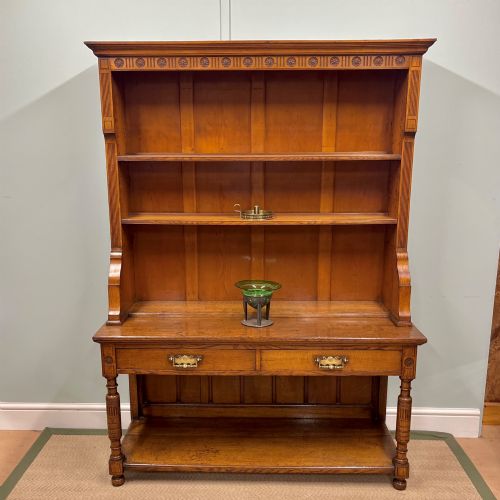


Solid Oak Plate Rack
A solid oak plate rack organises crockery with rustic utility and brings honest grain into the kitchen.
Solid Oak Plate Rack
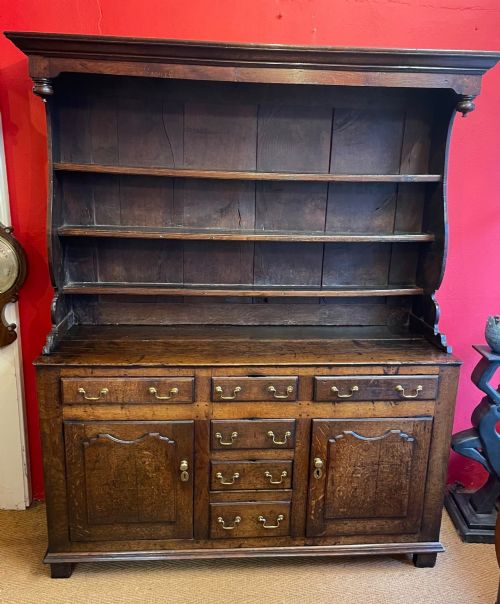
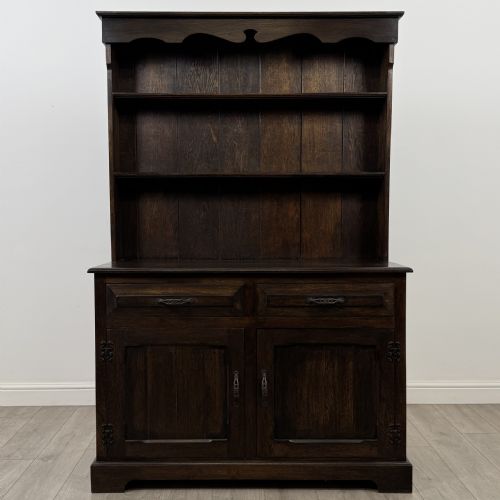
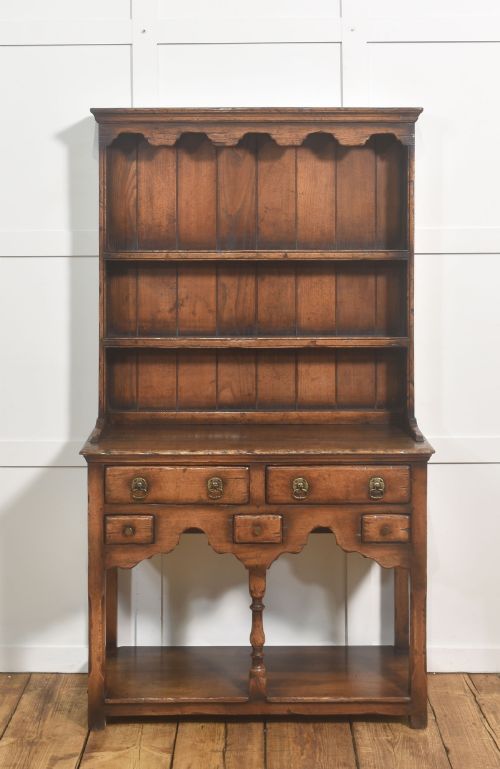
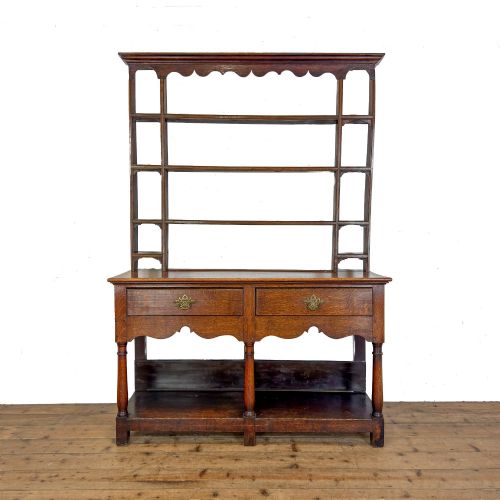
Solid oak plate racks appear most frequently as the upper tiers of country dressers or as wall-mounted rails designed to hold ceramic plates upright. These pieces emerge from periods ranging from the seventeenth century through the Edwardian era, with provincial workshops producing the majority of surviving examples.
Buyers often encounter the form integrated into Welsh dressers, pot board dressers, and freestanding vertical stands. The English country and Georgian styles dominate the surviving selection, showing practical shelving configurations built for daily domestic service.
How they were made
Craftsmen built these pieces using solid oak boards joined with traditional methods, often incorporating brass or iron hardware for structural support and hinges. The timber was selected for durability and finished to highlight the natural grain patterns characteristic of English country furniture.
Makers shaped the grooved plate rails and vertical uprights by hand, ensuring plates leaned safely against the backboards. Barley twist supports and pot boards occasionally appear in more ambitious regional constructions.
Solid Oak Plate Rack Retail Price Guide 2026
Typical asking prices for solid oak plate rack among the pieces listed under this phrase on Sellingantiques today, from the lower quarter to the upper quarter. They describe what is for sale here now, not the wider market.
The listings span from the seventeenth century through the Edwardian period, featuring oak alongside brass and iron elements.
What varies in quality
The standard of a solid oak plate rack rests on the depth of the timber's grain, the crispness of the joinery, and the integrity of the surviving backboards. Superior examples maintain their original mounting points and display balanced proportions across the plate tiers.
The presence of period brass or iron fixtures and untouched surface patination distinguish finer country pieces from later revival items. The harmony between the rack and its base dresser, where applicable, determines the overall cohesiveness of the piece.
The Solid Oak Plate Rack Glossary
- Plate rack
- A wall-mounted or dresser-integrated shelving unit designed with wooden grooves or slats to display plates vertically. These frames protect domestic crockery while keeping everyday tableware accessible.
- Pot board
- A low, open shelf fitted near the floor beneath a dresser base to store pots and heavy kitchenware. This lower tier provides structural stability to the entire framework.
- Welsh dresser
- A traditional kitchen storage unit combining closed cupboards or drawers below with an open plate rack above. These pieces originated in rural households for storing and displaying pottery.
- Barley twist
- A type of turned wooden support carved in a spiral column shape. This decorative joinery technique appears on legs and uprights during seventeenth-century and revival periods.
- Country oak
- A descriptor for provincial furniture constructed from native oak without sophisticated urban ornamentation. Pieces in this category emphasise utilitarian strength and regional joinery traditions.
Solid Oak Plate Rack: Frequently Asked Questions
How do I mount a wall rack safely?
Secure the frame directly into wall studs using heavy-duty fixings that match the weight of the solid oak and loaded ceramics.
Distribute the weight evenly across the mounting points to prevent the timber from pulling away from the plaster.
Are these racks suitable for modern kitchens?
The robust construction and warm grain integrate easily into contemporary spaces while offering practical vertical storage for everyday crockery.
Ensure the wall space can accommodate the depth of the shelves before installation.
How should I clean solid oak?
Dust the timber regularly with a dry cloth and occasionally feed the surface with a traditional beeswax polish to maintain the finish.
Avoid excessive moisture and keep the wood away from direct heat sources to prevent warping.
How do I identify a revival piece?
Examine the cut of the timber, the uniformity of the tool marks, and the style of the hardware for clues to the manufacturing era.
Revival pieces often replicate earlier Georgian or seventeenth-century forms with machine-sawn backing boards.