

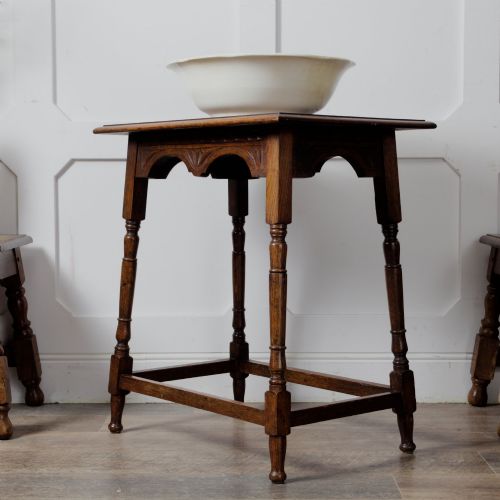
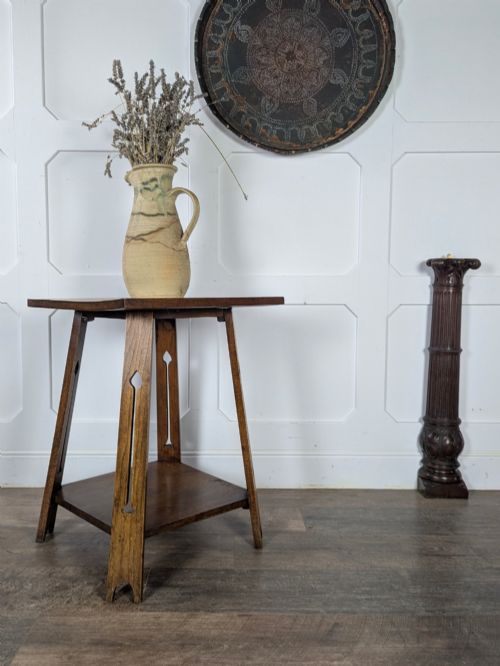
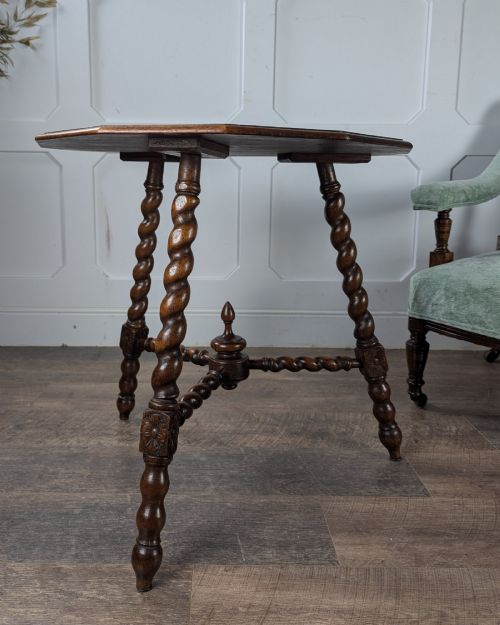
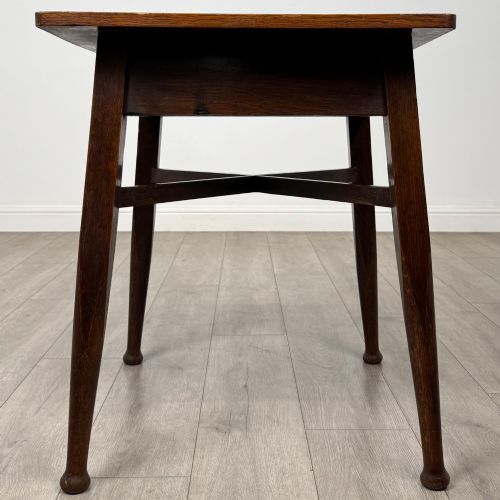
Solid Oak Hall Stand
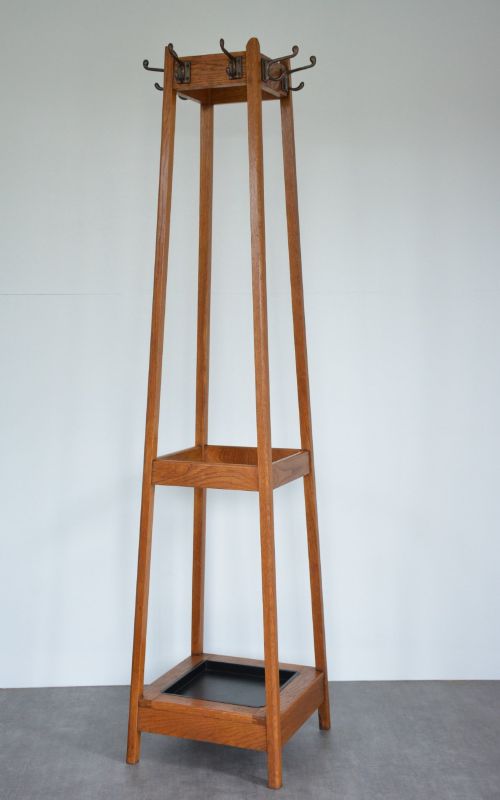
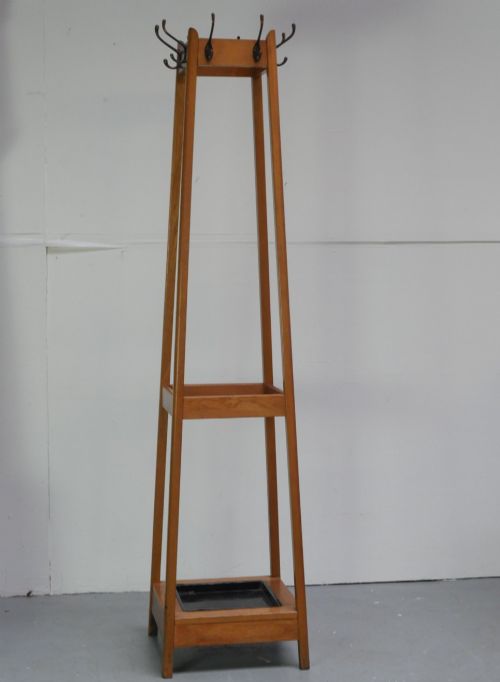
A solid oak hall stand anchors an entranceway with practical timber presence, combining hooks, rails, and umbrella storage for daily use.
Solid Oak Hall Stand
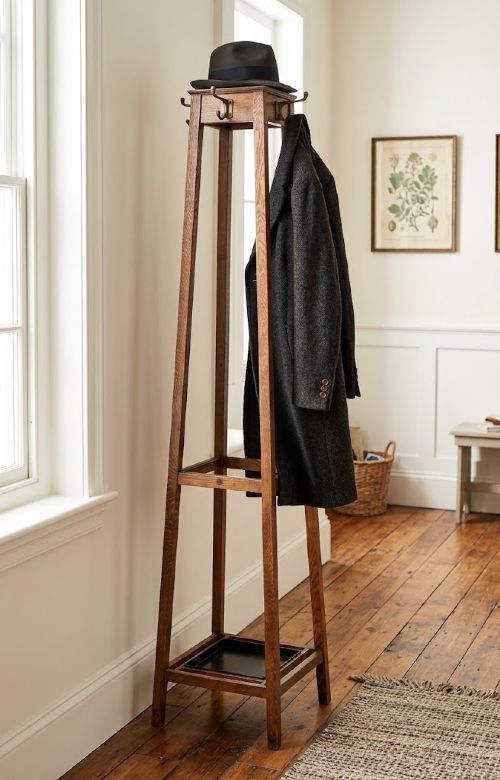
A solid oak hall stand provides a robust entrance fixture designed to hold coats, hats, and umbrellas in domestic hallways. These pieces emerge across Victorian, Edwardian, and later twentieth-century periods, reflecting shifting interior fashions from heavy revivalism to simpler utility.
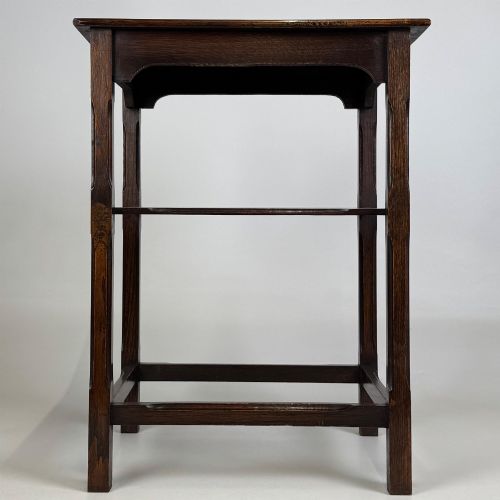
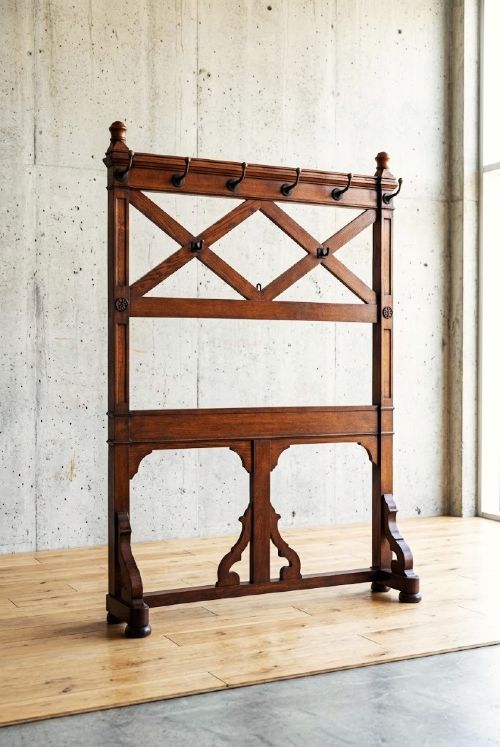
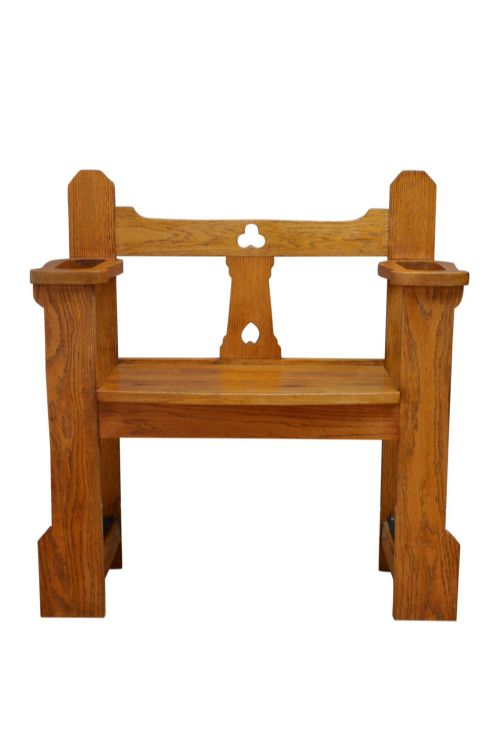
The form encompasses upright stick stands with metal drip trays, hall seats with integrated benches, and multi-functional coat stands. Examples frequently display regional British craftsmanship through styles such as Arts and Crafts, Gothic Revival, and Jacobean Revival.
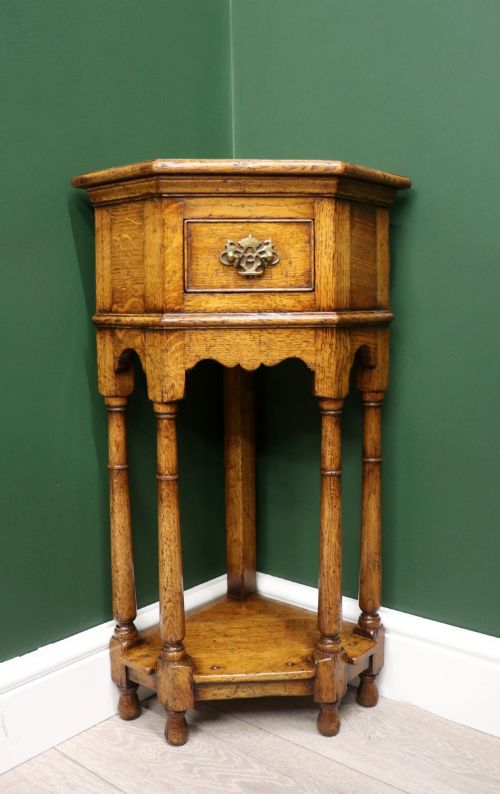
Buyers meet variations ranging from compact corner stands to expansive hall trees fitted with mirrors and brass hooks. The core material remains solid oak, often paired with iron or copper hardware.
Materials and construction methods
Carpenters utilised solid oak planks for the main framework, panels, and bench seats, ensuring structural endurance in high-traffic entryways. Timber surfaces received traditional wax or polish finishes to highlight the natural grain.
Metal components such as brass, copper, and iron formed functional elements including coat hooks, hanging rails, and umbrella drip trays. These metal fittings were often screwed or bolted directly into the wooden framework to bear heavy winter garments.
The recorded periods span from late Victorian and Edwardian craftsmanship to mid-century industrial utility.
Distinctions in quality and execution
Quality rests upon the heft of the timber and the integrity of the joinery, distinguishing sturdy architectural builds from lighter occasional furniture. Superior pieces employ thick solid oak boards and substantial framing rather than thin veneers.
The refinement of carved ornamentation and the originality of metal hardware dictate the tier of a piece. Hand-beaten copper trays, robust brass hooks, and thoughtful proportions separate workshop-produced items from mass-manufactured alternatives.
Waring & Gillow·Astrola
The Solid Oak Hall Stand Glossary
- Arts and Crafts
- A design movement prioritising traditional craftsmanship and simple forms over industrial mass production. This style frequently appears in oak hall furniture with exposed joinery.
- Drip tray
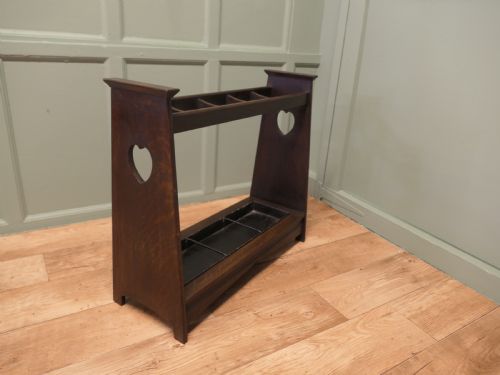
- A metal insert placed at the base of stick and umbrella stands to catch moisture from wet weather gear. These are typically fashioned from brass, copper, or galvanised iron.
- Hall seat
- An entrance bench incorporating a backrest with coat hooks and umbrella compartments. It combines seating with garment storage.
- Gothic Revival
- An architectural and decorative style drawing inspiration from medieval forms. Pieces often feature pointed arches, heavy mouldings, and dark oak finishes.
- Luggage rack
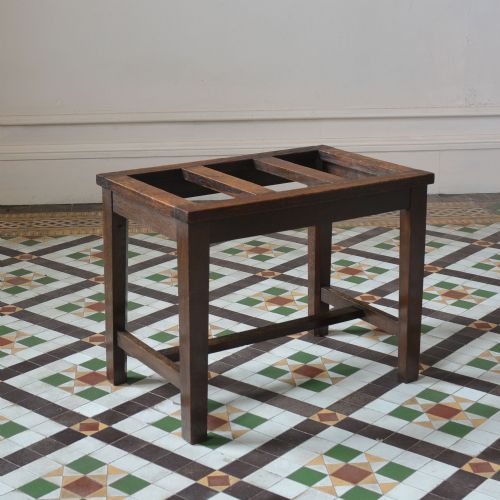
- A low slatted wooden stand utilised for holding bags and cases in reception spaces. They share materials and construction methods with larger hall furniture.
Solid Oak Hall Stand: Frequently Asked Questions
How do I maintain solid oak hall furniture?
Apply a natural beeswax polish occasionally to nourish the timber and protect the surface from moisture. Avoid placing the stand directly against heat sources to prevent the oak from drying out.
Regularly dust carved details and check that wall fixings or stabilizing feet remain secure under daily use.
What periods do these hall stands date from?
The available pieces primarily span the late Victorian and Edwardian eras, extending through the interwar period into the mid-twentieth century. Styles shift from ornate Gothic and Jacobean revivals toward clean Arts and Crafts lines.
Earlier examples often feature heavier carved decoration, while later twentieth-century versions lean towards streamlined utilitarian forms.
How were umbrella stands integrated into these pieces?
Umbrella stands typically feature recessed wooden bases fitted with removable metal drip trays to catch water from wet canopies. Wooden or iron division rails keep walking sticks and umbrellas upright.
Side brackets or dedicated compartments are built directly into the lower framework of the stand.
Are these stands suitable for small hallways?
Many designs offer narrow proportions or corner configurations specifically intended for compact entrance spaces. Single-panel coat stands and corner umbrella racks provide storage without dominating narrow corridors.
Checking the depth and width dimensions ensures the piece allows comfortable passage through the door area.