


Solid Oak Buffet
A solid oak buffet brings grounding utility and honest timber grain to a dining room, built to store silver and serve food.
Solid Oak Buffet
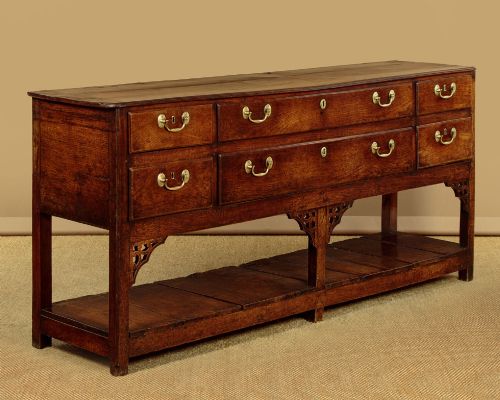
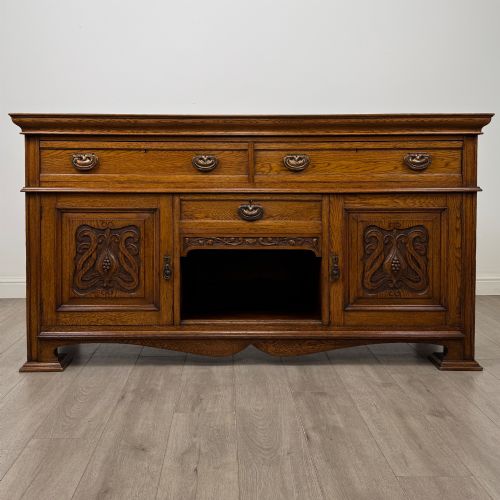
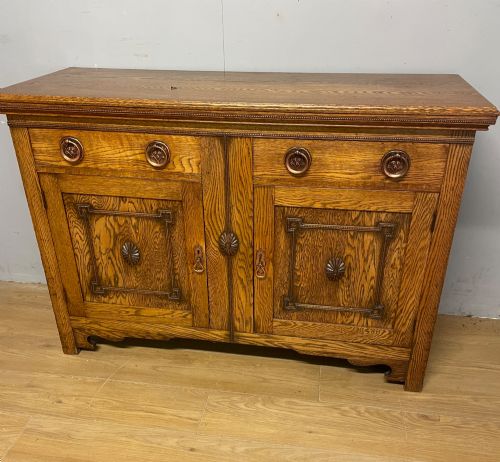
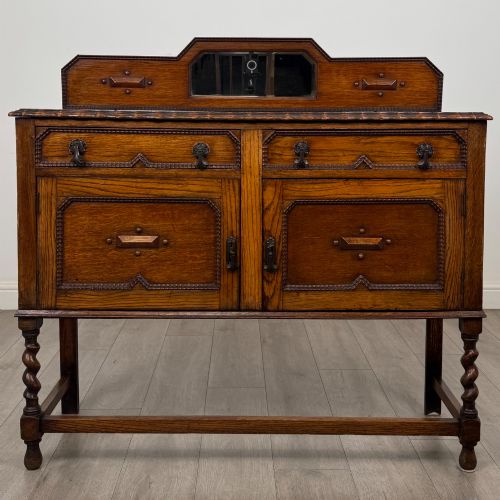
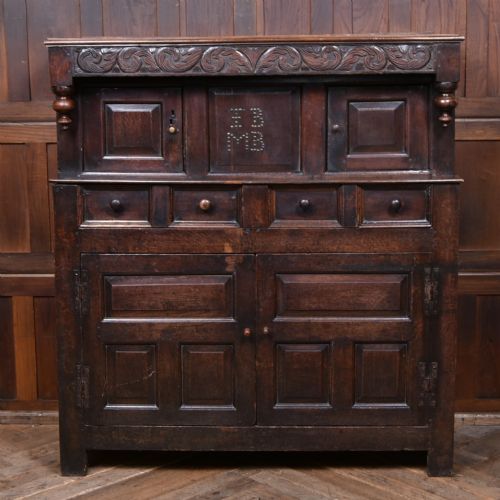
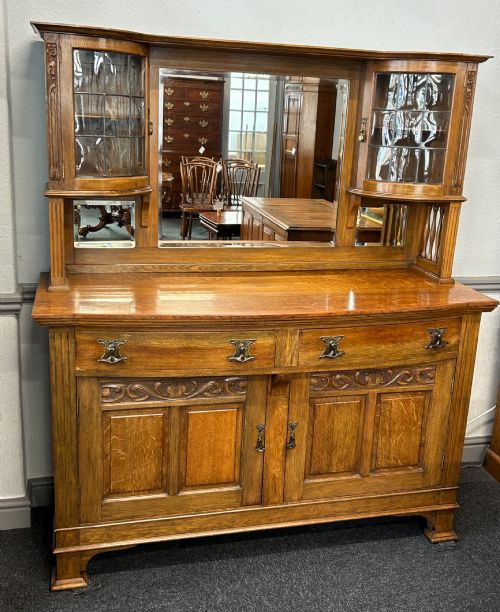
A solid oak buffet encompasses heavy sideboards, dresser bases, court cupboards and low serving tables designed for storage and display in dining spaces. When seeking a solid oak buffet, buyers frequently encounter pieces spanning the eighteenth century through to the twentieth century, with strong representation from the Edwardian era and the Arts and Crafts movement.
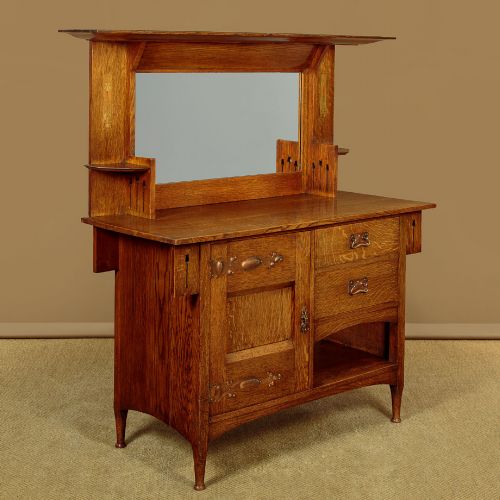
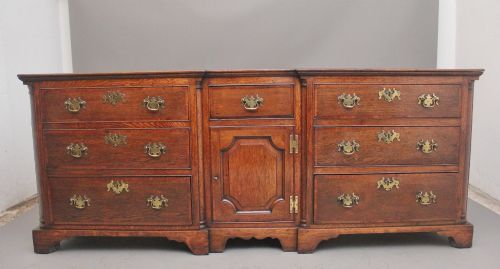
The forms range from utilitarian provincial French enfilades and game cupboards to British vernacular dresser bases and pieces carrying the distinctive philosophy of the Cotswold School or Liberty style. Early examples from the seventeenth and eighteenth centuries prioritise pegged framework and deep timber patination, whilst later nineteenth and twentieth-century interpretations introduce glazed doors, brass mounts and copper details.
Sideboards and dressers within this category serve the same domestic function as traditional buffets, offering substantial cupboard space and surface area. Buyers will find that proportions vary from compact small-scale sideboards suitable for modern rooms to large multi-tiered dresser bases designed for substantial country houses.
How they were made
Construction relies primarily on solid oak, chosen for its structural resilience and varied grain patterns, often complemented by secondary timbers. Workshops utilised traditional joinery techniques including pegged mortise and tenon joints to build durable carcasses that withstand decades of daily use.
Surface enrichment on these pieces stems from hand carving, wood inlay and panel moulding rather than applied veneers. Metalwork components such as brass handles, copper hinges and iron strapwork provide functional contrast, whilst occasional pieces incorporate leaded glass or plain glass panels within the cabinet doors.
Listings feature solid oak furniture spanning the 17th, 18th, 19th, and 20th centuries, alongside regional French and British vernacular forms.
What varies in quality
The distinction between standard utility furniture and superior examples lies in the depth of timber selection and the crispness of hand-carved detailing. Finer pieces demonstrate careful consideration of grain alignment across large expanses of oak, alongside well-proportioned mouldings and original hardware that integrate harmoniously with the primary structure.
Design attribution and historical integrity further differentiate the range, distinguishing vernacular country workshop pieces from those produced by notable commercial retailers or reformist design movements. The retention of original timber patination, uncompromised structural joints and authentic period mounts elevate the standing of a buffet within any collection.
Liberty & Co.·Heals of London·A.W.N Pugin
The Solid Oak Buffet Glossary
- Buffet
- A sideboard or low cupboard traditionally used for the serving of food and the storage of dining plate. Early examples often feature tiers or enclosed lower cabinets.
- Dresser base
- The lower section of a traditional kitchen or dining room dresser, featuring surface boards above drawers and cupboards without the upper plate rack. These sturdy pieces function effectively as sideboards.
- Enfilade
- A long sideboard or buffet, frequently of French origin, with a series of adjoining cabinet doors spanning the front elevation. They provide extensive internal storage capacity.
- Court cupboard
- An antique enclosed cupboard originating in the seventeenth century or earlier, characterised by an upper recessed section supported on carved pillars. They showcase heavy oak construction and panel carving.
- Potboard
- An open slatted lower shelf incorporated into the base of a dresser or buffet, historically utilised for the storage of pots and heavy kitchen utensils.
- Leadwork
- The network of lead cames used to hold individual pieces of glass together within cabinet doors, commonly seen on Arts and Crafts examples.
Solid Oak Buffet: Frequently Asked Questions
What is the difference between a buffet and a sideboard?
Buffets and sideboards share overlapping functions in dining rooms, primarily serving food and storing tableware. Traditionally, a buffet leans towards a lower profile with enclosed cupboards, whilst sideboards frequently incorporate drawers and varied tiers.
In marketplace listings, these terms are often used interchangeably to describe solid oak storage furniture from various periods. Buyers should assess the dimensions and internal layout of each specific piece rather than relying strictly on the nominal description.
How do I date an antique oak buffet?
Dating relies on examining construction methods, timber patination, and stylistic markers visible across the piece. Seventeenth and eighteenth-century examples display hand-cut joinery, pegged joints, and deep, natural wax finishes accumulated over centuries of use.
Later pieces from the Victorian and Edwardian periods often introduce machine-assisted elements, alongside specific stylistic revivals such as Jacobean twist turnings or Arts and Crafts ironwork hardware. Comparing the structural framing against known period styles helps establish a reliable timeframe.
Are these buffets suitable for modern homes?
Solid oak buffets provide robust storage solutions that integrate well into contemporary living spaces. Their durable timber construction handles daily household use whilst offering generous surface area and deep internal shelving for modern dining ware.
Buyers find options ranging from compact small-scale sideboards to expansive nineteenth-century enfilades. Selecting the correct proportion ensures the piece anchors the room without overwhelming the floor plan.
What is Arts and Crafts furniture?
The Arts and Crafts movement emerged in the late nineteenth century as a reaction against industrial manufacturing, promoting handcrafted construction and honest materials. Furniture from this tradition highlights the natural grain of solid oak, often complemented by exposed pegged joints and handcrafted metal hardware.
Pieces associated with this style frequently feature clean architectural lines, occasional copper accents, or leaded glass doors. They represent a deliberate return to traditional workshop practices and functional design integrity.