
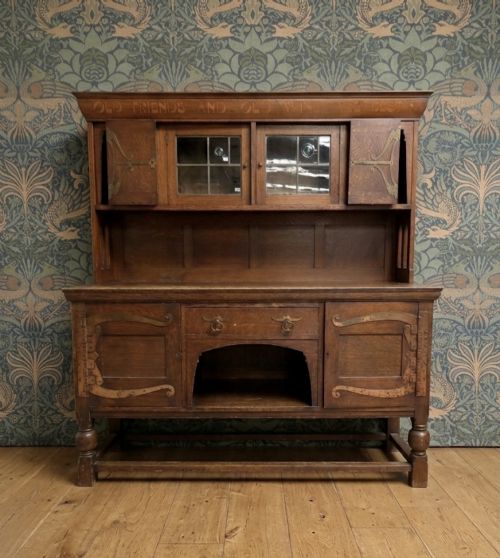
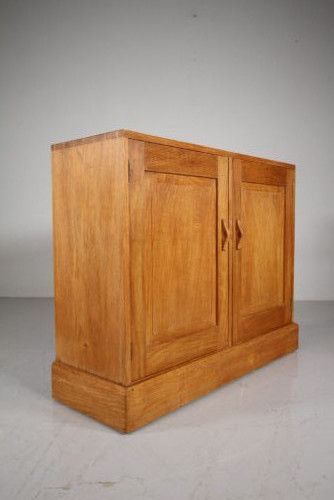
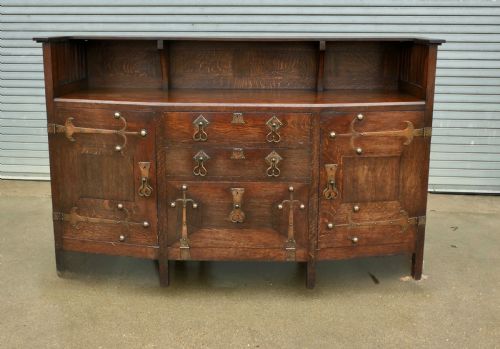
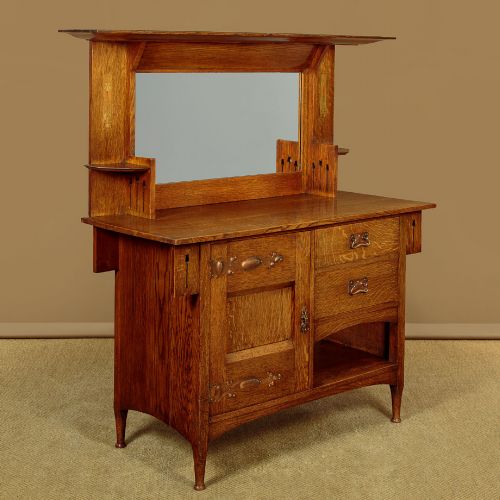
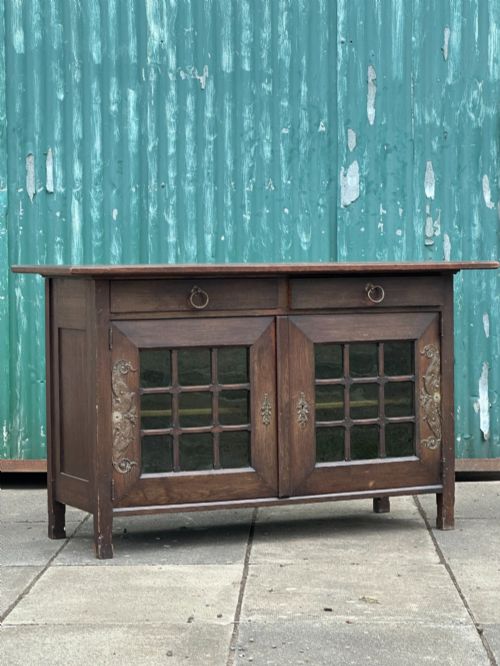


Craftsman Oak Credenza
These craftsman oak credenza pieces are solid timber items of furniture that bring honest construction and utility to any interior.
Craftsman Oak Credenza
Most examples date from the late nineteenth century through to the nineteen-thirties, spanning periods such as the Edwardian era and movements like the Cotswold School. Forms vary from sturdy sideboards and dressers to more compact side cabinets fitted with glass, copper, iron, or brass.
Makers and designers working for firms such as Liberty & Co., Heal & Son, and Shapland and Petter defined the aesthetic. Buyers frequently encounter pieces displaying clean lines, visible joinery, and an emphasis on the natural grain of English oak.
Materials and construction
Makers constructed these items predominantly using solid oak and English oak, valuing the timber for its strength and grain pattern. Metalwork details in copper, brass, and iron appear frequently on hinges, handles, and decorative mounts.
Surface decoration relies on traditional woodworking techniques including wood inlay and marquetry inlay rather than applied ornamentation. Glass panels are also integrated into cabinet doors to balance solid timber surfaces.
A sturdy oak sideboard makes an exceptionally quiet companion for storing heavy porcelain without complaint.
Assessing quality and design
Quality in these pieces rests upon the integrity of the timber selection and the precision of the construction. Superior examples display carefully matched golden oak grains and thoughtful proportions that reflect the ethos of their makers.
The sophistication of the hardware, from hammered copper hinges to subtle marquetry inlay, distinguishes standard production items from pieces designed by prominent figures like Ambrose Heal or Leonard Wyburd.
Ambrose Heal·Heal & Son·Leonard Wyburd·Liberty & Co·Shapland and Petter
The Craftsman Oak Credenza Glossary
- Arts and Crafts
- A design movement valuing traditional craftsmanship, simple forms, and natural materials over mass production. It heavily influences the sideboards and cabinets found in this selection.
- Marquetry inlay
- The art of applying small pieces of veneer to a structure to form decorative patterns. It adds visual detail to flat timber surfaces.
- Sideboard
- A large piece of furniture traditionally used for storing dining utensils and serving food. The evidence shows these often double as display cabinets.
Craftsman Oak Credenza: Frequently Asked Questions
What periods do these pieces span?
The selection covers items produced from the eighteen-eighties through to the nineteen-thirties. This includes Edwardian examples alongside Victorian and later interpretations.
Design influences stretch from early Arts and Crafts ideals to the Cotswold School tradition.
How were these cabinets used?
These sideboards and cupboards served primarily in dining rooms for storing china, cutlery, and linens. Their surface tops also functioned as serving areas during meals.
Smaller side cabinets provided enclosed storage for living spaces while displaying decorative objects.
What materials predominate?
Oak and English oak form the structural core of nearly every piece in this category. Timber selection dictates the heavy, durable character of the furniture.
Accents of copper, brass, and iron appear in structural hardware, whilst glass and wood inlay provide surface contrast.
How do I spot a Liberty piece?
Items associated with Liberty & Co or designed by figures like Leonard Wyburd often display specific restraint and proportion. They integrate metal fittings with timber in a unified manner.
Attributions rely on documented design characteristics rather than uniform branding.