
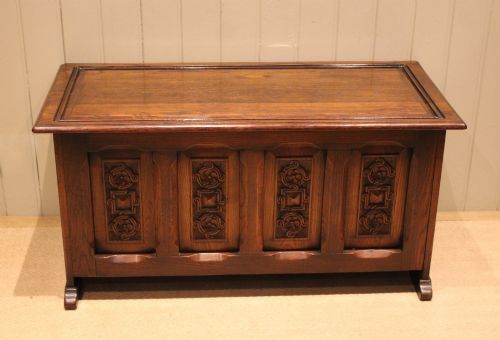
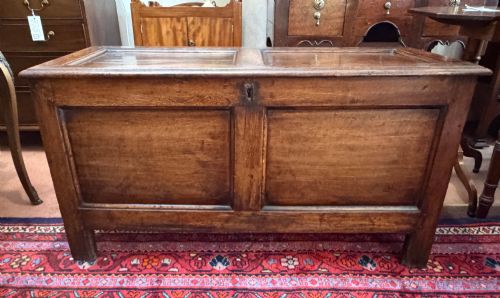
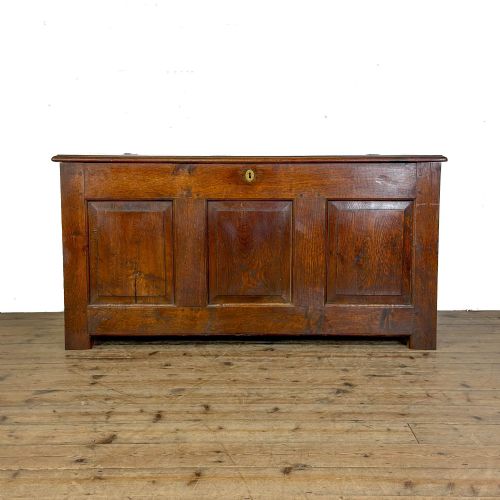
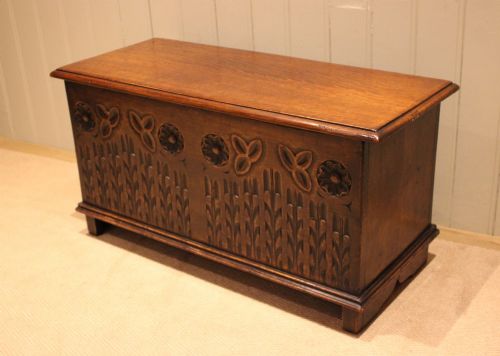
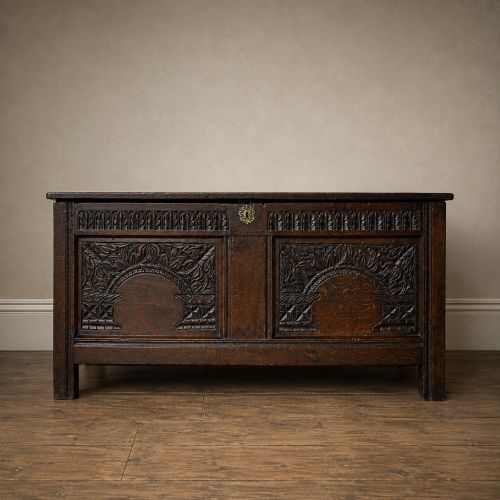
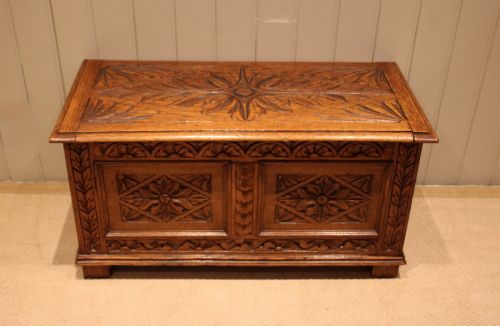
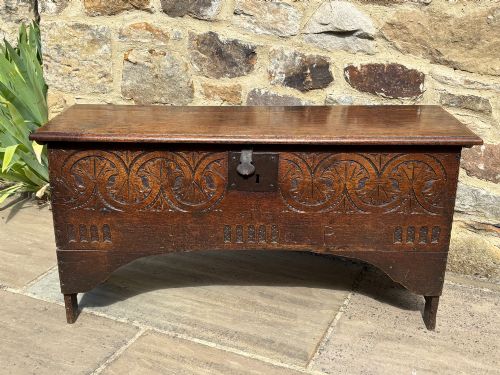
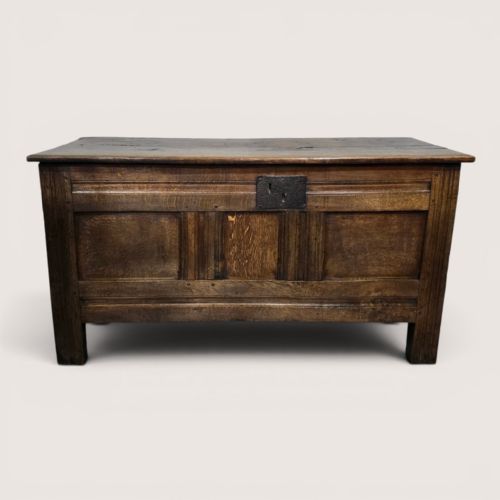
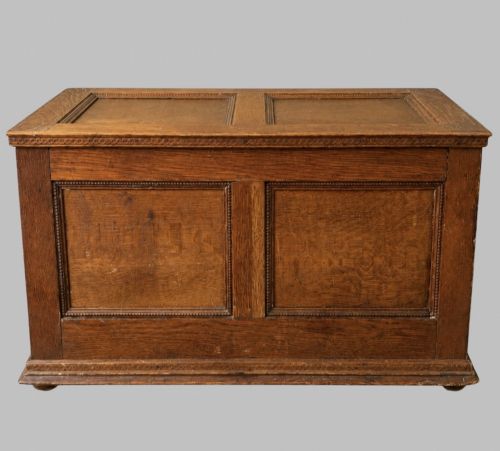
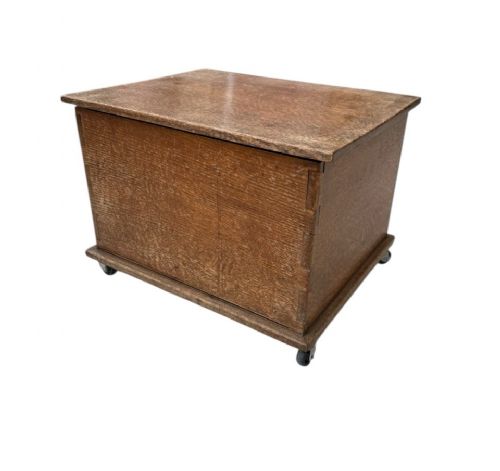
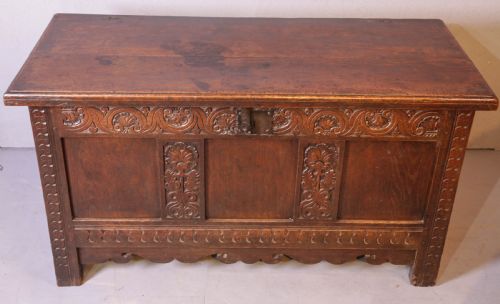

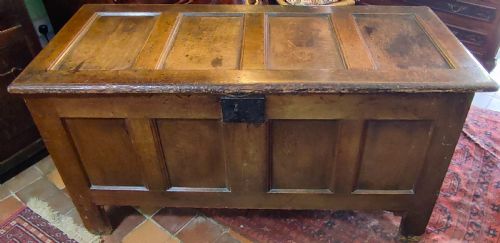


Solid Oak Blanket Trunk
A solid oak blanket trunk provides robust storage, bringing centuries of sturdy carpentry and rich timber grain into a modern interior.
Solid Oak Blanket Trunk
A solid oak blanket trunk serves as a heavy-duty storage box, frequently catalogued under terms like coffer, mule chest, or shipping chest. These sturdy items emerge from periods ranging from the 16th century through the Georgian and Victorian eras, up to the Arts and Crafts movement and the 1930s.
The versions most commonly met on this page date from the 17th century and later, constructed primarily in oak with panelled, carved, or six-plank bodies. They function equally well at the foot of a bed or as a living room coffee table with internal capacity.
What varies in quality
The standard of a solid oak blanket trunk rests largely on the integrity of its original timber, the crispness of any hand carving, and the survival of contemporary iron or brass hardware. Pieces featuring untouched surfaces and period hinges command greater attention than those altered or stripped heavily in later centuries.
Proportion and structural honesty also define the tier of a piece, distinguishing robustly joined 16th and 17th-century coffers from later revival items through the depth of patina and the weight of the timber used.
Some trunks still retain the faint aroma of old linen and beeswax locked inside their timbers for centuries.
Jack Grimble
The Solid Oak Blanket Trunk Glossary
- Coffer
- A traditional heavy chest, usually constructed of oak, used historically for storing valuables, linens, and documents. It forms the primary category for these trunk listings.
- Mule chest
- An oak storage chest featuring one or more drawers beneath the main lift-top compartment, combining the functions of a coffer and a low boy.
- Six-plank chest
- An early form of primitive box constructed from six individual boards joined simply at the edges, often reinforced with iron or wrought iron straps.
- Pollard oak
- Timber taken from trees that have been pollarded, producing a highly decorative, mottled grain pattern prized by cabinet makers.
- Panelling
- Framework construction utilising vertical stiles and horizontal rails enclosing a thinner wooden panel, allowing the solid oak to expand and contract with humidity without splitting.
Solid Oak Blanket Trunk: Frequently Asked Questions
How do I date an oak coffer?
Dating relies on observing construction methods, such as hand-cut pegs, joined framing, and the style of any carved ornamentation. Six-plank construction and deep geometric panels often point toward earlier centuries.
Later Victorian and Arts and Crafts examples display machine assistance, lighter hardware, or revival motifs that distinguish them from genuine 17th-century work.
Were these trunks used for blankets?
These large vessels stored precious woollens, household linens, and garments to protect textiles from moths and damp in unheated rooms. Their robust timber construction made them secure repositories for domestic valuables.
Over time, families repurposed them for shipping, silver storage, or general household tidying.
Can I use a trunk as a coffee table?
The flat top and solid oak construction make these trunks suitable for daily use as low tables in a sitting room. Their generous proportions provide hidden storage for books and throws.
Care should be taken with surface moisture by using coasters to protect the aged oak patina.
What is a mule chest?
A mule chest bridges the design gap between a traditional lift-top coffer and a drawer-base chest. The addition of lower drawers allowed access to stored items without needing to clear the top surface.
Georgian examples frequently utilise this practical two-part form.