
Smokers Armchair
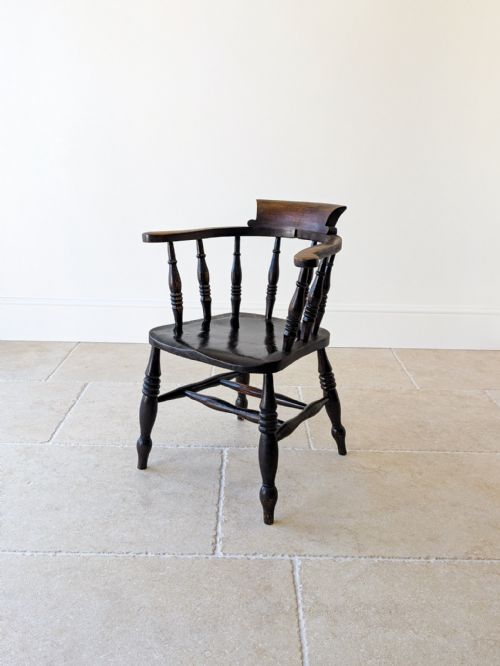
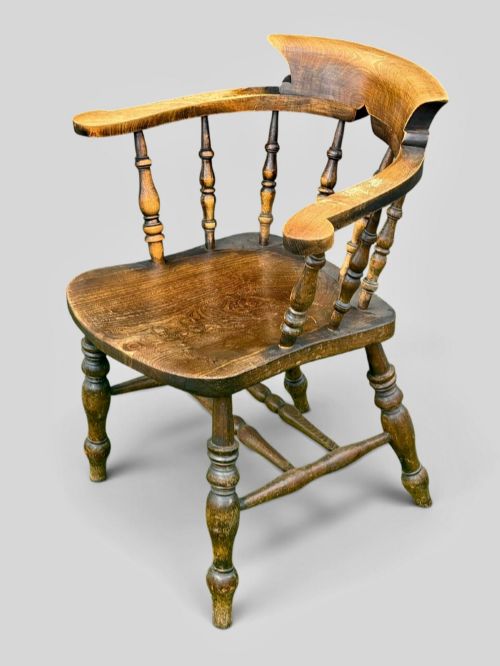
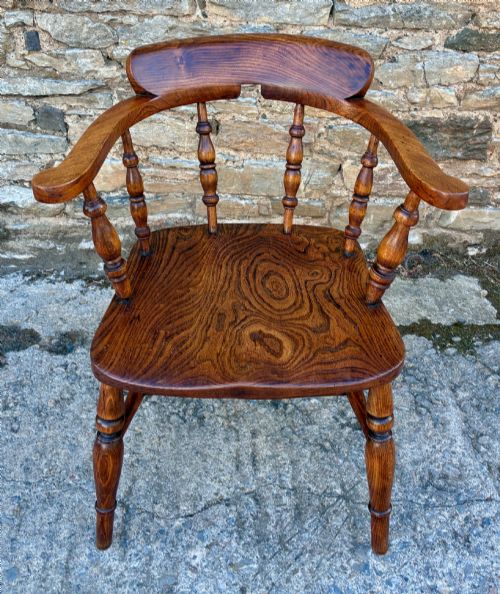
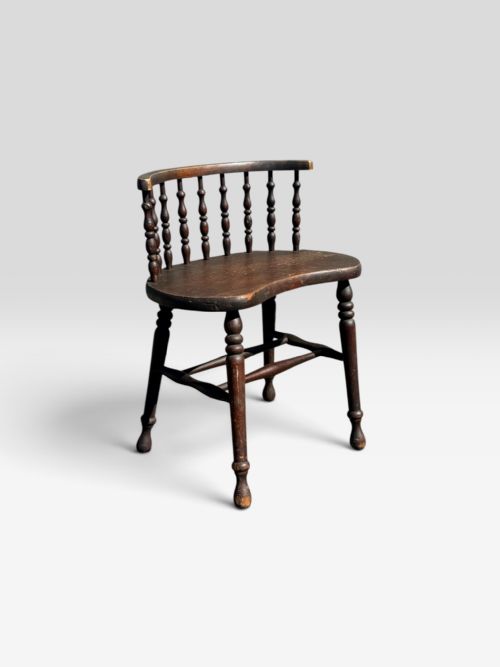
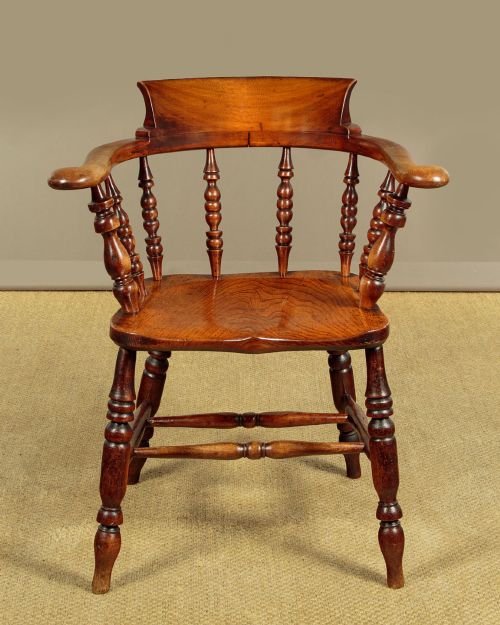
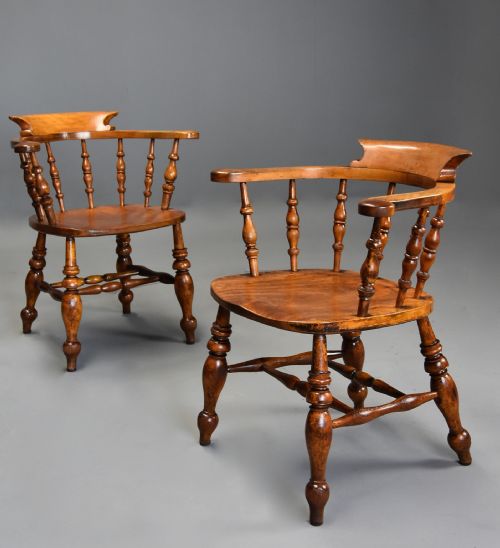
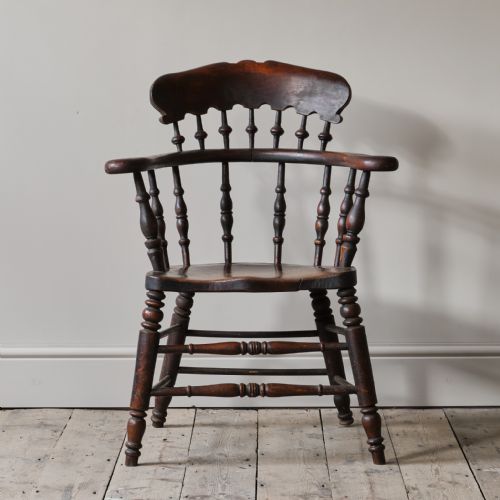
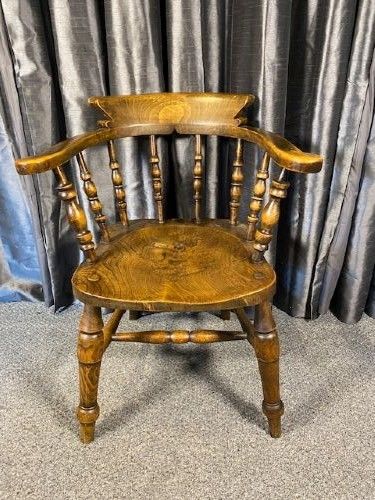
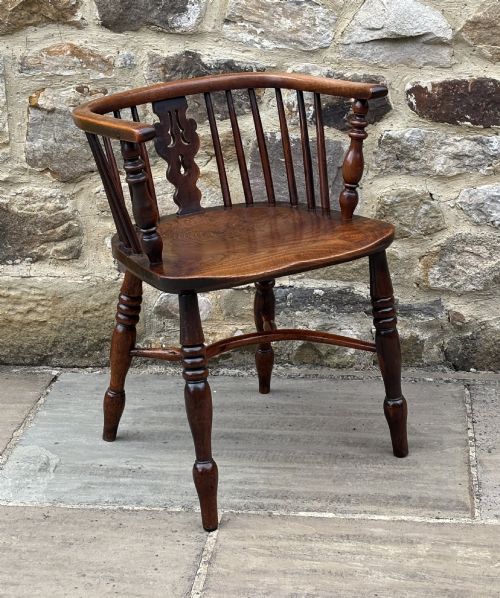
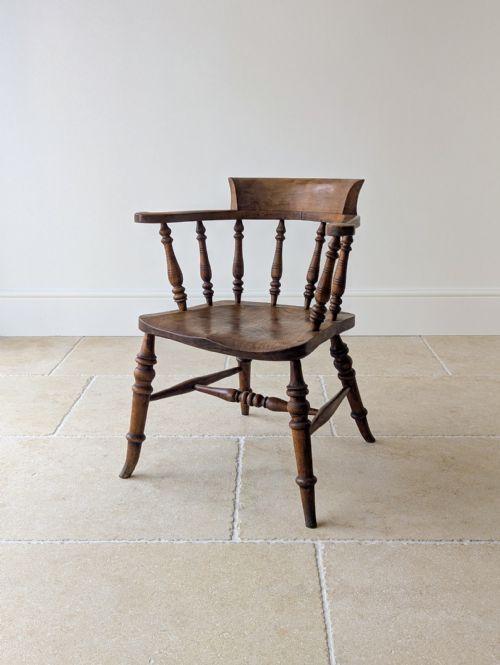
A smokers armchair delivers deep-seated country comfort, pairing robust provincial construction with low-back Windsor framing.
Smokers Armchair
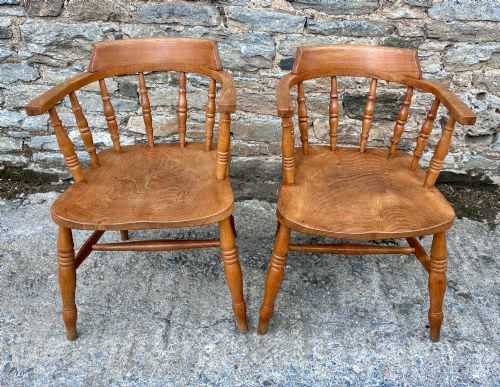
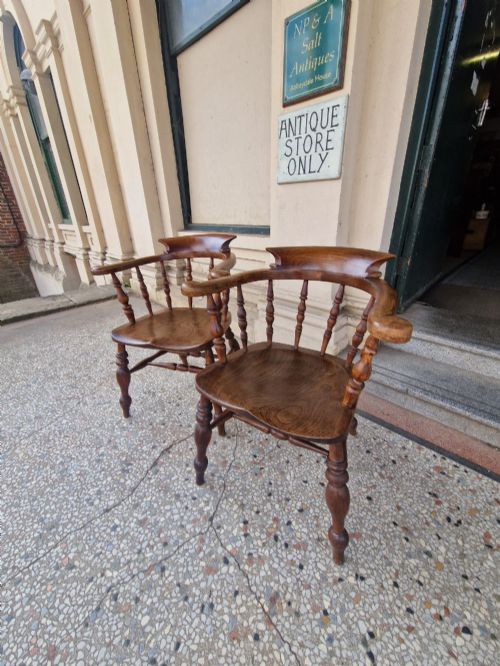
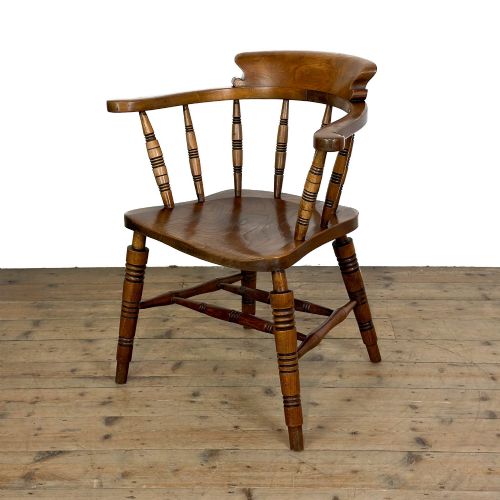
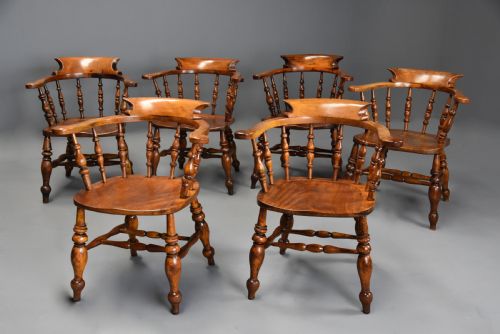
A smokers armchair is a sturdy low-back wooden seat, frequently referred to as a smoker's bow or captain's chair. These pieces emerge predominantly from the nineteenth and early twentieth centuries, spanning Victorian and Edwardian provincial workshops.
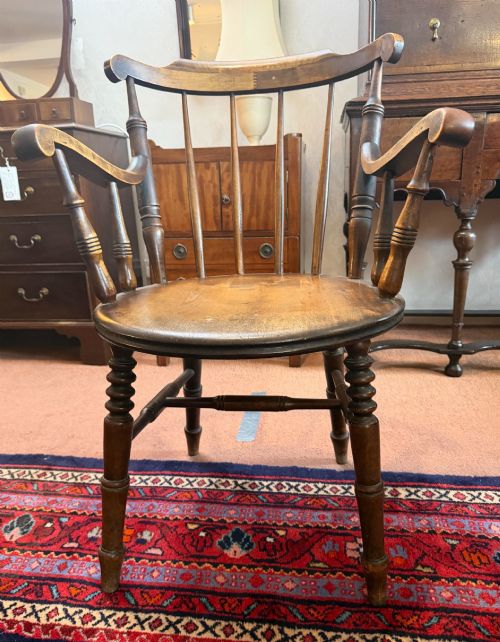
Most examples found here combine robust vernacular forms with generous proportions designed for everyday utility. They function as desk chairs, library seats, and farmhouse elbow chairs.
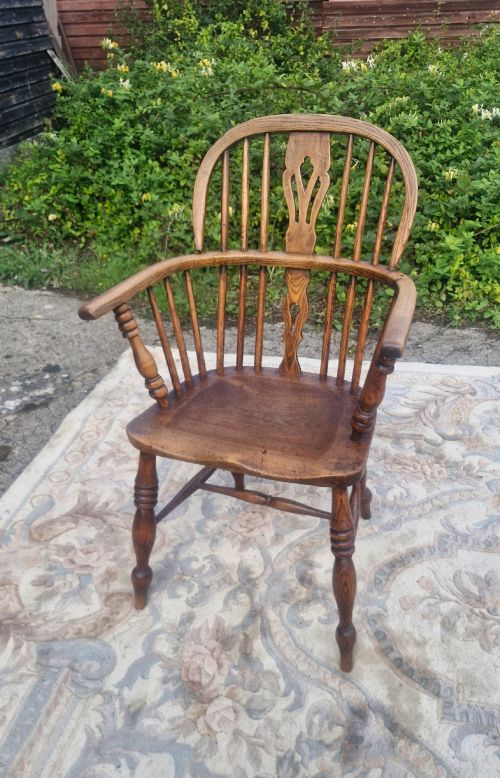
The category encompasses regional variations including Nottinghamshire low-backs and High Wycombe productions. Elm, ash, and beech dominate the available repertoire, often paired with saddle seats.
Materials and construction
Makers utilised native timbers, frequently combining solid elm for carved saddle seats with bent ash or beech for the continuous arm bow and spindles. This thoughtful selection of wood ensured both comfort and structural resilience under daily use.
Joinery relied on traditional Windsor techniques, including through-wedged legs and spindle stems pegged directly into the thick wooden seat slab. Steam-bending allowed artisans to shape single lengths of timber into the characteristic low bow back.
Surface treatments developed naturally through decades of handling, leaving exposed wood grains and warm historic finishes. Selected examples incorporate leather hides or brass accents on later desk adaptations.
Some nineteenth-century sitters smoked pipes, hence the low bow design that allowed elbow room for puffing without knocking the wall.
Distinctions in craftsmanship
Quality rests upon the sculptural grace of the bentwood bow and the depth of the sculpted elm seat. Superior pieces exhibit confident proportions and balanced spindle turning rather than utilitarian stiffness.
The integrity of the original joints and the preservation of honest surface wear dictate desirability among collectors. Examples retaining distinct regional characteristics or maker attributions stand apart from standard workshop output.
Glenister High Wycombe
The Smokers Armchair Glossary
- Smoker's bow
- A low-back wooden armchair featuring a continuous curved rail serving as both backrest and arms. This form became widely popular in nineteenth-century country houses and rural pubs.
- Windsor chair
- A chair built with stick-frame construction where individual spindles and legs are socketed directly into a solid wooden seat. They are celebrated for their organic strength and regional diversity.
- Saddle seat
- A thick wooden seat base scooped and carved into a concave contour for ergonomic comfort. Makers typically utilised domestic elm for this component due to its interlocking grain.
- High Wycombe
- A Buckinghamshire town that served as the primary historic centre for English chair manufacturing. Local workshops produced vast quantities of Windsor and smokers bow armchairs during the Victorian era.
Smokers Armchair: Frequently Asked Questions
What is a smokers armchair?
A smokers armchair is a sturdy wooden seat featuring a low, continuous curved backrail and a solid carved wooden seat. They developed during the nineteenth century as comfortable elbow chairs for domestic and tavern use.
These pieces combine vernacular Windsor framing with generous proportions suited for studies and living spaces. Their enduring design prioritises ergonomic seating through shaped wooden saddles and supportive spindles.
How do I date a smokers bow?
Dating relies on examining the timber selection, turning details on the legs, and the construction methods used in the undercarriage. Earlier nineteenth-century examples often display broader proportions and deeper patination on native elm and ash.
Edwardian and later iterations frequently incorporate beech or oak with more standardised turnings. Evaluating the wear patterns on the seat helps confirm the period of active service.
Can I use one as a desk chair?
These chairs function exceptionally well at writing desks and office tables due to their supportive elbow rests and sturdy frames. Many historical examples were specifically adapted for library and desk use.
Their ergonomic wooden seats provide comfortable posture for extended periods of reading or writing. Selecting a model with appropriate height clearance ensures compatibility with standard desks.
How do I care for antique elm?
Maintaining antique elm requires minimal intervention, relying primarily on occasional dusting with a dry, soft cloth. Avoiding direct sunlight and extreme humidity fluctuations preserves the natural moisture and historic finish of the wood.
Applying microcrystalline wax periodically helps nourish the surface without building up heavy residues. This gentle maintenance protects the patina accumulated over generations.