

Small Writing Slope Desk
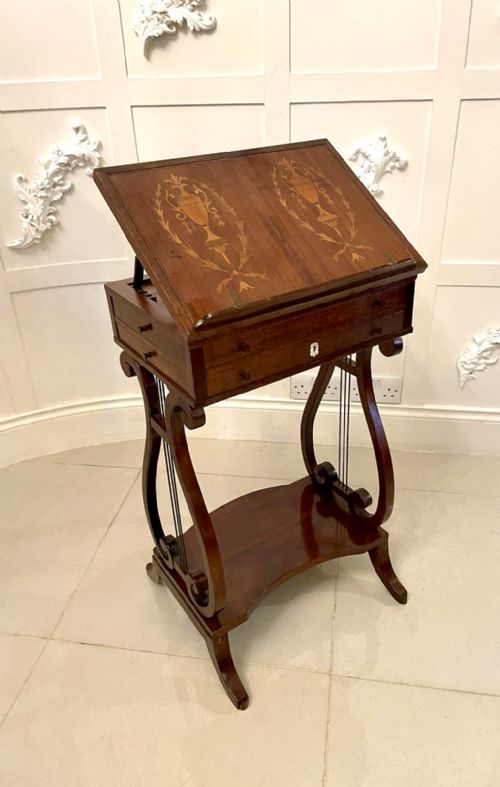
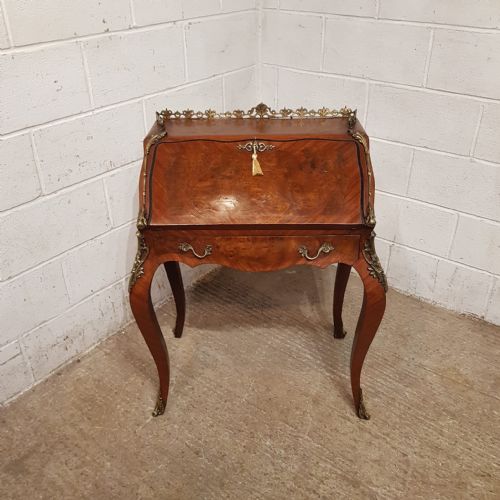
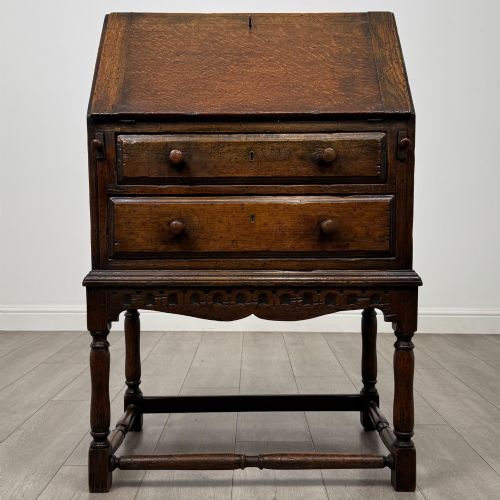
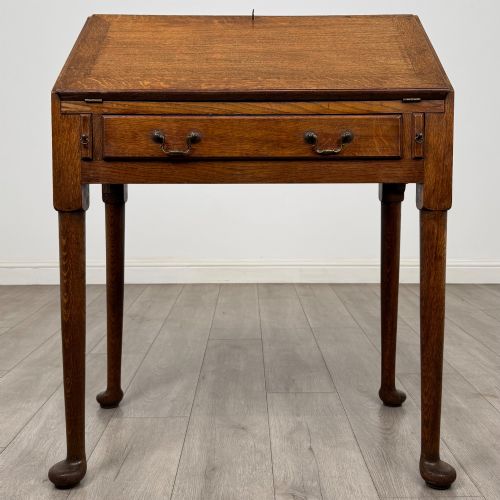
A small writing slope desk offers a compact, sloping surface for correspondence, drawing together rich cabinet timbers and practical stationery storage across Georgian, Regency and Victorian periods.
Small Writing Slope Desk
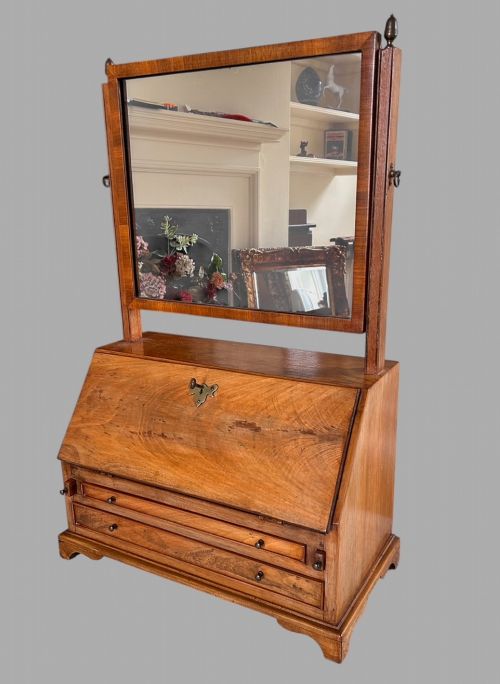
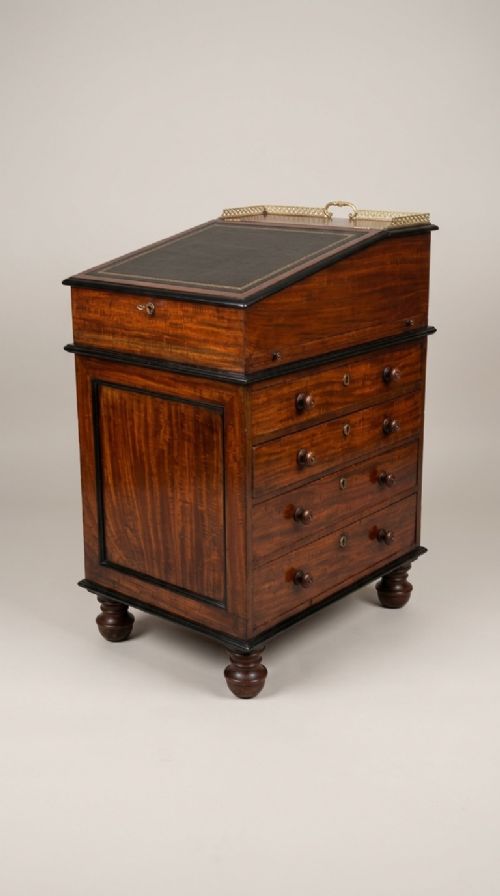
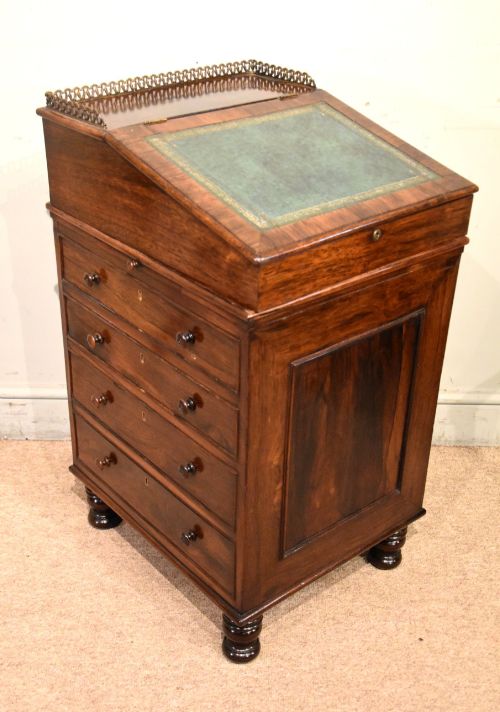
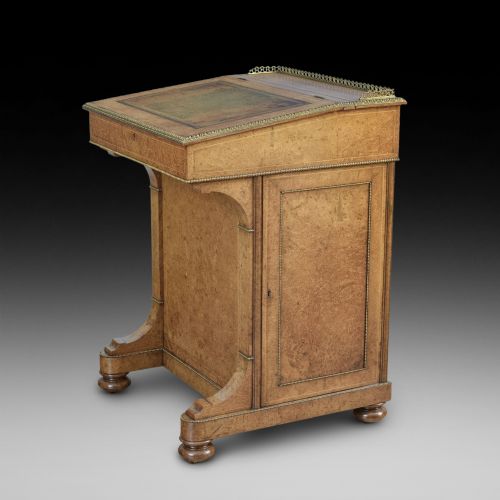
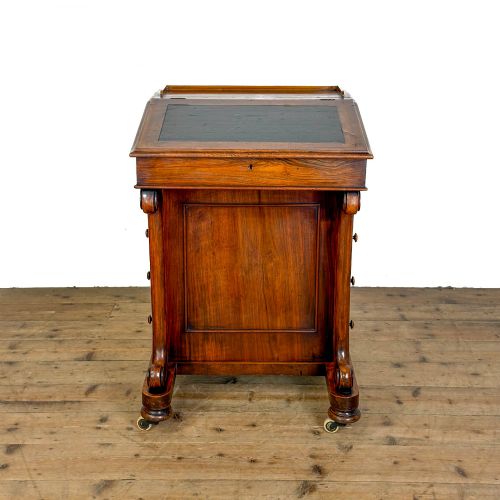
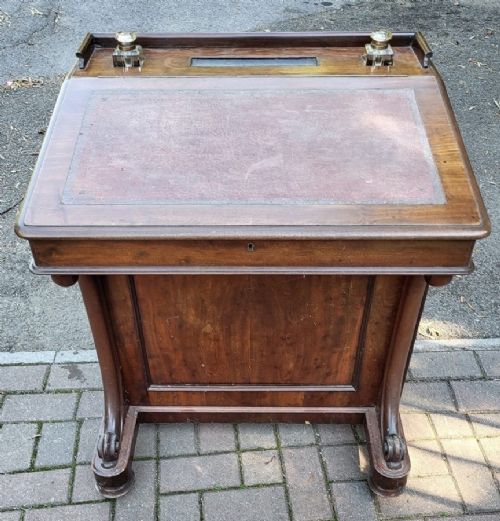
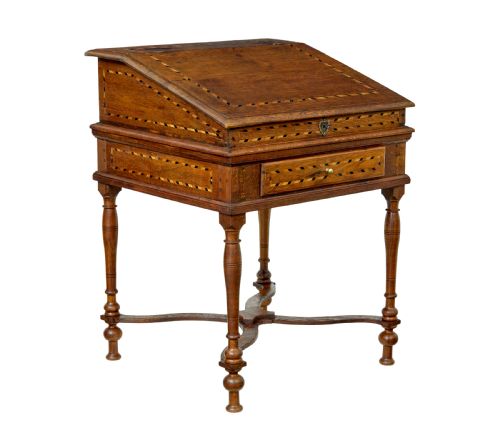
When you search for a small writing slope desk, you find portable boxes designed to sit on a table and standing cabinet forms such as the Davenport or the bureau. These compact pieces served domestic and travelling writers, providing an angled writing plane alongside compartments for paper and ink.
How they were made
Cabinet makers built these pieces using solid foundational timbers like mahogany, oak and walnut, often applying decorative veneers such as burr walnut, rosewood and satinwood to the exterior surfaces. Interior fitments frequently incorporate secondary woods like cedarwood or fruitwood alongside fitted pigeonholes and small drawers.
Fine brass mounts, brass hinges and leather inserts provide structural reinforcement and a refined writing surface. Inlaid marquetry and crossbanding add geometric and botanical ornamentation across Georgian and Victorian examples.
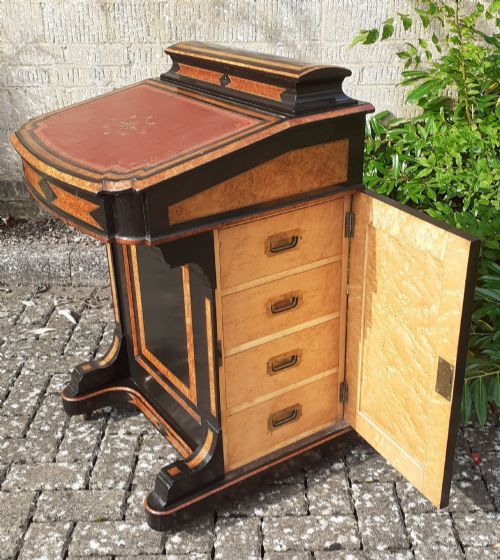
Pop-up mechanisms in Victorian walnut Davenports allowed hidden stationery cabinets to rise automatically when the writing lid lifted.
What varies in quality
Quality shows in the selection of timbers, where highly figured burr walnut, amboyna or finely grained mahogany display superior depth and movement. The precision of cabinet joinery, from dovetailed drawer linings to tightly fitted internal stationery compartments, separates standard utility pieces from finer workshops.
Hardware and secondary decorative elements also distinguish grades of manufacture. Solid brass mounts, crisp marquetry inlay and well-executed secondary wood choices indicate higher tiers of craftsmanship.
Gillows of Lancaster
The Small Writing Slope Desk Glossary
- Davenport
- A compact pedestal desk featuring a sloping, hinged writing surface and drawers opening to the side. It gained popularity during the 19th century as a space-saving writing cabinet.
- Bureau
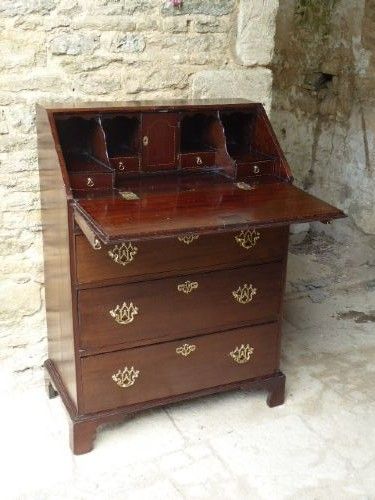
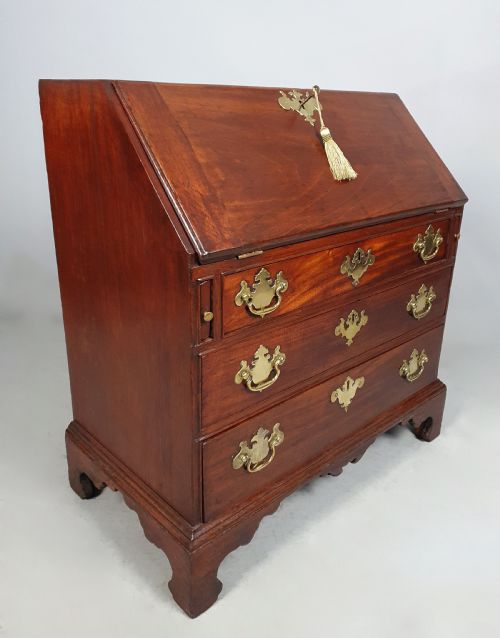
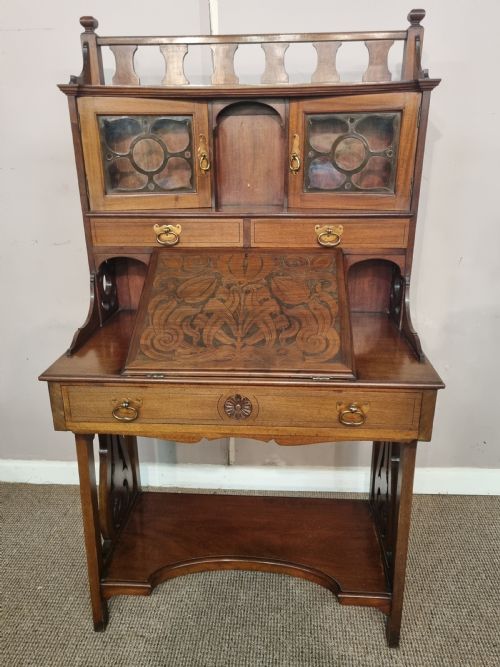
- A desk with a hinged sloping flap that opens to reveal a fitted interior of pigeonholes and small drawers. Early versions stand on bracket feet, while later variants integrate into larger cabinet structures.
- Crossbanding
- A decorative border technique where strips of veneer are laid around the perimeter of a panel so the grain runs perpendicular to the centre. This frames the primary timber of the desk lid or drawer fronts.
- Marquetry
- The art of forming decorative patterns using thin veneers of different coloured woods, ivory or shell. It appears frequently on Victorian walnut and satinwood surfaces across this selection.
Small Writing Slope Desk: Frequently Asked Questions
What is a Davenport desk?
A Davenport desk is a compact form of writing furniture featuring a sloped, hinged top above a pedestal of side drawers. It combines a writing surface with integrated storage for paper and writing implements.
Originally developed in the early 19th century, this design allowed users to write comfortably while taking up minimal floor space in a parlour or study.
How were slope desks used?
These desks provided a comfortable, angled plane for writing letters, keeping accounts and managing correspondence before the widespread use of flat writing tables. The slanted lid kept paper at a readable angle and often concealed hidden compartments for valuables.
Portable slope boxes rested on dining or Pembroke tables, while standing desk forms remained stationary in bedrooms or drawing rooms.
How do I date a bureau?
Dating relies upon timber selection, construction methods and stylistic markers such as bracket feet, interior pigeonhole design and hardware. Georgian pieces frequently utilise solid mahogany or walnut with simple internal layouts, whereas Victorian examples introduce burr veneers and more elaborate stationery fittings.
Secondary woods inside drawers also offer clues, as early pieces often feature oak or pine linings while later 19th century variants incorporate mahogany or mixed timbers.
Where should I place a slope desk?
Small writing slope desks suit rooms where floor space is limited, such as a corner of a living room, a bedroom or a home study. Tabletop versions require a sturdy surface like a sideboard or library table.
Positioning them away from direct sunlight and heat sources helps protect delicate wood veneers and leather writing inserts from drying and cracking.