
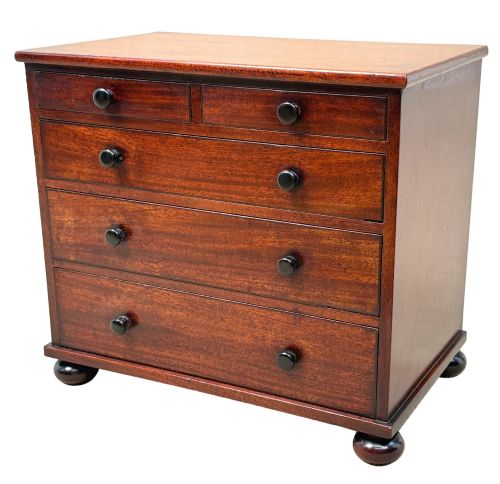
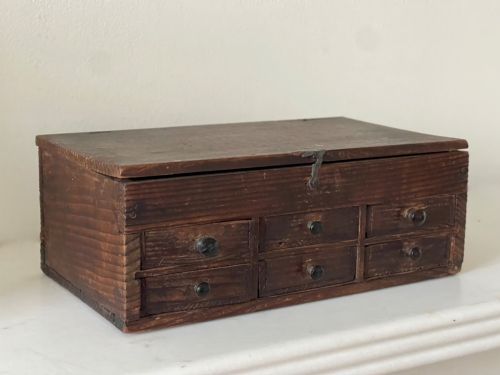
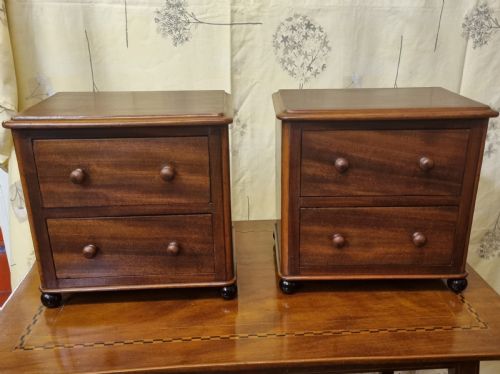
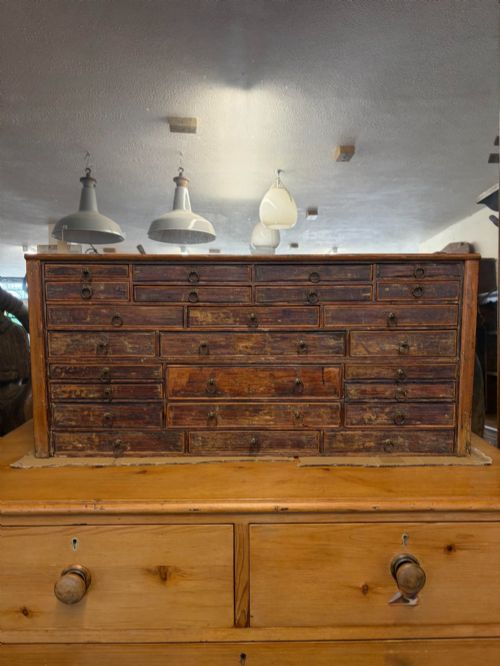
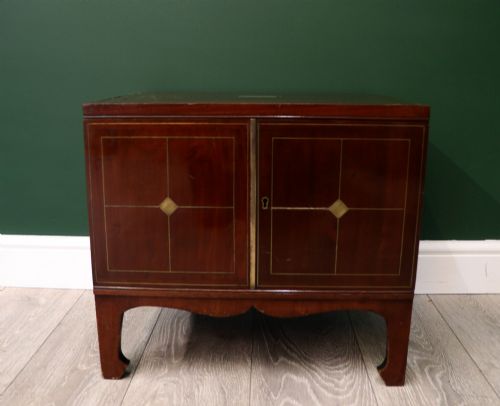
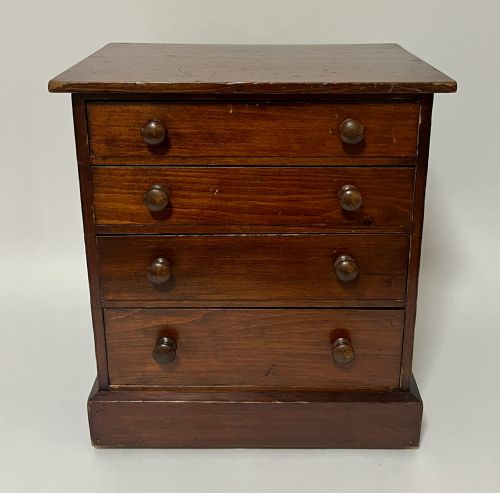
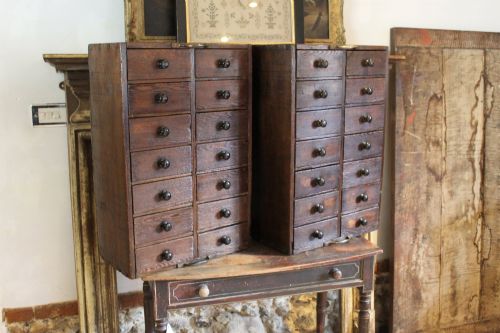
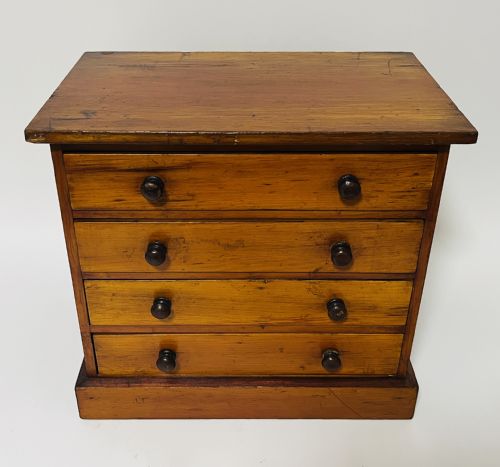
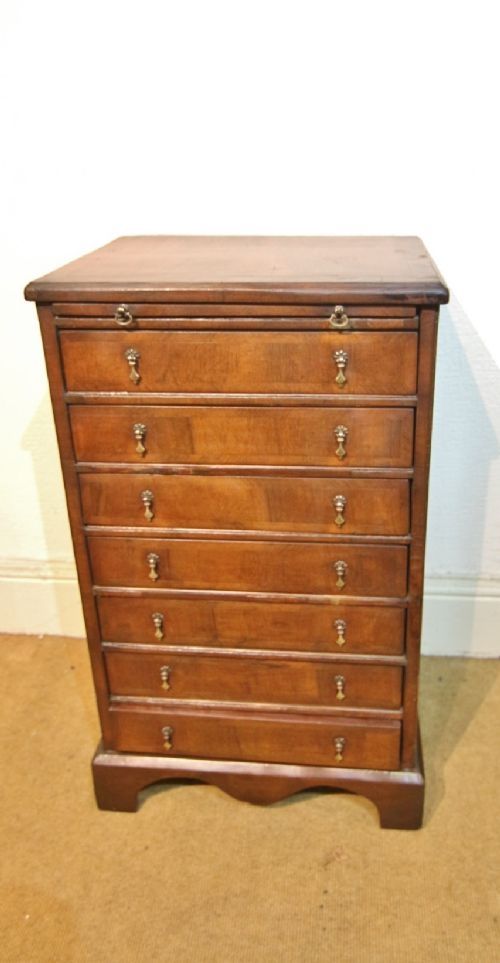
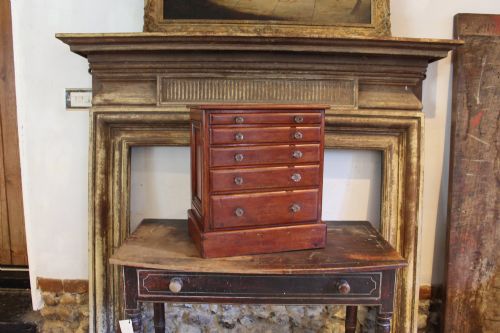


Small Wooden Specimen Chest
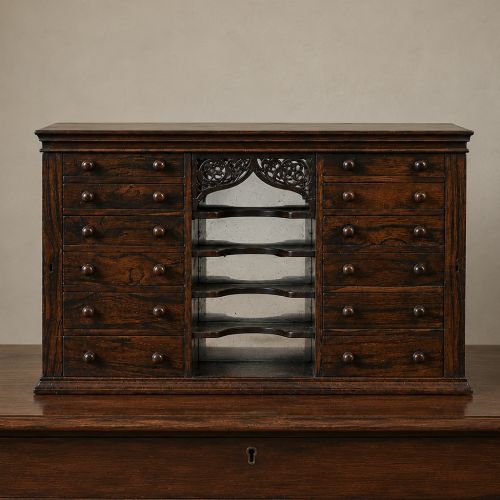
A small wooden specimen chest organises natural history or medical items in miniature drawers crafted across the Georgian, Regency and Victorian periods.
Small Wooden Specimen Chest
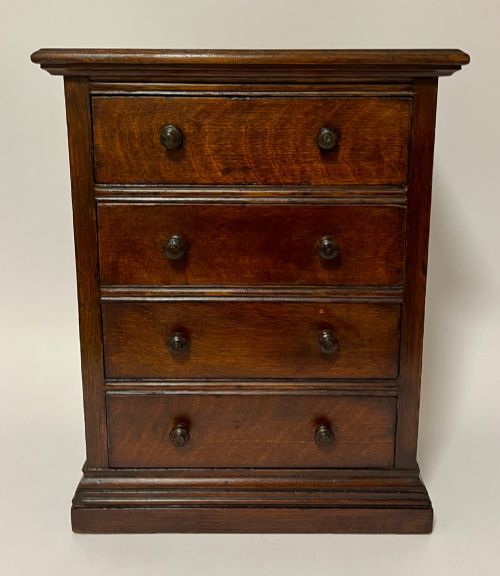
A small wooden specimen chest serves to house small objects, geological samples, insects or medical supplies in compact banks of drawers. Buyers encounter tabletop cabinets, miniature chests of drawers and apothecary storage units primarily from the nineteenth century and the Victorian era.
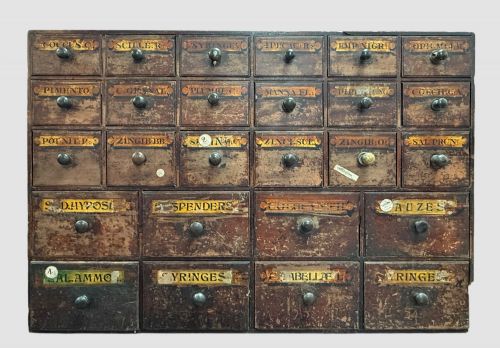
The forms span utilitarian banks of twenty-five drawers, Wellington chests with locking stiles, and campaign style cabinets fitted with brass hardware. Woods range from mahogany and walnut to stained pine, deal and exotic hardwoods like palmwood and amboyna.
Origins stretch from English workshops to Anglo-Indian studios, encompassing Georgian, Regency and Edwardian expressions. These pieces function as desktop organizers or miniature furniture designed for meticulous sorting.
How they were made
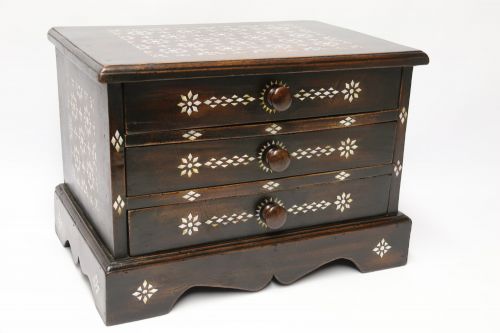
Cabinet makers built these small chests using solid hardwoods like mahogany, oak and walnut, alongside secondary softwoods such as pine and deal. Surfaces often display decorative veneers including burr walnut, satin walnut, rosewood and satinwood.
Construction details include brass drop handles, flush campaign mounts, inset locks with keys, and glass panels for display cabinets. Drawers are built to tight tolerances to protect delicate contents from dust and light.
Listings feature woods spanning mahogany, walnut, oak, pine, deal, palmwood, and amboyna across the 18th, 19th, and early 20th centuries.
What varies in quality
The distinction between ordinary utility storage and superior cabinet work rests on timber selection and interior execution. Finely figured veneers, book-matched walnut, and intricate brass inlay indicate a higher grade of workshop production.
Structural integrity relies on the precise sizing of multiple small drawers and the quality of their runner systems. Original hardware, functioning locks with keys, and specialised interiors such as microscope slide racks elevate the standing of a piece.
D Napier And Sons
The Small Wooden Specimen Chest Glossary
- Wellington chest
- A tall, narrow chest of drawers secured by a hinged locking stile that fastens over the drawer edges. This mechanism locks all drawers simultaneously with a single key.
- Campaign style
- Portable furniture designed for travel, distinguished by brass corner brackets, flush handles, and durable construction. These pieces unscrew or fold for transport.
- Apprentice piece
- A miniature furniture item created by a craftsman to demonstrate mastery of joinery skills before admission to a guild. They replicate full-scale furniture accurately in miniature.
- Specimen cabinet
- A specialised storage unit with shallow drawers built to hold botanical, geological or entomological collections. Interiors frequently feature glass tops or velvet linings.
- Apothecary chest
- A multi-drawer cabinet utilised by pharmacists or medical practitioners to store drugs, herbs and remedies. Banks of small drawers often bear remnants of paper labels.
Small Wooden Specimen Chest: Frequently Asked Questions
What were small wooden specimen chests used for originally?
These chests stored delicate items such as butterfly collections, geological specimens, microscope slides, and apothecary ingredients. Naturalists and physicians relied on the shallow drawers to keep classified items organised and protected.
Over time, domestic settings adopted them for jewellery, cigars, and sewing equipment. Their compact dimensions made them practical for desktop use in studies and surgeries.
How do I tell a Georgian chest from a Victorian one?
Georgian and Regency examples tend to display restrained classical proportions, premium timbers like figured mahogany, and subtle string inlay. Cabinet work from this earlier era prioritises clean architectural lines and understated brassware.
Victorian pieces often introduce heavier burr walnut veneers, more complex banks of drawers, and darker stained finishes. They frequently incorporate specialised inserts for microscope slides or medical equipment.
Can I use a specimen chest for modern jewellery storage?
The shallow drawers and divided compartments adapt well to rings, watches, and small trinkets. Lined interiors originally intended for specimens help prevent scratches on valuable items.
Checking drawer depth and internal dimensions ensures your specific pieces will fit comfortably within the casework without forcing closures.
Are these chests heavy to move around?
Despite being smaller than standard furniture, solid hardwood construction and multiple drawers add considerable weight. Solid oak, mahogany, and walnut cabinets require a sturdy surface to support them.
Carrying handles, where fitted on campaign styles, assist with repositioning, but care is needed due to the dense timber.