





Small Wooden Nightstand Pair
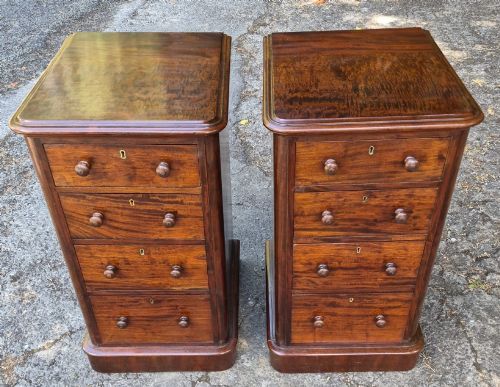
A small wooden nightstand pair gives a bedroom balanced proportion and matched storage, usually taking the form of Victorian chests or Edwardian cabinets.
Small Wooden Nightstand Pair
A small wooden nightstand pair brings symmetrical bedside storage to a room, offering matched surfaces and drawers. When you search for this phrase, you find dual pieces designed to flank a bed, appearing in forms from bedside chests to simple lamp tables.
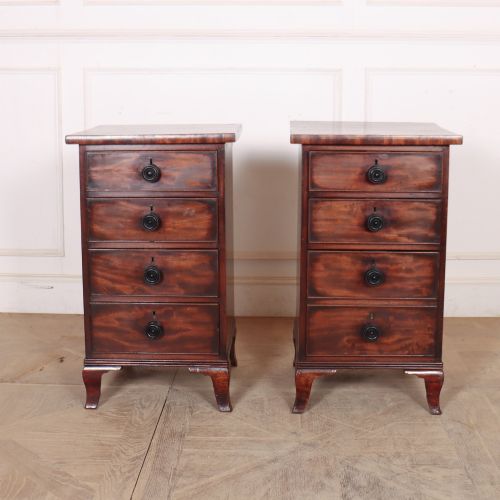
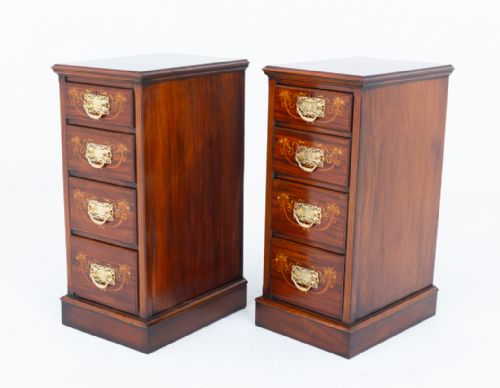
The pieces on this page span the nineteenth century through to the nineteen thirties, covering Victorian, Edwardian, and Art Deco designs. Victorian examples often take the form of compact mahogany chests, while later decades introduce walnut and oak variants with cleaner lines.
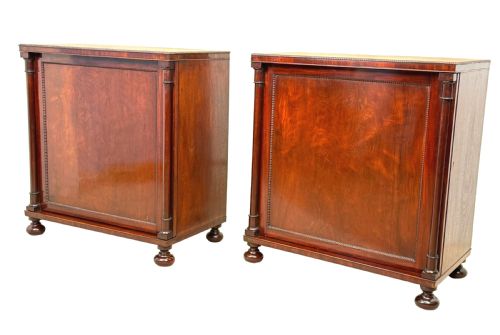
Most items function as enclosed bedside cabinets or small chests of drawers rather than open shelves. Buyers select these sets to achieve period cohesion on both sides of a bed without resorting to modern reproductions.
How they were made
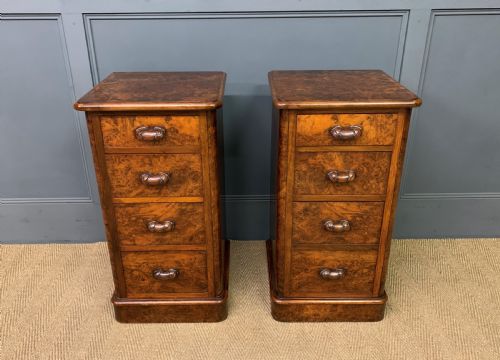
Cabinetmakers constructed these pairs using solid hardwoods and selected veneers, with mahogany and walnut forming the primary structures. Oak, ash, and satinwood also appear, sometimes enhanced by flame mahogany veneer or subtle inlaid details.
Joinery techniques reflect traditional cabinetmaking, utilising dovetailed drawer construction and panelled doors for longevity. Brass hardware, including handles and key escutcheons, provides functional contrast to the polished timber surfaces.
Small Wooden Nightstand Pair Retail Price Guide 2026
Typical asking prices for small wooden nightstand pair among the pieces listed under this phrase on Sellingantiques today, from the lower quarter to the upper quarter. They describe what is for sale here now, not the wider market.
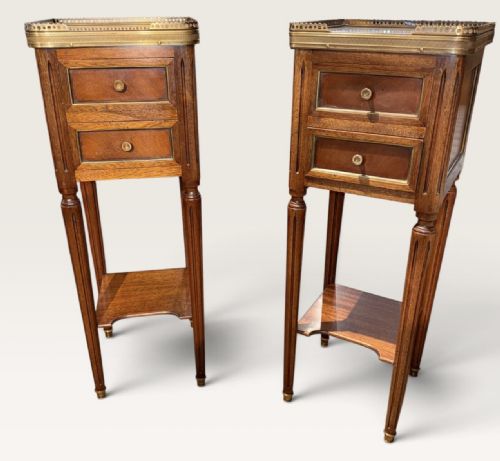
A sweet pair of French bedsides waits quietly to hold your midnight reading.
What varies in quality
The standard of a small wooden nightstand pair depends on the crispness of the timber grain and the integrity of the matching. Superior examples display carefully chosen wood figures that mirror each other across the pair.
Construction details such as flush drawer runners and intact original brass fittings elevate a pair above ordinary utility pieces. Even wear across both items indicates they have remained together since their original manufacture.
The Small Wooden Nightstand Pair Glossary
- Bedside Cabinet
- A small enclosed cupboard designed to stand beside a bed, usually featuring a single door and interior shelf. It keeps nighttime necessities out of sight.
- Flame Mahogany Veneer
- A thin slice of mahogany timber cut from the fork of the tree, displaying a distinctive flickering flame pattern. Cabinetmakers applied this to drawer fronts for decorative impact.
- Inlaid
- A technique where contrasting woods or materials are set into the surface of a piece to create ornamental patterns. Edwardian pieces frequently utilise this method.
- Dovetailed
- A joint formed by interlocking wedge-shaped fingers, prized for its exceptional strength in drawer construction. It indicates traditional hand or early machine crafting.
- Lamp Table
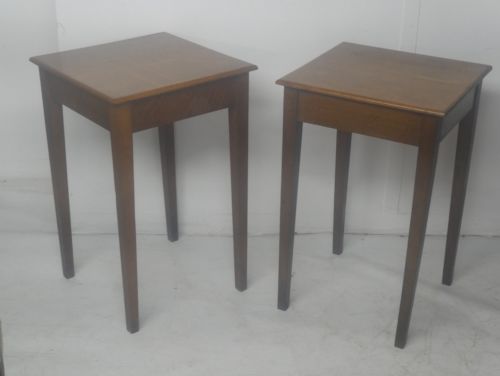
- A small, open-legged occasional table designed to hold a light source. In bedroom settings, these serve as lighter alternatives to heavy bedside chests.
Small Wooden Nightstand Pair: Frequently Asked Questions
Are both tables identical in a pair?
Most pairs are true matches made together by the same workshop, sharing identical dimensions, timber selection, and hardware.
Occasionally, pieces function as a matched set assembled later, though period pairs were typically sold as dual units from the outset.
How do I date a wooden bedside table?
Dating relies on combining the timber, style, and construction methods visible in the piece. Victorian examples often feature rich mahogany and substantial proportions, while Art Deco versions show geometric forms in walnut.
Examining the drawer joints and backboards provides further clues regarding the era of manufacture.
Can I mix different wood tones?
Placing a wooden nightstand pair against other furniture depends on the unifying warmth of the timber rather than a strict match. Mahogany and walnut share deep reddish-brown undertones that blend well with varied antique finishes.
Matching the general period style matters more than finding the exact same tree species.
How should I clean antique wood?
Routine maintenance requires only a soft, dry cloth to remove dust and preserve the polished finish. Avoid modern silicone sprays or harsh chemical cleaners that can damage aged wax or shellac.
Feeding the timber periodically with appropriate antique wax helps maintain the lustre of the grain.