



Small Wooden Footrest
A small wooden footrest brings low-slung comfort and period craftsmanship into a room without dominating the floor space.
Small Wooden Footrest
When you search for a small wooden footrest, you encounter a selection of compact stools designed for supporting the feet by a fireside or in a lounge. These pieces date across the nineteenth century, encompassing Early Victorian, Victorian, and later rustic traditions.
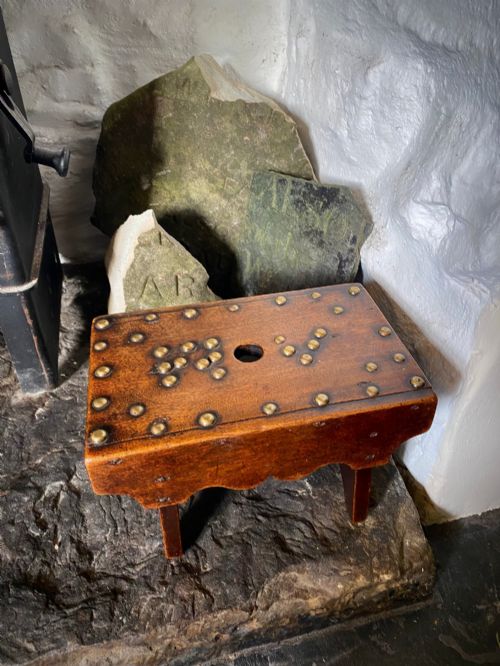
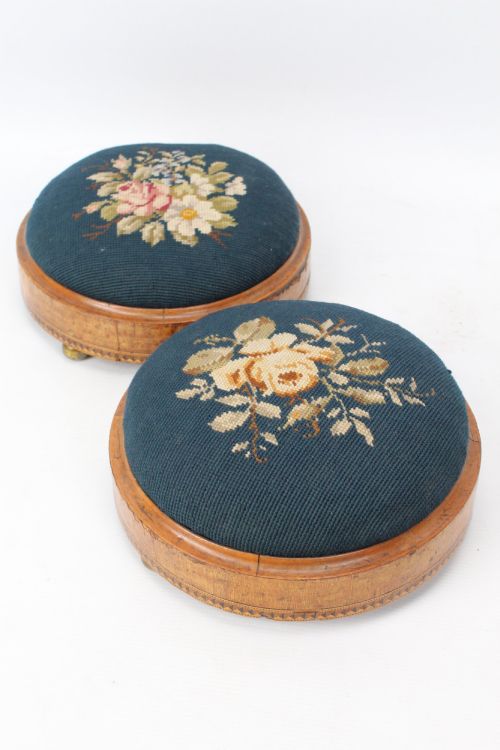
The most likely versions to meet on this page are low forms constructed from mahogany, walnut, beech, burr yew, pitch pine, or ebonised wood. They often feature upholstered tops in tapestry, needlepoint, textile, or wool, sometimes finished with brass studs.
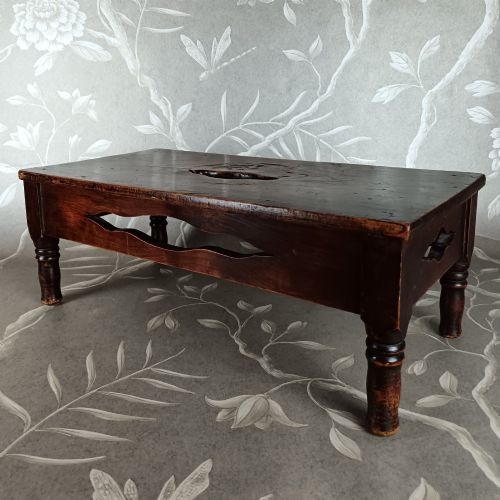
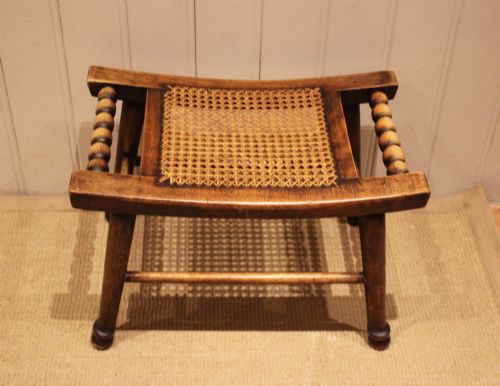
The assortment ranges from vernacular country pieces like country draught top turned wood stools to ornate Victorian examples and Italian folk art. Pairs of footstools and individual stools both appear, serving as both utilitarian seating and decorative furnishings.
How they were made
These items rely on traditional carpentry and turning techniques to shape domestic timbers such as mahogany, walnut, maple, beech, and pitch pine into sturdy frames. Solid wood construction forms the basis, occasionally augmented by decorative surface elements like Tunbridge Ware.
Upholstery techniques involve securing textile, wool, or tapestry needlepoint directly to the wooden structure, frequently finished with brass studs to fasten the fabric securely. Turned legs and carved details demonstrate the hand-tool methods of nineteenth-century makers.
Small Wooden Footrest Retail Price Guide 2026
Typical asking prices for small wooden footrest among the pieces listed under this phrase on Sellingantiques today, from the lower quarter to the upper quarter. They describe what is for sale here now, not the wider market.
Current listings feature items from the nineteenth century, spanning Early Victorian and Victorian periods alongside Italian folk art.
What varies in quality
The distinction between standard examples and finer pieces rests upon the choice of timber and the sophistication of the woodworking. Figured woods like burr yew or carved walnut elevate a piece above simple turned beech or pitch pine.
The intricacy of the upholstery and decorative detailing also dictates standing. Original needlepoint, tapestry covers, and careful brass stud work distinguish the more accomplished items from plain utility stools.
The Small Wooden Footrest Glossary
- Tunbridge Ware
- A type of woodwork characterised by mosaic tile patterns formed from tiny pieces of naturally coloured wood. It appears on decorative nineteenth-century panels and small items.
- Burr Yew
- A timber taken from the growth growths of a yew tree, prized for its swirling, highly figured grain pattern. It provides a rich decorative surface on small furniture.
- Ebonised
- Wood treated with a chemical stain or finish to imitate ebony, producing a dense black surface popular in Victorian design. This finish highlights the formal lines of the piece.
- Needlepoint
- Canvas work embroidery using wool or yarn to create dense pictorial or geometric designs. It frequently forms the upholstered top of nineteenth-century footstools.
Small Wooden Footrest: Frequently Asked Questions
What is a small wooden footrest?
A small wooden footrest is a low, compact stool designed for elevating the feet while seated in a chair or by a fireside. These pieces utilise various domestic timbers and often feature upholstered textile tops.
Originating largely in the nineteenth century, they combine practical utility with period decorative styles ranging from vernacular country items to formal Victorian furnishings.
How were these stools used?
Historically, people placed these low stools near firesides and in lounges to keep feet away from cold draughty floors. They provided portable comfort in parlours and sitting rooms.
Beyond functional seating, matching pairs and decorative variants served as refined accessories within period interiors.
How do I live with one?
Integrating a small wooden footrest into a modern room is straightforward due to its modest footprint. Position it beside an armchair or use it as a low decorative accent piece.
Protect delicate textiles like wool, tapestry, and needlepoint from direct sunlight, and treat the wooden frames with appropriate natural waxes to maintain the finish.
How do I tell periods apart?
Differentiating periods involves examining the timber selection, turning styles, and upholstery methods. Early Victorian pieces often display formal carved walnut or elaborate needlework, while vernacular country items rely on simpler turned beech or pitch pine.
Reference markers like Tunbridge Ware or specific framing techniques help narrow down the date of manufacture within the nineteenth century.