



Folk Art Wooden Bench
A folk art wooden bench brings the honest utility and distinct regional character of country life directly into a room.
Folk Art Wooden Bench
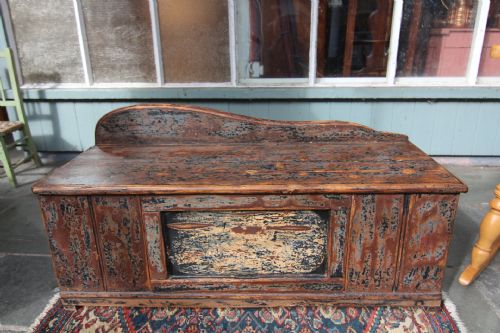
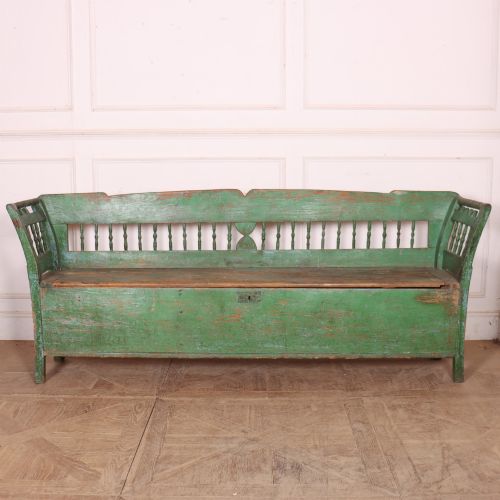
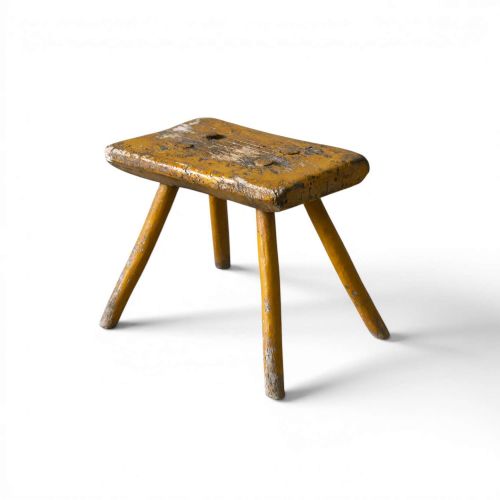
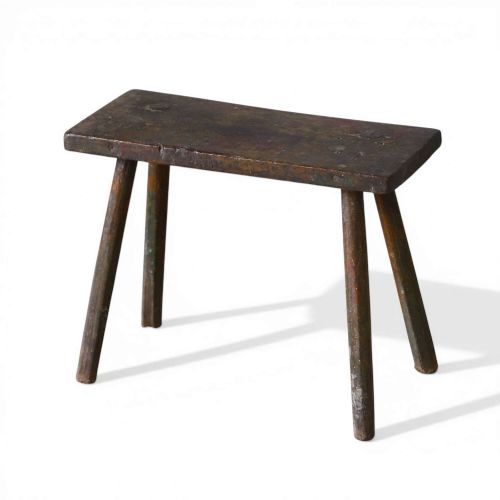
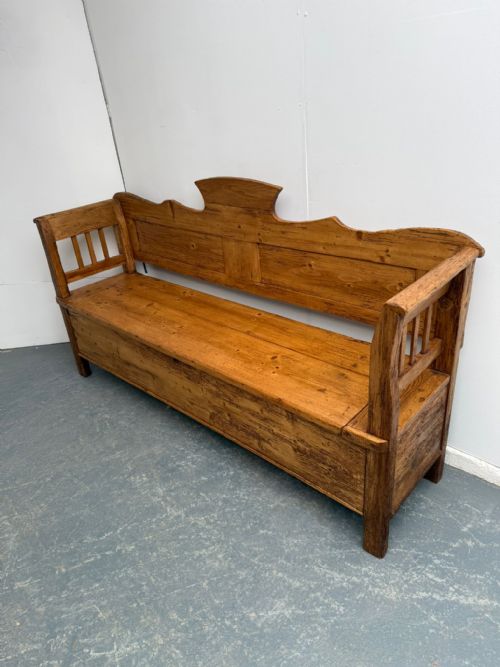
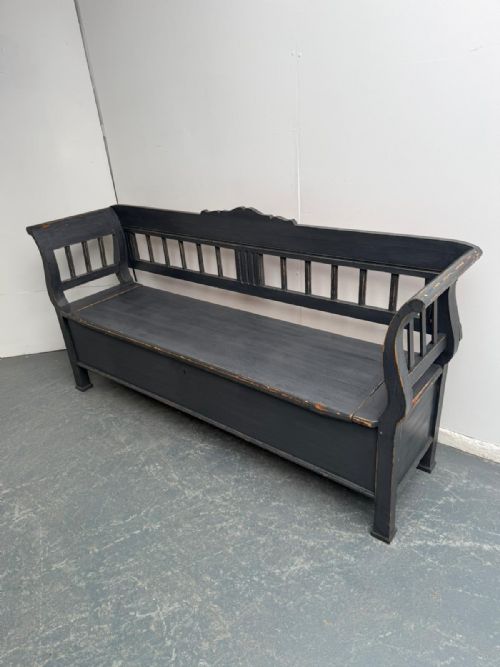
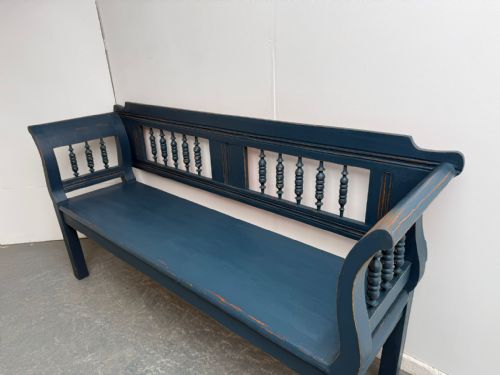
A folk art wooden bench represents the unpretentious seating traditions of rural European and British homes, ranging from simple milking stools to large painted box settles. When searching for a folk art wooden bench, buyers encounter pieces that display regional craftsmanship, such as Scandinavian country seating, Austrian farmhouse settles, and Hungarian box benches.
The inventory spans several centuries, drawing heavily from the nineteenth century alongside Georgian, Victorian, and Edwardian periods. Forms vary from small children's furniture and natural form oak stools to expansive three-seater painted settles and canopied Spanish designs.
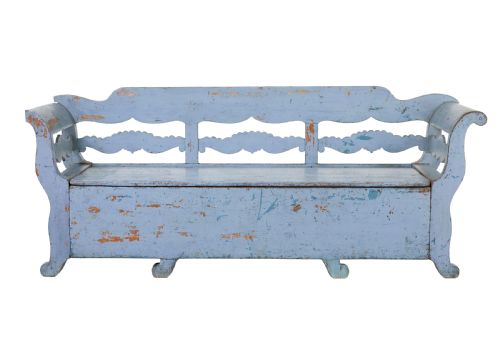
These items served practical domestic purposes in farmhouses and cottages, frequently incorporating storage compartments or specific functional shapes like sculpted rounded seats and corner configurations. Their appeal lies in this direct connection to historical utilitarian life, combined with surface decoration that reflects local aesthetic traditions.
Materials and construction methods
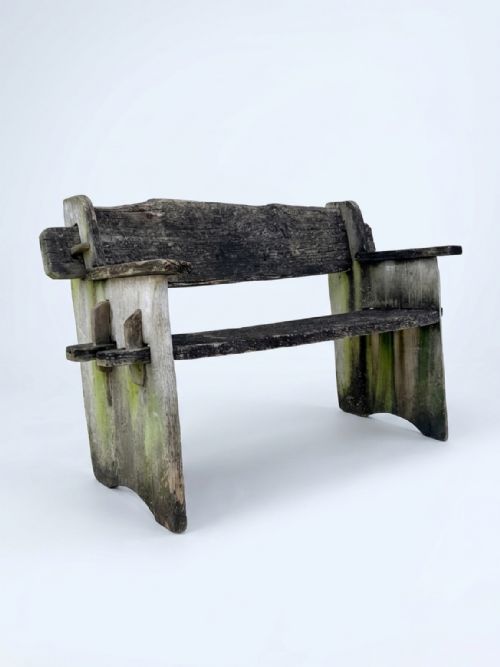
Makers utilised available local timbers such as pine, oak, beechwood, linden wood, and general weathered wood to construct these robust seats. Construction techniques relied on straightforward vernacular carpentry, joining solid planks and natural forms to endure daily use in agricultural and domestic settings.
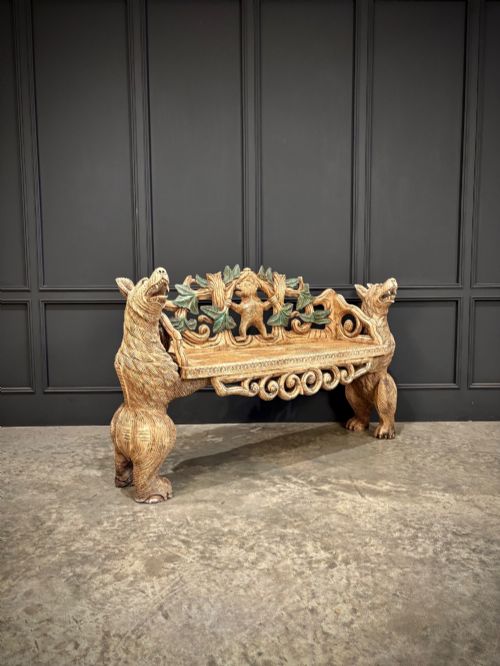
Many examples retain original surface treatments, including polychrome finishes, scumble paint, and specific pigments like ochre, green, blue, and cream. Specialised carving also appears, as seen in Black Forest work and sculpted wooden forms.
Pine and oak dominate the timber selections here, accompanied by distinctive painted finishes in ochre, green, and blue across nineteenth-century European forms.
Assessing quality in country seating
Quality rests in the integrity of the original construction and the preservation of authentic surface finishes, such as untouched painted schemes or aged wax patination. Pieces that retain their genuine regional character and structural proportion stand apart from heavily restored or altered examples.
The sophistication of the vernacular design, whether through unusual forms like box seats and canopied settles or simpler natural timber shapes, dictates the distinction between standard utilitarian items and exceptional decorative specimens.
The Folk Art Wooden Bench Glossary
- Settle
- A wooden bench with a high back, solid arms, and frequently a box compartment beneath the seat for storage. This form kept drafts away from occupants in unheated rooms.
- Scumble
- A paint technique involving a translucent top layer dragged or combed over a lighter base coat to imitate the grain of more expensive timbers. It was widely used on pine furniture.
- Polychrome
- Decorated or painted in several different colours. This finish appears frequently on European folk art furniture to brighten domestic interiors.
- Vernacular
- Architecture and objects created independently of professional architectural or academic styles, utilising local traditions and materials. It represents the everyday design of a specific region.
- Box Settle
- A bench featuring an enclosed storage chest integrated beneath the seat. The lifting lid provided practical utility in rural European farmhouses.
Folk Art Wooden Bench: Frequently Asked Questions
How do I date an antique wooden bench?
Dating relies on construction methods, timber choice, nail types, and the wear patterns visible on the wood. Stylistic cues such as Georgian proportions or Victorian paint finishes help narrow the period.
Comparing the joinery to documented examples from the eighteenth and nineteenth centuries provides a reliable timeline for each piece.
Are these benches suitable for daily use?
Most antique country benches were built for robust everyday utility and remain structurally sound for modern seating. Care should be taken to protect original painted surfaces from excessive moisture and wear.
Placing them in appropriate indoor environments preserves both the timber and any surviving historic finishes.
What is the difference between a settle and a bench?
A settle typically includes a high solid back and enclosed sides or arms designed to block cold drafts in older homes. Many traditional settles also incorporate a box seat for household storage.
A standard bench offers simpler open construction without the high protective back or integrated chest compartment characteristic of regional settles.