





Small Walnut Slant Desk
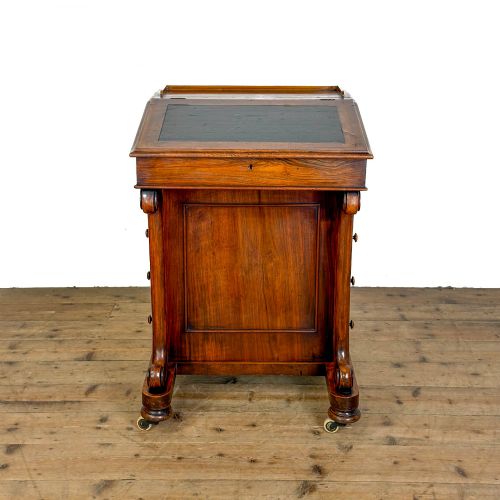
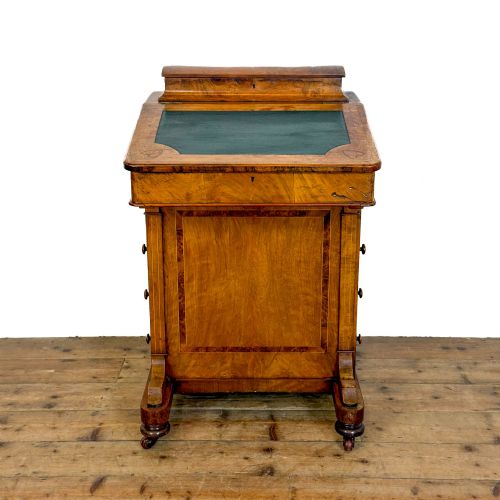
A small walnut slant desk is a compact writing cabinet housing fitted drawers behind a sloping lid, offering rich timber grain for a study or drawing room.
Small Walnut Slant Desk
When you search for a small walnut slant desk, you encounter compact writing furniture designed for domestic correspondence and the storage of papers. These pieces span centuries of cabinet making, appearing in forms such as bureau desks, Davenport writing desks, and dainty bonheur-du-jour tables.
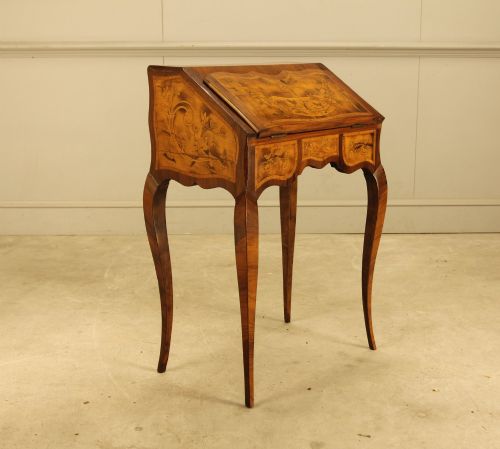
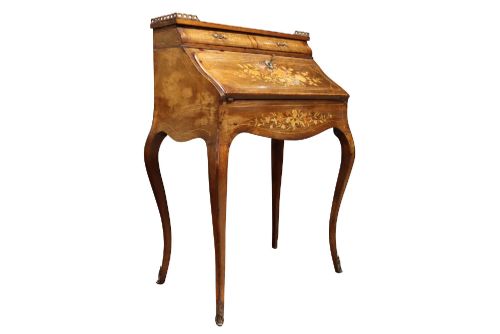
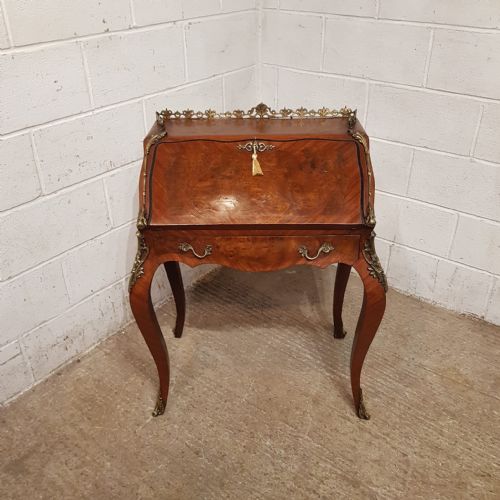
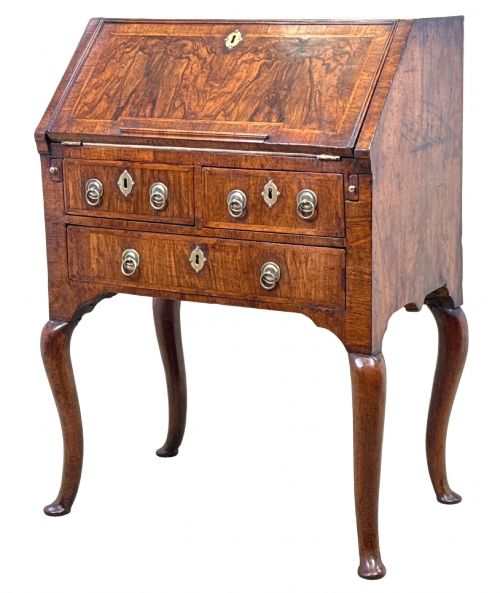
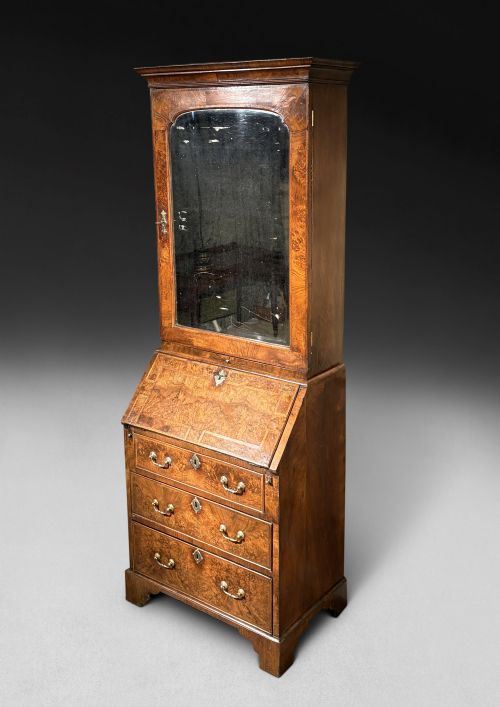
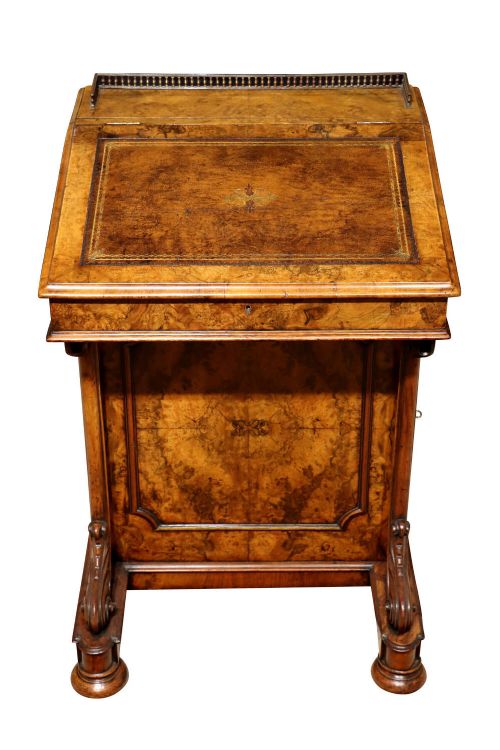
The selections on this page concentrate heavily on Victorian Davenport desks alongside 18th Century and Queen Anne style bureaux. Many examples employ burr walnut veneers, showing swirling grain patterns across the sloping writing flaps and drawer fronts.
Cabinet makers constructed these items to occupy minimal floor space while providing functional internal compartments, pigeonholes, and small drawers. The integration of a sloping fall front allows the writer to conceal correspondence instantly.
How they were made
Carpenters selected figured walnut and burr walnut veneers, laying them over secondary timbers like oak to create decorative patterned surfaces on the exterior carcase. Marquetry inlay, brass handles, ormolu mounts, and leather writing inserts frequently complemented the timber.
Internal components relied on traditional joinery, including dovetail construction for small drawers and panelled partitions within the writing compartments. Frame and panel methods accommodated timber movement across the sloping lids and side panels.
Listings feature walnut, burr walnut, oak, brass, leather, and marquetry inlay across Victorian and 18th Century periods.
What varies in quality
The visual impact depends largely on the choice and matching of burr walnut veneer across the fall front and drawer faces. Superior execution involves seamless grain continuity and meticulous marquetry inlay that remains crisp and undisturbed.
Construction standards are evident in the secondary woods chosen for drawer linings and internal divisions, where solid oak signifies robust workmanship. The integration of original brass hardware, fitted leather writing surfaces, and well-balanced proportions distinguishes finer cabinet making.
Gillows
The Small Walnut Slant Desk Glossary
- Burr walnut
- A prized timber veneer sourced from the abnormal growth knots of walnut trees, yielding intricate swirling grain patterns. Cabinet makers selected these sections to cover prominent surfaces like slant desks and drawer fronts.
- Davenport
- A compact pedestal desk featuring a sloping writing top and a set of drawers accessed from the side. This form gained immense popularity during the Victorian era for boudoir and parlour use.
- Bureau
- A writing desk with a sloping hinged lid that opens to reveal a fitted interior of pigeonholes and small drawers. Early examples often rest on bracket feet or dedicated stands.
- Marquetry
- The art of applying decorative veneer pieces in geometric or floral patterns onto a timber carcase. Craftsmen utilised contrasting woods to create elaborate visual displays.
- Bonheur-du-jour
- A light ladies writing desk featuring a small cabinet or set of shelves super-imposed on the back of the work surface. French revival examples frequently incorporate delicate ormolu mounts.
Small Walnut Slant Desk: Frequently Asked Questions
What is a Davenport desk?
A Davenport is a compact form of writing desk featuring a sloping lid on top and drawers opening to the side.
Victorian makers produced numerous variations of this design, frequently incorporating burr walnut veneers and leather writing inserts.
How do I date a walnut bureau?
Dating relies on examining construction methods, secondary timbers, and stylistic traits like bracket feet or fall-front proportions.
Earlier pieces from the 18th Century typically exhibit hand-cut dovetails and solid oak linings, whereas later revival items reflect Victorian manufacturing techniques.
What is burr walnut?
Burr walnut is a decorative wood veneer harvested from the knotty growths of walnut trees.
Cabinet makers valued this material for its dense, swirling grain patterns, which created striking visual depth on slant desks and tabletops.
Where were slant desks used?
These desks served primarily in private studies, drawing rooms, and bedrooms for handling personal correspondence and keeping records.
Their modest proportions allowed them to fit comfortably into smaller living spaces without dominating the room.