
Small Tripod Pedestal Table
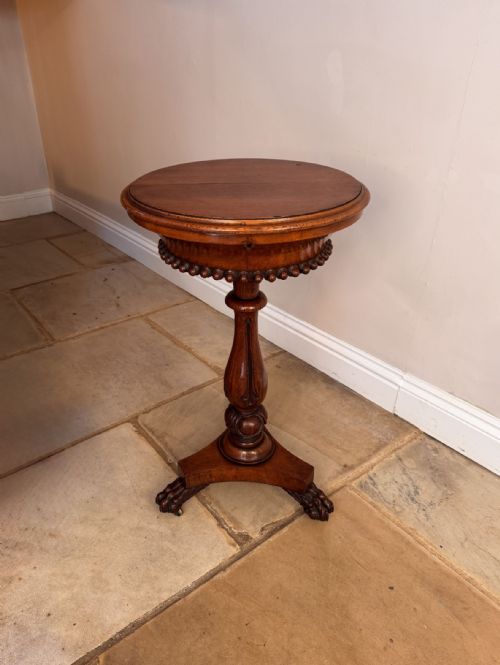
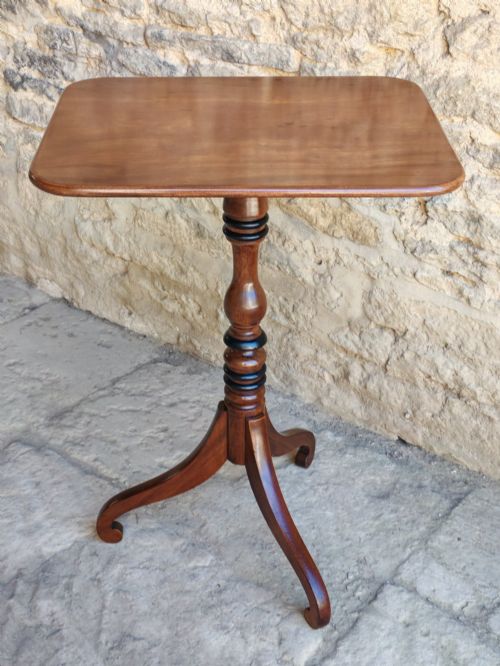
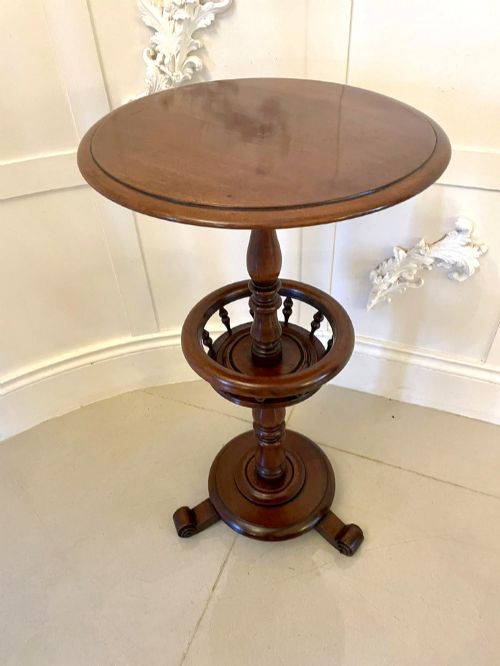
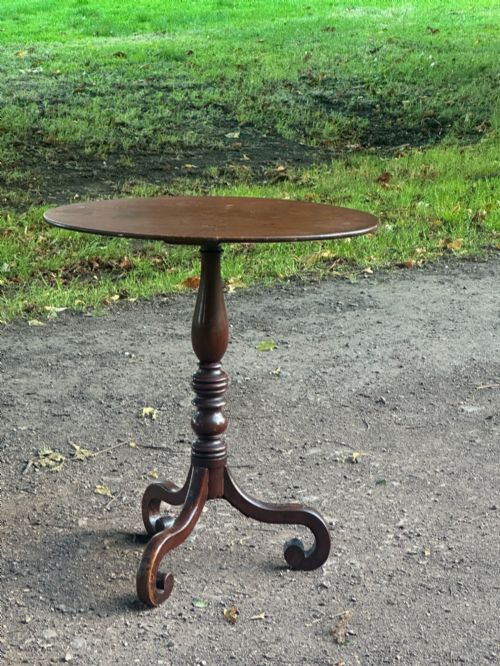
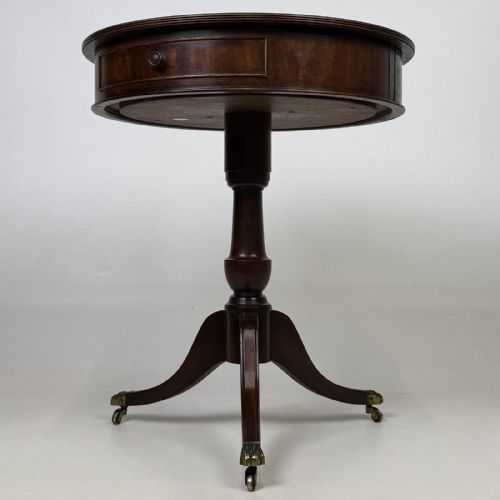
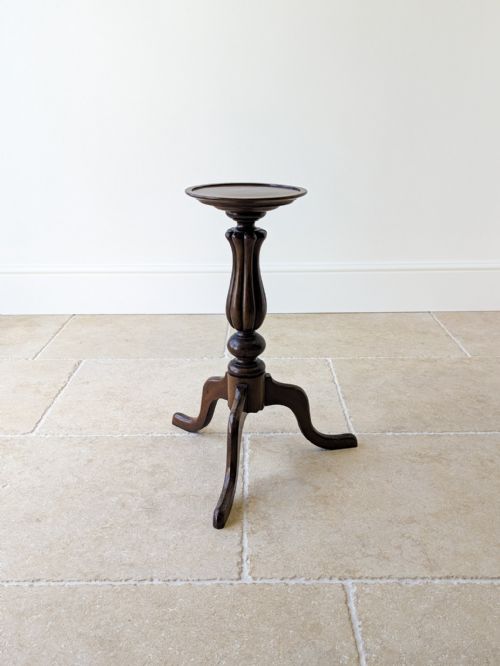
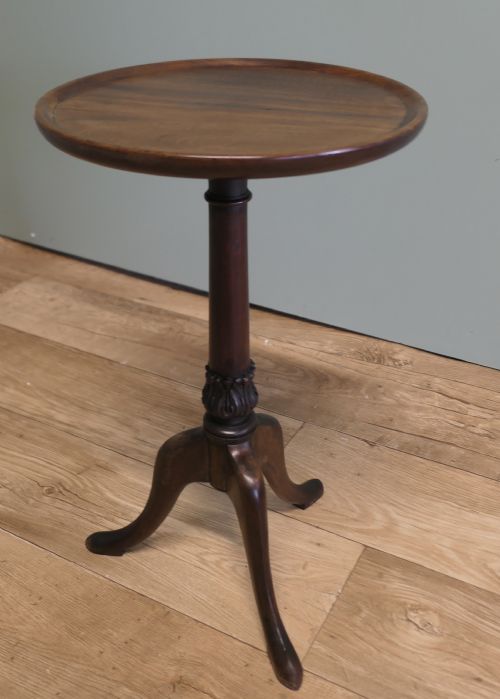
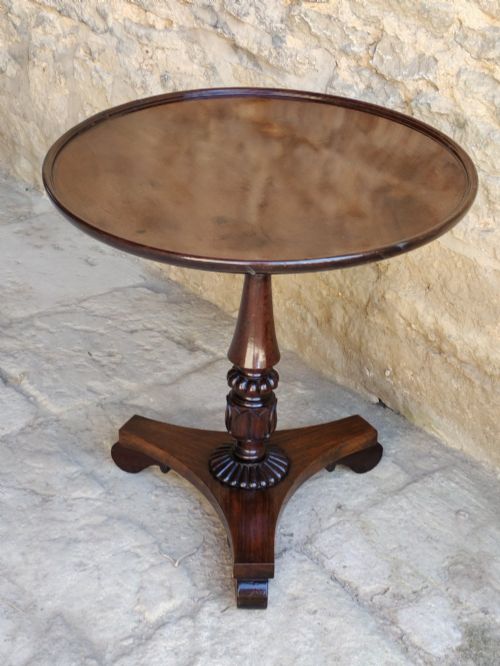
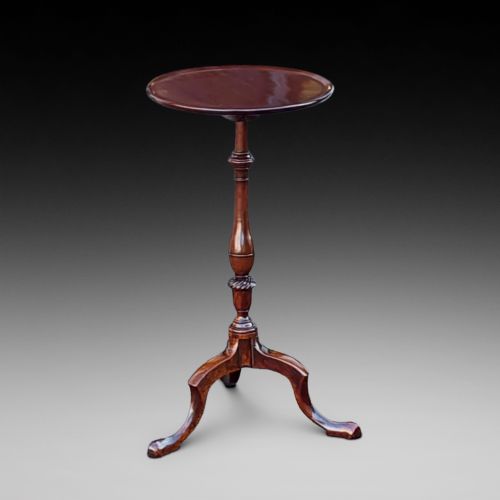
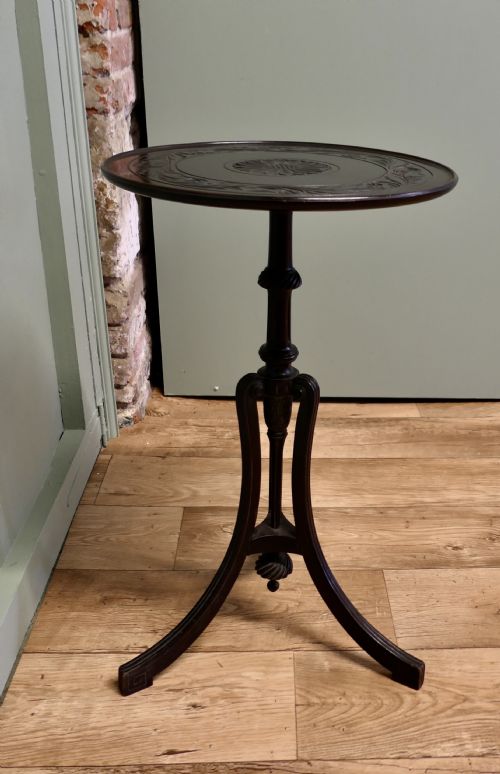
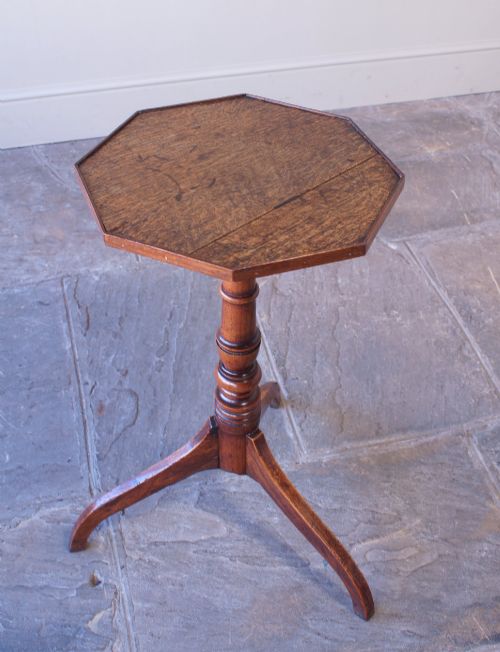
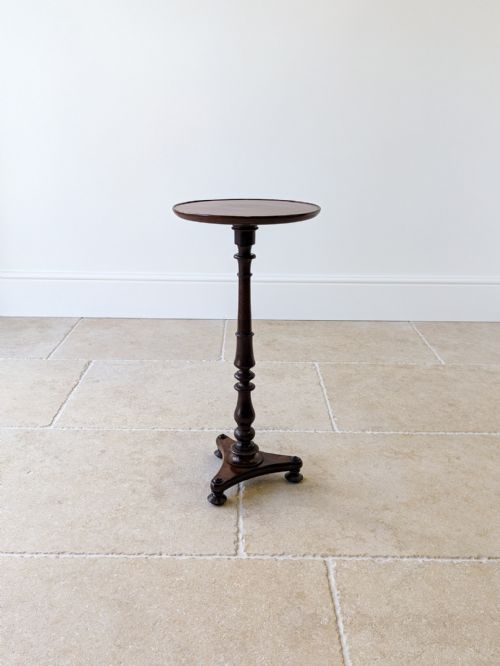
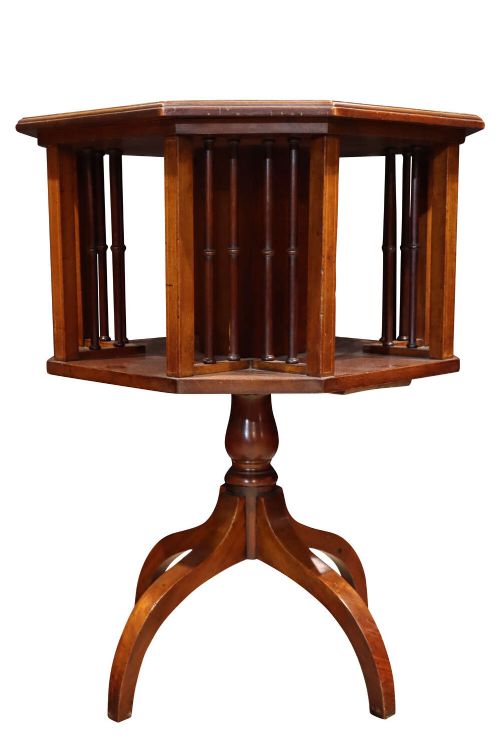
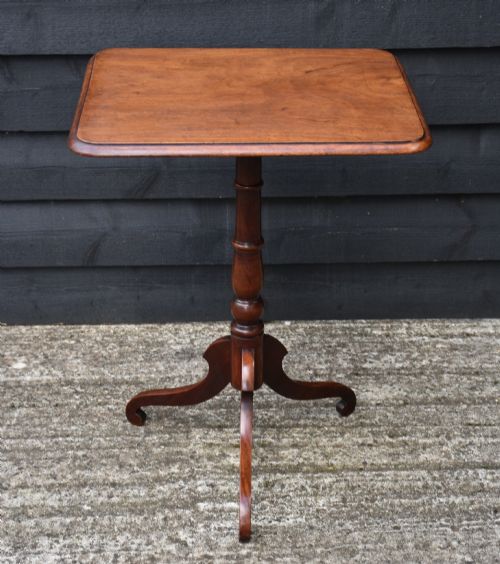
A small tripod pedestal table offers compact surface space supported by a central pillar and three legs, favoured for placing beside chairs.
Small Tripod Pedestal Table
A small tripod pedestal table is a compact item designed for occasional use in sitting rooms and parlours. The pieces found here span multiple periods, including the Georgian, Regency, Victorian, and Edwardian eras.
The form frequently appears as a wine table, lamp table, or candle stand, standing on a single central pillar supported by three legs. Mahogany is the predominant timber seen across these variations, alongside walnut, oak, fruitwood, and elm.
Buyers meet pieces originating from various workshops and countries, including British and Swedish examples. Both fixed tops and tilt-top mechanisms appear regularly among the listed items.
How they were made
Cabinetmakers utilised solid timbers and veneers such as mahogany, walnut, oak, and fruitwood to construct the pillars and tops. Turning lathes shaped the central pedestals, while joinery techniques united the legs firmly to the base.
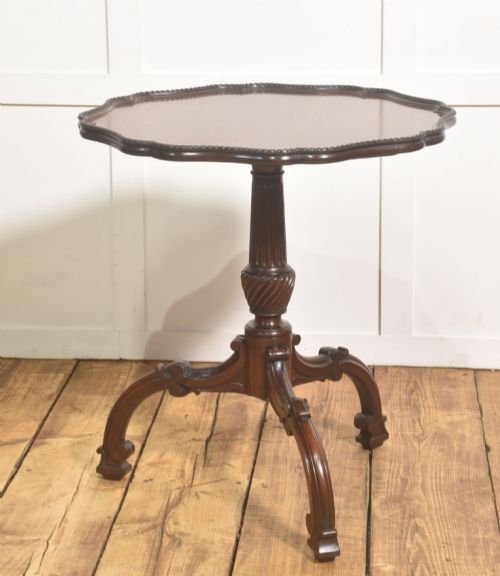
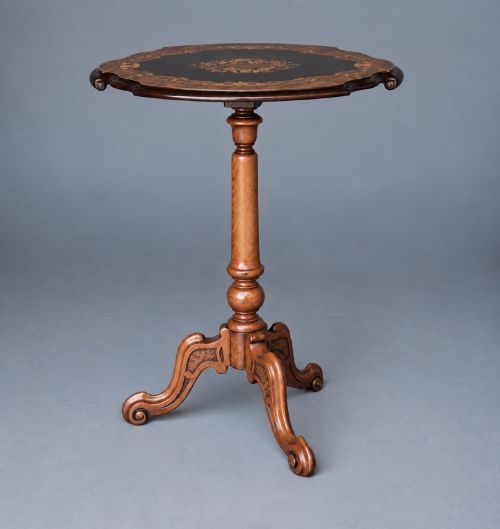
Some examples incorporate decorative elements including boxwood inlay, carved details, and shaped pie crust rims. Tilt-top variants required specialised brass or wooden catches to allow the surface to pivot safely.
Listings feature mahogany, oak, walnut, fruitwood, elm, and burr walnut across Georgian, Victorian, Regency, and Edwardian periods.
What varies in quality
The refinement of the timber selection dictates the initial visual impact, with figured veneers and rich grain patterns marking out finer examples. Timber choice ranges from plain utility woods like elm and basic oak up to burr walnut and figured mahogany.
Proportion and stability separate standard items from superior pieces, particularly in the turning of the central column and the graceful curve of the tripod legs. Subtle details such as boxwood stringing or intricate edge shaping reflect the skill invested by the maker.
The Small Tripod Pedestal Table Glossary
- Tripod table
- A small stand supported by a central pillar resting on three individual legs. This construction provides stability on uneven floors.
- Tilt top
- A hinged mechanism allowing the circular tabletop to pivot into a vertical position when not in use. This clever design saved space in period rooms.
- Wine table
- A compact occasional table designed to hold glasses and decanters beside a chair. They often feature circular tops and slender pedestals.
- Pie crust rim
- A carved and shaped tabletop edge resembling pastry work on a pie. It represents a decorative refinement found on finer examples.
- Pedestal
- The central vertical column supporting the tabletop above the three feet. It is frequently turned on a lathe from a single piece of timber.
Small Tripod Pedestal Table: Frequently Asked Questions
What is a small tripod pedestal table?
A small tripod pedestal table is a compact piece of furniture featuring a central column supported by three legs. These versatile stands served various practical functions in historic interiors.
Today they function as side tables, lamp stands, or bedside surfaces. Their modest footprint makes them suitable for modern rooms with limited space.
How were tilt-top tables used?
Tilt-top tables allowed owners to pivot the tabletop into a vertical position. This meant the furniture could be stored flat against a wall when not in use.
In period homes, this saved valuable floor space in smaller parlours and sitting rooms.
What woods were used for these tables?
Cabinetmakers primarily utilised mahogany, walnut, and oak for these compact tables. Lighter woods like fruitwood and elm also appear in regional pieces.
Finer examples sometimes incorporate burr walnut veneers or decorative boxwood inlay along the edges and legs.
How do I identify a Georgian table?
Georgian examples generally display restrained classical proportions and solid timber construction. They often feature simpler turned pillars and sturdy tripod bases.
Later revival pieces from the Victorian and Edwardian periods frequently emulate these earlier Georgian design characteristics.
Where should I place one?
These tables fit easily beside armchairs, sofas, or beds where a small surface is needed. Their compact circular tops accommodate a lamp, book, or cup.
They also work effectively in corners or empty hallways as decorative display stands.