

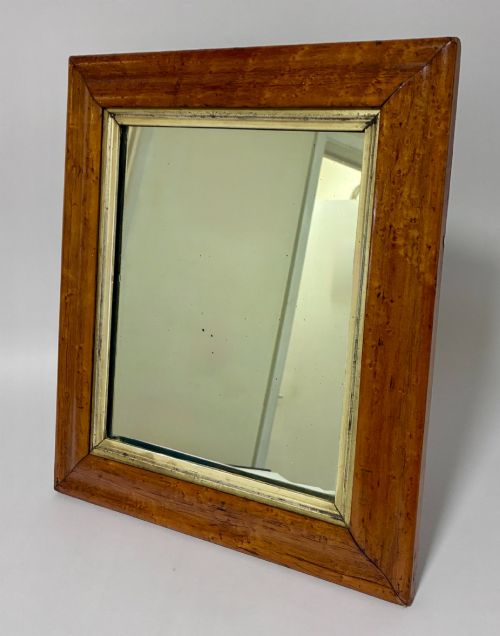

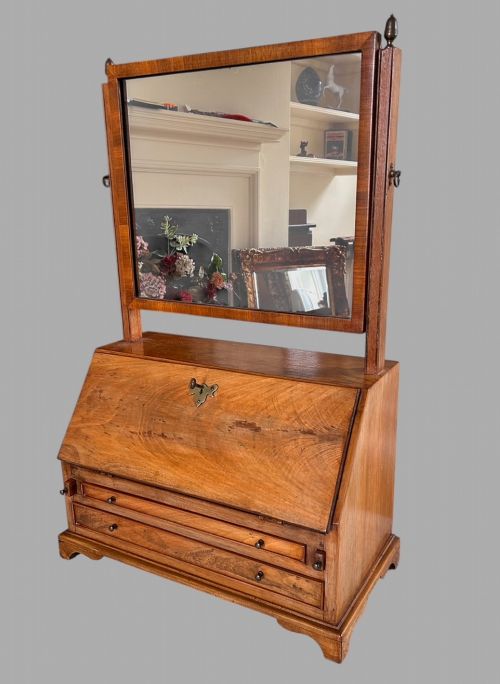
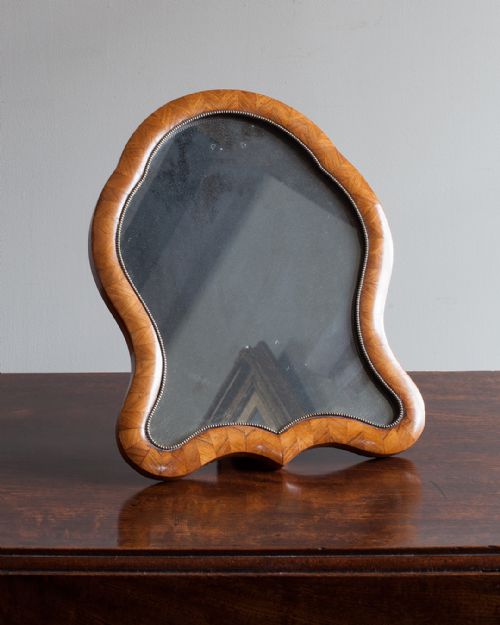
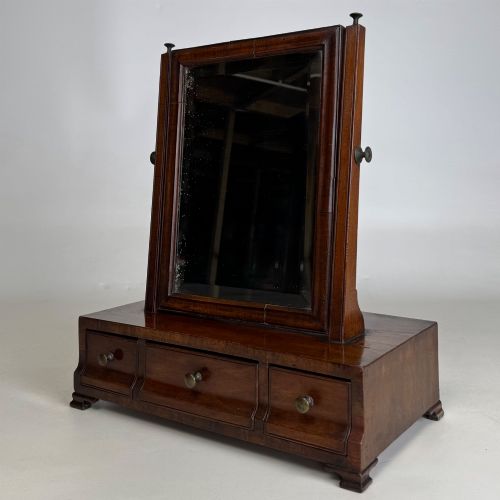
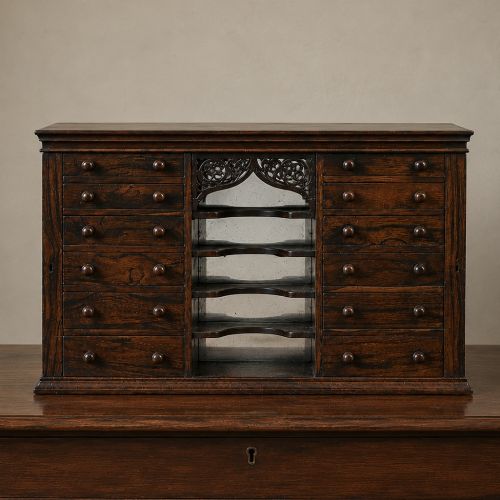


Small Tabletop Mirror
A small tabletop mirror brings personal reflection and intimate scale to a bureau, desk, or dressing chest.
Small Tabletop Mirror
A small tabletop mirror sits on a surface rather than hanging on a wall, offering a movable glass for a dressing room or parlour. These pieces span Georgian, Victorian, Edwardian, and later periods, often taking the form of dressing mirrors, toilet mirrors, or vanity glasses.
The objects on this page range from modest nineteenth-century examples in mahogany or brass to French Rococo-style and ebonised variations. Alongside traditional dressing mirrors, the selection includes miniature furniture and small display cabinets with mirrored elements.
Most items reflect domestic habits of the eighteenth, nineteenth, and early twentieth centuries, designed for intimate spaces where full-sized dressing tables were impractical. They offer functional glass paired with cabinetmaker's work in miniature.
Materials and construction
Cabinetmakers built these frames using dense hardwoods like mahogany, rosewood, satinwood, kingwood, and birds-eye maple, frequently employing fine veneers. Brass and ormolu mounts provide structural support and decorative contrast, particularly on easel backs and swivel frames.
Mirror glass is set within pivoting wooden frames or secured to miniature cabinet backs, often supported by scroll brackets or tabletop stands. Ebonised wood and applied porcelain plaques appear alongside simpler oak and brass constructions.
Small Tabletop Mirror Retail Price Guide 2026
Typical asking prices for small tabletop mirror among the pieces listed under this phrase on Sellingantiques today, from the lower quarter to the upper quarter. They describe what is for sale here now, not the wider market.
Listings feature woods including mahogany, rosewood, satinwood, kingwood, ebonised wood, and birds-eye maple alongside brass and mirror glass.
Assessing quality and execution
Quality rests in the precision of the cabinetwork, the choice of timber figure, and the preservation of the original mirror glass. Finer examples show careful jointing in miniature, matched veneers, and substantial brass hardware rather than stamped metal.
The integration of the mirror frame to its stand dictates the overall harmony of the piece, where smooth pivoting action and stable easel backs demonstrate competent workshop practice. Superior execution is visible in crisp mouldings and thoughtful proportions.
The Small Tabletop Mirror Glossary
- Toilet mirror
- A small tabletop glass designed for grooming, typically mounted on miniature drawers or a pivoting stand. These pieces sat upon chests of drawers in bedrooms and dressing rooms.
- Easel back
- A hinged support strut attached to the rear of a mirror frame, allowing the glass to stand upright on a flat surface. This mechanism is frequently found on nineteenth-century examples.
- Satinwood
- A pale, hard timber with a natural sheen, prized by cabinetmakers for fine veneer work on nineteenth-century small furniture and mirror frames.
- Ormolu
- Gilt bronze mounts applied to furniture and mirror frames for decorative effect, common in French revival styles of the nineteenth century.
- Apprentice piece
- A miniature item demonstrating a craftsman's skill to achieve journeyman status, often taking the form of a small chest or cabinet with mirrored elements.
Small Tabletop Mirror: Frequently Asked Questions
Where should I place a tabletop mirror?
These mirrors suit dressing chests, sideboards, and tabletops where they provide a functional reflection without requiring wall fixings. Their compact scale allows them to sit comfortably in smaller rooms or hallways.
Ensure the surface is stable and level, particularly for pivoting models that require a secure base to prevent tipping during adjustment.
How do I date a small tabletop mirror?
Dating relies on timber choices, construction techniques, and stylistic markers such as Georgian proportions, Victorian scrollwork, or Edwardian simplicity. Secondary woods and framing methods provide further clues to the decade of manufacture.
Examine the mirror glass itself, as bevelling techniques and silvering methods changed significantly between the eighteenth and twentieth centuries.
Are these mirrors original to their stands?
Many tabletop mirrors survive with their original swivel frames and supporting bases, particularly when constructed as a single cabinet unit. Checking the fit of the pivots and the wear around the screw mounts helps confirm originality.
Variations in timber colour or mismatched fixings can indicate later repairs or assembled components.
How do I clean and maintain the wood and glass?
Dust wooden frames gently with a dry, soft cloth and avoid modern aerosol polishes that can build up on old finishes. Natural wax applied sparingly helps preserve the patina of hardwoods like mahogany and rosewood.
Clean mirror glass with a minimum of liquid applied to a cloth rather than the glass directly, preventing moisture from seeping behind the edges and damaging the silvering.