
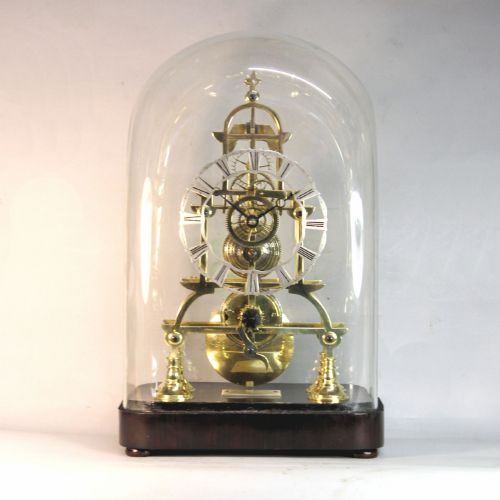


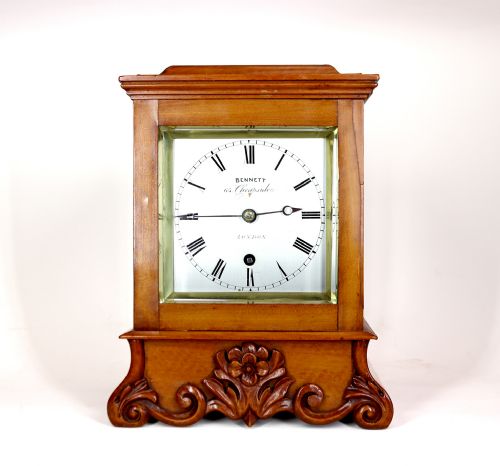


Small Table Clock
A small table clock brings precision and fine cabinetmaking together in a compact footprint designed for desks and mantelpieces.
Small Table Clock
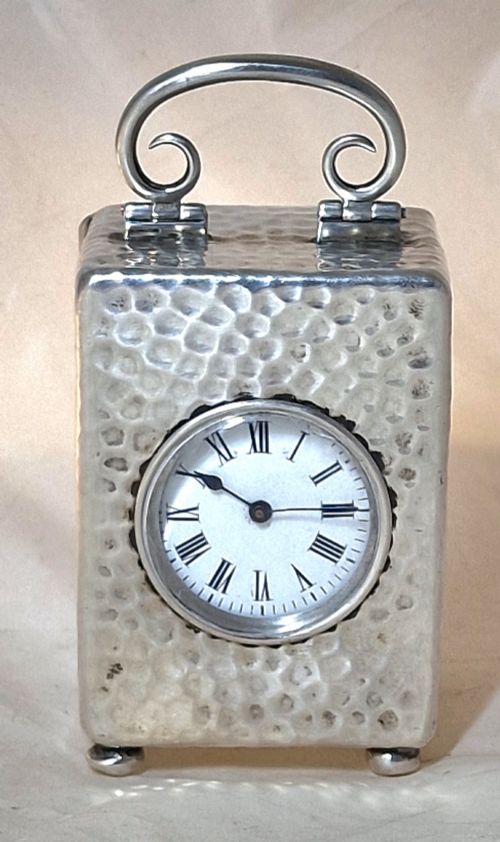
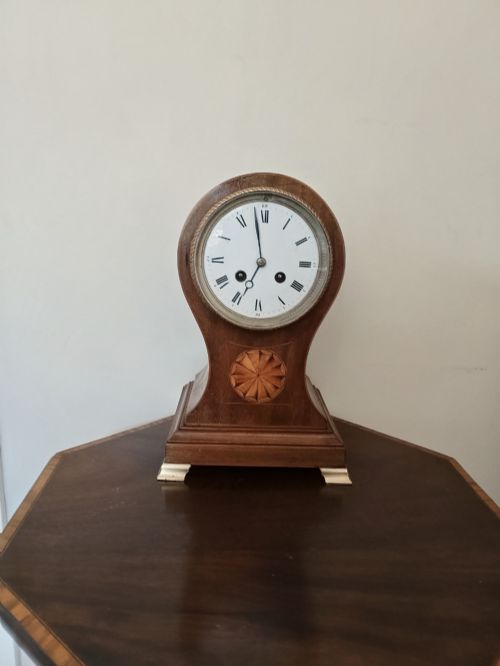
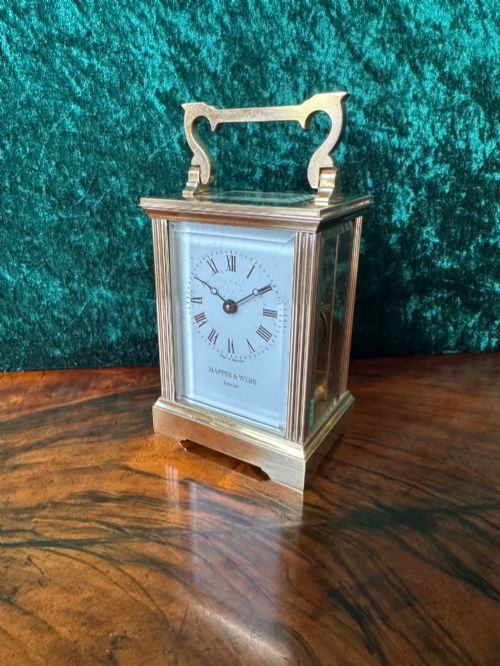
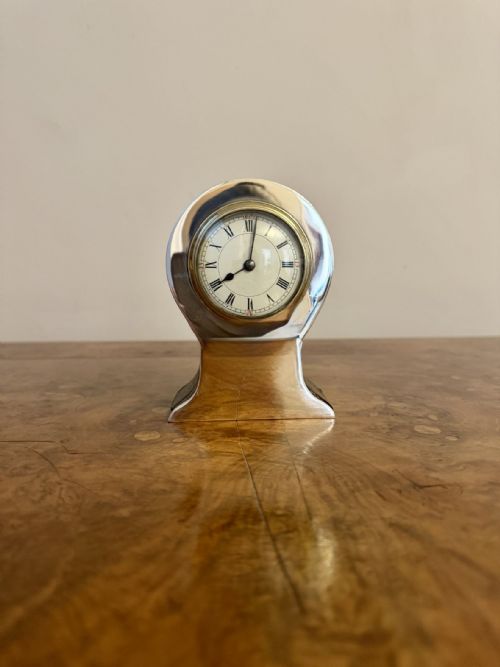
A small table clock is a portable timepiece housed in a fitted wooden or metal case, designed to sit comfortably on furniture without dominating a room. You will frequently encounter brass carriage clocks and mahogany or walnut bracket and mantel forms across the nineteenth century.
These pieces range from English fusee movements in classical timber housings to ornate French gilt brass designs with enamel dials. The selections span eras from late Georgian precision work through Victorian revival styles up to Art Deco chrome and marble.
Makers housed these mechanisms in everything from simple oak cases to intricate Chinoiserie and satinwood finishes, keeping timekeeping accessible for smaller spaces.
How they were made
Clockmakers constructed movements using brass plates, steel wheels, and escapements driven by either weight, mainspring, or fusee cone mechanisms to regulate time evenly. Cases combine structural timbers such as mahogany, walnut, ebony, and satinwood with cast metals like ormolu, gilt bronze, and sterling silver.
Dials received meticulous treatment through silvering, hand-painting, or enamel work, protected beneath bevelled glass panels or glazed bezels. Cabinetmakers utilised fine veneers, brass inlay, and carved mouldings to finish the compact housings.
What varies in quality
Quality rests in the crispness of the movement construction, the crisp engraving on dials and backplates, and the integrity of the timber case. A superior piece displays hand-finished gear teeth, signed plates by notable makers, and heavy gauge brass or solid hardwoods rather than thin veneers.
The sophistication of the escapement and the inclusion of striking or alarm complications elevate standard timepieces into exceptional horological examples. Proportion and original matching components determine whether a clock retains its historical character.
Mappin and Web·Richard Winter of Chieveley·Sir John Bennett·William Comyns·Tiffany·J Batson and Son·Louis Recordon·Lenzkirch·Payne and Co·Perigal of London·Joseph Jump·McCabe London·Arnold and Frodsham·Barraud·John Seddon·John Ebsworth·F Waldek London·Tennant London
The Small Table Clock Glossary
- Fusee
- A conical pulley used in older clocks to maintain even power from the mainspring as it unwinds. This mechanism ensures consistent timekeeping throughout the duration of the wind.
- Carriage clock
- A small, portable spring-driven clock with a carrying handle, originally designed for travelling officers and gentry. They typically feature glazed glass sides displaying the escapement.
- Bracket clock
- A traditional English table clock, originally built with a bracket for wall mounting but later placed directly on furniture. These often feature striking trains and arched wooden cases.
- Silvered dial
- A brass clock face treated with a silver compound to produce a frosted, matte finish with engraved numerals filled in black wax. This technique provides clear legibility against ornate brass backings.
- Timepiece
- A clock that indicates the time without any striking mechanism or musical train. Simpler to maintain than striking clocks, they focus purely on visual elegance and hour-tracking.
Small Table Clock: Frequently Asked Questions
Where should I place a carriage clock?
Position your carriage clock on a stable, level surface away from direct sunlight, draughts, and radiators. A sturdy desk, mantelpiece, or bookshelf provides an ideal environment for consistent performance.
Avoid high-vibration areas like top shelves near heavy doors to protect the delicate balance wheel and escapement from premature wear.
What is the difference between a timepiece and a mantel clock?
A timepiece simply tells the time without striking on the hour or half-hour. They offer a quieter operation suited for quiet rooms and studies.
Mantel clocks frequently incorporate striking trains with bells or gongs, requiring additional gear trains within the wooden or metal case.
How do I identify the age of a wooden clock case?
Examine the timber species, construction joints, and back door fittings to determine the period of manufacture. Georgian and Regency pieces often utilise solid mahogany or fine veneers with secondary pine or oak carcases, while Edwardian examples show different internal blocking.
Maker signatures engraved on the backplate or painted onto the dial provide the most reliable dating evidence.