

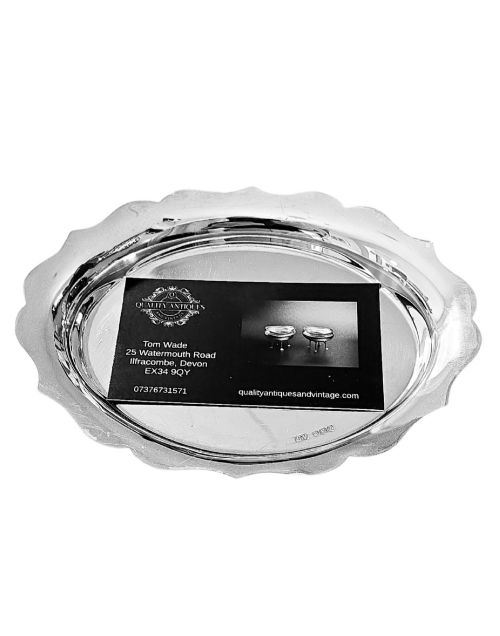
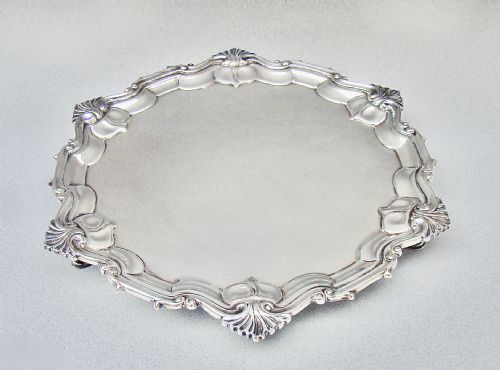


Small Silver Waiter
A small silver waiter is a compact serving tray designed for cards, glasses or small vessels, prized for its elegance and utility.
Small Silver Waiter
When you search for a small silver waiter, you are examining compact serving trays, card trays, salvers, dishes, patens and teapot stands. These domestic accessories have served various purposes across centuries of entertaining and correspondence.
The pieces you meet on this page span several distinct periods, including the eighteenth century, the Georgian era, the Victorian period, the Edwardian era, the mid-twentieth century and the nineteen-sixties. Forms range from simple card trays to modernist cocktail trays and traditional teapot stands.
Originating predominantly from British workshops, these items reflect changing domestic habits from receiving calling cards to serving morning tea or evening drinks. Buyers frequently encounter both sterling silver examples and various plated alternatives such as Old Sheffield plate and electroplated nickel silver.
Materials and Construction
Makers utilised sterling silver and solid silver for the finest traditional examples, alongside copper bases fused with silver in Old Sheffield plate and later electroplated nickel silver techniques. These metallurgical methods determined the weight, durability and visual character of each tray.
Craftsmen shaped these metals through hand-hammering, casting, piercing and rolling, often applying applied borders or engraved details by hand. Hallmarks stamped into sterling silver pieces record the assay office, standard and date letter.
Small Silver Waiter Retail Price Guide 2026
Typical asking prices for small silver waiter among the pieces listed under this phrase on Sellingantiques today, from the lower quarter to the upper quarter. They describe what is for sale here now, not the wider market.
Assessing Quality and Merit
Quality in a small silver waiter rests upon the crispness of its engraved decoration, the integrity of its raised borders and the balance of its form. Superior pieces exhibit precise chasing and substantial metal gauge rather than thin construction.
The clarity of hallmarks or maker marks on sterling pieces contributes significantly to desirability. In plated items, the preservation of the original silver layer over the base metal dictates the longevity and visual appeal of the surface.
Emile Viner·William Hutton & Sons·William Garrard
The Small Silver Waiter Glossary
- Waiter
- A small serving tray or salver, typically raised on feet or resting flat, used for carrying glasses, letters or calling cards.
- Salver
- A plate or tray used for presenting items, historically synonymous with a waiter.
- Old Sheffield Plate
- An early method of fusing a thin sheet of sterling silver to a thicker copper core by heat and pressure, often showing a thin line of copper at the edges.
- Paten
- A small plate or dish, originally ecclesiastical in use for the bread of the Eucharist, but also applied to domestic silver dishes of similar form.
- Teapot stand
- A small raised tray designed to protect wooden tabletops from the heat of a teapot.
Small Silver Waiter: Frequently Asked Questions
What is a small silver waiter used for?
These pieces served historically to hold calling cards left by visitors, or to present letters, glasses and small vessels. In modern settings, they function effectively as decorative desk accessories or small cocktail trays.
The compact scale makes them versatile for placement on side tables, dressers or mantelpieces without dominating the surrounding interior space.
How do I distinguish sterling silver from silver plate?
Sterling silver pieces bear hallmarks that indicate the metal standard, assay office and date of manufacture. Silver plated items lack these official hallmarks and often reveal base metals like copper at points of wear.
Examining the edges under magnification can help reveal the fused copper layer characteristic of Old Sheffield plate.
How should I clean silver waiters?
Gentle cleaning with a soft cloth and a proprietary silver polish removes tarnish without harming engraved details. Avoid abrasive materials that can scratch the metal surface or wear away thin plating.
Plated items require particular care to prevent the underlying base metal from becoming exposed through excessive rubbing.
What period do most of these trays come from?
The selection includes items from the eighteenth century, the Georgian era, the Victorian and Edwardian periods, and mid-century modern designs up to nineteen sixty-seven.
Each era brings distinct stylistic traits, from ornate Victorian borders to clean modernist lines.