
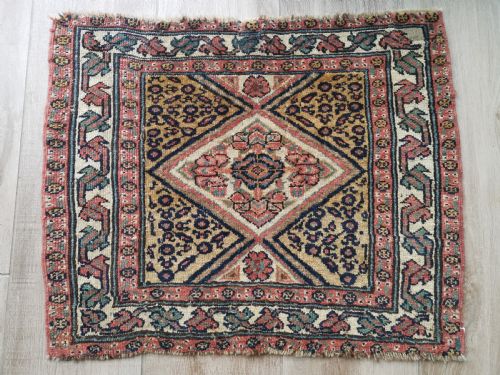

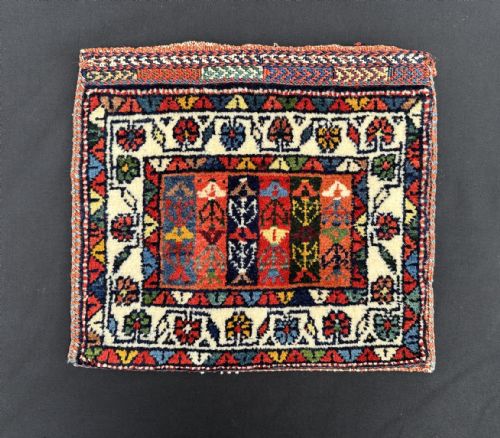
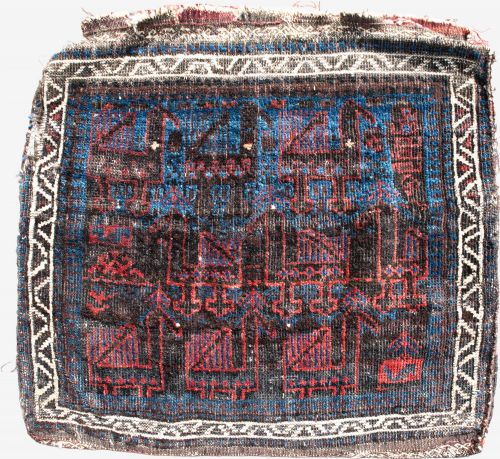
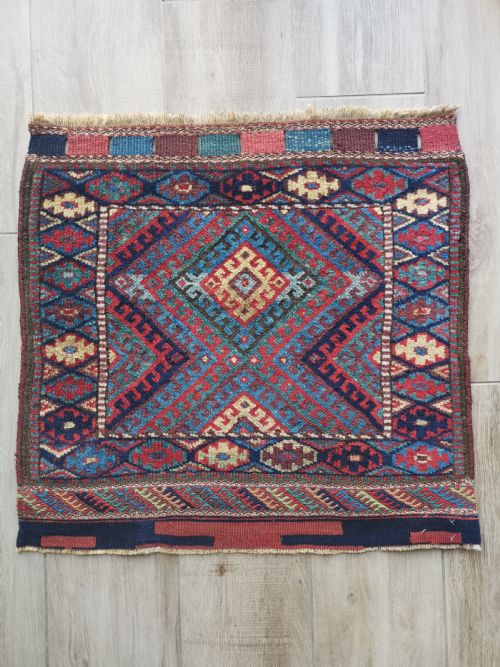




Small Rug Wall Hanging
A small rug wall hanging brings concentrated tribal artistry into a room, utilising fragments and bags originally crafted for nomadic life.
Small Rug Wall Hanging
A buyer seeking a small rug wall hanging encounters compact tribal textiles, primarily bag faces, torbas, chantehs, and small mats originating from Persian, Turkmen, and Anatolian nomadic groups. These items span the nineteenth and early twentieth centuries, including pieces from the 1850s, 1870s, 1880s, 1890s, and 1900s.
The selections on this page lean heavily toward utilitarian fragments adapted for display, such as saddlebags, vanity bags, and bread sofreh rugs. Instead of large floor coverings, these smaller formats focus complex tribal patterns into manageable dimensions suitable for vertical hanging.
How they were made
Weavers relied on hand-spun wool and natural dyes to build durable pile and flatweave structures, often incorporating cotton foundations or wool felt backings.
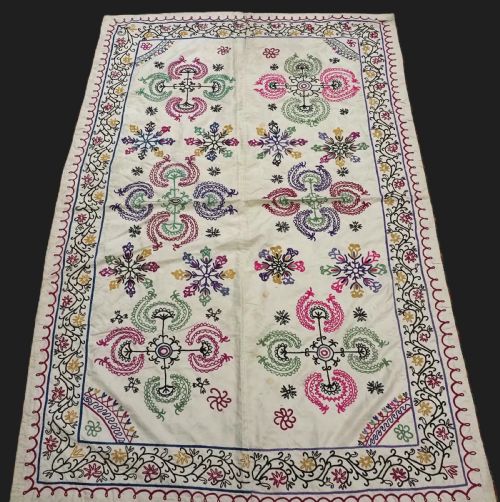
Certain examples utilise delicate silk on silk or silk on cotton embroidery techniques, demonstrating fine needlework alongside traditional knotting.
Listings feature nineteenth and early twentieth-century Persian, Turkmen, and Caucasian tribal formats including mats, torbas, and chantehs.
What varies in quality
Quality rests upon the tightness of the weave, the clarity of the tribal motifs, and the vibrancy achieved through natural dye use. Finer examples display meticulous precision in intricate guls and medallions.
The integrity of the remaining structure and the survival of early materials distinguish exceptional survival pieces from heavily degraded fragments.
The Small Rug Wall Hanging Glossary
- Torba
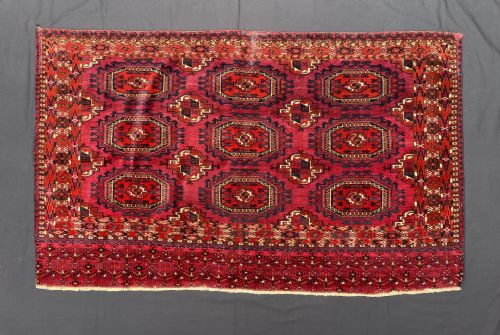
- A small Turkmen storage bag face traditionally hung inside a yurt. These pieces feature characteristic guls and wide elem panels.
- Chanteh
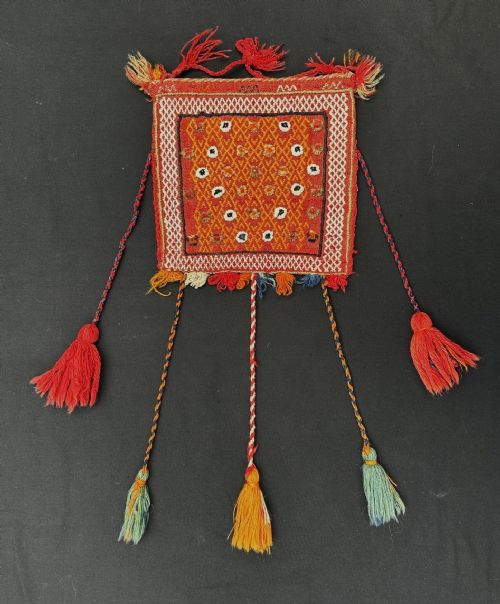
- A small personal bag or vanity bag woven by nomads for carrying small possessions. They translate well into compact wall displays.
- Sofreh
- A spreading cloth used for meals or bread making, often woven with striking geometric fields. They double effectively as square wall hangings.
- Gul
- A repeating, octagonal medallion motif used extensively by Turkmen and other Central Asian tribes. Each design often identifies a specific tribal group.
- Suzani
- An embroidered silk textile originating from Central Asia, typically worked on a cotton or silk foundation. They introduce vibrant floral medallions to wall displays.
Small Rug Wall Hanging: Frequently Asked Questions
How do I hang a small rug?
Mounting a textile requires gentle support that distributes weight evenly across the upper edge. A fabric sleeve can be stitched to the reverse to hold a slim wooden dowel.
Alternatively, specialised textile velcro or non-damaging brass clips secure the piece without piercing the foundational weave.
Are these pieces authentic antiques?
The selections date from the nineteenth and early twentieth centuries, reflecting traditional nomadic production methods. Materials such as hand-spun wool and natural dyes confirm their age.
Construction details and regional wool characteristics align with historical tribal weaving practices.
Why are many of these items bag faces?
Nomadic weavers produced utilitarian bags for daily transport, storage, and tent organisation. Over time, the front panels survived while the plain backs deteriorated.
These surviving faces preserved the finest knotting and iconography, making them ideal for preservation as compact wall art.
How do I care for a textile on the wall?
Protect antique wool and silk from direct sunlight to prevent natural dye fading. Gentle vacuuming with a mesh screen protects fragile fibres from dust accumulation.
Avoid hanging textiles in damp environments to safeguard organic materials against mould and insect damage.