


Small Oriental Cabinet
A small oriental cabinet brings focused storage and rich surface detail into a room, spanning tabletop kodansu, apothecary chests and Chinoiserie cupboards.
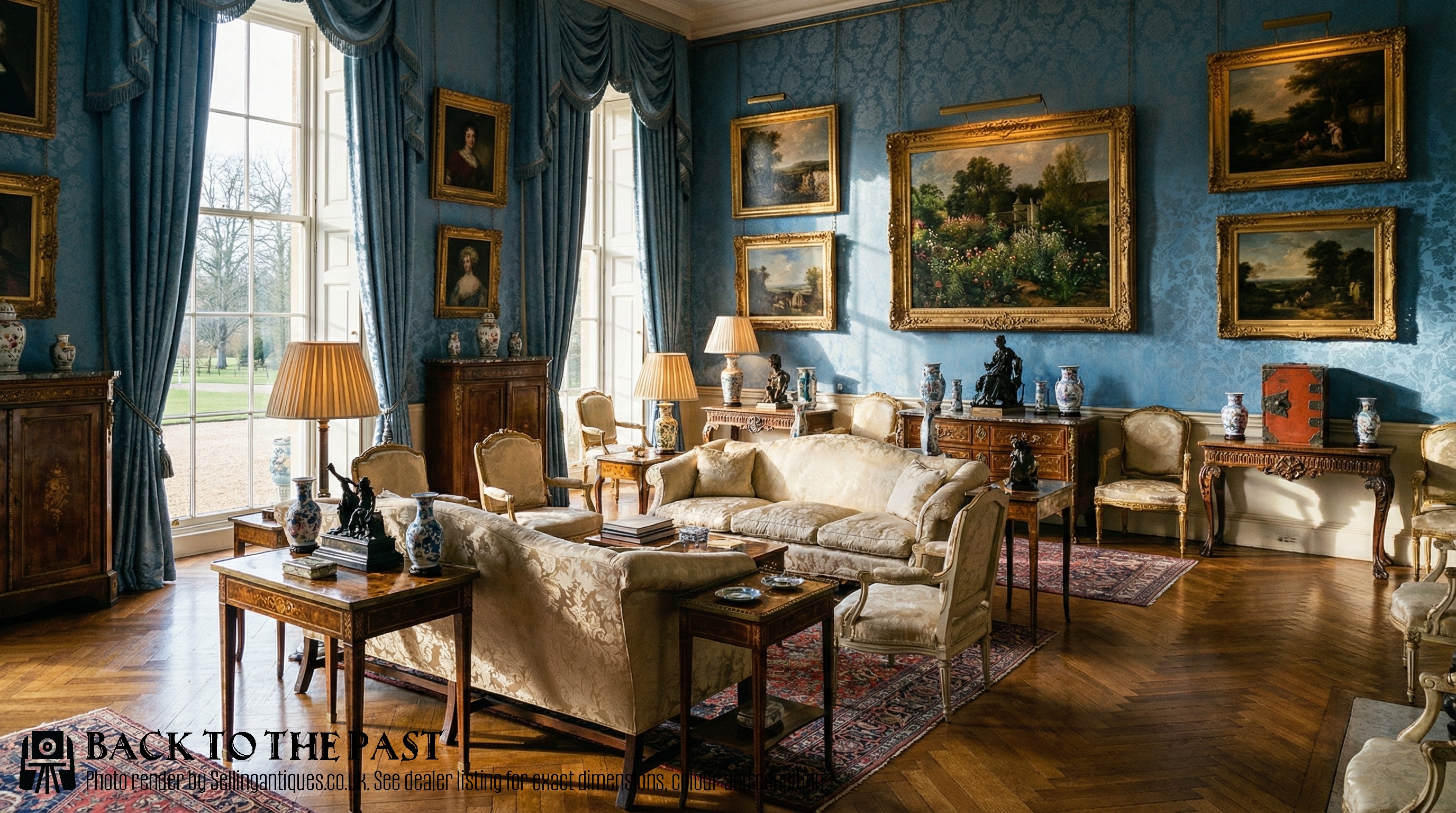
Small Oriental Cabinet
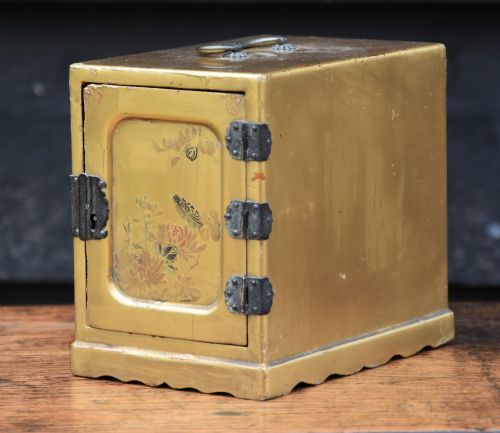
A small oriental cabinet takes many forms across this selection, from miniature table top cupboards and jewellery boxes to apothecary chests and side cabinets. These pieces serve practical storage roles while displaying distinct craftsmanship originating from China and Japan.
The periods represented stretch from the Victorian era and the 19th century into the early decades of the 20th century, including pieces dated around nineteen-ten, nineteen-twenty and nineteen-thirty. Stylistic expressions range from traditional Chinese and Chinese provincial designs to Japanese Meiji period works and Aesthetic Movement pieces.
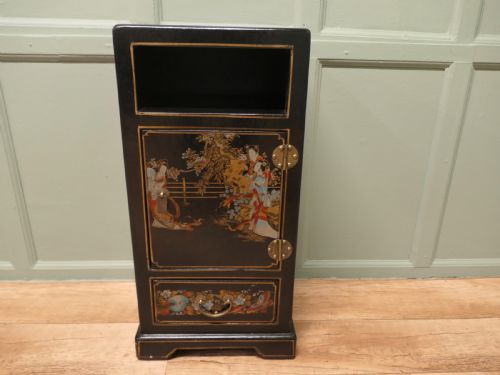
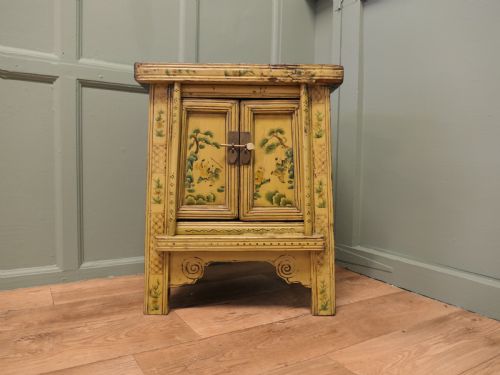
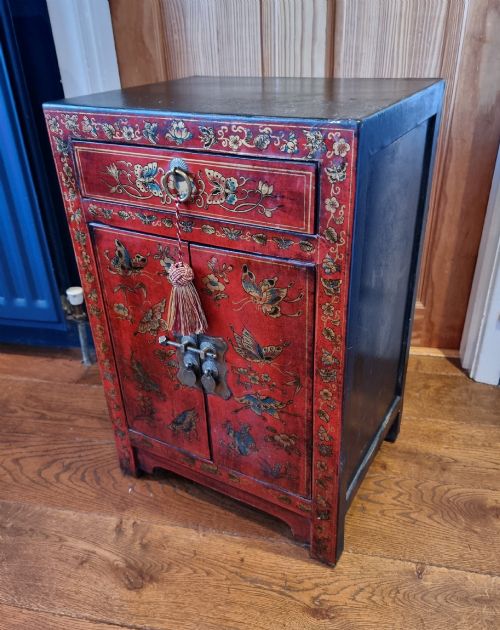
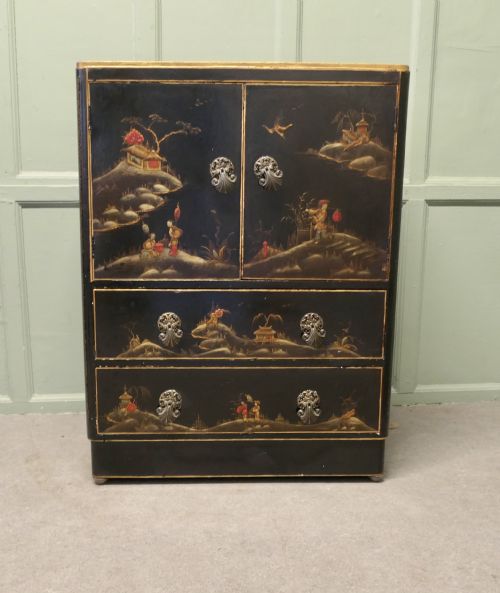
Buyers are most likely to encounter lacquered wood cupboards finished in black, red or cream Chinoiserie decoration, alongside elm wood chests and table cabinets. These smaller formats sit easily upon sideboards, desks or floors while providing compartmentalised storage.
Materials and construction
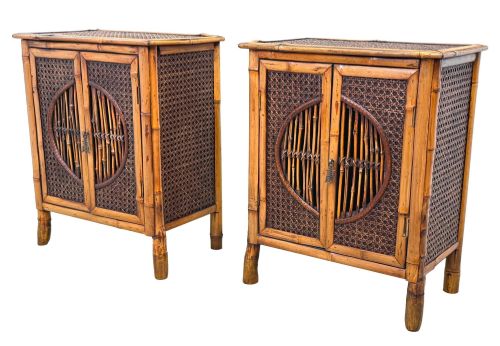
Construction relies heavily on woods such as elm, kiri wood, rosewood and bamboo, forming the structural carcasses of these cabinets and chests. Artisans select these timbers for stability and grain quality before applying decorative surface treatments.
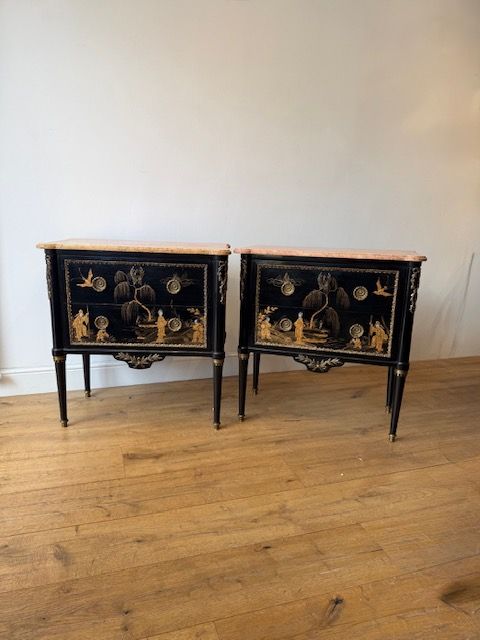
Surface finish is paramount, utilising lacquer, gold leaf, and painted Chinoiserie motifs to build up rich pictorial or plain dark panels. Metal elements in brass and iron provide structural reinforcement and decorative hinges, lock plates and handles.
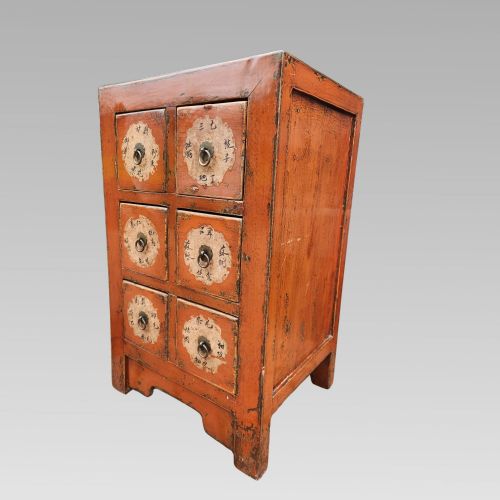
Several apothecary cabinets hide dozens of tiny drawers once intended for dried herbs and secret powders.
Quality and execution
Distinctions in quality rest upon the depth of the lacquer work and the crispness of hand-painted Chinoiserie or gilt details. Finer examples display meticulous layering and polishing that retain their lustre across decades.
Joinery and timber selection also divide standard production from superior pieces, with dense hardwoods like rosewood or well-figured elm offering greater durability and refined framing. Original hardware such as brass or iron mounts that fit flush and show careful hand-shaping elevate the overall standard.
The Small Oriental Cabinet Glossary
- Chinoiserie
- European decorative style reflecting Chinese artistic influences, frequently seen in painted lacquer scenes on cabinets and cupboards. It employs whimsical landscapes and figures rendered in gold and colour.
- Apothecary cabinet
- A partitioned chest designed originally for storing medicinal herbs, powders, and remedies in multiple small drawers. They offer a distinctive grid-like aesthetic.
- Meiji period
- The era of Japanese history spanning from eighteen sixty-eight to nineteen twelve, known for exceptional metalwork, lacquer and decorative arts. Pieces from this time demonstrate high technical proficiency.
Small Oriental Cabinet: Frequently Asked Questions
Where can I place a small oriental cabinet?
These compact pieces fit readily upon tables, desks, sideboards or direct on the floor depending on their dimensions. Table cabinets and kodansu sit well on flat surfaces where their detailed drawers remain accessible.
Larger side cupboards and apothecary chests function effectively in hallways, living rooms or bedrooms as standalone accent furniture that provides useful enclosed storage.
How do I care for lacquered wood?
Dust surfaces gently with a soft, dry cloth to prevent scratching the delicate lacquer and gold leaf layers. Avoid placing antique pieces in direct sunlight or near heat sources to protect the wood and finish.
Keep humidity levels stable within the room to prevent the timber beneath the lacquer from expanding or contracting excessively over time.
What is the difference between Chinese and Japanese pieces?
Chinese pieces often feature painted Chinoiserie scenes, elm or rosewood construction, and brass hardware suited to domestic storage and display. They frequently encompass apothecary layouts and side cupboards.
Japanese works frequently utilise lacquer techniques on woods like kiri, manifesting as portable kodansu or bedside storage designed with minimalist or highly refined decorative restraint.
How do I identify a 19th century piece?
Nineteenth-century items show traditional hand-cut joinery methods, natural ageing in the lacquer and wood, and hand-forged metal fittings. Examining the interior construction reveals manual planing and assembly marks.
Stylistic cues such as Aesthetic movement touches, Meiji period characteristics or Victorian ebonised finishes help anchor the production era alongside documented dates.