
Small Open Bookshelves
Small open bookshelves are practical low furniture pieces that keep daily reading within arm's reach while fitting neatly into compact rooms.
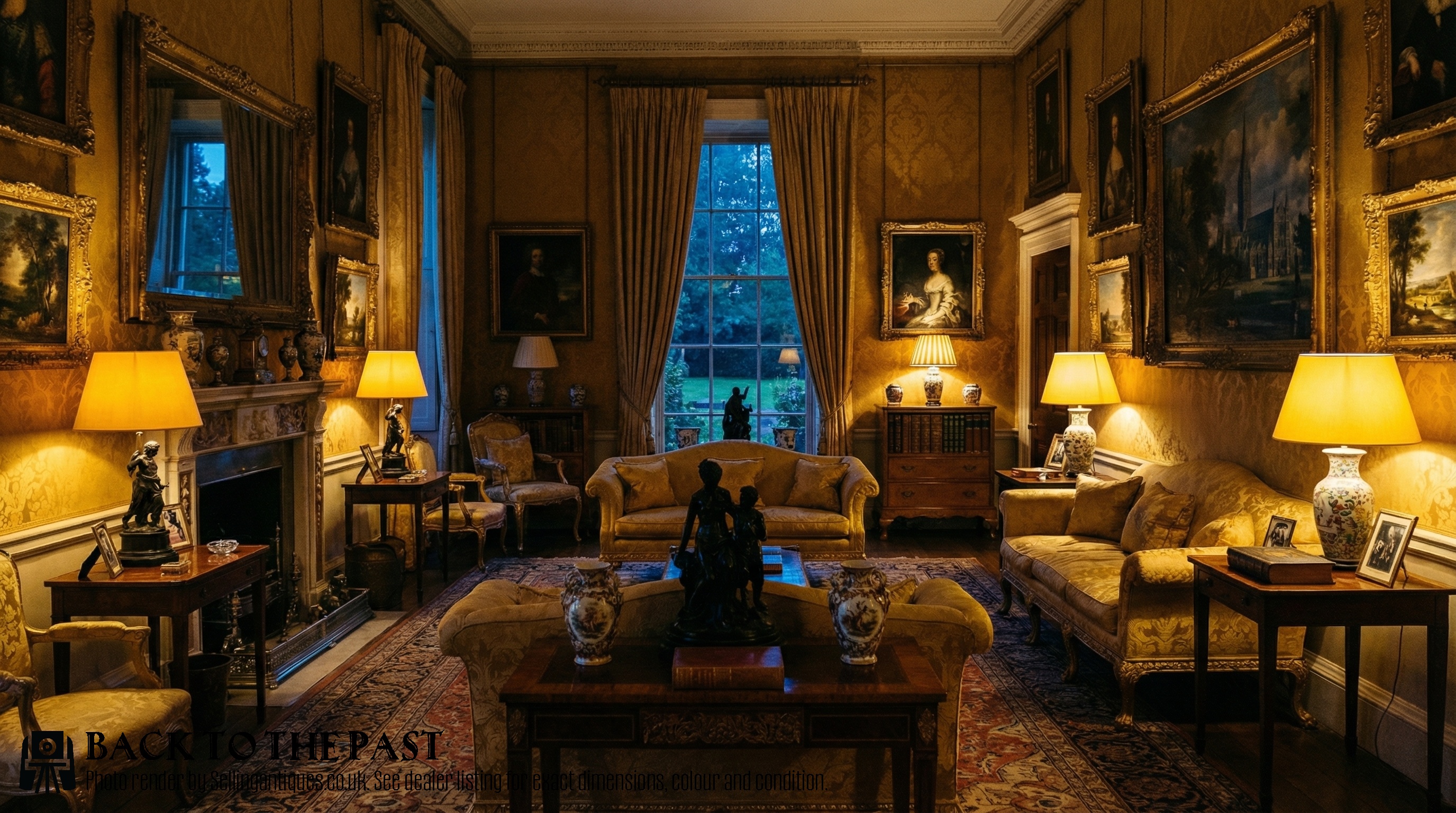
Small Open Bookshelves
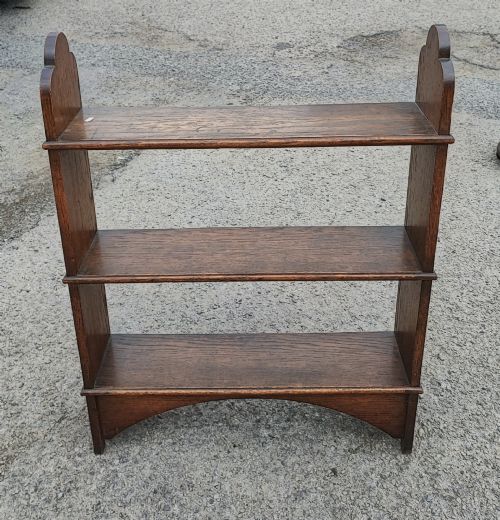
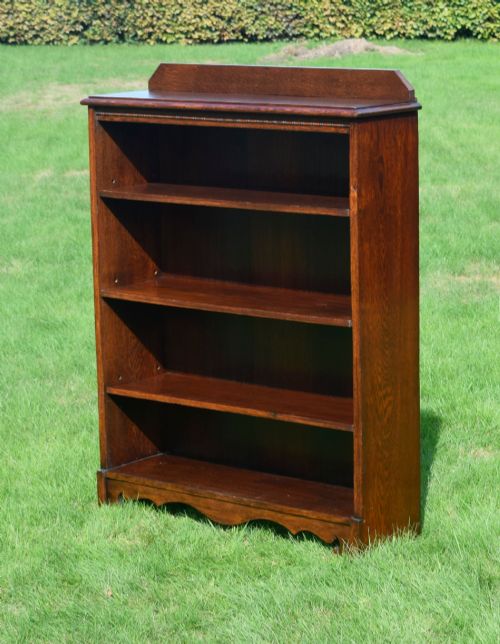
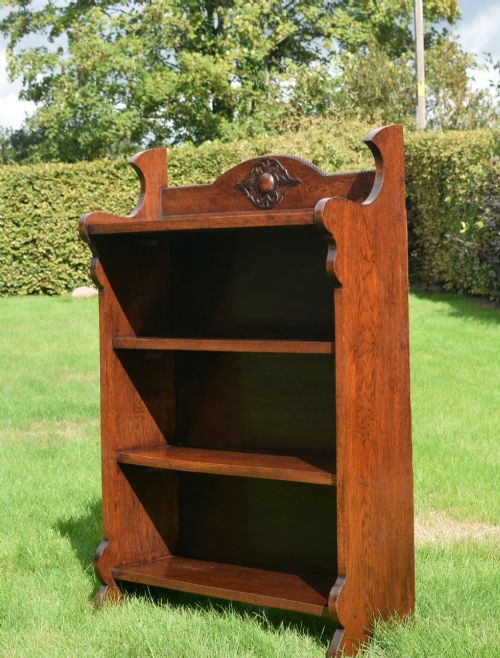
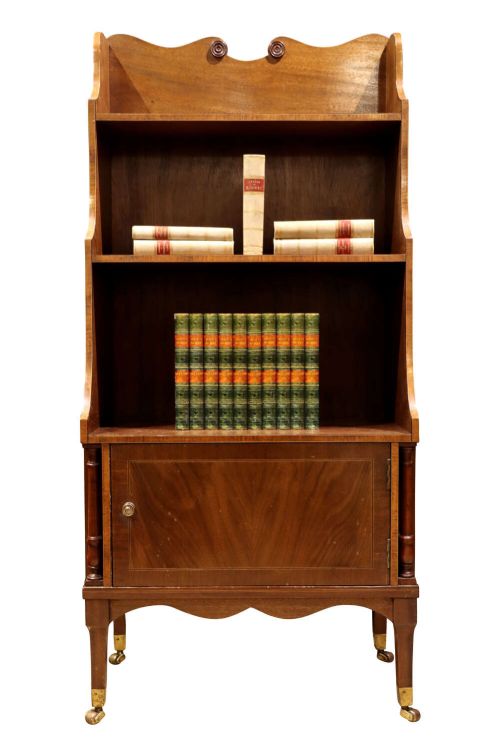
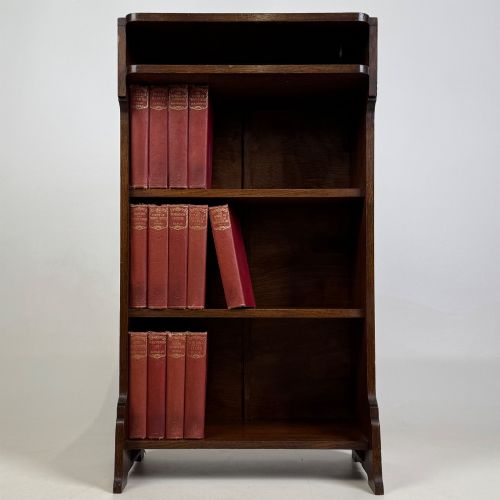
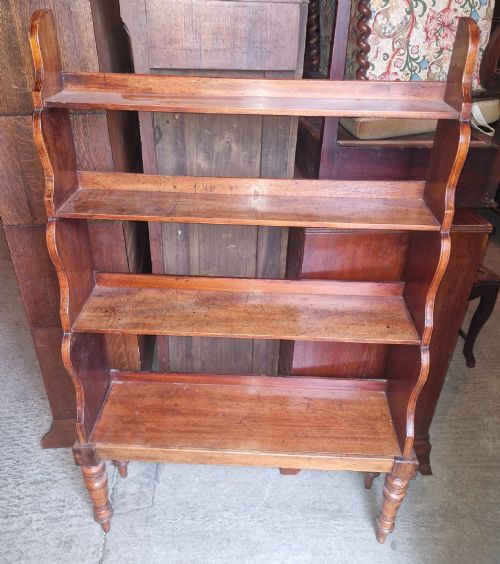
Small open bookshelves offer accessible storage for domestic libraries, appearing across Victorian, Edwardian, and twentieth-century periods in forms such as low freestanding cases, narrow wall shelves, and stepped waterfall designs.
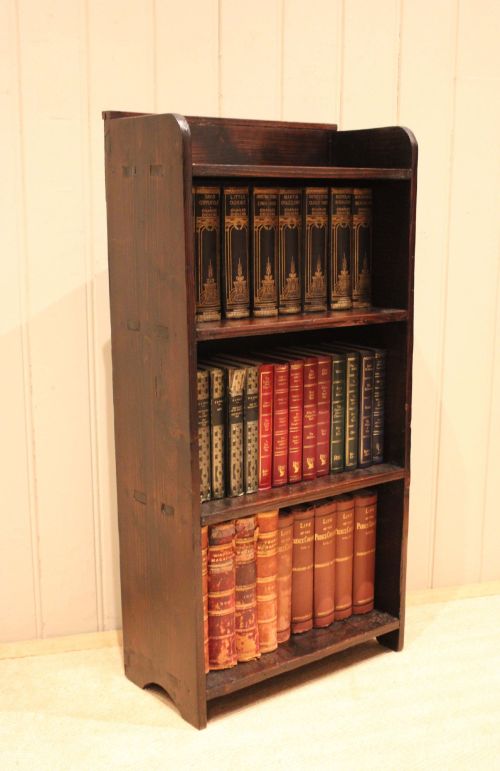
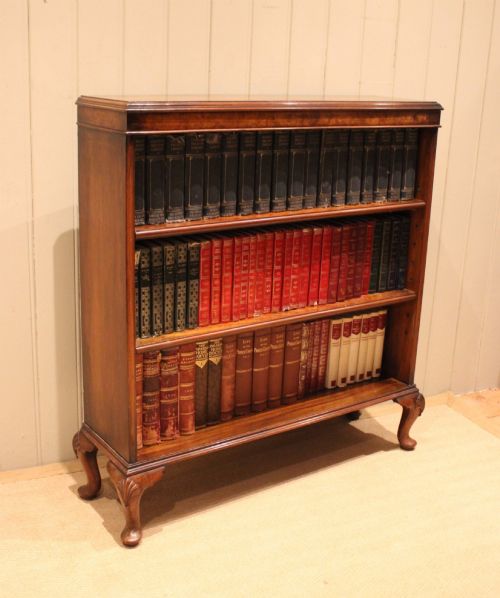
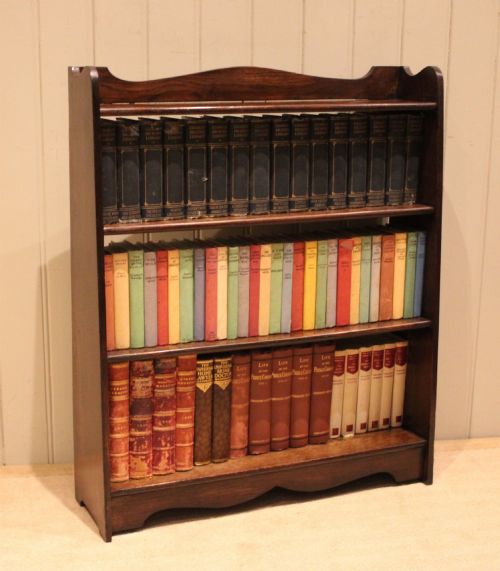
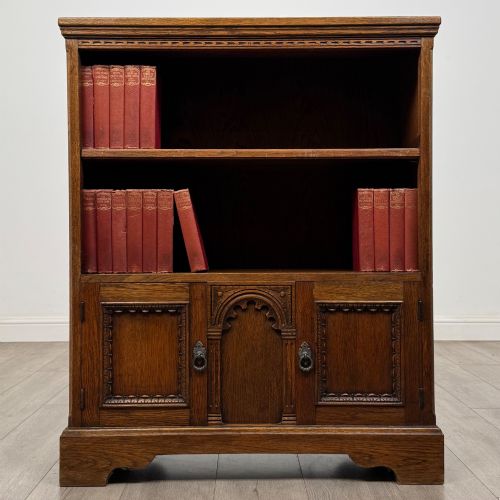
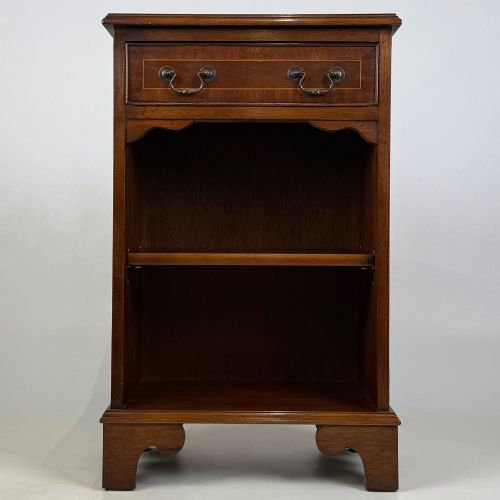
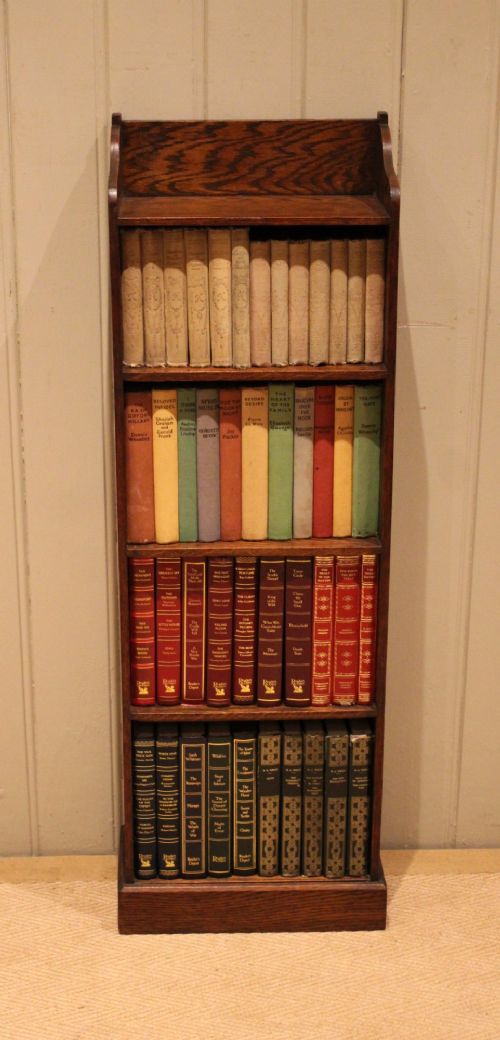
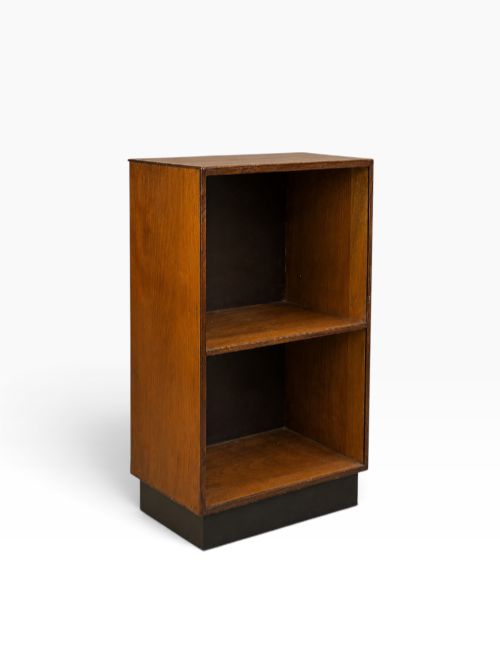
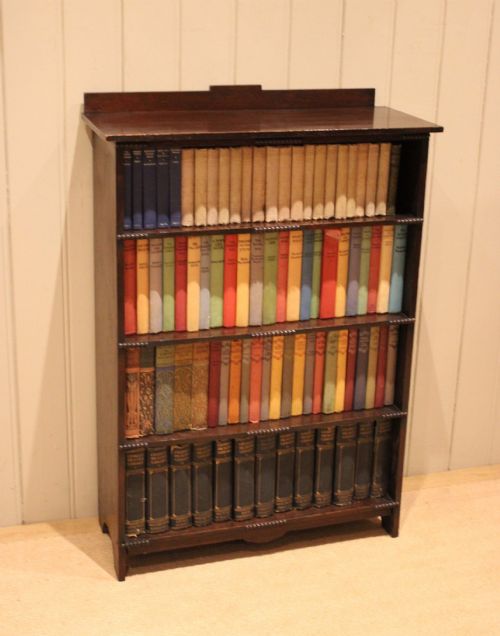
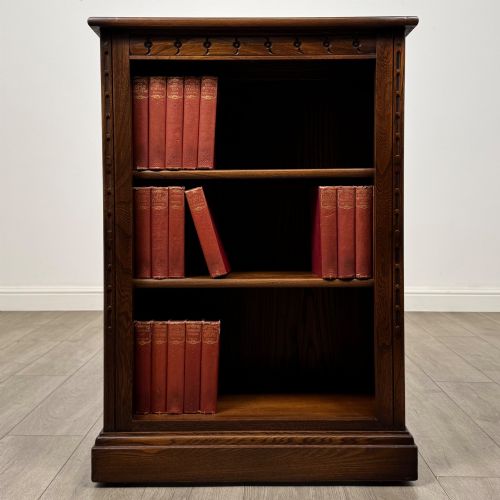
The version most commonly met on this page is the compact oak or mahogany bookcase from the Edwardian era or the 1920s, often featuring adjustable shelving or simple beaded edges.
Other variations include side tables combined with bookshelves, whatnots, and occasional pieces attributed to specific design movements like Arts and Crafts or Art Deco.
How they were made
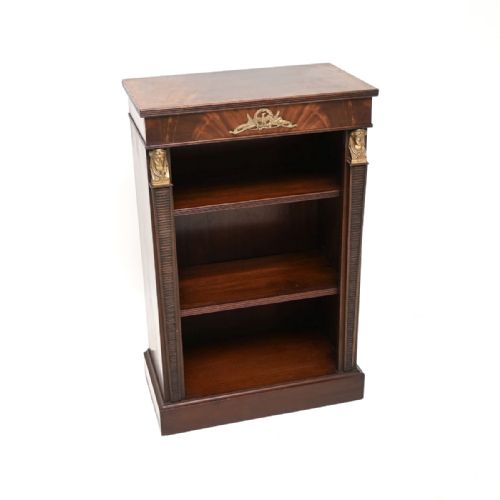
Cabinet makers utilised solid timbers and veneers including oak, mahogany, walnut, satinwood, and ash, selecting materials to suit the prevailing style of the decade.
Construction techniques involved straightforward tongue-and-groove joints for shelving and backs, occasionally supplemented by brass castors on larger floor models or inlaid details such as stringing.
Surface finishes ranged from polished dark oak and waxed mahogany to painted French surfaces, preserving the natural grain of the timber.
Some nineteenth-century examples arrive with brass castors ready to roll your reading collection across the floor at a moment's notice.
What varies in quality
The distinction between standard utility furniture and finer items lies in the choice of cabinet timber, where figured burr walnut, satinwood, or finely grained mahogany elevate the visual weight of a small piece.
Execution of detail separates workshops, seen in whether shelves are genuinely adjustable with neat rackwork or fixed permanently in place, and whether inlay or carved mouldings are crisply handled.
Gillows·Heals·Jacob of Paris
The Small Open Bookshelves Glossary
- Waterfall bookcase
- A tiered set of open shelves that progressively step back from bottom to top, creating a cascading profile popular in the nineteenth and early twentieth centuries.
- Whatnot
- A multi-shelved open piece of furniture designed for displaying books or ornaments, standing on small legs.
- Beaded edge
- A narrow rounded moulding run along the corner or shelf edge of a wooden cabinet to soften the profile.
- Inlay
- A decorative technique where contrasting timbers or materials like brass are fitted flush into the surface of the primary wood.
Small Open Bookshelves: Frequently Asked Questions
Where should I place a small open bookshelf?
These compact bookcases suit tight spaces like hallways, alcoves beside a fireplace, or beside a bed where floor area is restricted.
Because the shelves are open, they work best away from direct damp or strong sunlight that might fade the polished wood surface.
How do I adjust the shelves?
Many Edwardian and later cases use wooden peg supports or vertical metal rack strips inset into the interior sides to let you alter shelf heights.
Older or simpler constructions often have fixed shelves screwed or glued directly into the side panels.
How do I tell Edwardian from Victorian cases?
Edwardian oak and mahogany shelves tend to be lighter in build and simpler in outline, reflecting a turn toward unpretentious domestic design.
Victorian pieces frequently employ darker finishes, heavier mouldings, and occasionally brass castors or enclosed cupboards beneath the open tiers.
Can these shelves hold heavy books?
Solid oak and mahogany versions easily support standard octavo volumes and novels, especially when the shelves are well-supported on sturdy vertical partitions.
For very heavy art folios or dense reference sets, check whether the shelf timber shows any long-term sagging across the span.