





Small Oil Portrait
A small oil portrait condenses a human likeness into intimate scale, offering centuries of character in a compact, framed format.
Small Oil Portrait
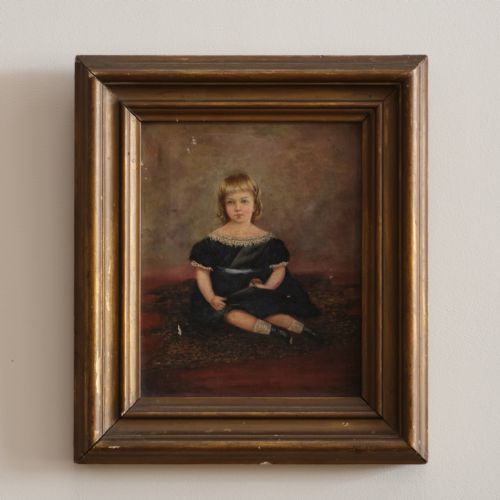
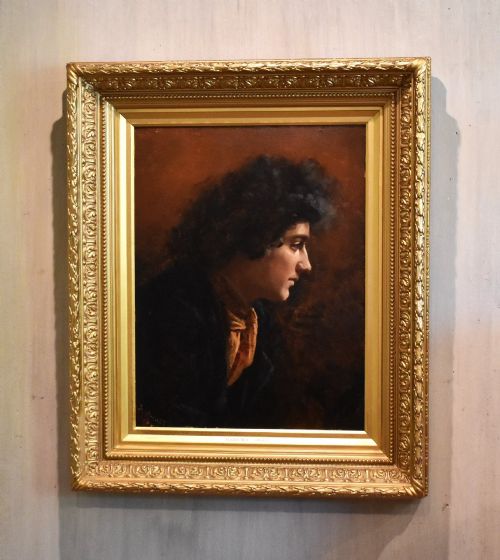
A small oil portrait brings historical likenesses into domestic spaces through compact canvases, panels, and boards. These works span the seventeenth century to the Victorian era, depicting subjects ranging from notable figures to anonymous sitters and animals.
The most common examples on this page date from the nineteenth century, executed in oil on canvas or wood. Buyers frequently encounter regional sitters, historical figures, and domestic pets rendered on a modest scale.
How they were made
Painters applied oil paint to rigid supports such as wood panels, copper, tin, and board, or flexible canvas stretched over frames. These surfaces were often prepared with gesso to create a smooth ground for fine brushwork.
Many frames incorporate gilded wood, adding weight and decorative depth to the compact paintings. Artists utilised traditional pigments to build subtle tonal gradations across miniature and small-scale compositions.
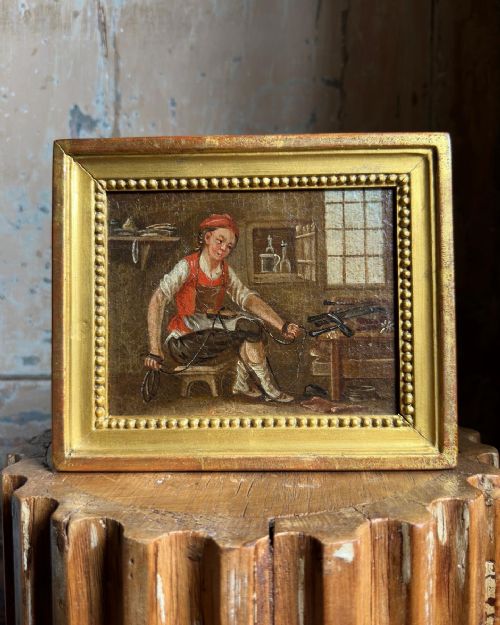
One determined eighteenth-century artisan recorded for posterity was a humble pattenmaker, immortalised in oil alongside his specialised wooden footwear.
What varies in quality
The precision of facial rendering and the handling of light separate masterwork portraits from vernacular pieces. Stronger examples capture psychological depth and anatomical accuracy within a restricted surface area.
The integrity of the original support and the preservation of the paint surface dictate the visual success of the piece. Subtle glazes and period frames that complement the painting elevate the overall character.
Florence Small·Samuel Raven·John Scougall·Ferdinand Barth·Sir John Everett Millais·Francis Alleyne·George Roth
The Small Oil Portrait Glossary
- Oil on canvas
- Pigments bound in a drying oil applied to a woven fabric support stretched across a wooden frame. This combination allows for rich colour blending and texture.
- Gesso
- A primer mixture consisting of a binder mixed with chalk, gypsum, or pigment used to prepare wood or canvas surfaces for painting. It creates a smooth and stable base.
- Portrait miniature
- A small-scale painting capturing a likeness with intense detail, often housed in a protective case or frame. These works required immense patience and fine brushes.
- Oil on copper
- A smooth metal support favoured for its durability and luminosity, allowing painters to achieve exceptional detail and enamel-like finishes.
- Oil on board
- Pigment applied directly to a rigid wooden or composition board support. This substrate provided a steady, flat surface favoured by portraitists working on smaller scales.
Small Oil Portrait: Frequently Asked Questions
Where were small oil portraits displayed?
These compact paintings hung in private parlours, bedrooms, and studies where intimate scales suited smaller wall spaces.
Owners kept them close for personal reflection and family remembrance rather than grand public display.
How do I care for an oil on wood portrait?
Keep the painting away from direct sunlight and sudden temperature shifts to protect the wooden panel from warping.
Dust the surface gently with a soft, dry brush and avoid applying liquid cleaners to the aged paint.
Why are some portraits painted on copper?
Copper provided a completely smooth surface that prevented the absorption of oil paint, allowing for extraordinary fine detail.
Artists valued the metal for its stability and the luminous quality it lent to skin tones.
How can I tell a seventeenth-century portrait apart from a Victorian one?
Seventeenth-century works often feature darker palettes, stiff lace collars, and heavy wooden panels with distinct craquelure.
Victorian portraits typically display brighter lighting, looser brushwork, and subjects wearing mid-nineteenth-century attire.