




Victorian Interior Wall Art
Victorian interior wall art captures domestic scenes and cottage life in oil and watercolour across the nineteenth century.
Victorian Interior Wall Art
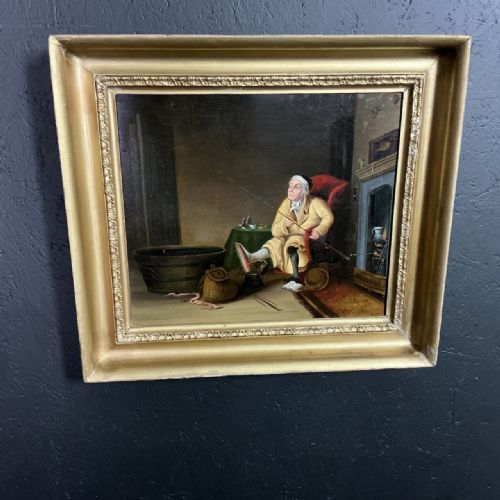
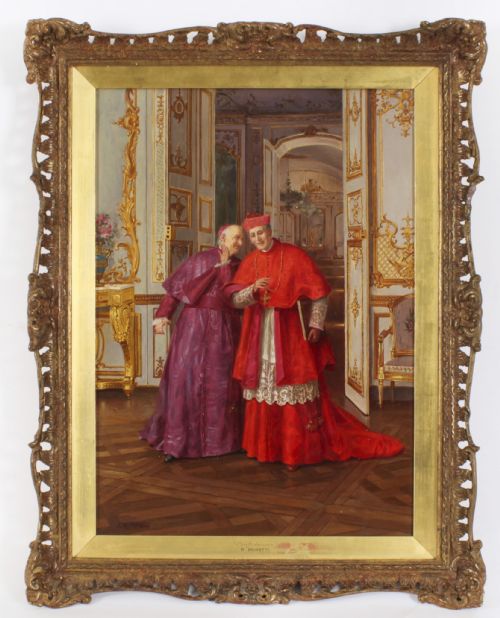
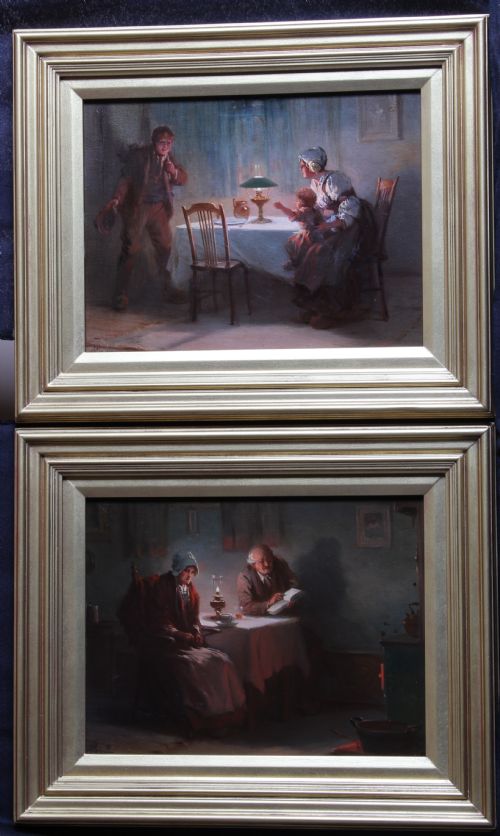
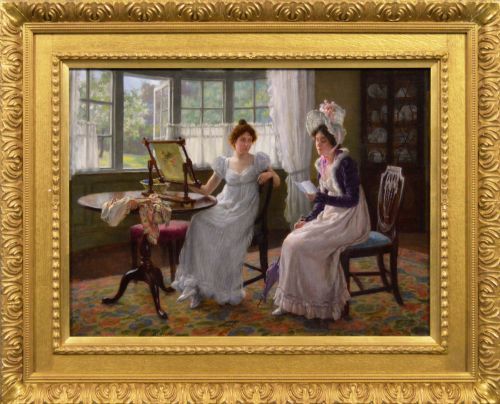
When you search for victorian interior wall art, you encounter oil paintings, watercolours, and engravings depicting domestic spaces, cottage scenes, and family gatherings. These works record nineteenth-century daily life through the eyes of genre painters and portraitists.
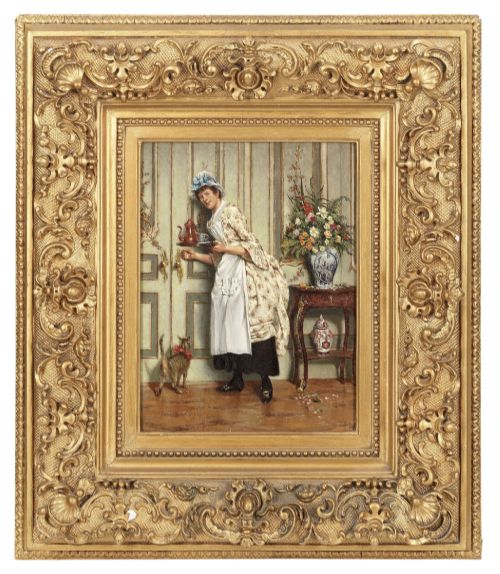
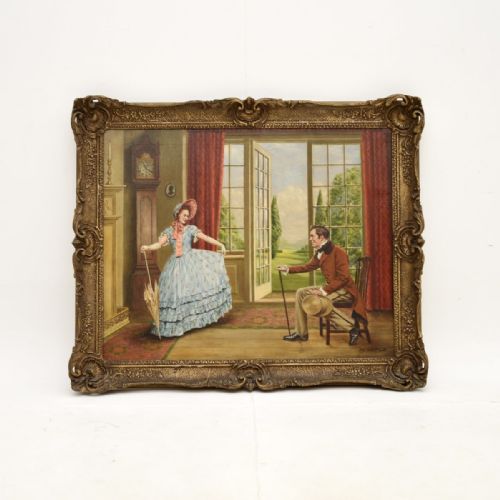
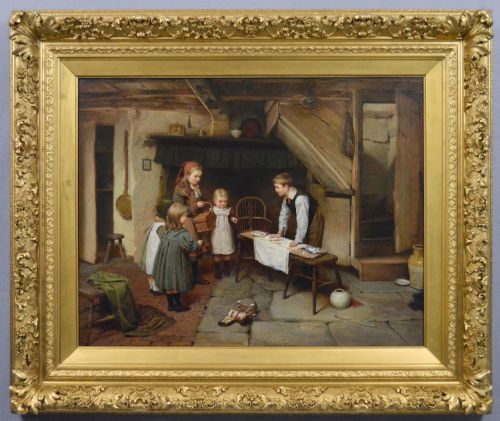
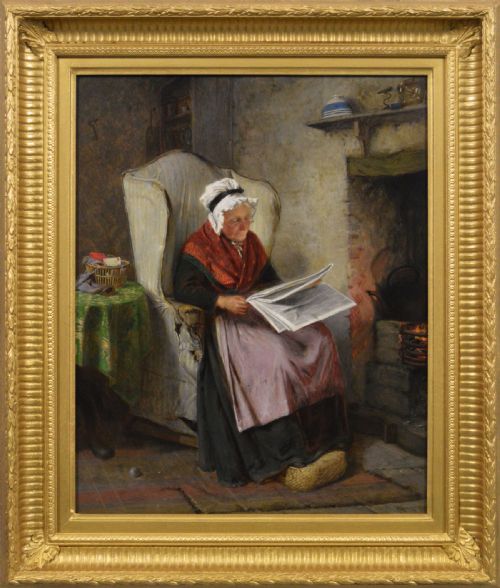
You are most likely to meet oil on canvas or oil on panel pieces showing figures in country houses, cottages, or dining rooms. The selection includes specific room studies, cottage interiors with spinning maids or children, and historical scenes housed in original frames.
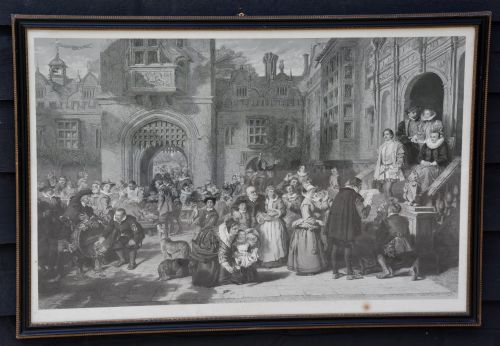
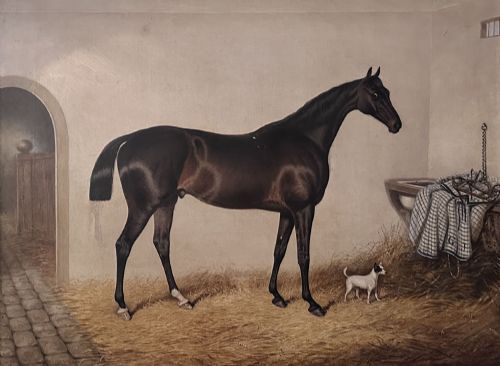
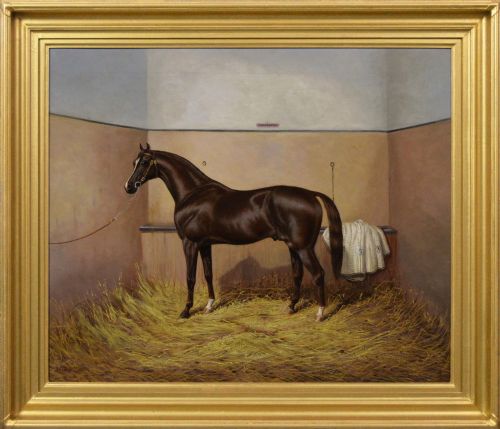
The material record also contains watercolours, drawings, and engravings, alongside animal and horse portraits set within stable or interior environments. These compositions reflect academic realism and Victorian genre painting traditions from the eighteen-seventies onward.
Materials and methods
Artists painted primarily in oil on canvas, panel, or tin, utilising oil paint applied with fine brushes to build texture and depth in fabric, wood, and skin. Watercolours on paper appear frequently for lighter domestic and landscape studies.
Framing forms an integral part of the physical object, utilising wood, gesso, and gold leaf to create original Hogarth frames and ornate mouldings that protect and define the artwork.
Listings feature oil paintings, watercolours, and drawings created across the nineteenth century, utilising wood, canvas, paper, and gesso.
Markers of quality
Quality rests upon the artist's handling of light, shadow, and human expression within the interior space. Works by established named painters display superior draughtsmanship and anatomical precision in figures and animals.
The preservation of the original canvas, panel, and surface pigment determines longevity, alongside the presence of period frames matching the date of the artwork.
Stephen Samuel Lewin·Alfred Lyndon Grace·Renato Moretti·Harry Brooker·George Kilburne·Alexander Rosell·John Arthur Lomax·Albert Clark·John Watkins Chapman·Charles Haigh Wood·Frank Moss Bennett·Haynes King·James Kyd·Edwin Hughes·Benjamin Cam Norton·Edwin Frederic Holt·Charles Bilger Spalding·Samuel John Carter·Pauline Delacroix Garnier·Henry Silkstone Hopwood·Ralph Hedley·Robert Gemmell Hutchison·Jonathan Pratt·Francesco Bergamini·Sir John Everett Millais
The Victorian Interior Wall Art Glossary
- Genre painting
- A style depicting scenes from everyday life, typically involving ordinary people in domestic or cottage interiors. These works form the core of nineteenth-century domestic art.
- Oil on canvas
- A painting technique using pigments suspended in a drying oil applied to stretched woven fabric. This medium allows for rich colour blending and textured brushwork.
- Gesso
- A plaster-like material applied to wooden frames or panels as a base for gilding and paint. It provides a smooth surface for gold leaf application.
- Hogarth frame
- A distinctive wooden picture frame profile characterised by a stepped outer edge and dark finish. These frames frequently house eighteenth and nineteenth-century engravings and paintings.
Victorian Interior Wall Art: Frequently Asked Questions
What subjects appear in these works?
These paintings portray domestic scenes, cottage interiors, family gatherings, and rural workers. Artists focused on everyday moments such as dining, spinning wool, and children playing.
Animal portraits also feature prominently, including horses and hunting dogs placed within stables or country houses. Historical and genre subjects dominate the nineteenth-century selection.
How do I identify the date of a piece?
Dates are often established through artist signatures, biographical records, and framing styles. Many works carry specific nineteenth-century dates or reflect the working periods of named painters.
Materials such as gesso frames, canvas type, and paper watermarks provide additional physical evidence for dating the artwork to specific decades like the eighteen-eighties or nineties.
Where should I hang these paintings?
These works suit traditional living spaces, dining rooms, and studies where period character is desired. Their domestic subject matter harmonises naturally with wooden furniture and classical interior decor.
Direct sunlight should be avoided to protect oil pigments, watercolours, and paper from fading over time. Proper wall placement ensures the original frames remain secure.
What is a genre painting?
A genre painting depicts aspects of everyday life by portraying ordinary people engaged in common activities. In nineteenth-century British art, this typically meant cottage interiors, children at play, or domestic workers.
These scenes offer a window into social history, capturing the clothing, furniture, and daily routines of the Victorian era with realistic detail.