

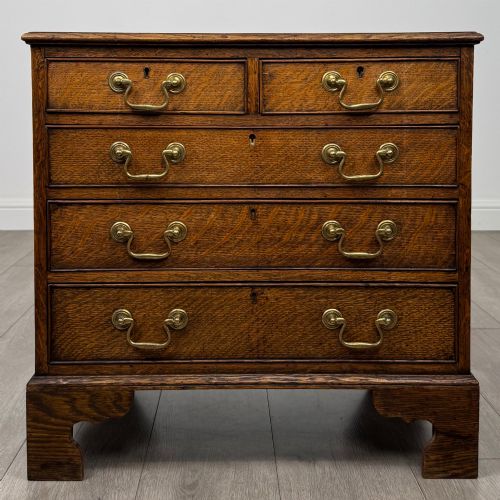
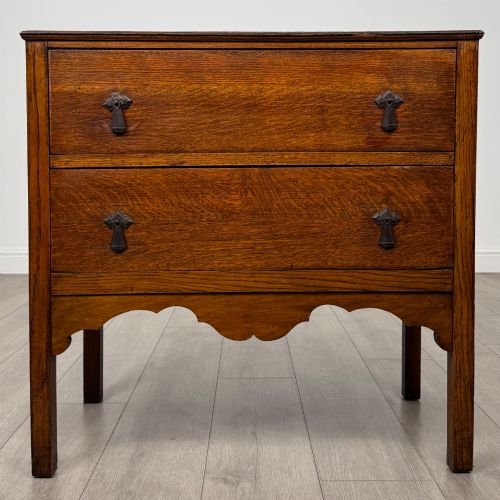
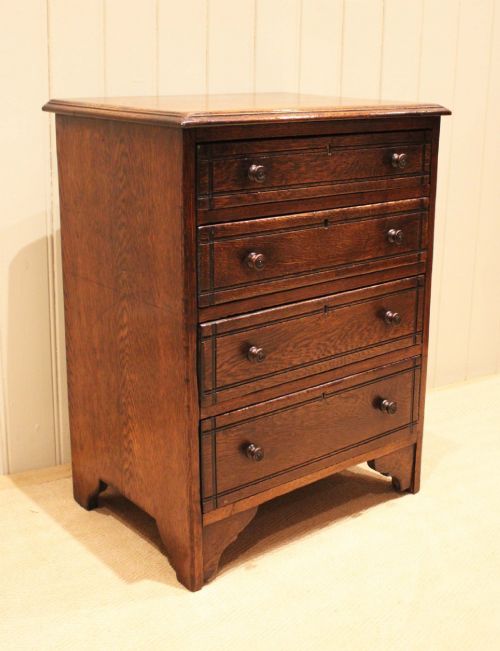
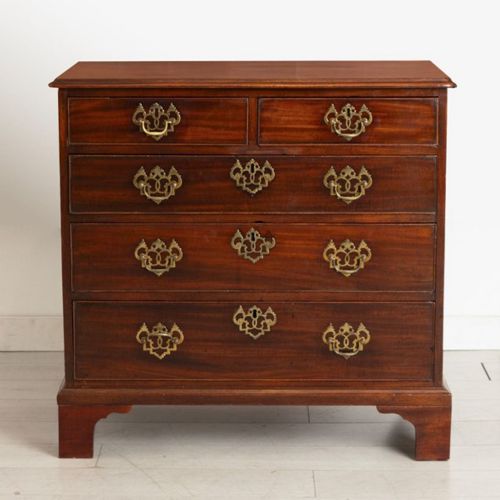

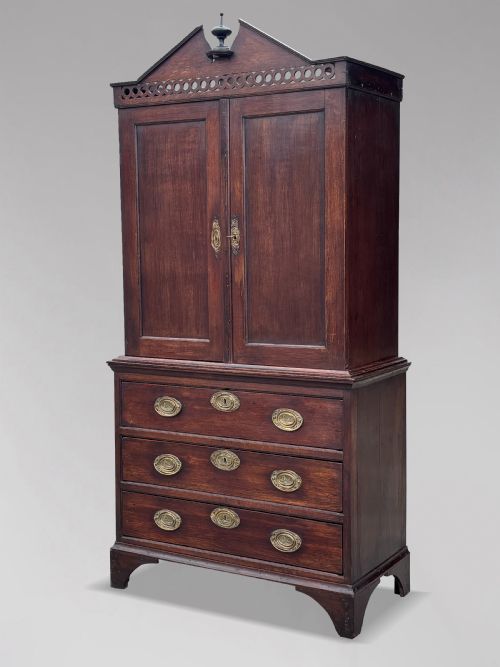


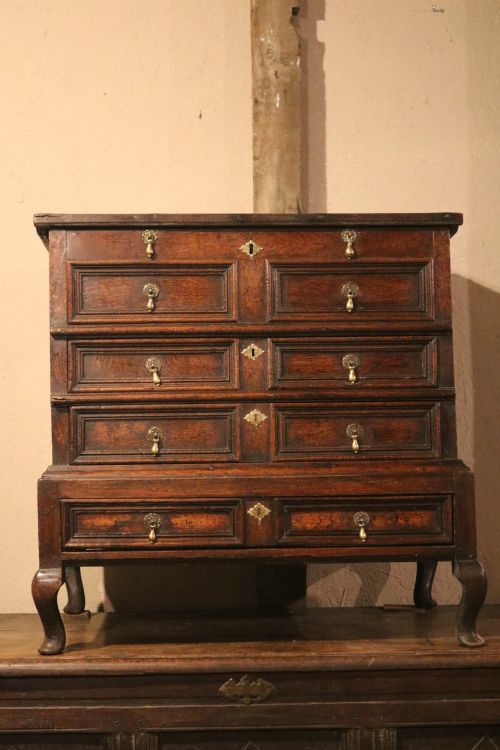


Small Oak Tallboy
These small oak tallboy pieces offer substantial vertical storage with a compact footprint, suiting rooms where floor space is limited.
Small Oak Tallboy
A small oak tallboy is a stacked chest of drawers or a tall cupboard designed to maximise storage capacity without dominating a room. When buyers search for a small oak tallboy, they encounter forms ranging from Georgian and 18th-century pieces to later Edwardian and Art Deco interpretations.
The evidence shows various related formats including chests on stand, housekeeper's cupboards, and secretaire chests alongside traditional tallboy chests on chests. Welsh origins and English country workshops appear frequently among the surviving examples.
Most pieces combine solid oak construction with smaller proportions suited to domestic interiors. They bridge the gap between heavy, room-filling wardrobes and low chests of drawers.
How they were made
Craftsmen built these pieces primarily using solid oak, often complemented by mahogany cross-banding or oak linings. Timber selection focused on grain pattern and stability for the drawer frames and carcase.
Hardware such as brass handles and metal fittings were integrated into the design, alongside bracket feet or simple stands. Joinery techniques varied from traditional dovetailing in the drawers to panelled construction in the main bodies.
Listings feature oak alongside mahogany and brass, spanning the 17th, 18th, 19th, and 20th centuries from Georgian to Art Deco periods.
What varies in quality
Quality separates pieces by the crispness of the cabinetwork and the preservation of original timber surfaces. Better examples retain their original brass handles, feet, and proportional harmony between the upper and lower sections.
The refinement of the mouldings and the precision of the drawer dovetailing distinguish provincial vernacular pieces from higher-status urban workshop production. Surface patination and the condition of the oak grain also influence the character of each piece.
The Small Oak Tallboy Glossary
- Tallboy
- A tall chest of drawers made in two sections, typically a double chest or a chest on stand. This form provides maximum drawer space on a minimal floor area.
- Cross-banding
- A decorative border of veneer laid around the edges of a drawer front or top with the grain running perpendicular to the centre. It creates a neat framing effect on Georgian pieces.
- Secretaire
- A desk disguised as a chest of drawers featuring a fitted drop-front writing drawer. It combines workspace with standard drawer storage.
- Bracket feet
- Small, foot-like corner supports shaped from a flat board and joined at a mitre. They lift the carcase slightly off the floor on many 18th-century chests.
Small Oak Tallboy: Frequently Asked Questions
How were tallboys used historically?
Tallboys served primarily as bedroom storage for garments, linens, and personal items before fitted wardrobes became common. The stacked drawer configuration allowed households to store multiple categories of clothing within one tall footprint.
Some variants included secretaire drawers that doubled as writing desks for correspondence.
Where were these pieces made?
Surviving examples originate from English provincial workshops, London cabinet makers, and Welsh regional makers. Regional differences appear in the moulding profiles and foot styles.
Local timber availability often dictated whether makers used solid oak throughout or added mahogany details.
How do I date an antique tallboy?
Dating relies on examining construction methods, hardware types, timber choice, and overall style characteristics like bracket feet or cornice mouldings. Georgian and 18th-century pieces show hand-cut dovetails and pegged joints.
Later Edwardian and Art Deco examples display machine-cut elements and different surface finishes.
How do I fit a tallboy into a modern room?
The vertical proportions make a tallboy ideal for corners or alcoves where horizontal drawer space will not fit. They offer deep storage capacity without blocking walkways.
Pair them with low beds or simple furniture to balance the height in the room.