
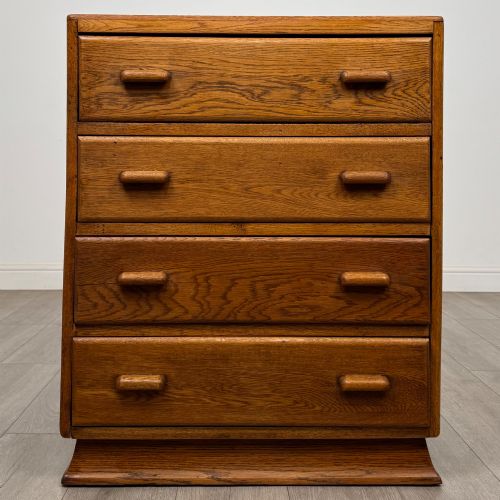
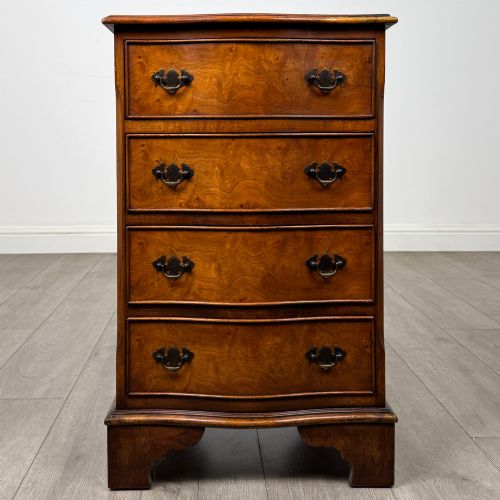
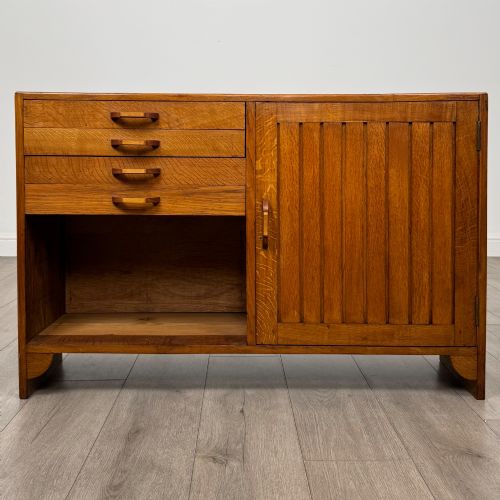
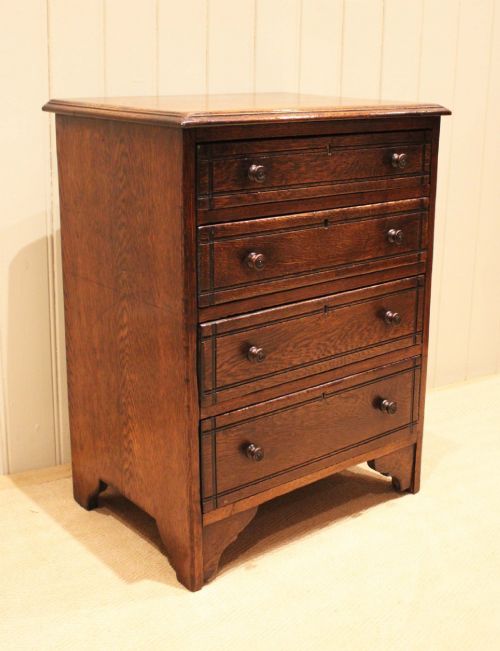
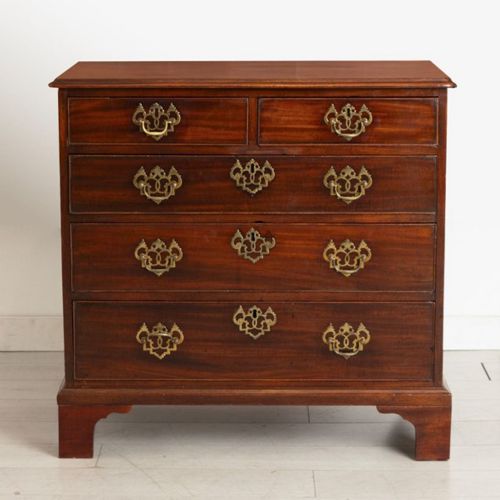


Compact Oak Dresser
A compact oak dresser delivers generous storage without overwhelming smaller rooms, combining useful surface space with traditional craftsmanship.
Compact Oak Dresser
A compact oak dresser provides practical storage for rooms with limited floor space while retaining traditional character. The pieces found here span multiple eras, including Georgian, Edwardian, and Victorian periods.
Buyers encounter various formats when searching for a compact oak dresser, ranging from low sideboard bases to small chests of drawers and bachelor's chests. Solid oak and golden oak feature heavily alongside limed oak variations.
How they were made
Construction relies primarily on solid timber, with oak forming the core structure of these small-proportioned items. Brass hardware appears frequently as original handles on period examples.
Surface treatments vary from natural golden tones to limed finishes applied during the twentieth century. Joinery methods reflect traditional cabinet-making standards suited to domestic use.
Listings span the eighteenth, nineteenth, and twentieth centuries, featuring materials such as solid oak, brass, and mahogany alongside limed oak finishes.
What varies in quality
The standard of timber selection and the retention of original fittings dictate the tier of each piece. Finer examples display careful grain matching and period-correct brassware.
Proportion and scale define the better specimens, where smaller dimensions do not compromise structural integrity. Alterations to feet or handles reduce historical authenticity.
Heals of London
The Compact Oak Dresser Glossary
- Bachelor's chest
- A small chest of drawers featuring a fold-over top designed for writing or dressing. These items date primarily from the Georgian era.
- Bracket foot
- A simple structural foot shape resembling a bracket, commonly found on eighteenth-century cabinetry. It supports the corners of chests and sideboards.
- Limed oak
- Timber treated with a specialised finish that leaves a white pigment in the grain. This technique gained popularity during the early twentieth century.
- Sideboard base
- The lower section of a larger kitchen dresser, functioning as a standalone cabinet with cupboards and drawers. These serve as compact sideboards in modern dining rooms.
Compact Oak Dresser: Frequently Asked Questions
Where should I place a compact oak dresser?
These smaller pieces suit hallways, dining rooms, and bedrooms where full-sized furniture overwhelms the floor space. Their reduced depth allows them to function effectively in narrow circulation areas.
Position them against internal walls away from direct heat sources to protect the timber from drying out and splitting over time.
How do I identify a Georgian compact chest?
Look for hand-cut dovetails in the drawer construction and timber with a deep, patinated surface developed over centuries. Original brass handles and bracket feet provide further period indicators.
Construction details differ noticeably from later twentieth-century reproductions, utilising native hardwoods and traditional jointing methods throughout the carcass.
How do I care for antique oak?
Apply traditional beeswax periodically to nourish the wood and maintain a soft sheen without building up synthetic residues. Avoid placing items in direct sunlight or near radiators.
Dust regularly with a dry cloth and clean spills immediately to protect the historic finish from water staining.