
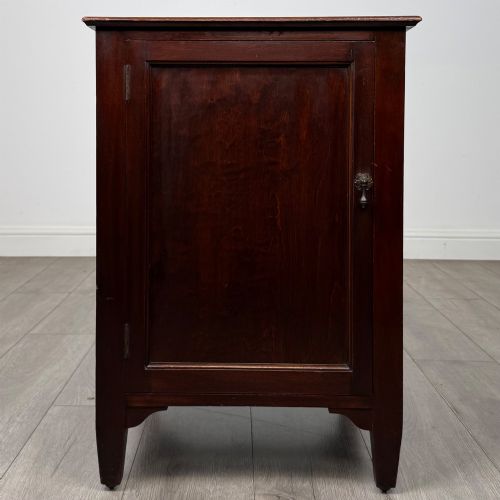
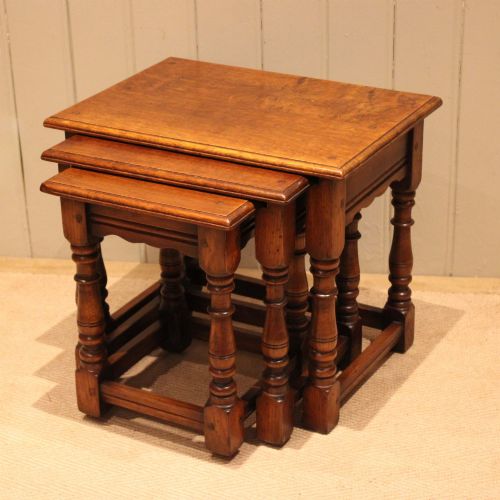
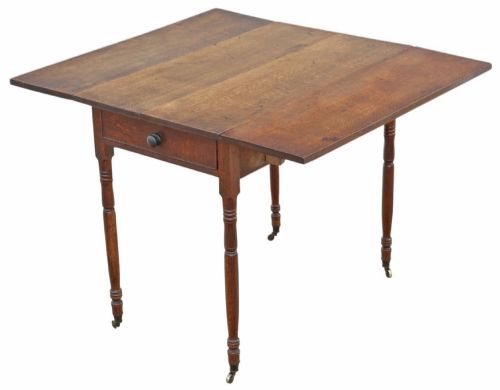

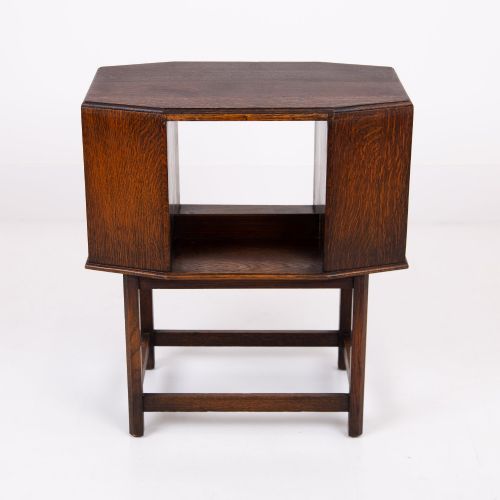
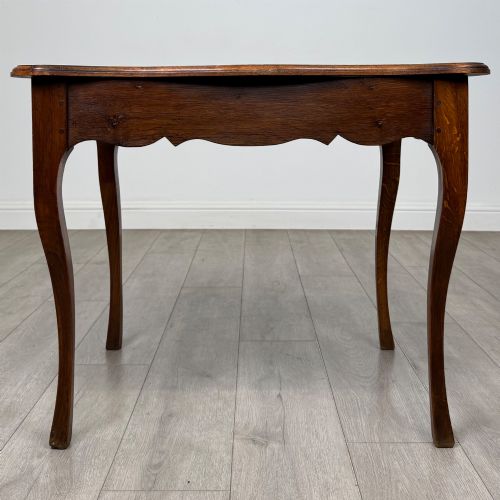
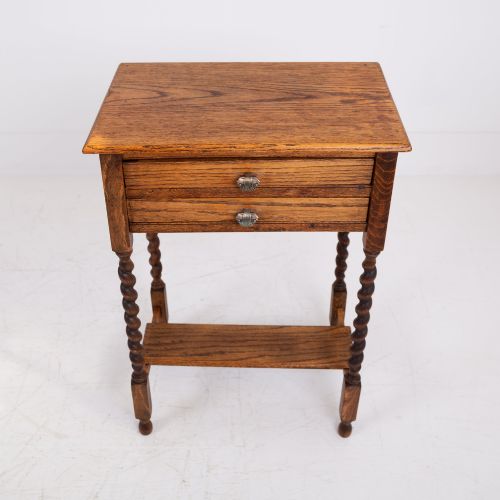
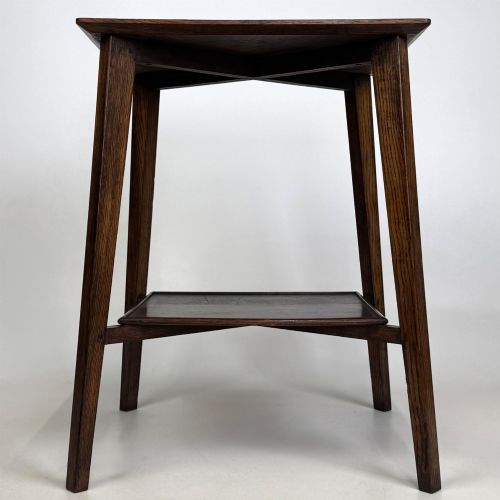
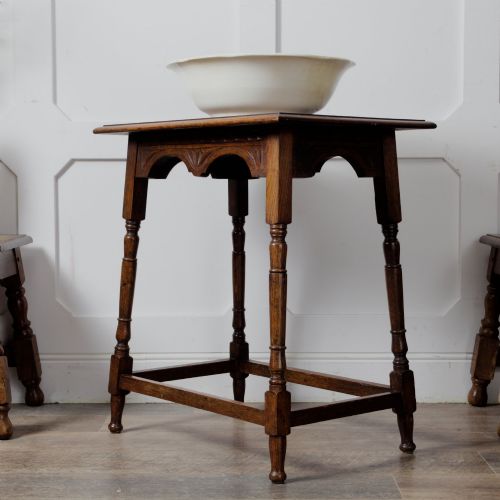
Small Oak End Table
A small oak end table brings practical surface space and traditional timber grain into a sitting room.
Small Oak End Table
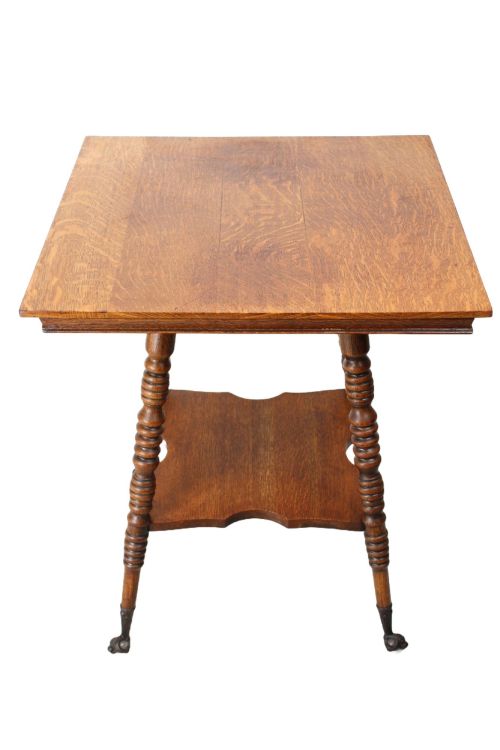
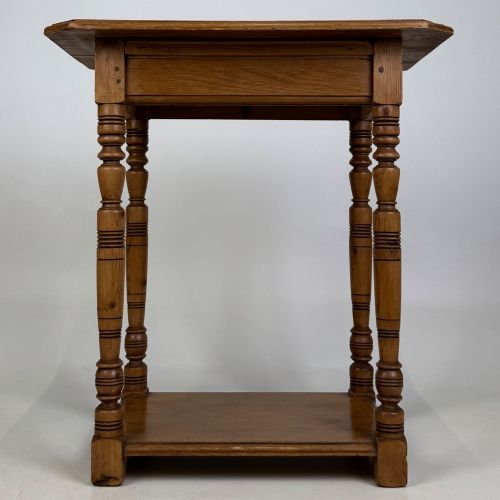
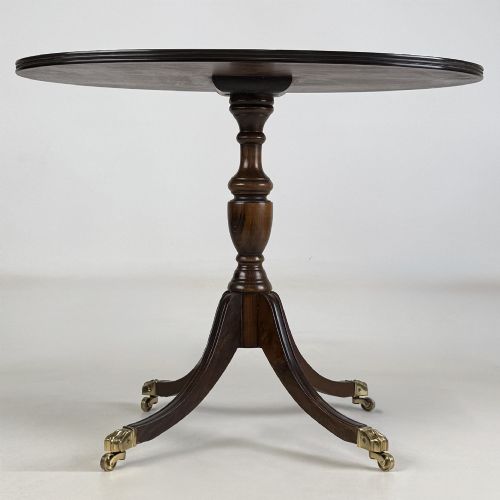
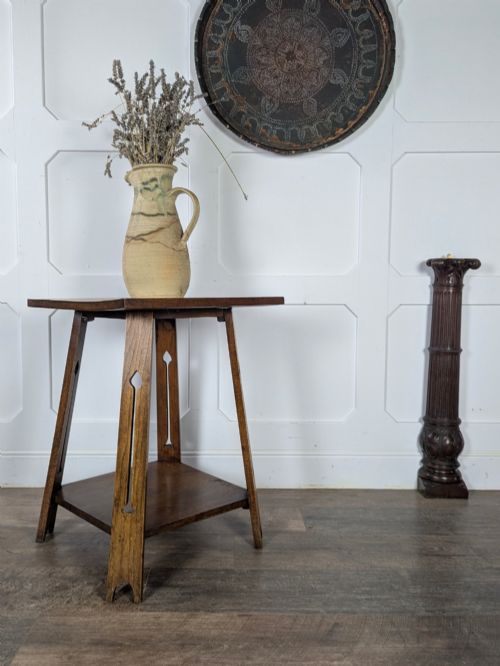
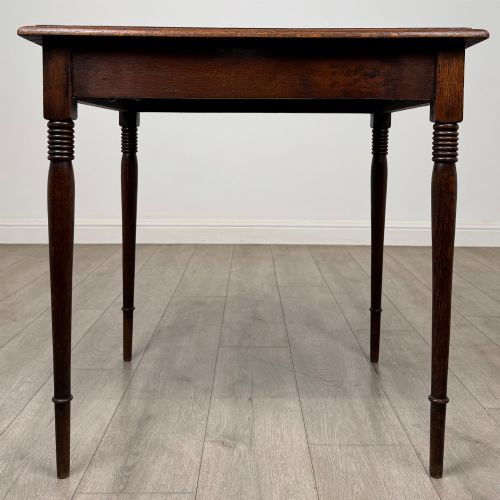
A small oak end table encompasses compact side pieces, occasional tables, and lamp stands designed for domestic use beside seating. These items emerge frequently from the Edwardian period and the 1920s, constructed predominantly as simple rectangular, oval, or octagonal surfaces.
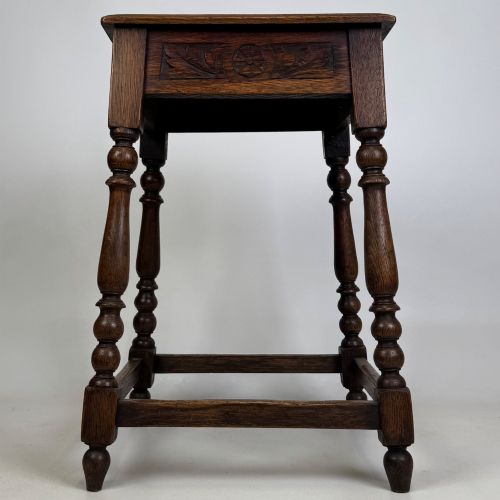
The selection ranges from vernacular English country pieces to refined Arts and Crafts interpretations and Jacobean Revival designs with carved detailing. Buyers often encounter side tables and nesting sets intended to tuck away neatly when floor space is at a premium.
Construction and Materials
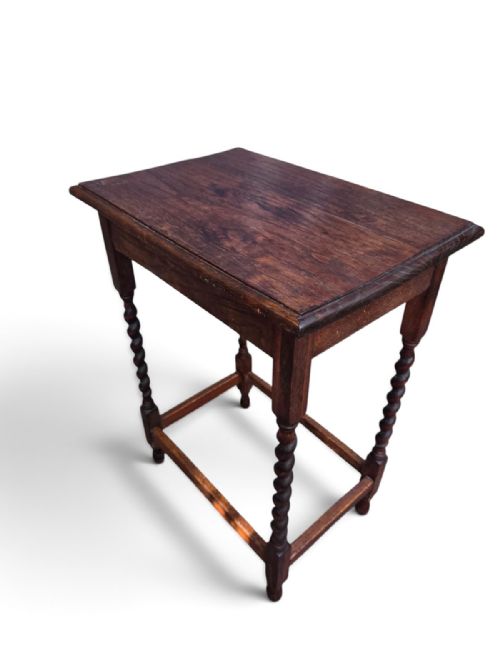
Makers relied on solid oak and burr oak veneer supported by traditional joinery, often incorporating turned elements like barley twist legs. Stained wood finishes appear alongside occasional decorative touches such as brass hardware, copper tops, and ceramic tiles.
Structural methods vary from straightforward nailed or screwed joints on simpler country tables to pegged mortise and tenon construction found in Arts and Crafts examples. Natural timber movement was accommodated through panel-in-frame tabletops and sturdy underframes.
Some tables feature clever folding mechanisms or nested tiers, proving that compact Victorian spaces demanded ingenious engineering just as much as modern ones.
Evaluating Craftsmanship
The distinction between standard utility items and finer examples rests on timber selection, such as richly figured burr oak veneer, and the crispness of hand-carved details like chip carving. Substantial weight in the timber and stable, well-balanced underframing separate superior pieces from lighter, mass-produced alternatives.
Design integration also dictates worth, where thoughtful proportions and cohesive stylistic influences, such as authentic Art Deco or Arts and Crafts movement lines, elevate a simple surface into a considered decorative object.
Liberty and Co·Baillie Scott
The Small Oak End Table Glossary
- Jacobean Revival
- A 19th and 20th-century style mimicking 17th-century English furniture. It employs heavy mouldings, geometric panels, and turned supports.
- Barley Twist
- A form of woodturning resembling a spiralling helix. This technique became popular on table legs during the late Victorian and Edwardian eras.
- Arts and Crafts
- A design movement valuing honest construction and hand craftsmanship over industrial manufacture. Pieces from this tradition often display exposed joinery and simple lines.
- Burr Oak
- A specialised timber cut from tree growths containing clustered bud knots. It yields intricate, highly decorative grain patterns highly prized for tabletops.
- Occasional Table
- A portable, multi-purpose piece meant to be moved around a room as needed. These items typically serve as stands for lamps, books, or drinks.
Small Oak End Table: Frequently Asked Questions
How do I style a small oak end table?
Pair the natural timber tones with neutral upholstery and soft lighting to balance the heavy grain of the wood.
Keep surface objects minimal to let the character of the oak remain the focal point of the corner.
Are these tables sturdy enough for daily use?
Solid oak construction provides a durable surface suited for holding lamps, cups, and books in active living areas.
Checking the stability of the legs and underframe ensures the piece handles everyday household demands securely.
How do I date an oak end table?
Examine the hardware, leg turnings, and overall style to align the piece with periods like Edwardian or Arts and Crafts.
Tool marks and construction methods visible beneath the tabletop often reveal whether a table dates to the 19th or 20th century.
What is the difference between a side table and a lamp table?
Side tables generally offer broader rectangular or oval surfaces meant for general placement beside seating.
Lamp tables are typically smaller and specifically proportioned to hold a light source and a small book.