
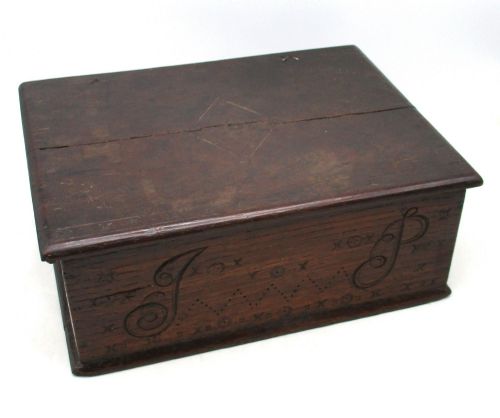
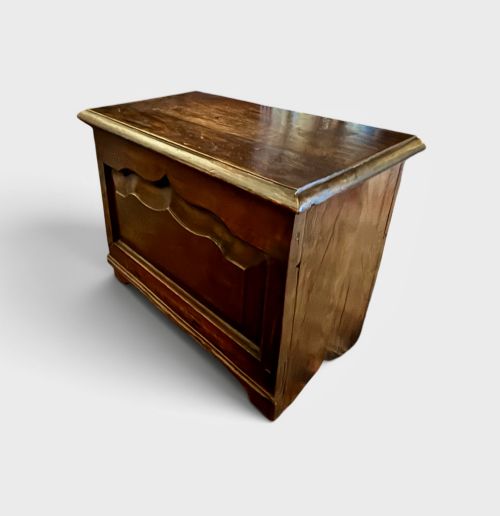
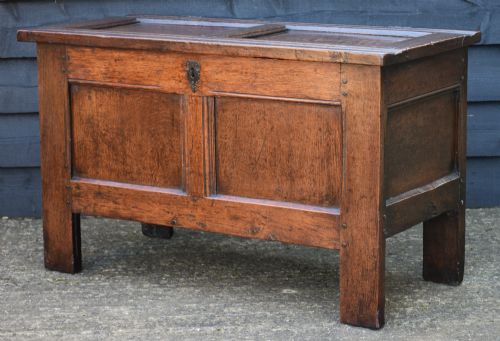
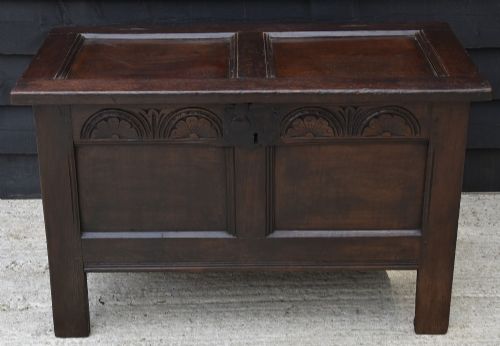
Small Oak Coffer Chest
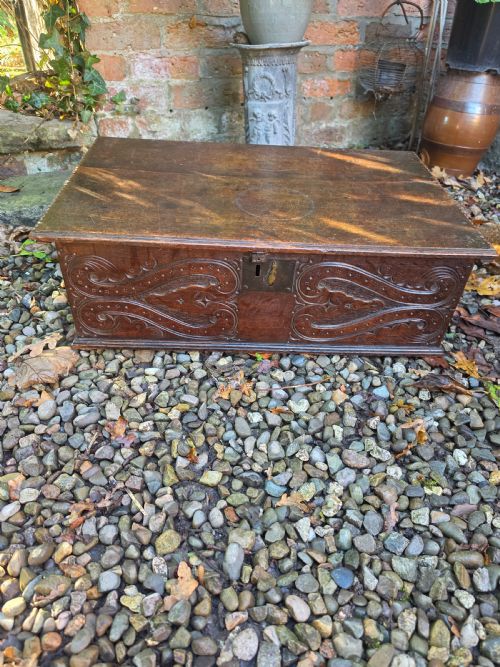
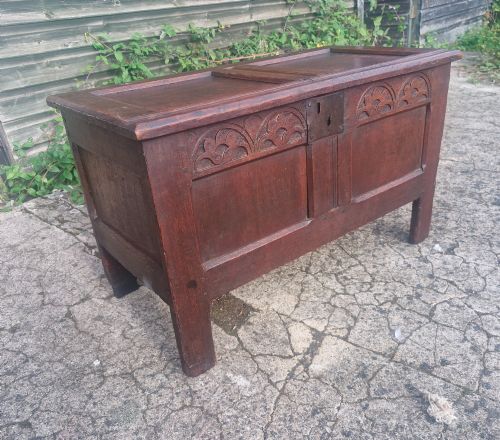
A small oak coffer chest offers compact historic storage in solid timber, spanning centuries of domestic joinery.
Small Oak Coffer Chest
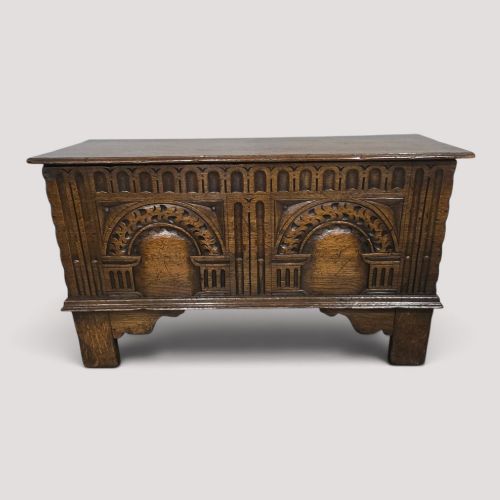
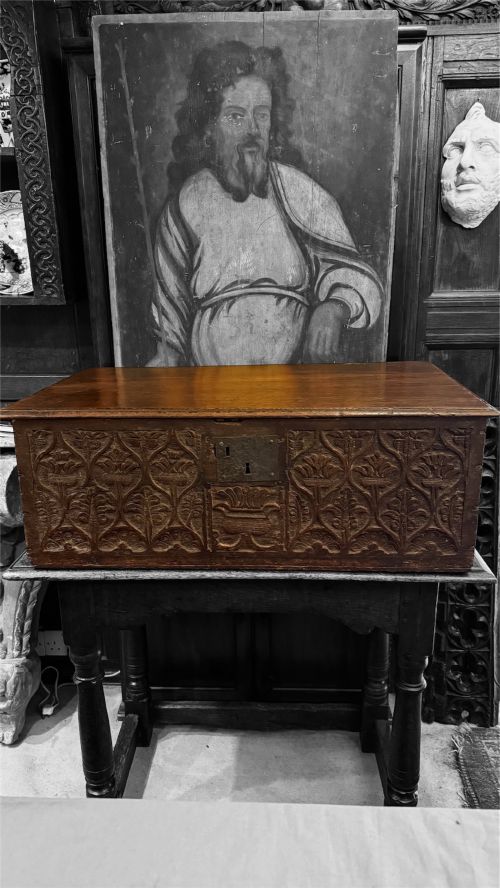
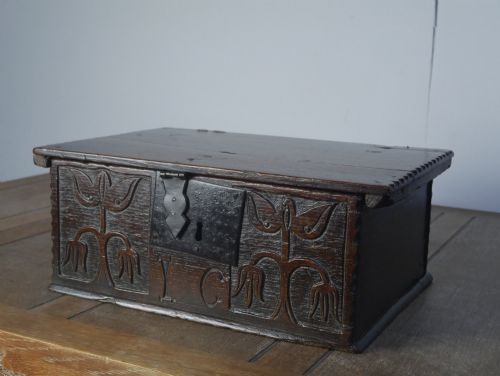
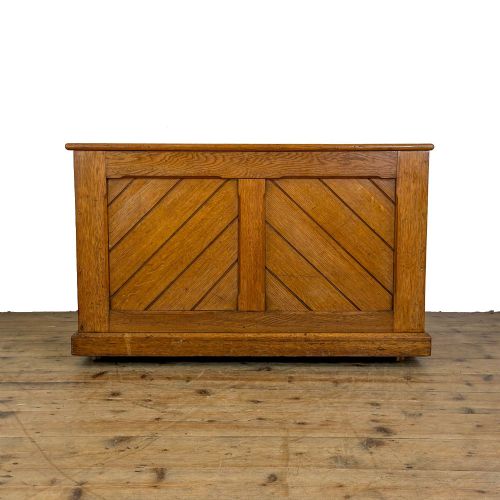
A small oak coffer chest serves as a domestic receptacle for valuables, linens, and documents, built in reduced proportions for intimate domestic spaces. Buyers encountering these pieces will find formats ranging from seventeenth-century panelled boxes to eighteenth-century Welsh coffer bach examples.
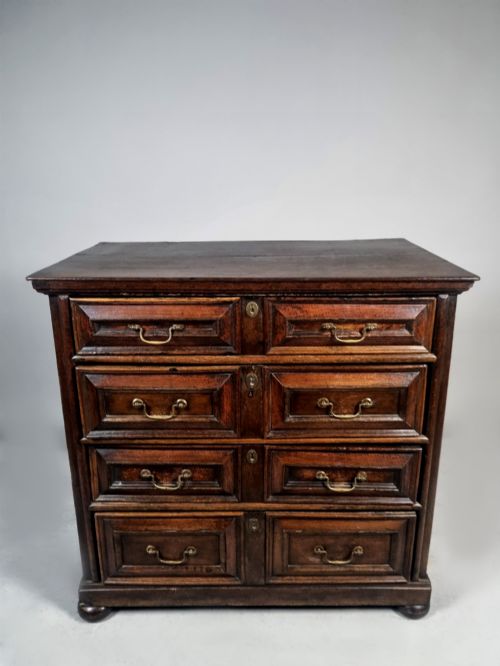
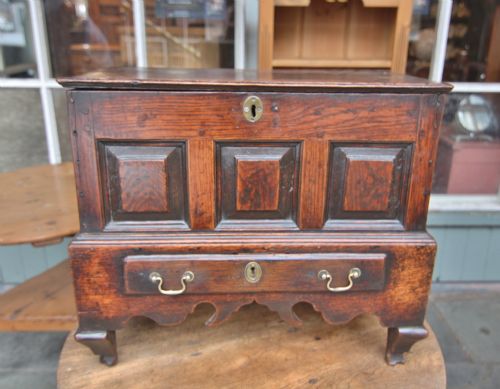
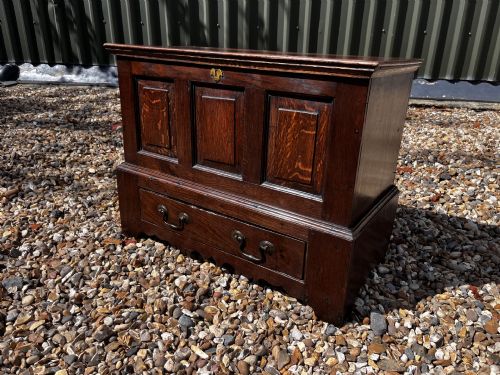
The regional variations include standard English blanket chests, mule chests fitted with lower drawers, and specialised deed or strong boxes. Most surviving examples date from the seventeenth and eighteenth centuries, constructed with hinged lids and robust board or frame-and-panel walls.
Construction and Materials
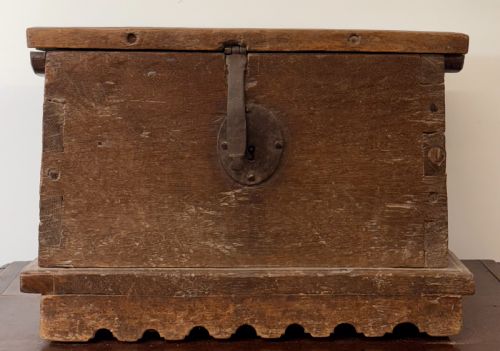
Makers built these pieces primarily from solid English oak, utilising joined frame-and-panel construction to accommodate the natural expansion and contraction of timber. Wrought iron strap hinges, latches, and brass escutcheons secure the lids and provide structural reinforcement.
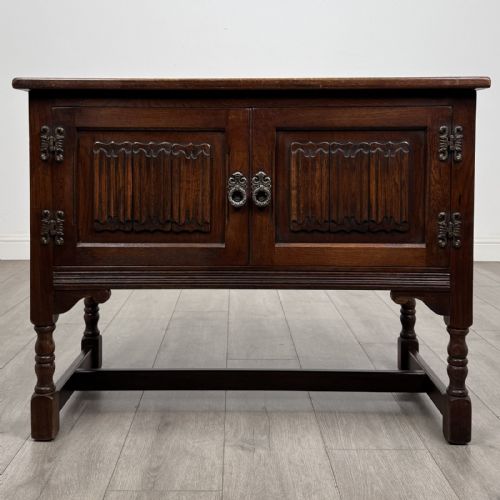
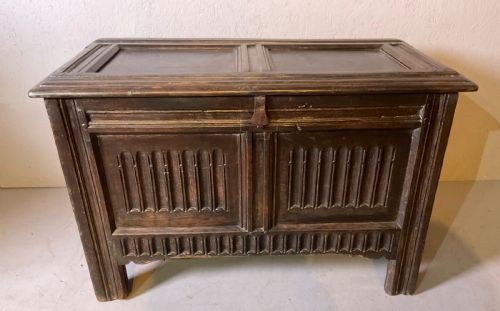
Secondary woods such as chestnut appear in continental pieces, while decorative detailing relies on simple mouldings, linen-fold carving, or geometric panel reliefs. Surfaces typically display a waxed finish developed through long domestic use rather than heavy pigmentation.
The inventory records regional Welsh coffer bach forms alongside standard English deed boxes, sword chests, and mule chests with integral drawers.
Quality and Proportion
Superior quality rests in the crispness of hand-cut joints, original board thicknesses, and the retention of early ironwork rather than later replacements. Pieces with well-balanced proportions and uncompromised timber surfaces command greater interest among collectors.
Lesser examples often show extensive replacement of baseboards, altered feet, or replaced lid hinges that disrupt the historic integrity of the chest. The depth of the carving and the tightness of the tenon joints further distinguish vernacular workshop output from later provincial copies.
The Small Oak Coffer Chest Glossary
- Coffer bach
- A small Welsh chest, often elevated on short feet or a small drawer base, traditionally made as a gift for family milestones.
- Mule chest
- A storage chest fitted with one or more drawers beneath the main internal compartment, bridging the form of a coffer and a chest of drawers.
- Linen-fold
- A carved wood panel motif imitating the vertical folds of folded linen cloth, common on sixteenth and seventeenth-century English joinery.
- Kist
- A regional term, particularly of northern or Scottish usage, denoting a heavy wooden storage chest or box.
- Panelled construction
- A method where a frame of stiles and rails holds a thinner floating central panel, preventing the wood from splitting as humidity changes.
Small Oak Coffer Chest: Frequently Asked Questions
What was a coffer bach used for?
A coffer bach served as a miniature storage chest in Welsh households, frequently used to store personal valuables, marriage documents, or keepsakes.
These small boxes were often presented as gifts during significant family events, reflecting both utility and sentimental value within the home.
How do I date an oak coffer?
Dating relies upon examining the construction joints, tool marks, and style of panel mouldings, which evolved from heavy seventeenth-century geometric panels to lighter eighteenth-century proportions.
Original iron hardware, peg construction, and the type of hinges utilised also provide reliable indicators of the period of manufacture.
Are mule chests different from standard coffers?
Mule chests incorporate one or more functional drawers beneath the main chest cavity, whereas standard coffers provide access solely through the top lid.
This hybrid form emerged to offer more organised storage without abandoning the traditional box chest format.
Where should I place a small coffer at home?
Small chests function effectively as blanket storage at the foot of a bed, as fireside bins, or as low accent tables in a living space.
Their compact proportions allow them to fit into hallways and smaller rooms where full-scale furniture would overwhelm the floor area.