
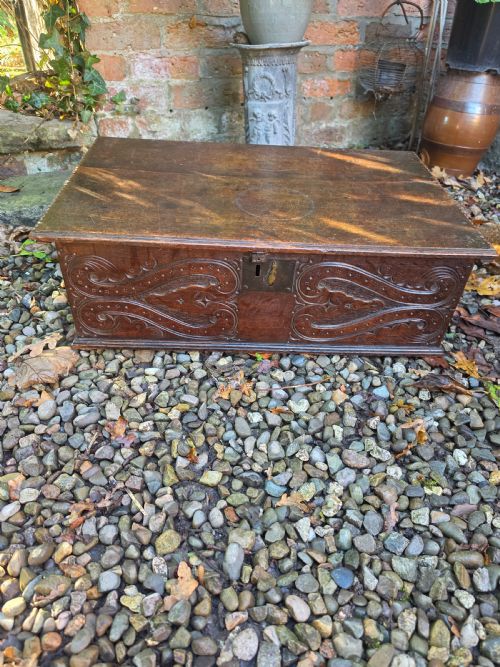
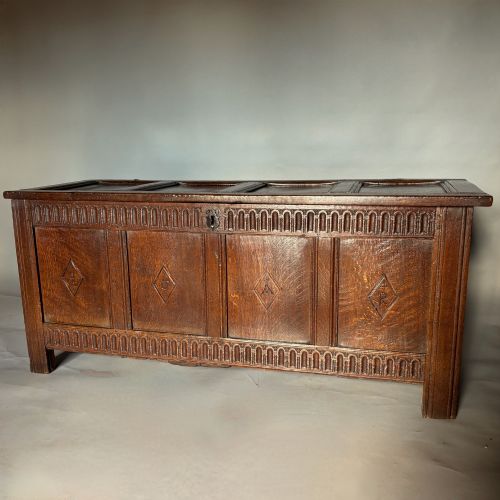
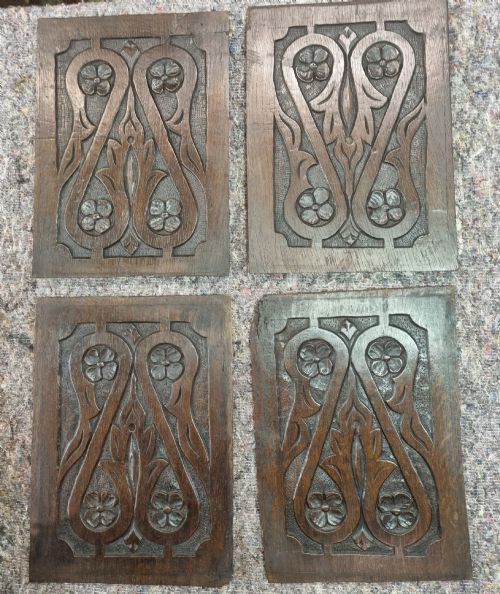
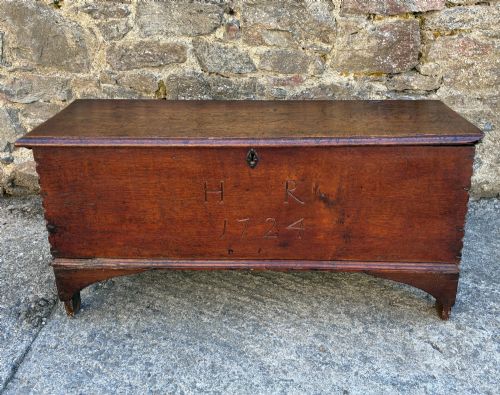
Oak Wooden Coffer Chest
An oak wooden coffer chest holds centuries of utility and craft, offering robust storage built to endure.
Oak Wooden Coffer Chest
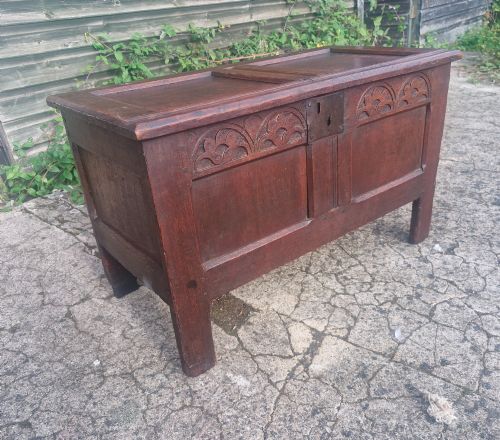
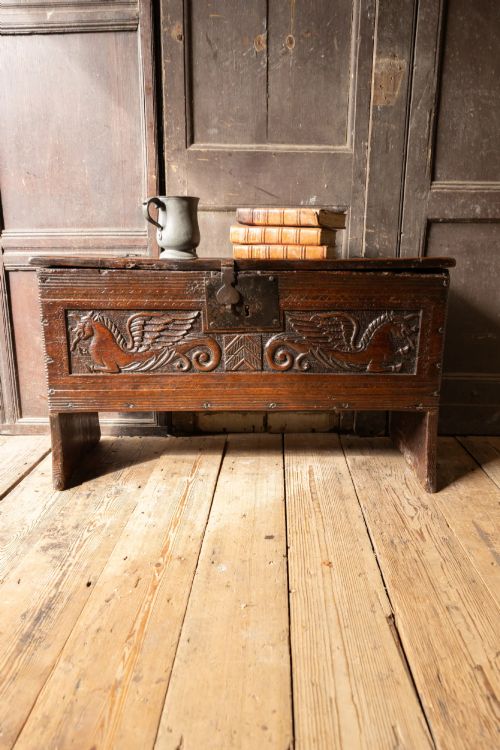
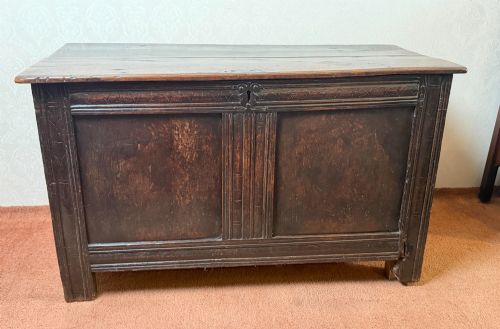
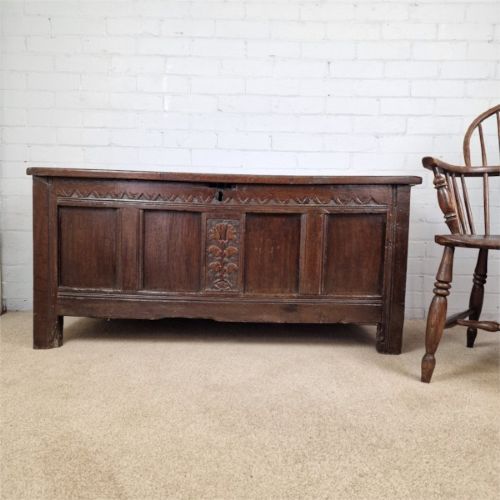
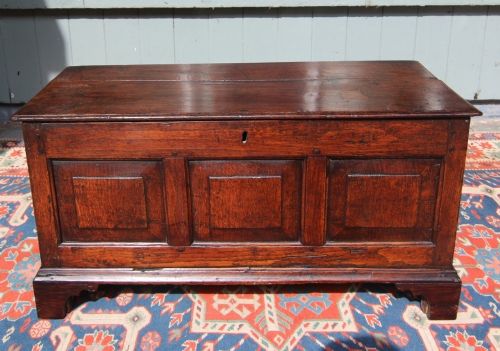
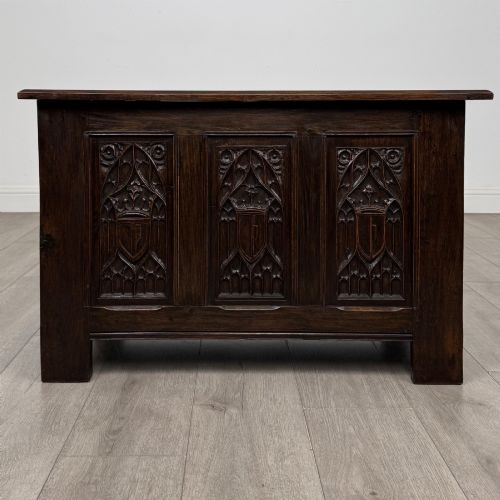
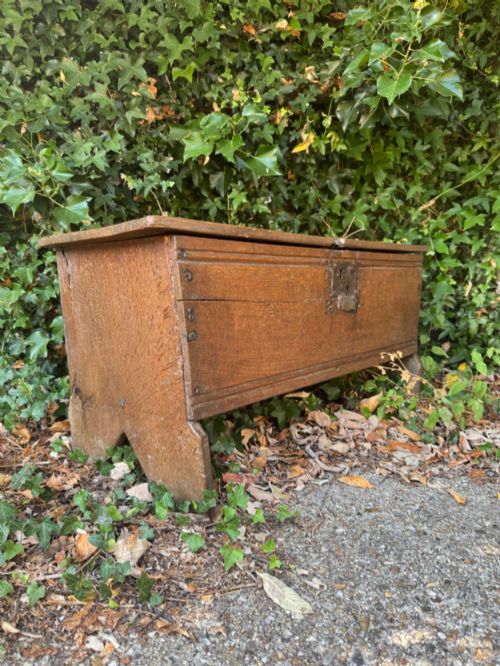
An oak wooden coffer chest functions as a heavy-duty storage box, originally designed to secure valuables, documents or textiles in domestic and institutional settings. You will encounter many examples originating from the sixteenth, seventeenth and eighteenth centuries, alongside later revivals from the twentieth century.
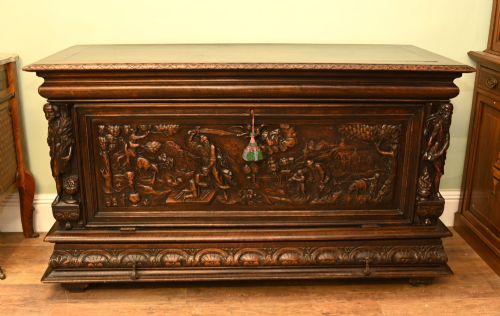
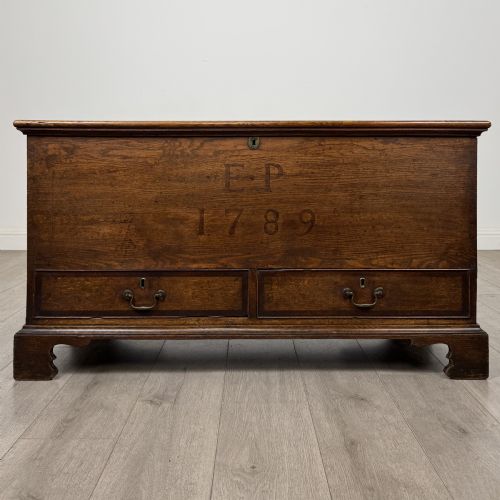
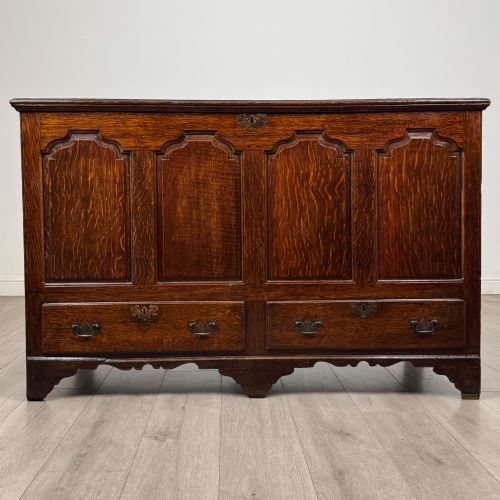
The forms vary from simple panelled boxes to mule chests equipped with lower drawers, document boxes and miniature versions. Regional pieces such as Welsh coffer bach items and Welsh Gower Peninsula examples sit alongside English, French and Flemish variants.
How they were made
Construction relies heavily on solid oak, frequently augmented with secondary timbers like elm, alongside iron, brass and wrought iron hardware for hinges and locks. Joinery typically employs pegged frame and panel construction to allow the timber to move naturally with humidity changes.
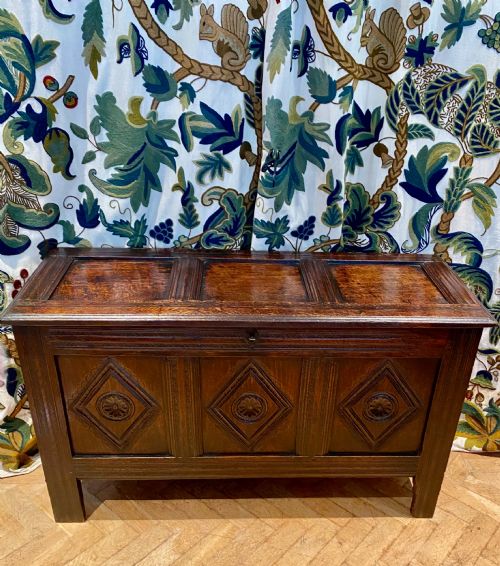
Surface ornamentation incorporates carved detailing, marquetry inlay and dark finishes, while some surfaces display a rich natural patina accumulated over hundreds of years of handling.
Several seventeenth-century chests bear carved dates or initials, serving as durable marital logs long before modern social media registries.
What varies in quality
The integrity of the original construction dictates much of the standing, distinguishing pieces that retain their primary timber lids, baseboards and floorboards from those heavily rebuilt. Crispness and depth in the carved panels separate ambitious workshops from simpler village carpentry.
Proportion and scale also define the hierarchy, where small proportions and miniature formats demand high skill to execute successfully alongside larger architectural chests.
The Oak Wooden Coffer Chest Glossary
- Coffer
- A heavy wooden chest used for storing valuables and household goods. These items typically feature a hinged lid and robust boarded or panelled construction.
- Mule chest
- A storage chest fitted with one or more drawers beneath the main compartment. This form bridges the traditional coffer and the chest of drawers.
- Marquetry inlay
- Decorative patterns formed by fitting contrasting pieces of wood veneer into a prepared surface. This technique adds pictorial or geometric enrichment to the front panels.
- Panelled construction
- A method of joining wooden frames around a thinner floating central panel. This technique prevents warping as the wood expands and contracts.
Oak Wooden Coffer Chest: Frequently Asked Questions
What is an oak wooden coffer chest used for?
These pieces originally served to secure family valuables, legal documents, silver and linens in households lacking built-in wardrobes or closets. Their heavy construction kept contents safe from damp and theft.
Today, they function as practical living room or bedroom storage units that double as coffee tables or blanket boxes at the foot of a bed.
How do I date an antique oak chest?
Dating relies on examining the joinery methods, tool marks left by hand axes or saws, and the evolution of carved decorative motifs. Seventeenth-century examples often display geometric strapwork or dated inscriptions, while later revivals copy these traits with modern machine precision.
Timber shrinkage, hand-forged iron hinges and the presence of pegged joints help confirm genuine early periods over later copies.
What is the difference between a coffer and a mule chest?
A standard coffer consists of a single deep box cavity accessed exclusively through a hinged lid at the top. Retrieving items at the bottom requires unloading everything stacked above.
A mule chest incorporates one or more storage drawers beneath the main box, allowing easier access to frequently used garments without disturbing the top compartment.
How do I care for antique oak furniture?
Maintain a stable indoor humidity and keep wooden chests away from direct heat sources such as radiators or fireplaces. Sudden temperature shifts cause timber to split and joints to weaken.
Apply a microcrystalline wax polish occasionally to nourish the surface and preserve the historic patina without sealing the wood permanently.