

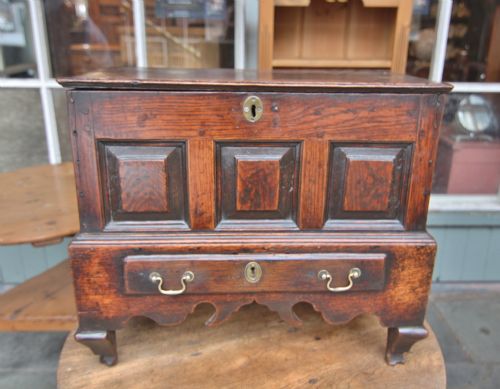
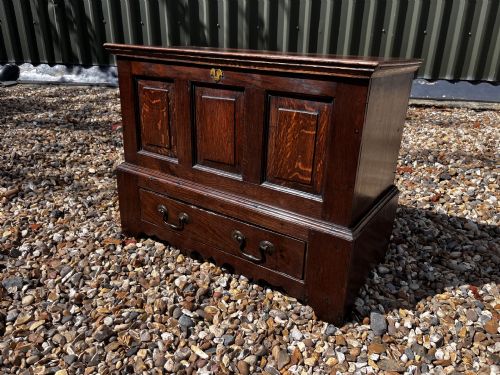
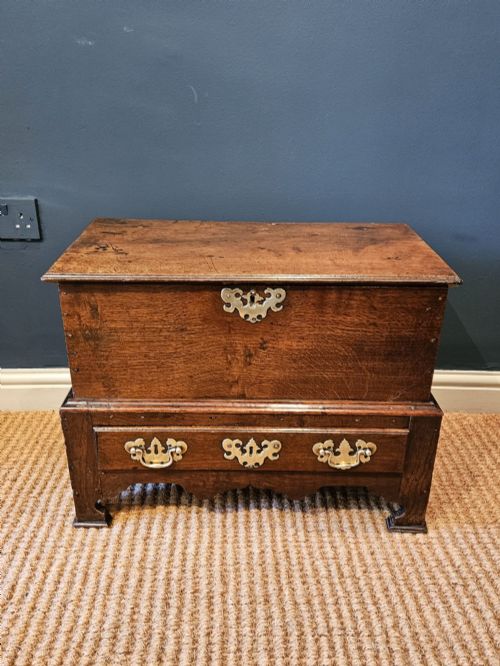


Small Oak Coffer Bach
A small oak coffer bach is a traditional Welsh miniature chest built to hold precious documents and keepsakes.
Small Oak Coffer Bach
A small oak coffer bach represents a scaled-down version of the standard household chest, originating from Welsh domestic traditions. These pieces typically combine a hinged lid above a small compartment, often featuring a single drawer set into the base.
Most examples encountered date from the seventeenth, eighteenth, and nineteenth centuries, spanning Georgian and Welsh vernacular styles. Buyers frequently select these miniature chests for display on tabletops or sideboards as historic focal points.
How they were made
Local cabinetmakers constructed these small chests primarily from solid oak, sometimes incorporating timber inlay or carved details for ornamentation. Structural iron and brass components, including hinges and small locks, secured the lids and drawers.
Joinery methods relied on traditional pegged mortise and tenon frames, whilst bases often rested upon simple turned feet or bracket supports. Surfaces were finished by hand, developing rich patination through centuries of handling and wax polishing.
Small Oak Coffer Bach Retail Price Guide 2026
Typical asking prices for small oak coffer bach among the pieces listed under this phrase on Sellingantiques today, from the lower quarter to the upper quarter. They describe what is for sale here now, not the wider market.
Some miniature chests are small enough to sit on a grand piano, having spent centuries guarding family love letters.
What varies in quality
Quality rests heavily on the crispness of the original carving, the restraint of proportion, and the retention of authentic period hardware. Pieces displaying untouched timber surfaces and early peg construction command higher regard than those with extensive modern repairs.
The degree of regional vernacular character also influences distinction, where unusual proportions or integrated drawer arrangements set finer examples apart. The presence of original feet and untouched interior compartments further elevates the standing of a piece.
The Small Oak Coffer Bach Glossary
- Coffer bach
- Welsh for little chest, designating a miniature storage box often featuring a base drawer. These objects served traditional domestic functions in rural households.
- Vernacular
- Furniture built by local country makers using regional traditions rather than formal London pattern books. This style reflects practical utility and local material availability.
- Mule chest
- A storage chest fitted with one or more drawers beneath the main lift-up compartment. The term frequently overlaps with coffer bach in Welsh regional classifications.
- Patina
- The surface sheen and colour developed by aged wood through handling, oxidation, and polishing over generations. It provides a primary indicator of authenticity.
- Peg construction
- The traditional method of joining wooden framing members using turned wooden pins rather than modern metal fasteners. This technique marks period Welsh country cabinetmaking.
Small Oak Coffer Bach: Frequently Asked Questions
What were small oak coffers used for?
These miniature chests historically held important family documents, marriage certificates, bibles, and small valuable possessions. Their portable nature allowed owners to keep precious items secure.
Today, they function as decorative objects on tabletops, housing modern keepsakes whilst displaying centuries of rural craftsmanship.
How do I date a coffer bach?
Dating relies on examining the construction methods, such as hand-split oak boards, early iron hinges, and pegged joinery. Seventeenth and eighteenth-century examples display different foot forms and moulding profiles compared to nineteenth-century revivals.
Subtle changes in drawer dovetailing and the wear patterns on the timber help narrow down the period of manufacture.
How should I care for my oak coffer?
Maintain the historic oak by keeping the piece away from direct heat sources and dramatic humidity fluctuations. Natural beeswax applied sparingly helps preserve the surface sheen without building up heavy residues.
Avoid modern liquid polishes, which can penetrate unsealed grain and soften the aged patina of the timber.