
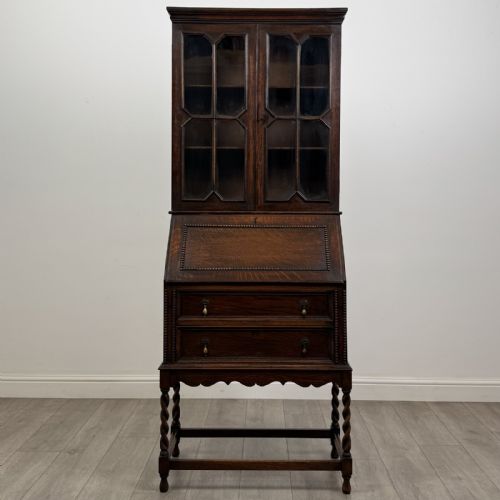
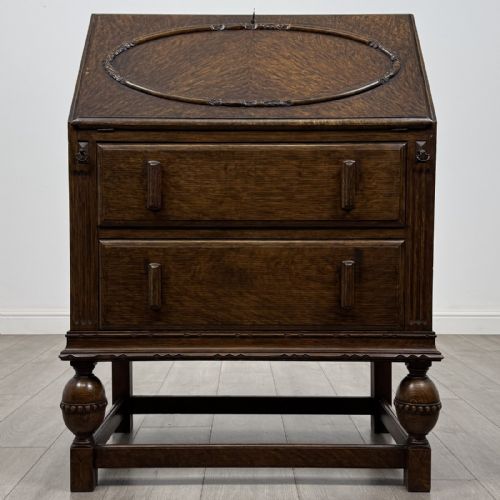
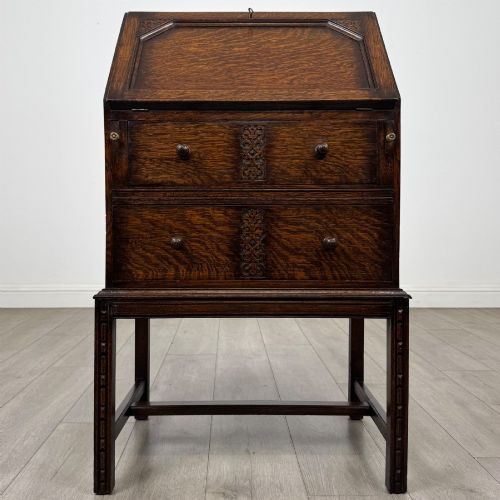

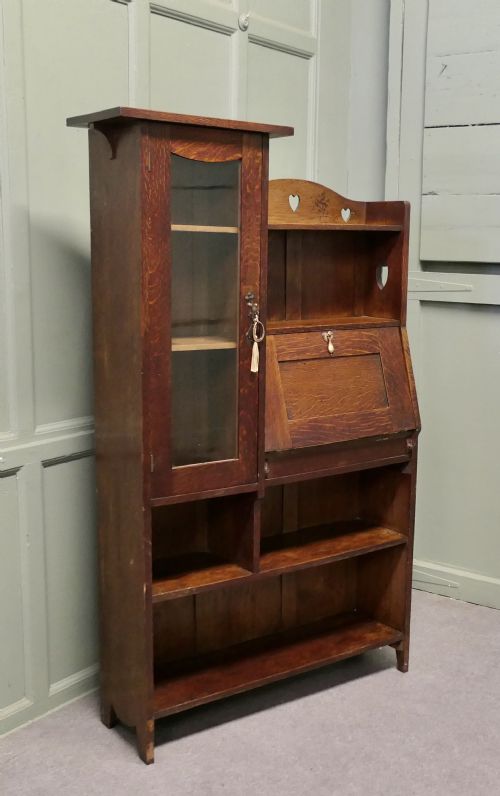


Small Oak Bureau Cabinet
These small oak bureau cabinet pieces combine a writing desk and storage into compact proportions that suit modern rooms.
Small Oak Bureau Cabinet
A small oak bureau cabinet unites a fall-front writing surface with fitted interior compartments and upper shelving enclosed by glazed or solid doors. These compact forms appear across multiple periods including the seventeenth, eighteenth, and nineteenth centuries.
The pieces on this page span styles from Jacobean Revival and William and Mary to Georgian, Victorian, Edwardian, and Arts and Crafts. Buyers encounter everything from austere seventeenth-century framing to Edwardian narrow writing desks and Arts and Crafts golden oak student models.
Originating as practical writing furniture, these compact cabinets provide concealed workspace alongside bookcase storage without dominating a room. Their timber construction ranges from plain native boards to figured pollard and burr oak veneers.
What varies in quality
The calibre of a piece depends heavily on the choice of timber figure, such as richly patterned pollard or burr oak, and the restraint of its decorative carving. Early examples demonstrate hand-shaped mouldings and pegged joinery that contrast with later, more mechanised production methods.
Proportions also dictate distinction, with narrower Edwardian formats and seventeenth-century variants showing thoughtful spatial economy. The sophistication of the internal pigeonholes and small drawers reveals the maker's dedication to hidden detail.
One notable piece on record carried provenance directly from the Shakespeare Birthplace Trust.
The Small Oak Bureau Cabinet Glossary
- Bureau
- A desk featuring a sloping hinged writing flap that opens to reveal internal compartments. It often sits above a chest of drawers or a cupboard base.
- Secretaire bookcase
- A tall piece of furniture combining a dedicated writing drawer or fall-front desk with an upper shelving section enclosed by doors.
- Pollard oak
- Timber taken from trees that were cut back near the trunk to encourage dense, highly figured branch growth. This wood produces distinctive clustered patterns when sliced.
- Burr oak
- Wood harvested from tree growths containing distorted, knotty grain patterns. Cabinetmakers prize this material for its rich, swirling decorative surfaces.
- Arts and Crafts
- A design movement valuing honest construction, visible handcraftsmanship, and simple materials over industrial ornament. Pieces from this tradition often feature unadorned surfaces and straightforward joinery.
Small Oak Bureau Cabinet: Frequently Asked Questions
How were bureau cabinets used historically?
These cabinets served as private administrative stations for managing correspondence, household accounts, and personal libraries. The fall-front flap provided an immediate writing surface that could be closed quickly to conceal unfinished work.
Upper glazed sections kept reference books clean and visible, while internal drawers organised letters and ink supplies.
How do I fit a small bureau cabinet into a modern room?
Because these pieces were built with compact footprints, they slip easily into alcoves, home studies, or living rooms without overwhelming the floor plan. The enclosed writing flap lets you hide away laptop computers and papers at the end of the working day.
Their neutral timber tones coordinate naturally with both traditional and contemporary interiors.
How do I tell different periods apart?
Seventeenth-century pieces typically display heavy rectilinear framing, pegged joinery, and austere fielded panels. Georgian and Victorian examples introduce more refined proportions, mahogany-lined drawers, and occasionally figured veneers like burr or pollard oak.
Edwardian and Arts and Crafts versions lean towards lighter structural lines, unpretentious golden oak surfaces, and functional simplicity.