

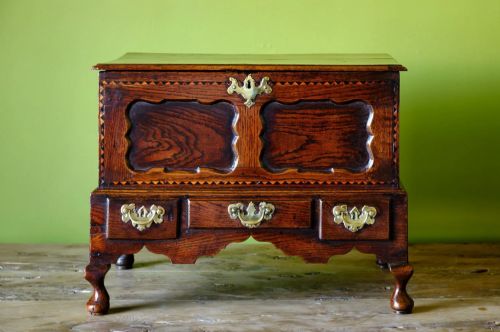
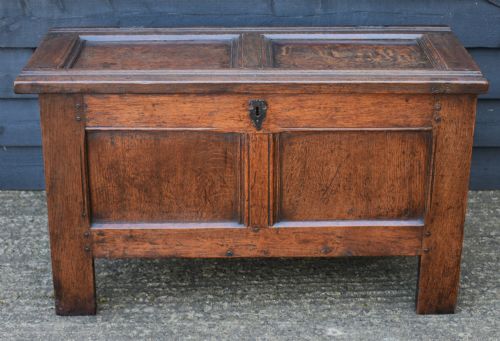
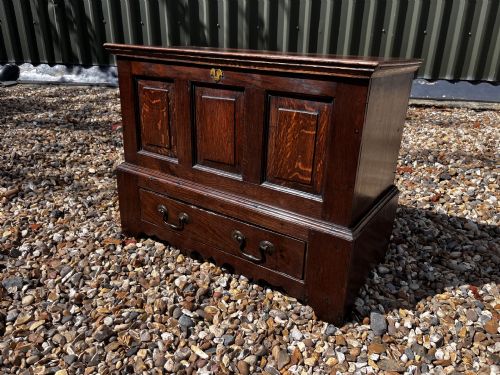
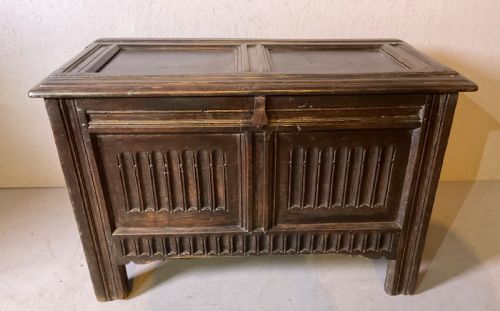




Small Mule Chest
A small mule chest offers compact storage with traditional character, combining practical timber construction with regional vernacular design.
Small Mule Chest
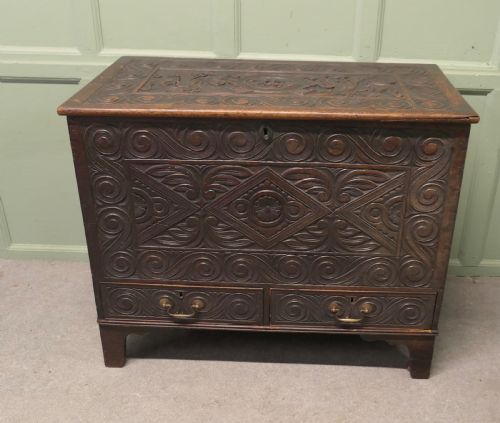
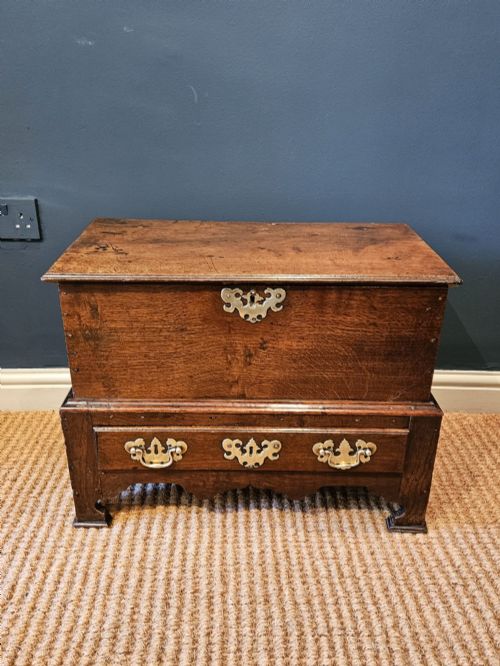
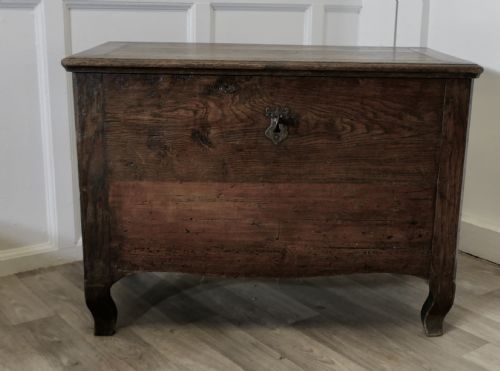
A small mule chest provides compact storage in solid oak, taking the form of a miniature coffer or a drawer-fitted box. These pieces emerge from the seventeenth and eighteenth centuries, frequently originating in Welsh vernacular workshops or Georgian English domestic settings.
Buyers encounter regional variants such as the Welsh coffer bach or coffor bach alongside cottage-sized blanket chests and apprentice pieces. These smaller formats serve as desktop boxes, fireside bins, or bedside storage while retaining the robust construction of full-sized furniture.
The inventory on this page consists entirely of oak examples spanning the seventeenth and eighteenth centuries, incorporating Jacobean panel traditions and Georgian vernacular styles.
How they were made
Cabinet makers constructed these pieces using solid oak, often shaping panels with linen fold designs, geometric mouldings, or carved details such as green man motifs. Structural joints rely on traditional pegged framing to support daily domestic use.
Iron and brass fittings secure the lids and provide functional hardware, including hinges and latches forged by local blacksmiths. The timber receives a natural wax or polished finish that highlights the grain of the solid oak.
Small Mule Chest Retail Price Guide 2026
Typical asking prices for small mule chest among the pieces listed under this phrase on Sellingantiques today, from the lower quarter to the upper quarter. They describe what is for sale here now, not the wider market.
Iron and brass hardware appear across these listings, securing lids and panels on Welsh vernacular and English country pieces alike.
What varies in quality
Quality rests upon the integrity of the original timber and the crispness of any hand-carved ornamentation, such as panel moulding or figural work. Pieces retaining their early brass or iron hardware hold greater authenticity.
Proportion and scale dictate desirability, particularly in miniature formats like the coffer bach, where balanced dimensions and original boarded lids distinguish finer examples from altered items.
The Small Mule Chest Glossary
- Coffer bach
- A small Welsh chest or miniature coffer traditionally used for linen or valuables. The term translates directly from the Welsh language.
- Linen fold
- A carved panel motif resembling folded cloth, frequently seen on seventeenth century oak furniture. This style provides texture to plain wooden surfaces.
- Vernacular
- Furniture built by regional craftsmen following local traditions rather than metropolitan fashion. These pieces utilise local materials like solid oak.
- Jacobean
- A style dating to the early seventeenth century characterised by heavy rectilinear construction and geometric panelling. Oak pieces from this period often display dark patination.
- Mule chest
- A traditional chest featuring one or more drawers beneath the main storage compartment. This hybrid form bridges the gap between simple coffers and drawer chests.
Small Mule Chest: Frequently Asked Questions
What is a coffer bach?
A coffer bach is a small Welsh chest traditionally used to store valuables or linen. These miniature pieces often feature single lower drawers and solid oak construction.
Craftsmen built them as presentation pieces or domestic storage items. Their compact proportions make them suitable for tabletop use or placement beside a fireside.
Where were small mule chests used?
These chests served domestic functions in seventeenth and eighteenth-century homes, acting as bedside boxes, desktop storage, or fireside bins. Their small scale allowed owners to place them on tables or in chambers.
Regional variants like the Welsh coffor bach held a dual purpose as practical storage and decorative household objects in cottage interiors.
How do I care for antique oak?
Antique oak benefits from simple maintenance using natural beeswax to nourish the dry timber. Avoid placing these chests near direct heat sources or strong sunlight.
Applying wax sparingly and buffing with a soft cloth preserves the historic patina. Regular dusting prevents particle buildup on carved panels and iron hardware.