
Small Mahogany Storage Drawers
Small mahogany storage drawers bring compact utility and period craftsmanship to modern interiors, offering discrete organisation for letters, trinkets or collections.
Small Mahogany Storage Drawers
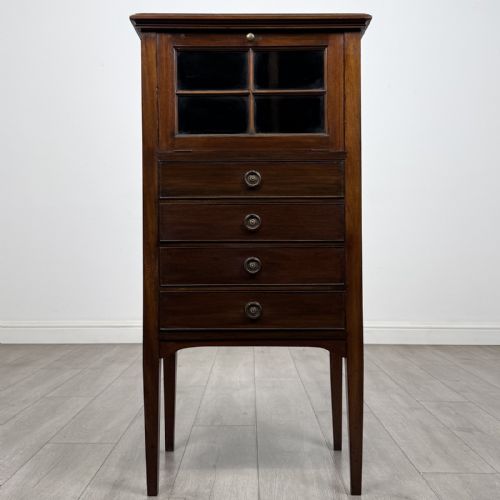
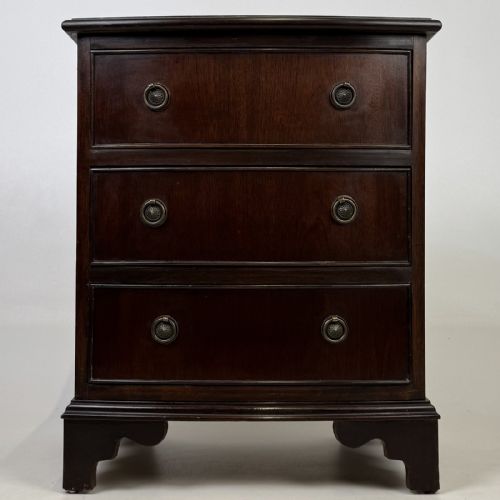
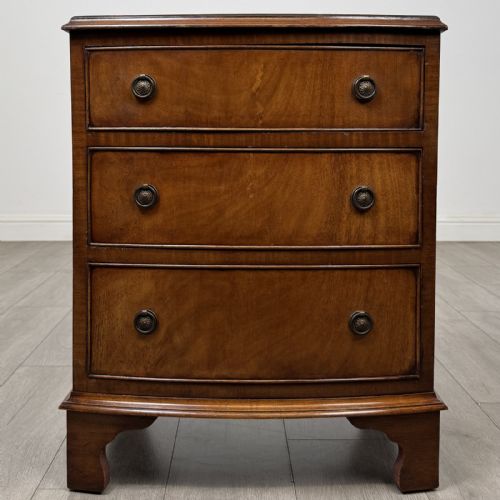
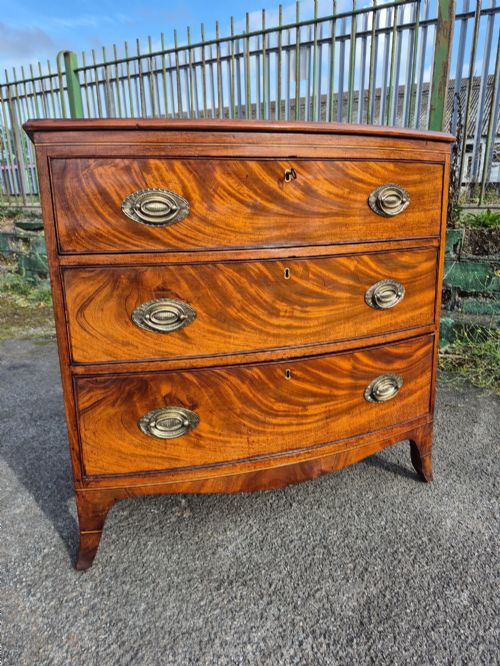
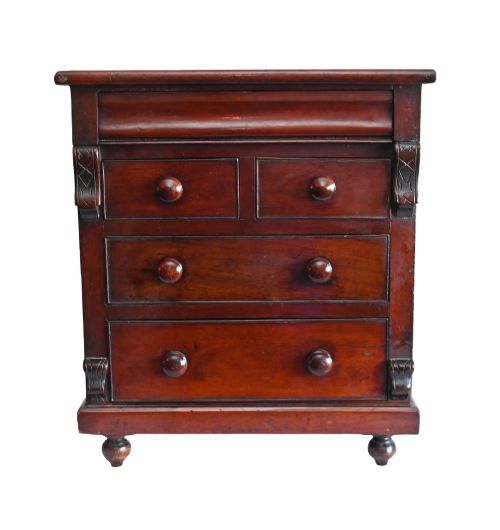
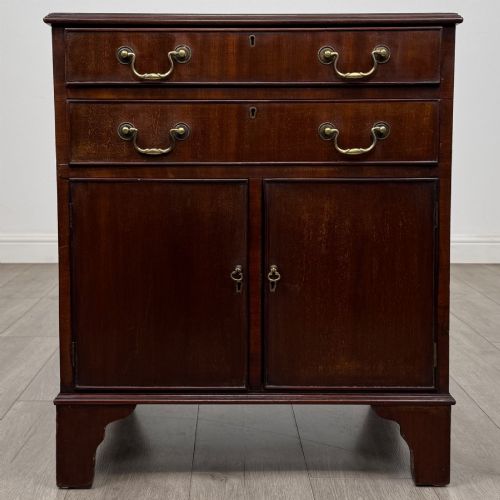
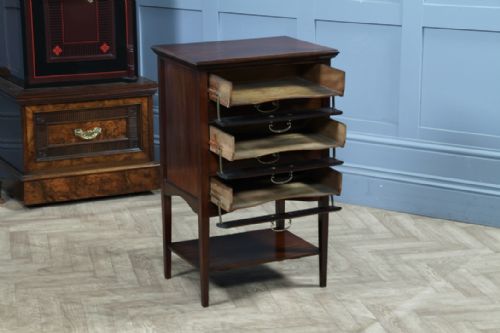
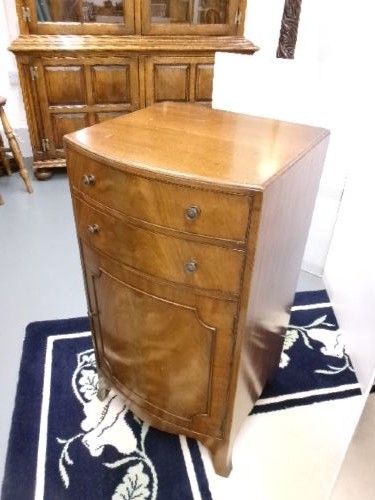
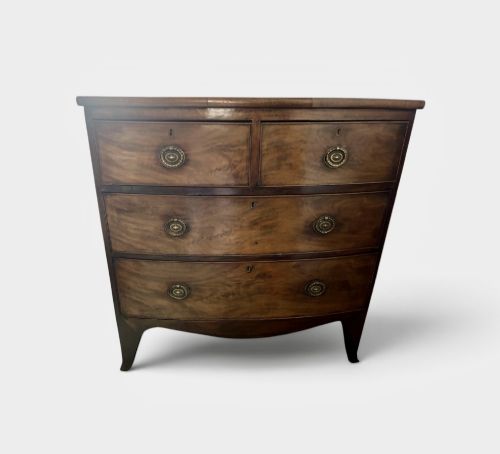
Small mahogany storage drawers appear most frequently as Georgian, Regency and Victorian chests of drawers, alongside miniature apprentice pieces, apothecary boxes and multi-drawer filing cabinets. These pieces range from diminutive bowfront designs with brushing slides to tallboys, sideboards and compact collector cabinets built for restrained spaces.
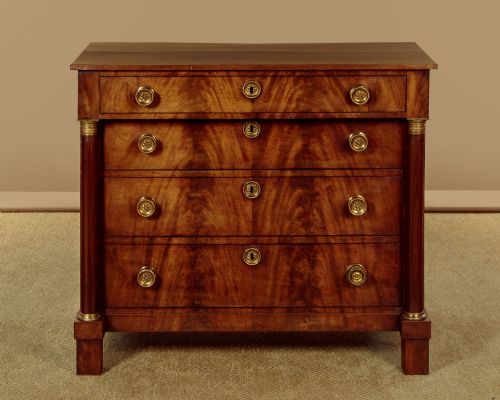
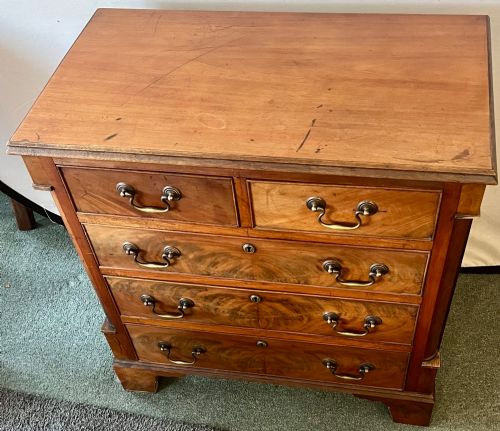
The materials recorded across these listings include solid and veneered mahogany, often paired with secondary woods like oak or pine, and highlighted with brass handles, satinwood inlay or glass elements. Makers and cabinetmakers utilised flame mahogany veneers and crossbanding to add visual depth to the compact proportions of these storage units.
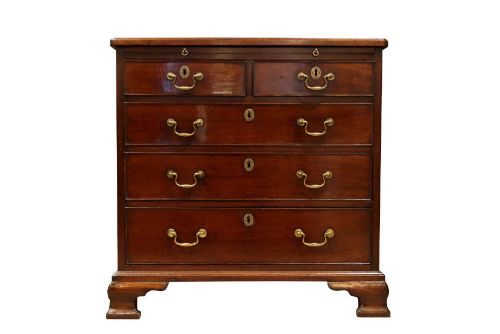
Dating spans from the eighteenth century through the Victorian era and into twentieth-century revivals, including Edwardian and Art Deco examples. Buyers encounter everything from eighteenth-century bachelor chests with bracket feet to early twentieth-century filing cabinets and medical carrying chests.
Construction and Materials
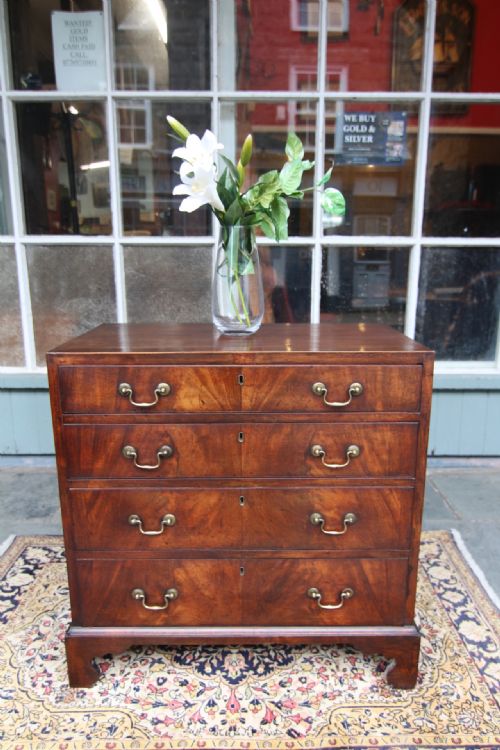
Cabinetmakers built these storage pieces using solid mahogany and flame mahogany veneer applied to sturdy carcases of oak or pine. Surfaces often display crossbanding in contrasting timbers such as satinwood to frame the drawer fronts and top boards.
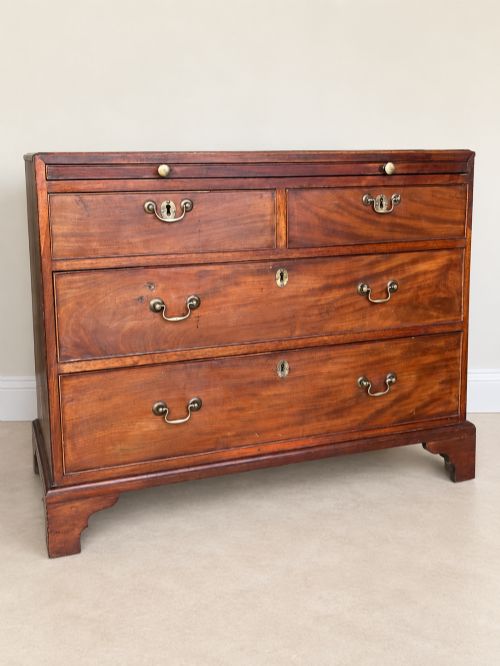
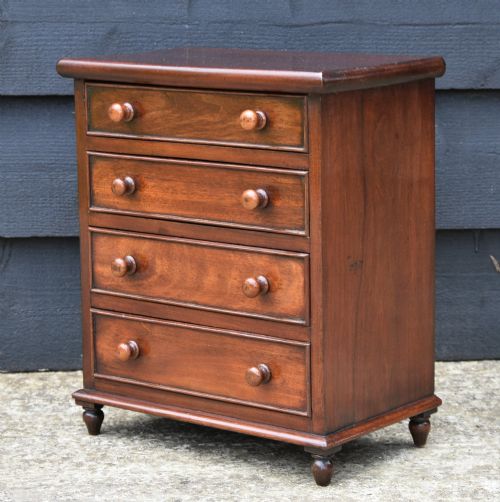
Hardware played an essential structural and decorative role, with original brass drop handles, backplates and working locks securing the contents. Drawer construction relied on traditional hand-cut dovetails, while miniature apprentice pieces and apothecary boxes incorporated turned feet or fitted interior compartments.
Formations span traditional chests of drawers, apothecary boxes, miniature apprentice pieces, tallboys and multi-drawer filing cabinets.
Assessing Quality and Proportion
Quality rests in the handling of timber figure and grain, particularly where flame mahogany veneer is matched symmetrically across drawer fronts. Superior examples maintain crisp mouldings, tight dovetail joints and well-preserved patination that develops naturally over centuries of use.
Proportion and originality dictate the standing of a piece within its period. Refined items retain their original brass hardware, working locks with keys, and untouched bracket feet or caddy tops without heavy timber replacement.
The Small Mahogany Storage Drawers Glossary
- Bowfront
- A convex curved cabinet front popular during the Georgian and Regency periods. This shape softens the corners of small storage chests.
- Brushing slide
- A pull-out shelf integrated above the top drawer of a chest, historically used for writing or brushing clothes. It sits flush when closed.
- Crossbanding
- A decorative border of veneer laid with the grain running perpendicular to the surrounding wood. It frames the perimeter of table and drawer tops.
- Apprentice piece
- A miniature furniture item created by a craftsman to demonstrate skill for guild membership or as a salesman's sample. These often replicate full-scale chests in precise detail.
- Apothecary box
- A compact storage cabinet fitted with small drawers or compartments for medicines and phials. They frequently feature carrying handles and secure locks.
Small Mahogany Storage Drawers: Frequently Asked Questions
What are apprentice pieces?
Apprentice pieces are miniature chests of drawers created by trainees to demonstrate mastery of cabinetmaking techniques. They mirror the joinery and proportions of full-sized furniture in a reduced scale.
Craftsmen also produced these smaller items as salesman samples to show clients designs without transporting heavy inventory.
How do I date a mahogany chest?
Dating relies on architectural styling, drawer construction methods, and timber choice. Georgian examples often feature hand-cut dovetails and oak secondary woods.
Later Victorian and Edwardian pieces introduce machine-sawn elements, different handle styles, and varied secondary timbers like pine.
Were brushing slides common?
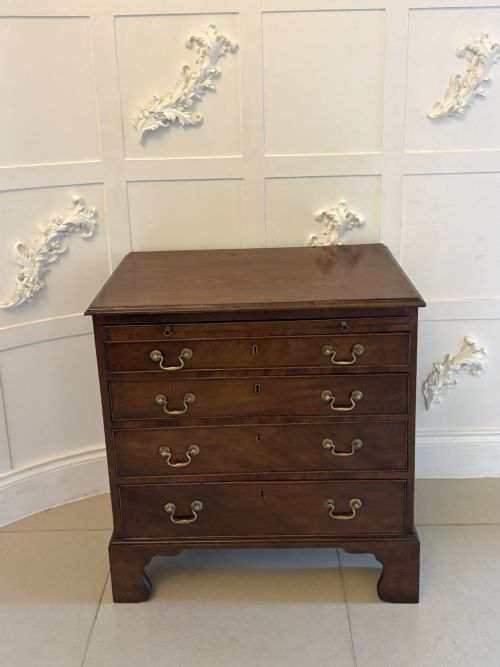
Brushing slides appear frequently on Georgian and Regency chests of drawers. They provided a clean surface for folding garments or writing notes.
These pull-out boards sit directly beneath the top moulding and slide smoothly on runners built into the interior frame.
How should I clean mahogany?
Maintenance requires gentle dusting with a soft cloth and occasional application of traditional beeswax to nourish the timber. Avoid modern silicone sprays that build up residue.
Keeping pieces away from direct sunlight and heat sources protects the fragile mahogany veneers from drying out.