
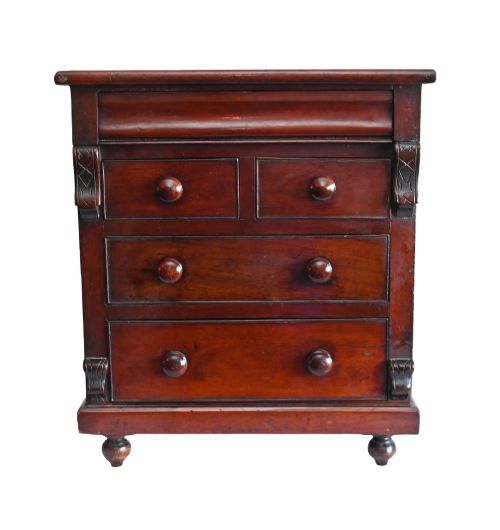
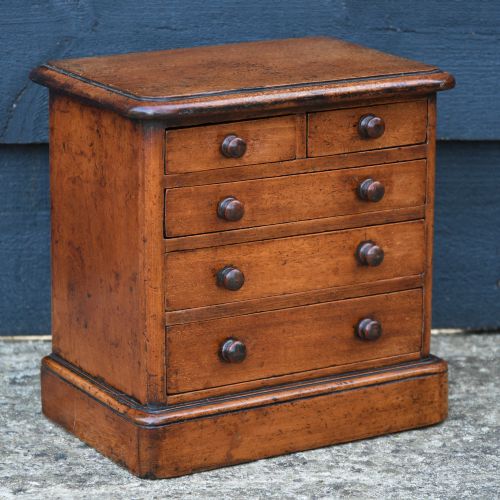
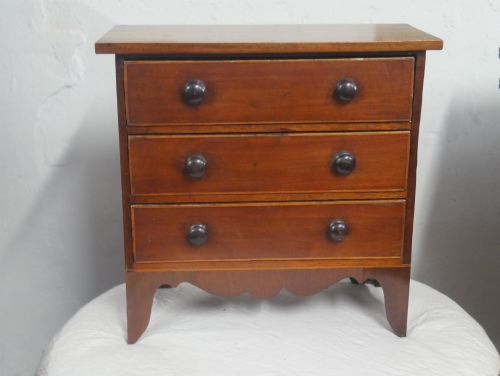
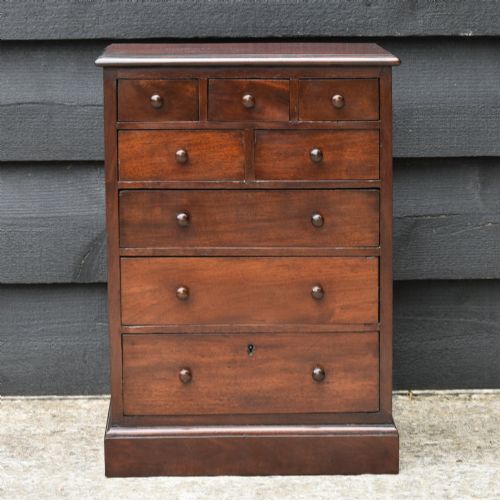
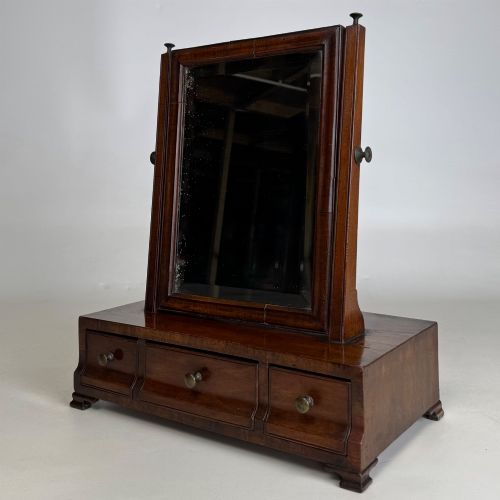
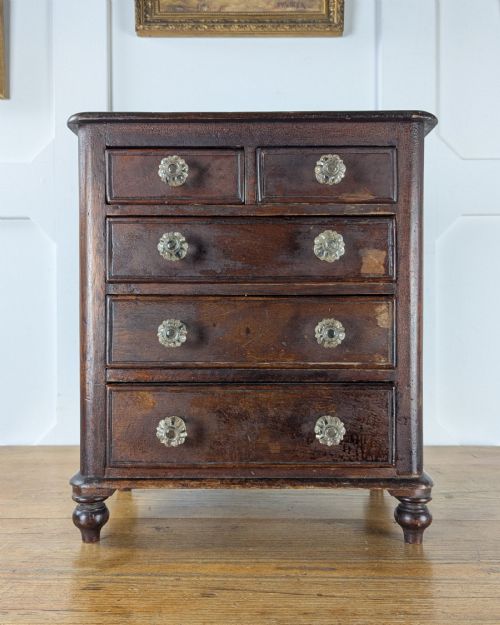
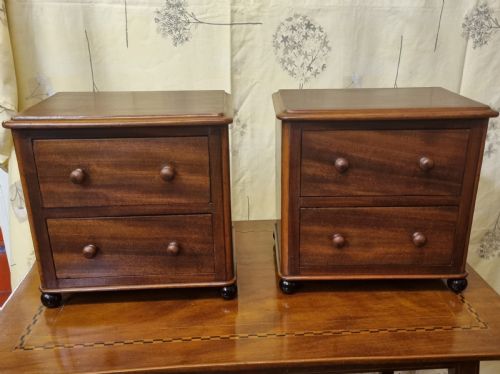
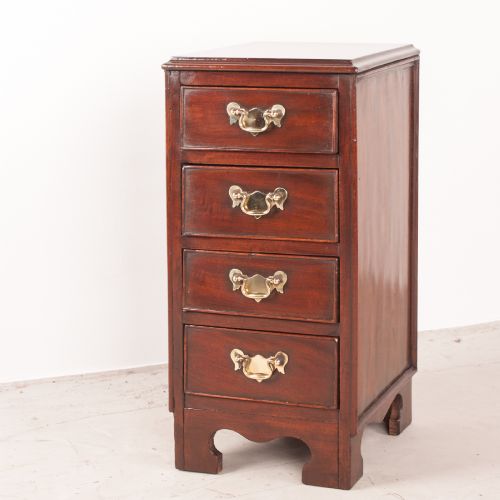
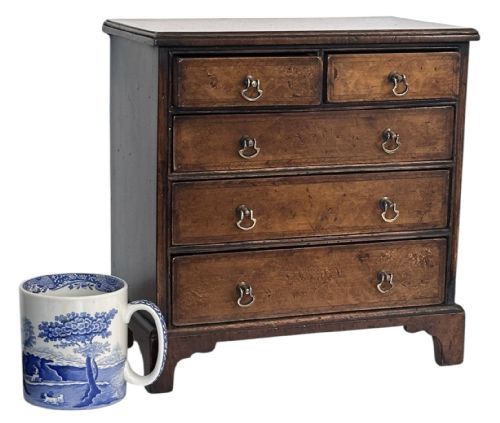


Small Mahogany Desktop Drawers
Small mahogany desktop drawers are compact table chests and miniature furniture designed for storage, bringing period craftsmanship directly to your desktop.
Small Mahogany Desktop Drawers
Small mahogany desktop drawers encompass miniature chests of drawers, apprentice pieces, tabletop cabinets, and desktop storage units. These pieces range from Georgian and Regency forms to Victorian campaign and Edwardian variations.
You will most frequently encounter nineteenth-century Victorian and Georgian examples on this page. These take the form of miniature chests, bowfront chests, and specialised collectors cabinets or watchmaker cabinets.
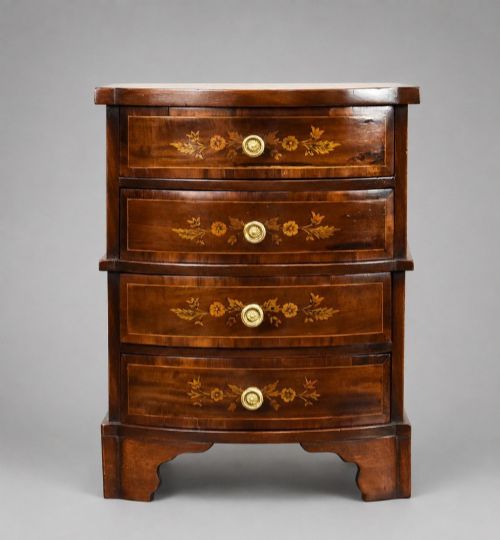
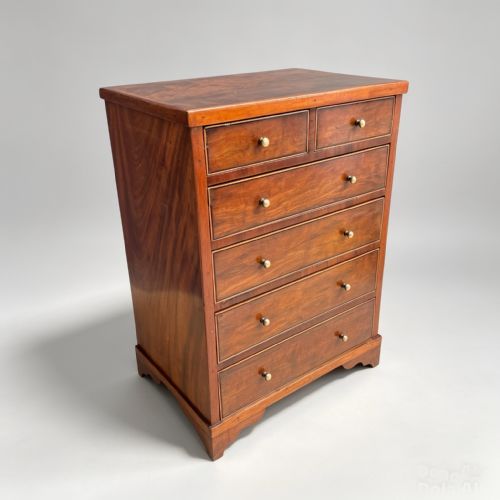
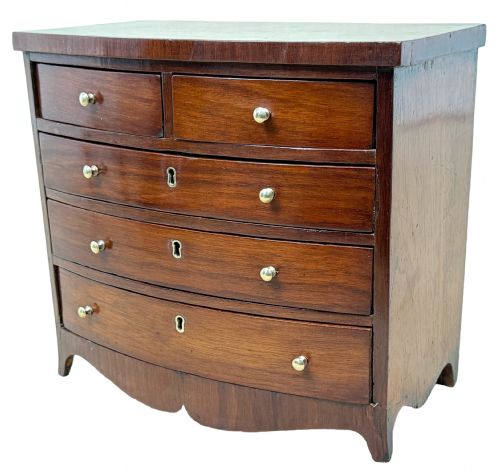
Makers constructed these smaller pieces using solid mahogany and mahogany veneers, frequently incorporating pine or oak as secondary woods. Many examples feature brass drop handles, turned feet, and delicate wood inlay.
Materials and construction
Craftsmen built these desktop storage pieces primarily using mahogany, supplemented by secondary timbers such as pine and oak for internal framing and drawer construction. The exterior surfaces often display rich grain patterns and fine patina.
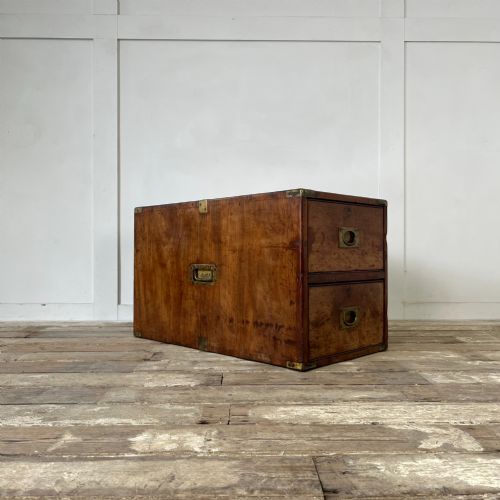
Metal hardware played a key functional role, with brass drop handles and campaign-style flush fittings secured to the drawer fronts. Marquetry and wood inlay appear on specific Edwardian and Georgian style pieces to decorate the exterior surfaces.
Joinery techniques matched those used in full-sized furniture, adapted carefully for miniature scale and tabletop use. Turned feet and glazed elements occasionally feature in the construction of tabletop chests and specimen cabinets.
Tiny brass campaign handles on desktop chests prove that even miniature furniture prepared for a life on the march.
What separates the finest examples
Quality rests upon the crispness of the proportions and the fidelity to full-scale period furniture design. Finer pieces demonstrate superior timber selection with a deep, natural patina across the mahogany surfaces.
The refinement of the small details, from the fit of the drawers to the quality of the brass drop handles and inlay work, distinguishes standard storage pieces from exceptional collector cabinets and miniature chests.
The Small Mahogany Desktop Drawers Glossary
- Apprentice piece
- A small-scale item of furniture made by a craftsman to demonstrate skill or mastery of a trade. These often mirror full-size chest of drawers designs.
- Bow front
- A convex, curved front shape popular on miniature and full-size chests during the Georgian and Victorian periods. This curved form requires advanced woodworking skill.
- Campaign chest
- Portable furniture made in sections with recessed brass handles, originally designed for travel. Desktop versions adapt this military style for stationary use.
- Wellington chest
- A tall, narrow chest of drawers secured by a hinged locking stile that fastens over the drawer edges. These typically feature multiple small drawers suited for documents or specimens.
- Specimen cabinet
- A specialised storage unit containing numerous shallow drawers designed to hold natural history collections or small valuables. They frequently incorporate glass viewing panels or secure locking mechanisms.
Small Mahogany Desktop Drawers: Frequently Asked Questions
What were apprentice pieces used for?
Apprentice pieces served as physical proof of a woodworker's skill before gaining full guild membership. They replicated standard furniture forms in miniature.
Craftsmen kept these small chests on workbenches or desks to showcase their proficiency in joinery, carving, and timber selection to potential clients.
How do I date a miniature chest?
Dating relies on identifying period characteristics such as bracket feet, bow fronts, brass hardware styles, and secondary woods like pine or oak.
Georgian examples display different proportions and aesthetic restraint compared to heavily ornamented Victorian campaign chests or Edwardian marquetry pieces.
Where were desktop drawers placed?
These compact storage units sat upon writing desks, dressing tables, or sideboards within studies, bedrooms, and parlours. They provided accessible organisation for small personal items.
Owners utilised them to store documents, jewellery, watchmaking tools, or natural history specimens close at hand.
What is a watchmaker cabinet?
A watchmaker cabinet is a specialised tabletop work chest fitted with numerous shallow drawers. Horologists used them to store delicate watch components and miniature repair tools.
These pieces feature sturdy wooden construction and secure compartments designed to protect tiny mechanical parts from dust and damage.