


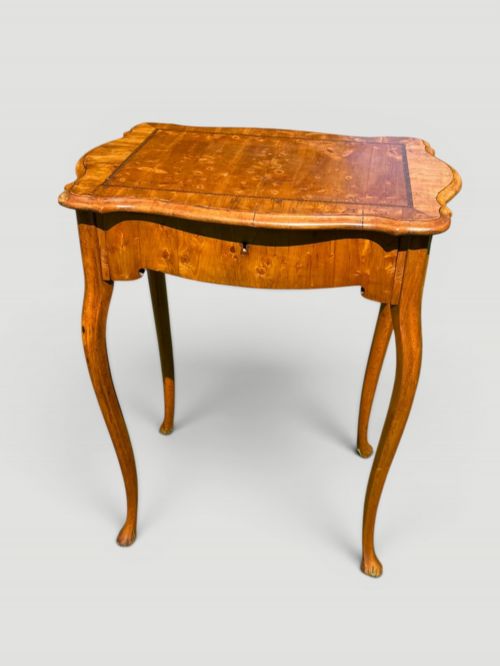
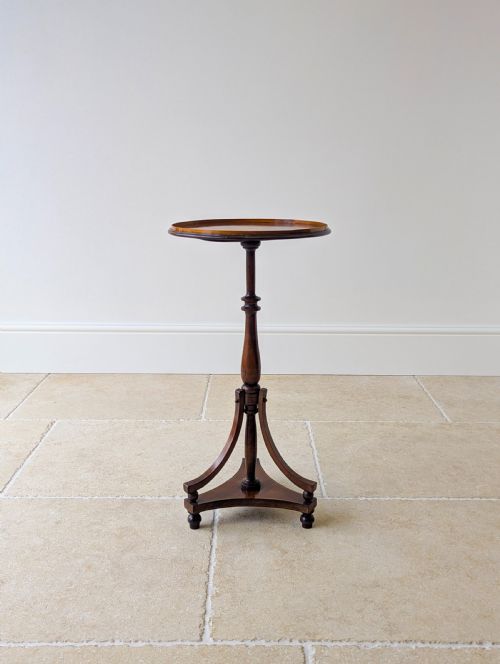
Small Inlaid Accent Table
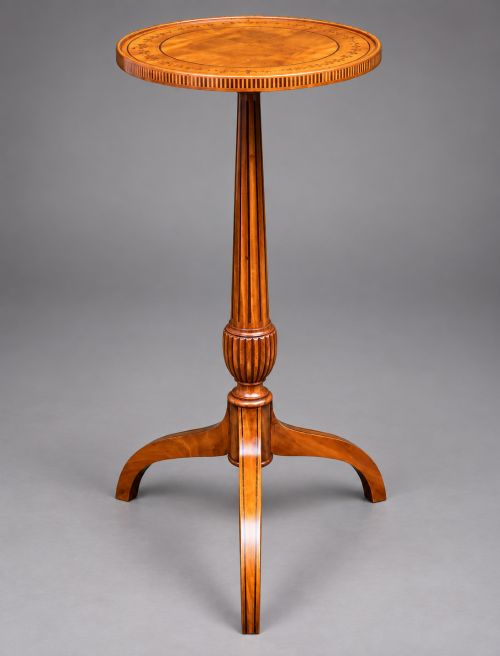
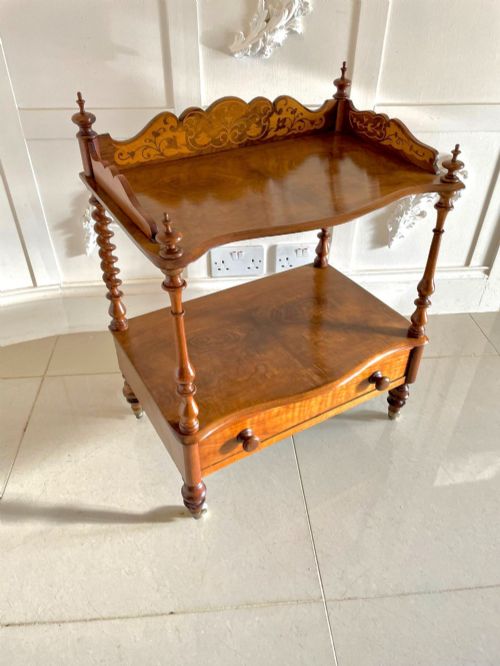
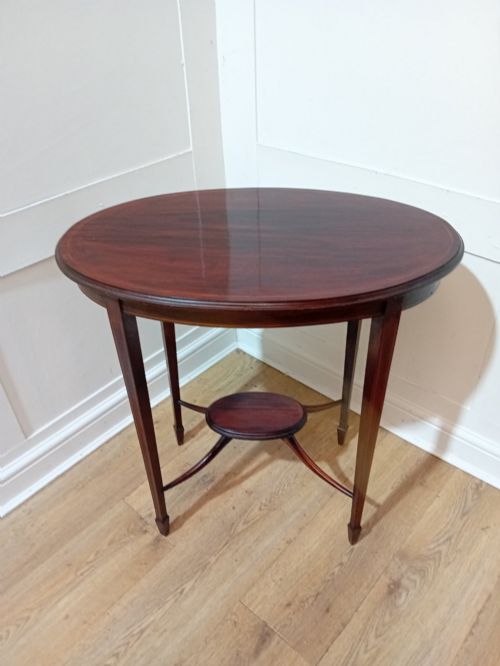
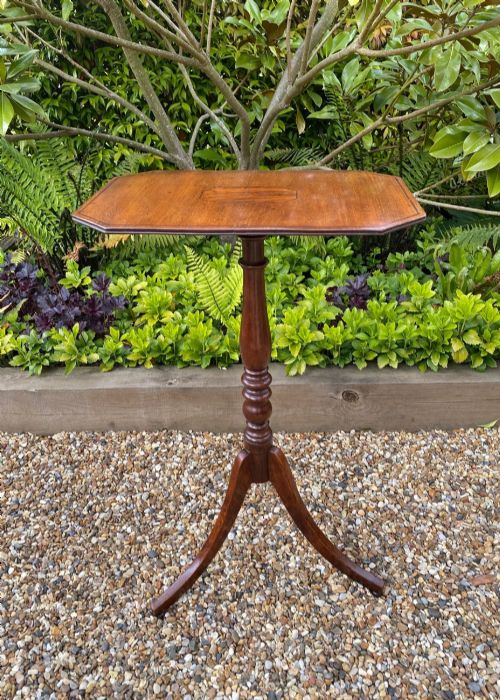
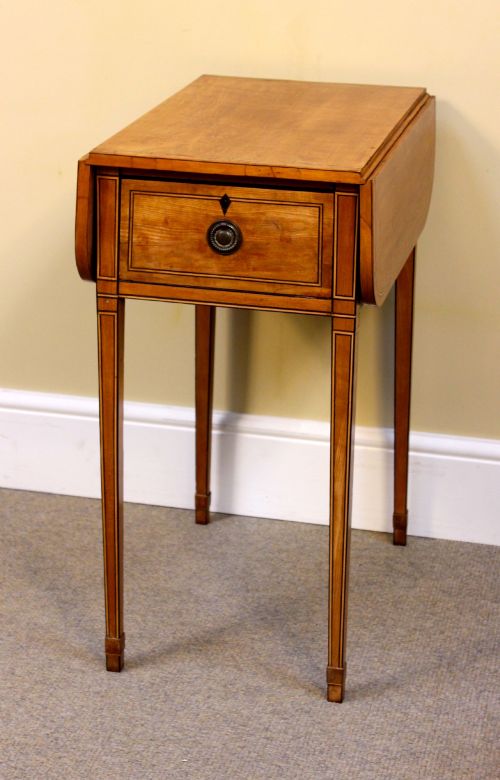
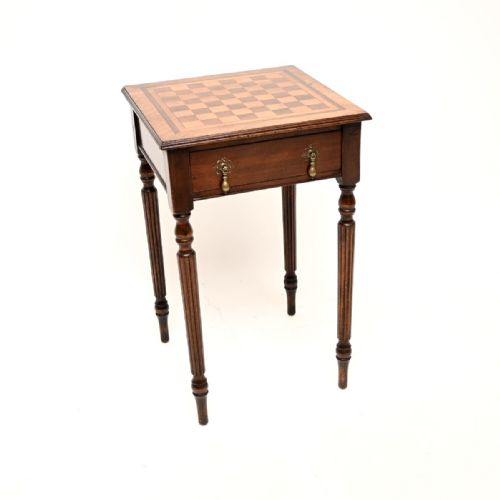
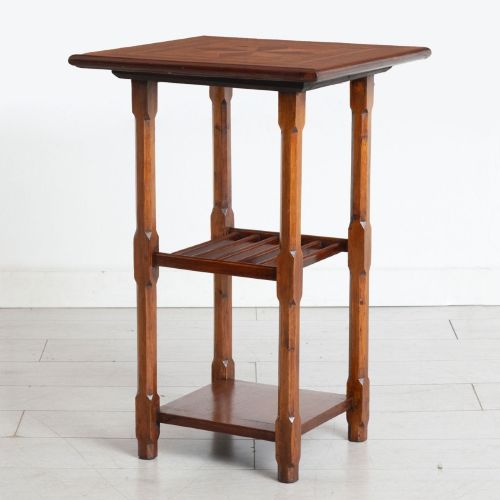
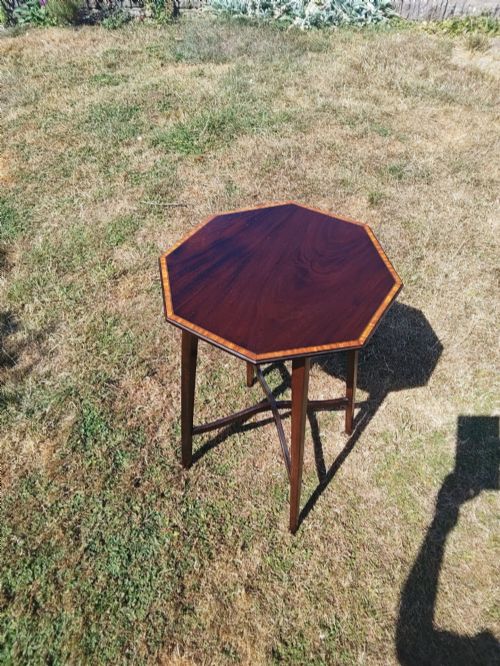
A small inlaid accent table brings rich timber and delicate marquetry into a room, offering surface space without crowding the floor.
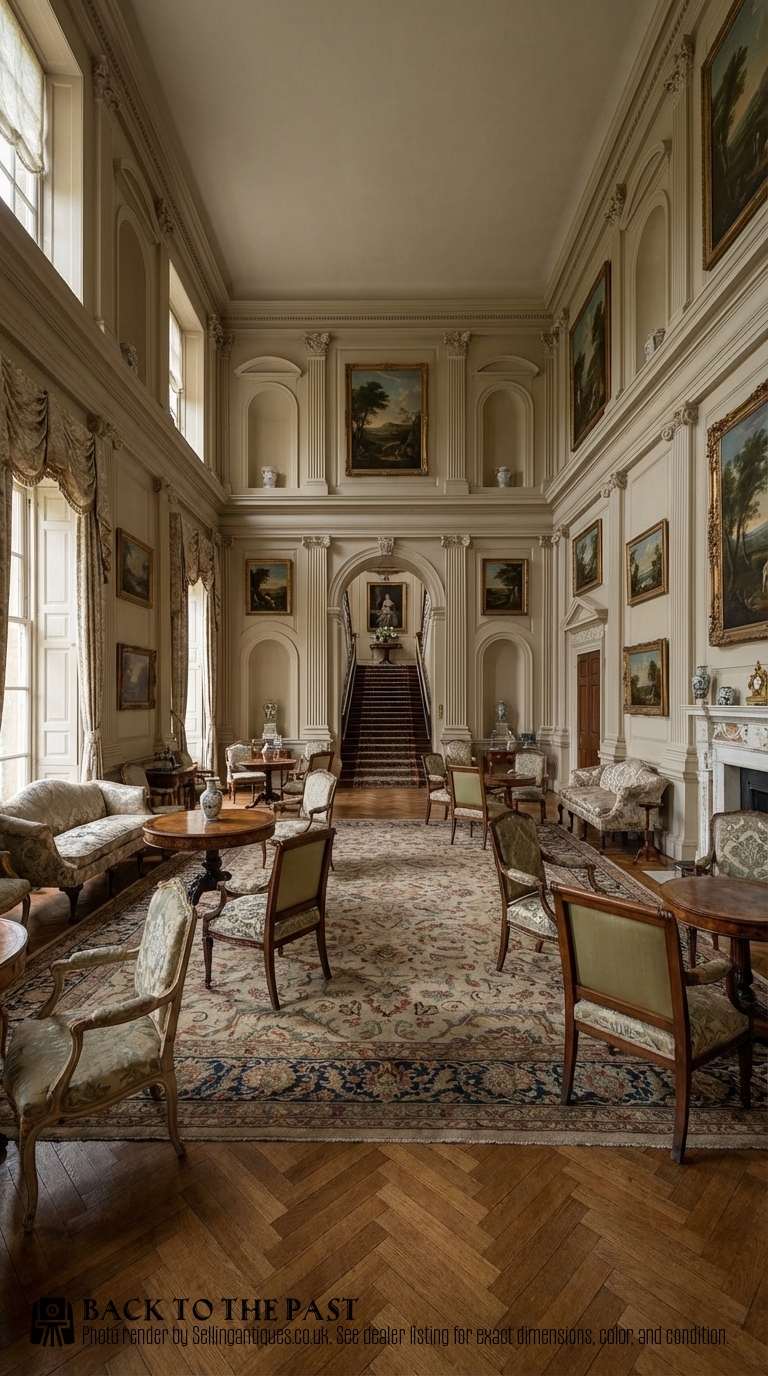
Small Inlaid Accent Table
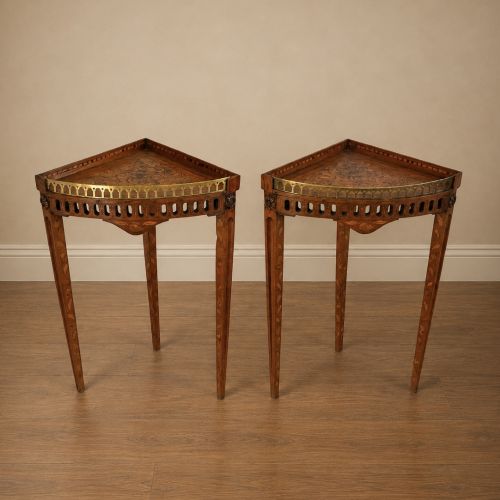
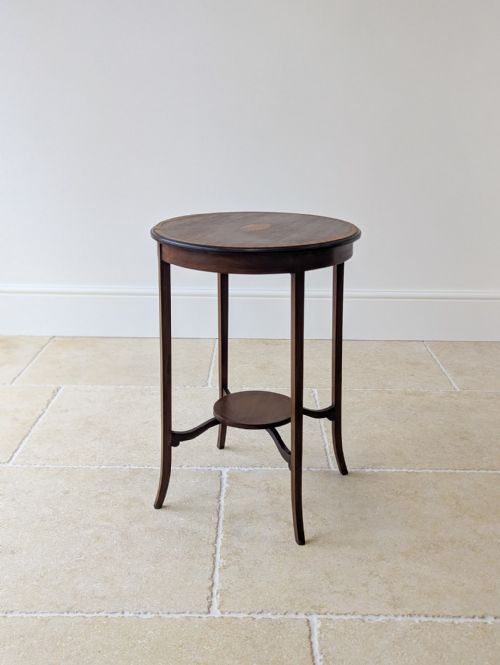
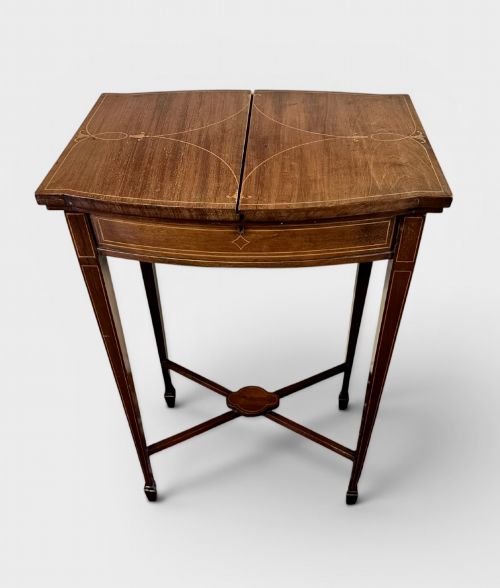
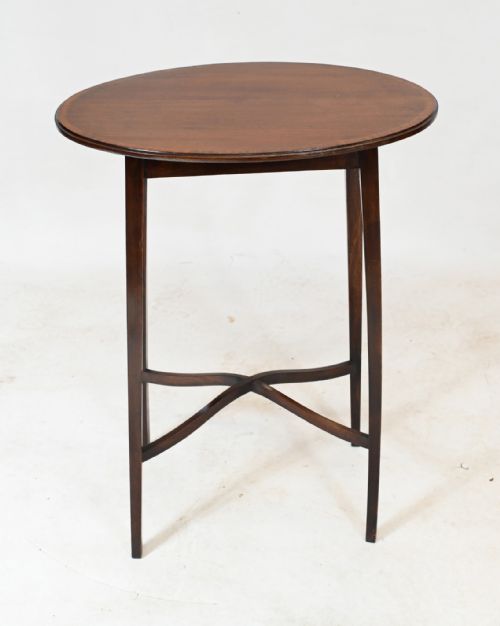
When you search for a small inlaid accent table, you find a diverse group of occasional, lamp, side and wine tables designed for portability and display.
The pieces on this page span the eighteenth, nineteenth and early twentieth centuries, with Edwardian and Victorian examples appearing most frequently.
Forms range from simple circular tripod wine tables to nests of tables, envelope chess boards and kidney-shaped occasional tables.
How they were made
Cabinet makers built these pieces using solid timbers and veneered surfaces of mahogany, walnut, burr walnut, satinwood and rosewood.
Decoration relies on contrasting wood inlays, boxwood lines, shell motifs and marquetry panels, occasionally complemented by brass galleries or painted tops.
One tiny table arrived bearing intricate Hoshiapur inlay, proving that Victorian parlour games extended into global design curiosities.
What varies in quality
The standard of a small inlaid accent table rests on the crispness of the cutting in the marquetry and the choice of figured veneers.
Fine examples show careful timber selection, balanced proportions and tight joinery in the legs and aprons, whereas simpler pieces rely on plain secondary woods and minimal banding.
The Small Inlaid Accent Table Glossary
- Marquetry
- Decorative patterns formed by fitting together thin veneers of various woods onto a structural ground. It often depicts floral or geometric scenes.
- Satinwood
- A pale, hard timber from tropical trees that yields a lustrous, golden sheen. It was widely utilised in Sheraton Revival and Edwardian inlay work.
- Tripod table
- A small occasional table supported by a pillar above three splayed legs. This form gained popularity for its stability on uneven floors.
- Quartetto nest
- A set of four graduating tables designed to slide neatly beneath one another. They were frequently produced in satinwood during the Edwardian period.
Small Inlaid Accent Table: Frequently Asked Questions
Where should I place a small inlaid accent table?
These pieces suit tight spaces beside a sofa, in a hallway or tucked into a corner as a lamp stand.
Their decorative tops mean they work well where people can view them from above, rather than hiding beneath heavy objects.
How do I care for antique veneered furniture?
Keep wooden tables away from direct heat sources and strong sunlight to prevent the timber and veneer from drying out or fading.
Apply a traditional wax polish occasionally and buff gently with a soft cloth to maintain the surface sheen.
What is the difference between inlay and marquetry?
Inlay involves setting pieces of wood into a recessed cavity within a solid surface. Marquetry assembles an entire picture or pattern from various veneers before gluing it down as a single sheet.
Both techniques appear frequently across Victorian and Edwardian occasional tables.
How do I identify an Edwardian table?
Edwardian tables often feature light mahogany frames, delicate satinwood banding and inlaid shell motifs influenced by Sheraton Revival designs. They tend to feel lighter in scale than their heavy Victorian predecessors.
Many incorporate slender tapered legs linked by low stretchers or appear as nested sets.