
Small Georgian Drop Leaf Table
A small georgian drop leaf table offers clever folding versatility for compact spaces, marrying traditional cabinetmaking with practical daily living.
Small Georgian Drop Leaf Table
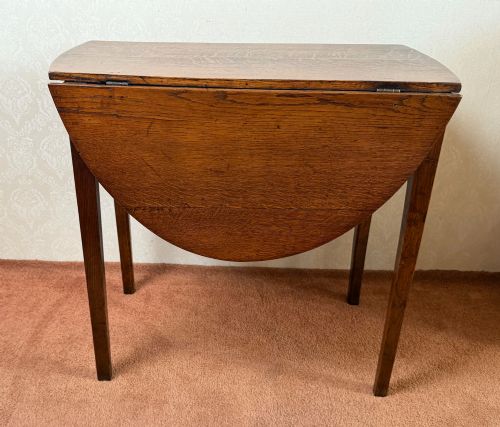
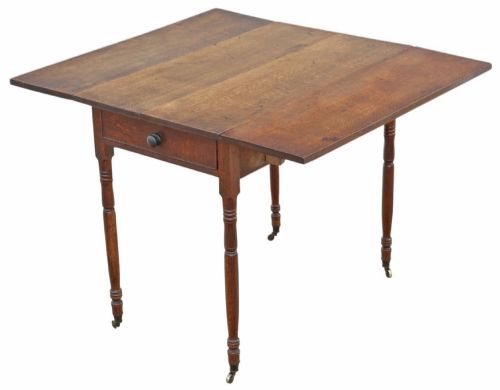
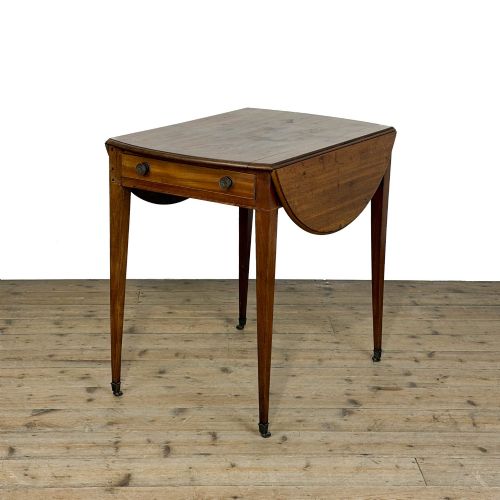
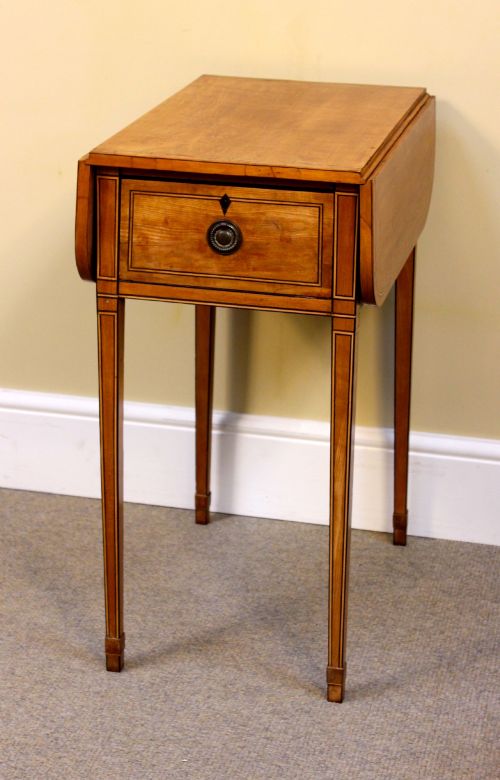
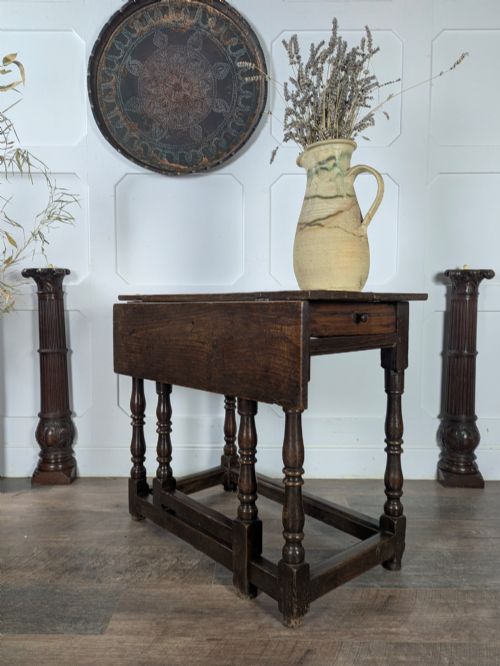
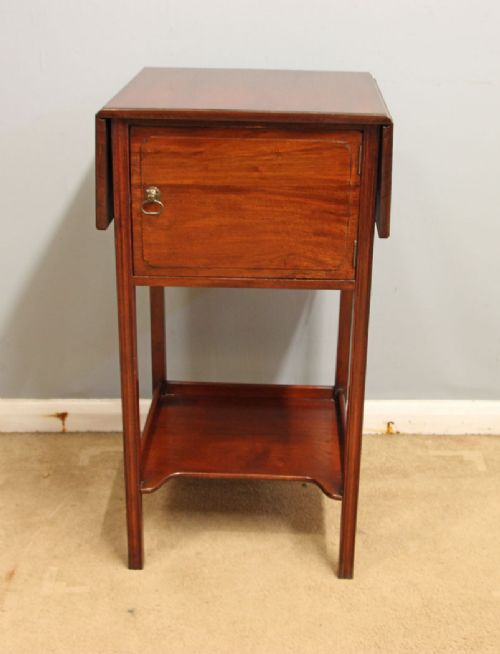
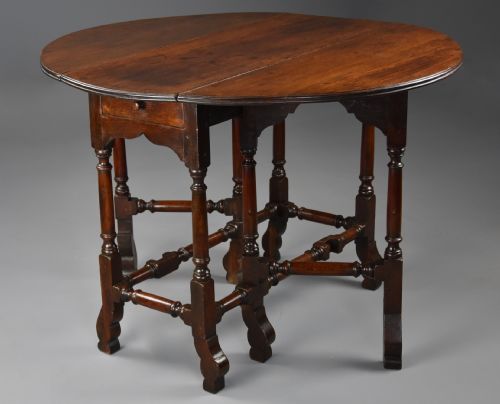
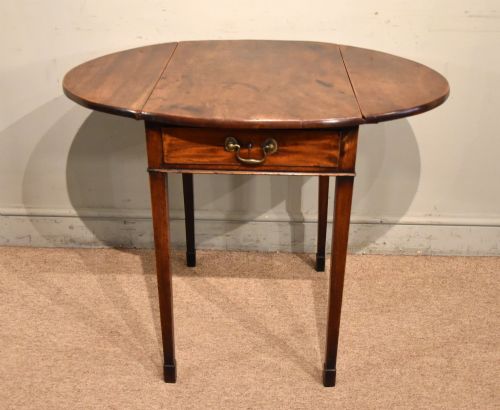
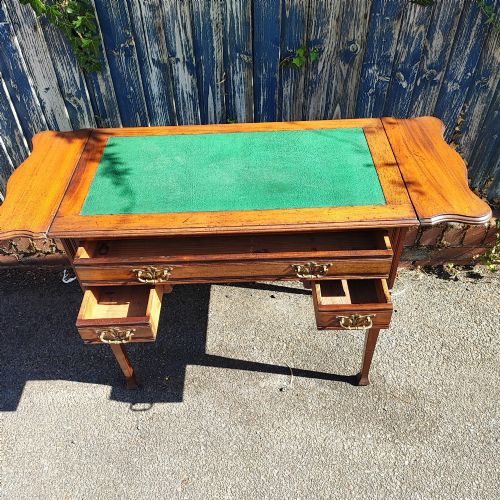
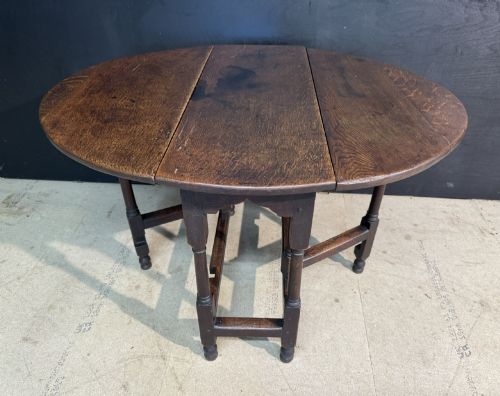
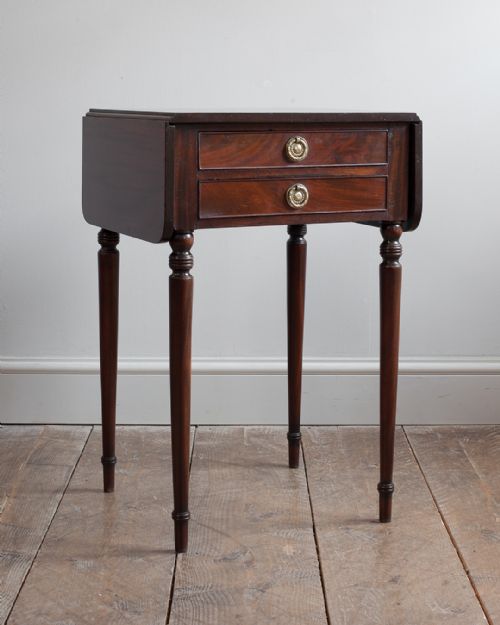
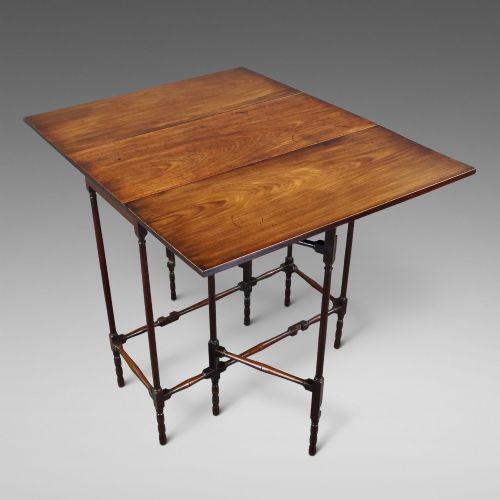
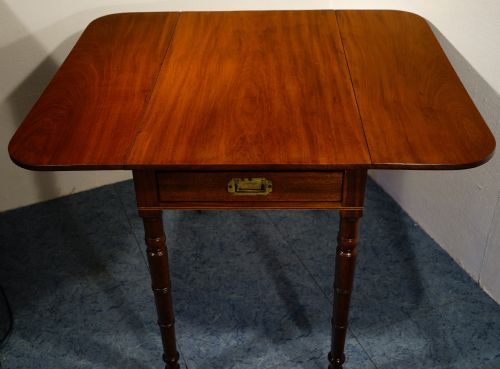
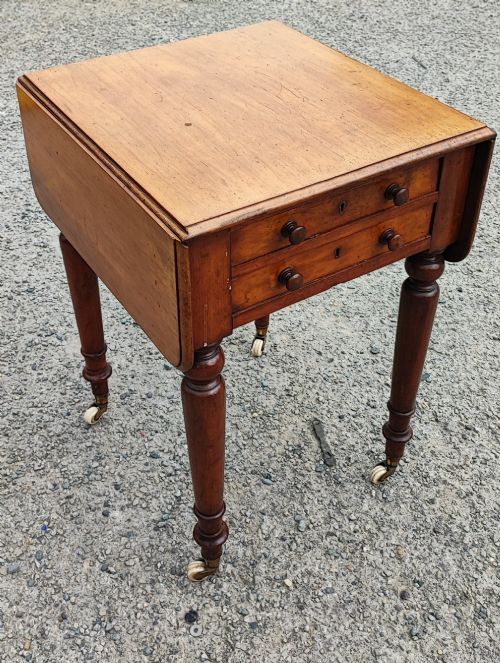
A small georgian drop leaf table is a functional domestic item featuring hinged flaps that raise to extend the surface area and drop down when space is at a premium. These pieces span compact Pembroke designs with drawers, gateleg formats supported by swinging legs, and occasional tables intended for dining or writing.
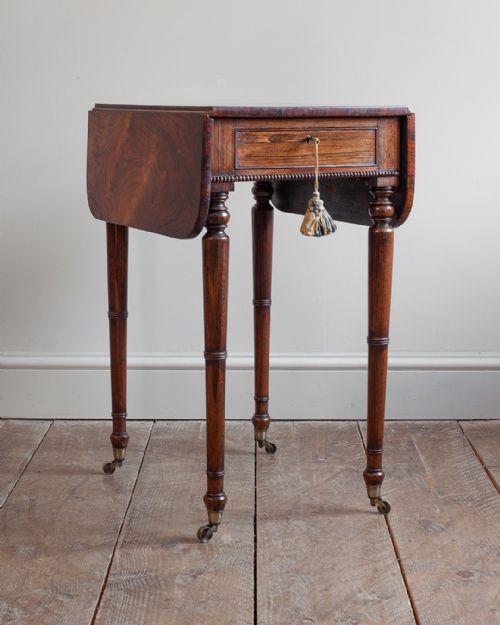
The materials and periods represented on this page range from solid oak examples of the eighteenth century to mahogany and rosewood forms from the Regency and Victorian eras. Buyers frequently encounter smaller proportions in mahogany, oak, and walnut, often demonstrating subtle oval or rectangular drop-leaf configurations.
How they were made
Cabinetmakers utilised dense timbers such as mahogany, oak, walnut, and rosewood, frequently incorporating secondary woods like boxwood or satinwood for inlay and detail. Structural integrity relied on sturdy framing, mortise and tenon joinery, and reliable wooden or brass hinges to support the dropping flaps.
Surfaces were finished to highlight natural grain patterns, sometimes showing decorative marquetry, fine patination, or turned supports such as spider legs and central columns.
Listings feature woods such as mahogany, oak, walnut, satinwood, and rosewood spanning the eighteenth to early twentieth centuries.
What varies in quality
The standard of timber selection largely dictates value, with finely figured Cuban mahogany or rich, patinated oak sitting above more plain utility woods. Construction nuance also separates examples, visible in the precision of the hinge placement, the fluidity of the drop-leaf action, and the integrity of dovetailed drawer construction.
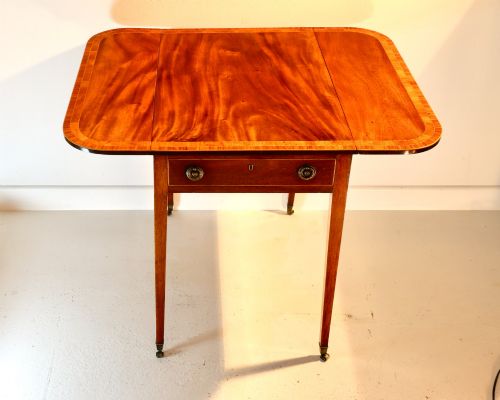
Proportion and decorative restraint define the better pieces, where delicate tapering legs, subtle stringing, and original brass hardware complement the practical form without visual heaviness.
Morison of Ayr
The Small Georgian Drop Leaf Table Glossary
- Pembroke table
- A small rectangular table featuring two hinged drop leaves on opposing sides, frequently fitted with a single end drawer.
- Gateleg table
- A table with hinged leaves supported by legs that swing outward like a gate to bear the weight of the extended top.
- Patina
- The surface sheen and mellow colour developed on antique wood over centuries of handling, polishing, and light exposure.
- Marquetry
- Decorative patterns formed by inserting thin veneers of different coloured woods into a prepared surface.
Small Georgian Drop Leaf Table: Frequently Asked Questions
How were drop leaf tables used originally?
These tables served flexible domestic functions, easily pulled away from walls for dining or tea and folded down to conserve floor space in smaller rooms.
Their adaptable nature made them popular across various rooms in the house, from bedrooms as work tables to living spaces as occasional surfaces.
What woods are most common?
Mahogany and oak appear most frequently across the listed periods, often accompanied by walnut, rosewood, and occasional fruitwood variants.
Finer decorative examples might incorporate satinwood or boxwood details to accent the primary timber.
How do I care for the wood surface?
Protect the antique timber from direct heat sources and strong sunlight to prevent warping and fading of the polish.
Apply traditional beeswax occasionally and buff gently with a soft cloth to maintain the natural lustre of the patination.
How can I distinguish an eighteenth-century piece?
Look for construction details such as hand-cut dovetails in drawers, traditional timber shrinkage, and the specific rich patination unique to older woods.
Earlier examples often utilise solid oak or heavy Cuban mahogany combined with simpler, robust gateleg or Pembroke framing.