


Small Gallery Table
A small gallery table brings a raised rim to a compact surface, keeping precious items secure while adding architectural definition.
Small Gallery Table
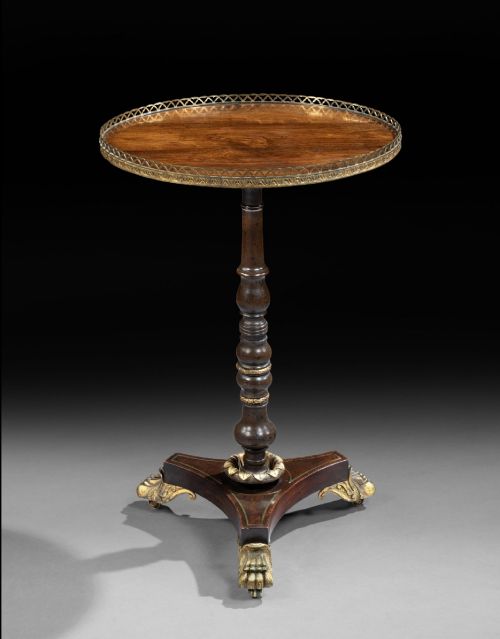
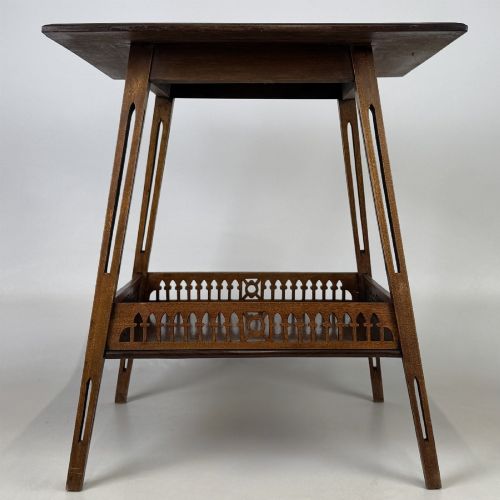
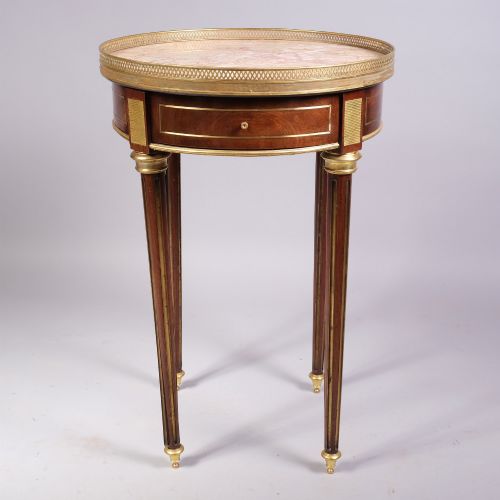
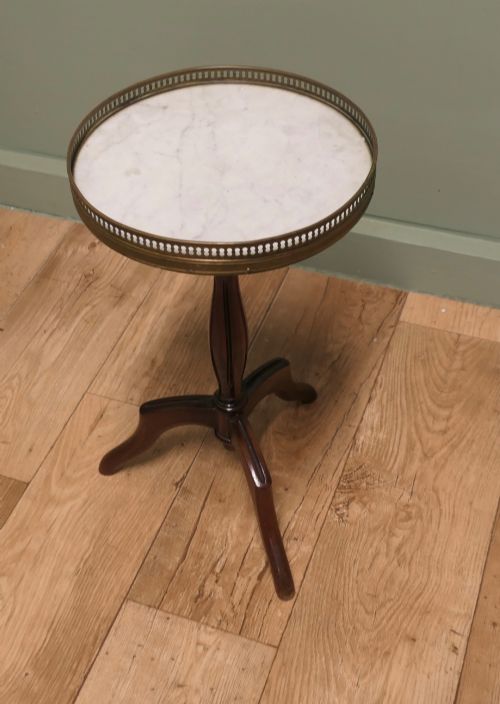
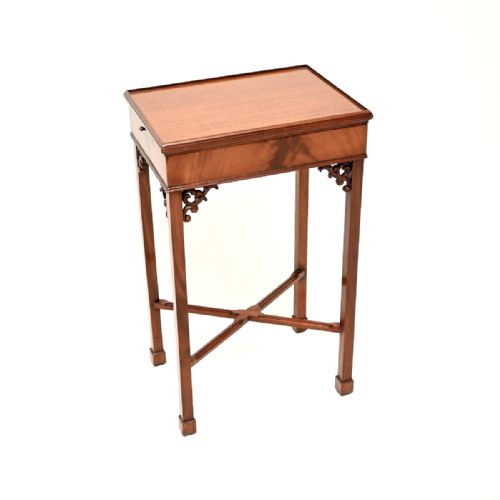
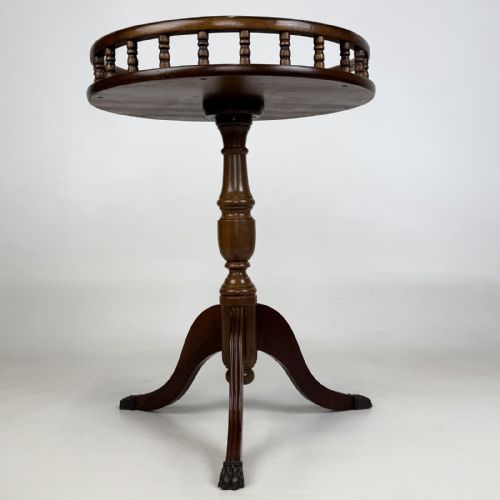
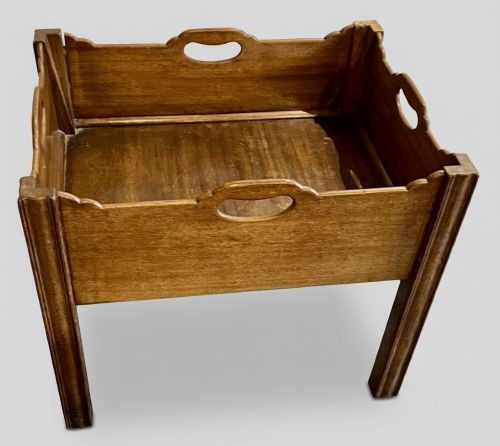
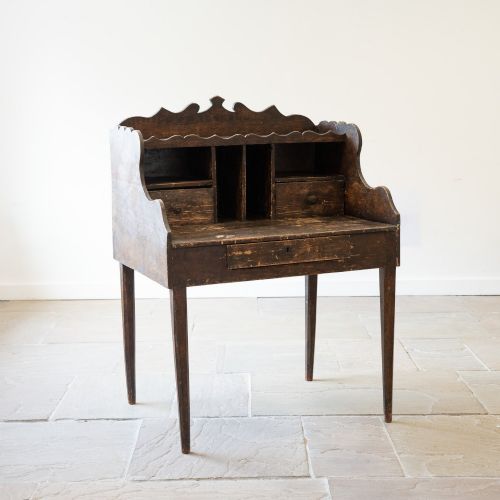
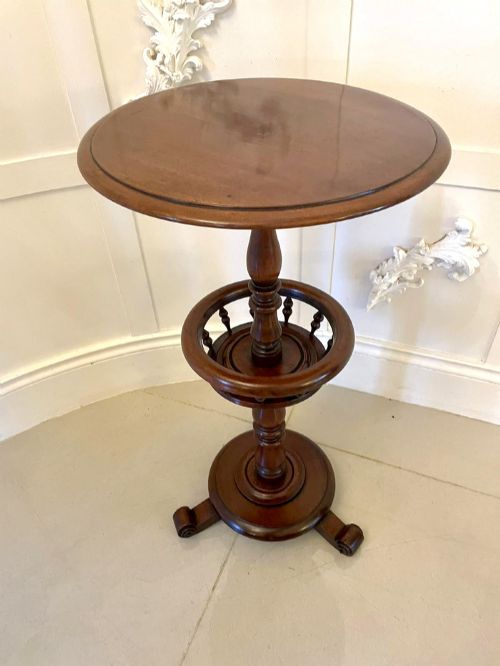
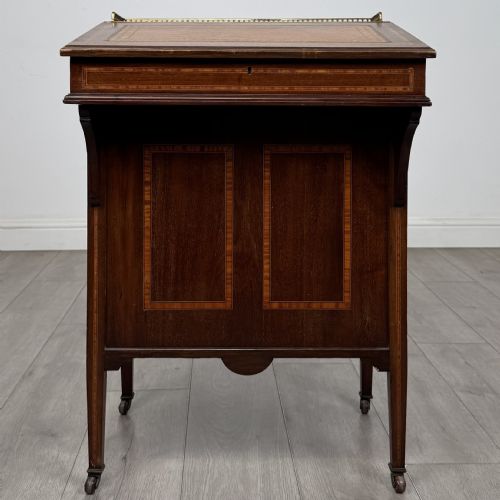
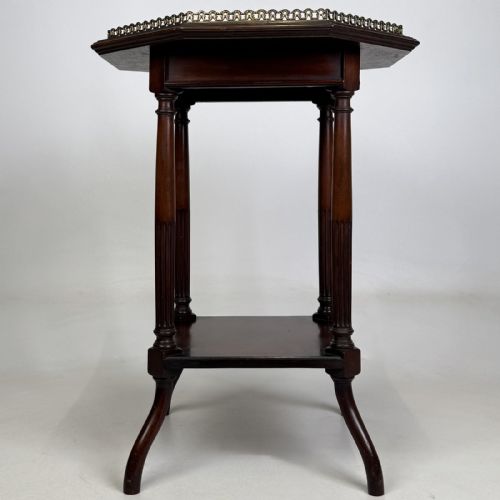
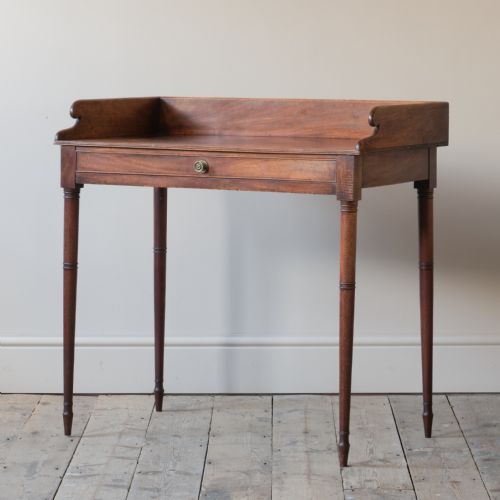
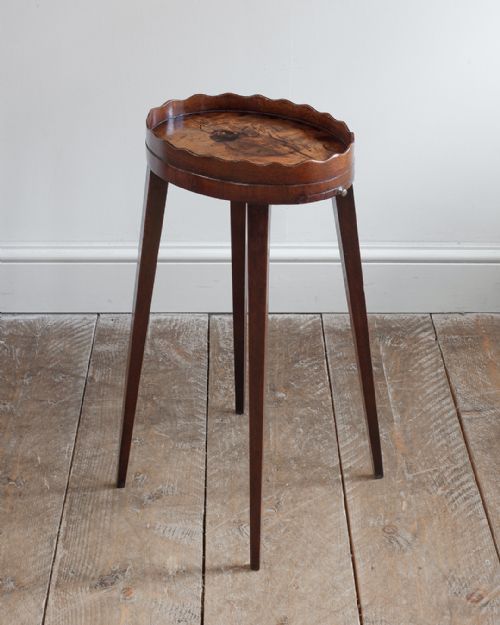
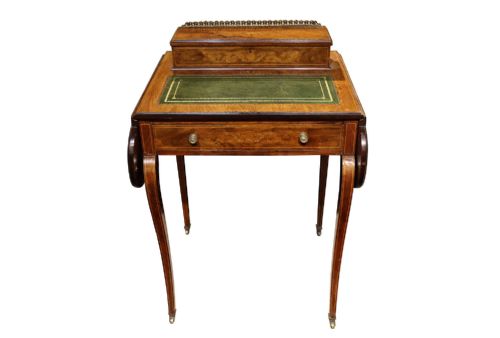
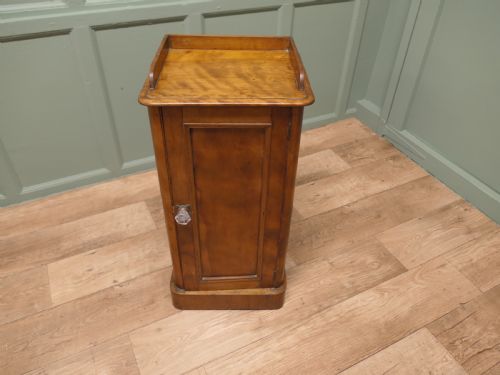
A small gallery table is a compact piece of furniture designed for specific domestic tasks, distinguished by a raised border or gallery encircling the top surface. These tables appear in forms such as lamp tables, occasional tables, urn stands, and small writing desks.
The versions most commonly met on this page span the eighteenth, nineteenth, and early twentieth centuries, reflecting Georgian, Victorian, and Edwardian tastes. Mahogany and rosewood predominate among the timbers, frequently accompanied by walnut, oak, and satinwood.
Makers utilised these tables as functional accents beside seating, in hallways, or as bedside surfaces where the raised edge prevented small objects from rolling off. Their proportions remain modest, allowing them to fit tight spaces without dominating a room.
Materials and construction methods
Cabinetmakers constructed these tables using dense hardwoods such as mahogany, rosewood, and walnut, often selecting figured veneers for visual depth on the top surfaces. Inlaid details in satinwood, boxwood, and marquetry appear across Georgian and Edwardian examples.
The distinctive raised gallery is executed in brass, pierced wood, or turned spindles attached firmly to the tabletop edge. Structural integrity relies on traditional joinery, including mortise and tenon frames, tapered legs, and occasional tripod supports with sturdy pillar stems.
Small Gallery Table Retail Price Guide 2026
Typical asking prices for small gallery table among the pieces listed under this phrase on Sellingantiques today, from the lower quarter to the upper quarter. They describe what is for sale here now, not the wider market.
Several tables feature miniature pierced wooden galleries so delicate they resemble tiny architectural balconies built exclusively for ambitious mice.
Assessing quality in small gallery tables
Quality rests upon the crispness of the timber selection and the precision of the joinery where legs meet the frieze. Superior pieces display continuous grain matching and tight, flush joints without visible filler.
The construction of the gallery itself reveals much about the workshop standard, with solid brass castings or finely pierced wooden frets securing the perimeter firmly. Finer examples integrate secondary timbers of equal quality inside drawers and beneath tabletops.
Gillows·A Hugnet Paris
The Small Gallery Table Glossary
- Gallery
- A raised border or rail encircling the edge of a tabletop, shelf, or tray. It prevents items from sliding off and adds a decorative architectural silhouette.
- Urn stand
- A small, tall table specifically designed to hold a tea urn or kettle. These pieces often feature pull-out slides and delicate raised galleries.
- Gueridon
- A small French occasional table supported by a central pillar or columns. They frequently incorporate marble tops and brass galleries.
- Frieze
- The horizontal band situated directly beneath the tabletop. On better tables, this section houses dovetailed drawers with fine mahogany linings.
- Marquetry
- Decorative veneer patterns formed by fitting together small pieces of various coloured woods. This technique creates pictorial or geometric designs on tabletops.
Small Gallery Table: Frequently Asked Questions
What is a small gallery table used for?
These tables served primarily as convenient surfaces for holding lamps, tea equipment, or writing materials within easy reach of seating. The raised gallery ensured that delicate items remained secure on the compact top.
Today, they function effectively as bedside tables, lamp stands, or decorative accents in narrow hallways. Their modest scale allows them to fit into spaces where larger furniture proves impractical.
How do I identify a Georgian gallery table?
Georgian examples, including urn stands and kettlestands, typically display rich mahogany surfaces with slender, elegant legs and fine timber or brass galleries. Proportions tend to be exceptionally refined, with attention paid to subtle turning and bracket connections.
Examining the underside and drawer linings reveals period hand-cut dovetails and timber characteristics consistent with eighteenth-century workshop practices. Construction methods rely entirely on traditional joinery without modern metal fasteners.
Are brass galleries original to the table?
Original brass galleries are securely fastened through the tabletop with integrated pins or screws that show appropriate age and wear on the underside. The metal displays a consistent natural patina matching the rest of the brasswork.
Replacements often leave wider bore holes or utilise modern slotted screws. Inspecting the seating of the gallery posts provides clear evidence of original assembly.
How should I care for a polished wood surface?
Protect the timber by avoiding direct sunlight and placing felt pads beneath objects set upon the gallery top. Natural beeswax applied sparingly maintains the finish without building up heavy residues.
Maintain stable room humidity to prevent the veneer from lifting or the solid timbers from splitting. Dust regularly with a soft, dry cloth rather than using silicone sprays.